Tag: maha movement
As Kennedy's MAHA Ruptures Over His Corrupt Betrayals, Will Democrats Respond?

As Kennedy's MAHA Ruptures Over His Corrupt Betrayals, Will Democrats Respond?

Just below the headlines describing the midterm disintegration of Donald Trump’s electoral coalition, a crackup is occurring that may prove equally consequential. As Robert F. Kennedy Jr. increasingly resembles his corrupt boss, the political fissures in his “MAHA” movement are rupturing – which creates opportunities for Democrats to recapture the high ground on environmental safety and public health.

What Kennedy delivered to the Republican Party in 2024 when he folded his own presidential campaign into Trump’s reelection bid – selling out his family’s iconic legacy – was a phalanx of suburban women who had usually supported Democrats, their ranks buttressed by a new category of online influencers. For those concerned about environmental perils, his previous record as an attorney and his name were sufficient credentials, with a smaller cohort drawn by his anti-vaccine activism.

From the beginning, those who knew Bobby understood that he was likely to double-cross the “MAHA moms,” not just because of his weak character and greed but because such falsity is embedded in Trumpism. Once he signed up with this president and the Republican Party, both wholly and permanently owned by corporate interests, there was no chance that Kennedy would fulfill his promises to confront pharmaceutical, agricultural and industrial interests.

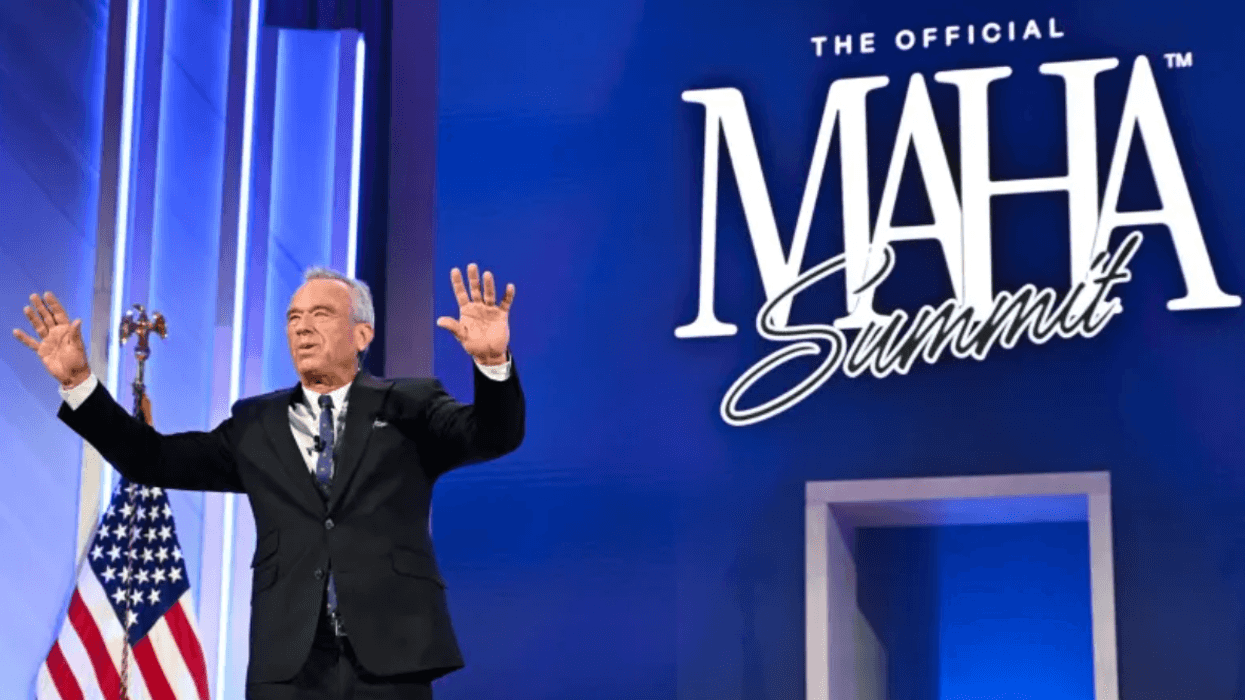
But in recent months the secretary of health and human services, and his inner circle have brazenly displayed the self-dealing and conflicts to make a mockery of MAHA’s supposed ideals. Last month his “Make America Healthy Again Summit” sold access and sponsorships for hundreds of thousands of dollars to the same corporate behemoths that market ultra-processed foods, pesticides and unaffordable health care, alongside the quacks who populate the anti-vaccine fever swamps. He has repeatedly misused his power to promote donors, notably a company marketing a controversial cancer-detection test that experts have denounced.

Meanwhile, Kennedy constantly gloms every speck of profit for himself, including $4 million in book contracts, continuing residuals from his anti-vax litigation, and free luxury travel, perks and gifts and perks lavished on him by dubious “allies.”

Worse still, from the perspective of his adoring fans, is his demonstrated propensity to abandon their environmental priorities at Trump’s command. While the Environmental Protection Agency and the Department of Agriculture promote cancer-causing pesticides and other threats to our water and food, Kennedy doesn’t fight – he folds like a cheap suit.

What has changed in the aftermath of the MAHA Summit is the slavish acceptance of Bobby’s deceit. Robert Malone, a longtime anti-vaxxer and Kennedy crony, blasted the corporate takeover, saying it showed that MAHA was “a grift.” MAHA mom influencers like Zen Honeycutt and Kelly “Glyphosate Girl” Ryerson have fumed publicly over the administration’s environmental depredations, and Scarlett Fang, a prominent MAHA activist, decried the “complete corporate capture.”

“This is not the MAHA we signed up for,” said former HHS official Gray Delany, ousted by the secretary last year. The truth, of course, is that Trump’s embrace of Kennedy was always a snare and a deception, at the service of corporatist ideology that despises environmentalism and public health.

What becomes of the broken-hearted, those MAHA moms?

Many will remain politically isolated in the anti-vax fever swamps, voicing conspiracy theories that look more insane than ever amid the upsurge of measles and the feared return of polio. Yet others in MAHA – and many unaffiliated Americans who share their concerns over the food supply and the quality of our water and air – might look elsewhere for solutions.

That’s why Democrats might want to emulate Dr. Abdul El-Sayed, their party’s Michigan Senate nominee, who has reached out to the MAHA moms in recent days. Last week, El-Sayed released a policy agenda titled “Building a Healthier America,” vowing to outlaw dangerous pesticides, improve drinking water and broaden access to wholesome food – what MAHA once symbolized, minus the anti-vax nonsense.

As a former public health official who also happens to sport a buff physique, he knows that Kennedy’s wreckage is an important chance for

his party to renew and update their traditional devotion to the environment, public health and consumer protection. His fellow Democrats would be wise to heed him.
Zen Honeycutt

MAHA Moms Denouncing Republican “Traitors” Who Voted For Farm Bill

The Senate Agriculture Committee last week passed the farm bill, a policy package that has repeatedly faced opposition from the “Make America Healthy Again” movement.

While the farm bill was being considered, MAHA advocates urged their followers to contact senators to vote “no,” arguing that the bill's language would fail to hold pesticide manufacturers accountable. Following the bill’s passage, advocates expressed frustration with Republican senators, highlighting tensions between a key faction of President Donald Trump's base and the broader GOP prior to the midterms.

MAHA vs. the farm bill

As the Senate Agriculture Committee reconsidered the farm bill, MAHA advocates asked their followers to call senators and urge them not to pass a package that would delay pesticide reviews and cut funding for regenerative agriculture, a pesticide-free farming method.

Several major MAHA accounts, including Moms Across America, Kelly Ryerson (known online as Glyphosate Girl) and Courtney Swan, joined in a September 14 post on Instagram urging their followers to contact five Republican senators — Alabama’s Tommy Tuberville, Iowa’s Joni Ernst, Kansas’ Roger Marshall, North Dakota’s John Hoeven, and West Virginia’s Jim Justice — and tell them to vote “no” on the farm bill.

MAHA activist Alexandra Munoz shared the post and commented, “This bill must be stopped! Don’t let them deregulate pesticides more!” The post was further shared in an Instagram story by MAHA podcaster Alex Clark, and the MAHA Mom Coalition included the call to action in a series of posts critical of the bill.

Zen Honeycutt, founder of Moms Across America, posted a video Tuesday morning encouraging her audience to call their senators to vote “no” on the bill. In an additional video posted the following day, Honeycutt elaborated, “We just want to let them know we will be watching their vote.”

She added, “If the Republicans lose the midterm elections and they are voting — doing things like this, like voting party lines instead of listening to their constituents — this will be one of the reasons why."

On Wednesday, the farm bill passed the Senate Agriculture Committee in a vote along party lines. The stalemate was broken by Sen. Mitch McConnell (R-KY), who has been privately dealing with health issues since at least June and reportedly returned to the Senate in part to break the deadlock.

MAHA advocates responded by expressing frustration, particularly with Republican senators.

Vani Hari (known online as the Food Babe), Munoz, Ryerson, and Swan shared a post condemning the passage of the farm bill. Hari wrote, “What happened with the Farm Bill today is absolutely insulting to the American people. Congress had an opportunity to demand MORE accountability for the chemicals being sprayed on our food.” The caption included a “Traitor list” naming a dozen Republican senators.

Ryerson also separately posted an image of McConnell returning to the Senate with the caption, “Ailing Sen McConnell dragged in from medical leave to VOTE TO DEFUND REGEN AG and POSTPONE GLYPHOSATE REVIEW.”

In a new video, Honeycutt said, “We're very disappointed. I’m going to read the Republicans who voted for the farm bill, which is not what their constituents want.” She also claimed that McConnell “did not have the wherewithal, he was not in mental or physical fitness to be able to do that vote, that should absolutely not be allowed.”

She then read a list of Republican senators who voted to pass the bill, adding, “Folks, the Republicans need to hear from you.”

Recap: MAHA vs. glyphosate

This spring, the herbicide ingredient glyphosate became a particular rallying point for MAHA advocates as the Supreme Court prepared to hear a case that would shield Bayer, the manufacturer of the glyphosate-based Roundup, from liability. As CNBC reported, “The Environmental Protection Agency does not classify glyphosate as a carcinogen and does not require labels to disclose cancer risk, but the World Health Organization’s International Agency for Research on Cancer in 2015 said the chemical is ‘probably carcinogenic to humans.’”

The issue was further charged in March after the Trump administration, which had signed an executive order promoting glyphosate production in February, wrote an amicus brief to the Supreme Court in support of Bayer.

In response, MAHA advocates organized “The People vs. Poison” rally in D.C. on April 27. The protest prompted the House of Representatives to remove language from the farm bill that MAHA figures said would also have shielded pesticide manufacturers from liability. The bill passed the House without the pesticide protections just a few days later, and MAHA celebrated the win.

The victory was short-lived, however. In late June, the Supreme Court decided in favor of Bayer, finding that “that the company can't be sued in state courts because federal regulations have found a cancer link unlikely and do not require a warning label.”

Then, in early August, Senate Republicans voted down a Democrat-led amendment to the farm bill that would have allowed injured parties to file suit against pesticide companies. The legislation then stalled in committee, according to The Hill, thanks primarily to Democratic members who oppose a “provision in the bill that would require states to help cover the cost of Supplemental Nutrition Assistance Program (SNAP) funding.”

Reprinted with permission from Media Matters

Corporate Grift Plus A Sickening Dose Of Hypocrisy At Bobby's 'MAHA Summit'

Corporate Grift Plus A Sickening Dose Of Hypocrisy At Bobby's 'MAHA Summit'

If you’re a large company and you’d like some favorable treatment from, say, the Food and Drug Administration, you’re in luck. The MAHA Summit is open for business, baby.And by “open for business” I mean “available for bribes … er, corporate sponsorship.”

The MAHA Summit is ostensibly a private event run by whatever weirdos run MAHA events. But in reality, it’s just another way for corporations to buy access to this administration.

That’s why I can’t technically say that Walmart, OpenAI, Anthropic, and other enormous companies are bribing officials like Health and Human Services Secretary Robert F. Kennedy Jr. Those behemoths are just footing the bill for the summit, which is totally different, right?

Look, why should President Donald Trump have all the fun and ill-gotten gains? Why can’t other officials fully lean in to opportunities for corruption?

The MAHA Summit has the same vibe as Trump’s crypto dinner grift, where massive purchases of Trump’s worthless crypto got people—specifically those in need of pardons and deregulation—a sit-down with Trump.

Or perhaps it’s the same vibe as Transportation Secretary Sean Duffy’s seven-month family field trip that was also somehow a reality show that was also of course “sponsored” by the very companies that Duffy regulates.

The MAHA Summit is “sponsored” by companies like Walmart, even though it’s essentially ultraprocessed foods central—a thing that MAHA ostensibly detests. Other sponsors include companies pimping psychedelic drugs and peptides, two of the hallmarks of MAHA wellness scumminess.

The summit also has a panel consisting of United Health and AHIP, an insurer trade group—because nothing says “Make America Healthy Again” like cozying up to insurers, right?.

The MAHA Summit folks aren’t even being subtle about this attempt to purchase face time and influence.

Bloomberg News reviewed the full menu of “sponsorship” options, topping at $300,000 for a speaking slot with “meaningful input on the panel composition and topic” and dinner with Kennedy and Centers for Medicare and Medicaid Services Administrator Mehmet Oz.

Honestly, I’d pay a substantial sum not to have dinner with those two.

Meanwhile, the Department of Health and Human Services is busy pretending that, somehow, the MAHA Summit sponsorship people went rogue and that department officials listed as speakers were “not involved in the planning or sponsorship activities” and were “not aware of the sponsorship arrangements.”

Okay well, that’s easy enough to solve. Just have Kennedy, Oz, and other officials make a public statement repudiating any existing sponsorships, confirming that there’s no grifty dinner and that there will be no corporate sponsors of this shindig—or simply saying that they won’t attend because it’s chock-full of conflicts of interest.

But we all know full well that none of that will happen.

Instead, what we have is a gross symbiosis, like medical device company ResMed Inc. being a prominent sponsor and having its chief medical officer appearing on a panel with the head of the National Institutes of Health.

Sadly, this really isn’t much different than last year’s MAHA Summit, where companies could do “exclusive networking” with FDA and NIH leaders, and the whole thing was an unholy mix of Trump health officials, biotech CEOs, and wellness grifters.

This year’s summit is just making the cash on the barrelhead, pay-to-play part more explicit.

Well, at least they’re no longer making us all pretend that this is government business as usual. The very slimmest of silver linings.

Reprinted with permission from Daily Kos

When Will Democrats Bring A Fresh Vision To Our Debate Over Health Care?

When Will Democrats Bring A Fresh Vision To Our Debate Over Health Care?

As we head toward the mid-term elections, affordability has seized center stage in the health care debate, and for good reason. Americans of every class and health status are upset about the amount of money they must shell out to buy insurance and pay the extra bills that arrive after they get sick.

The ruling Republican regime is making things worse. Not only has it launched a full-scale attack on Medicaid, which covers nearly a third of all Americans, the latest White House initiative allows the insurance industry to sell low-cost plans on the Affordable Care Act exchanges that will pay only a fraction of the bills people receive after being hospitalized. If the regime gets its way, comprehensive insurance — the previous requirement for all Obamacare plans — will become unaffordable for almost everyone but the well-to-do.

Democratic Party-oriented think tanks and commentators continue to crank out proposals for making insurance more affordable. A new report from the Searchlight Institute, first reported by Jon Cohn of The Bulwark, calls for limiting private equity’s role in health care; limiting insurers’ ability to abuse prior authorization or hide profits at their wholly-owned physician practices; and wielding antitrust law to bust up hospital and pharmacy benefit manager monopolies.

Last week, Nobel laureate and substacker Paul Krugman laid out his path forward for dealing with the affordability crisis. His three-part explainer started by laying out “why universal healthcare is a desirable objective, and why some type of government intervention is essential to achieve it.”

His second installment described the ongoing Republican assault on Obamacare and its successes. But his final piece, rather than offering a bold or unique plan, or even something like the European countries to which he unfavorably compared the U.S., repeats most Democrats’ long-standing plea for including a public option on the exchanges.

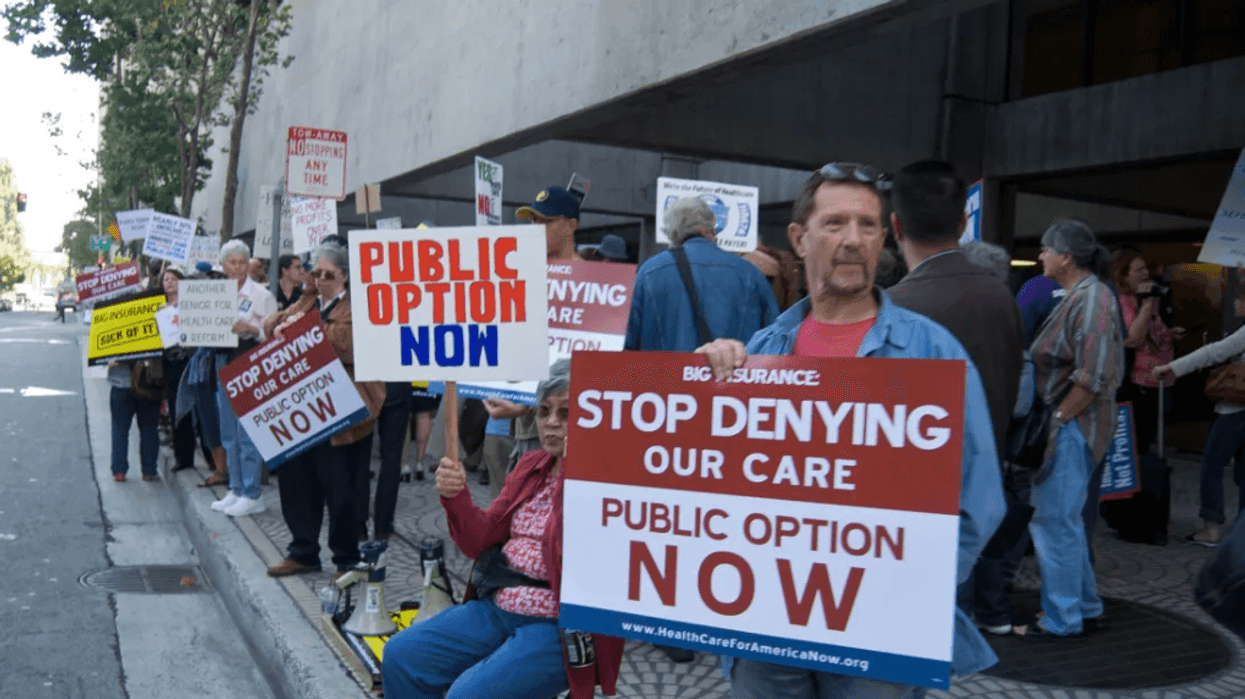
A public option would allow people to buy into Medicare. Progressive groups have been advocating this for decades. The House-backed version of the Affordable Care Act in 2009 included a public option. He imagines many employers would encourage their employees to avail themselves of this new option (presumably providing them with some or most of the cost of the buy-in). “If they like what they get, which they probably would, we could transition over time to a single-payer system without forcing Americans into it,” he wrote.

Shortcomings

Krugman fails to address the virulent opposition that would be mounted against the public option by the hospital, insurance, drug and medical device industries, and the many other types of providers (nursing homes, hospice, ambulatory surgical centers, etc.) that make up the medical industrial complex. Nor does he take into account the main reason employers resist jettisoning their role: It keeps many employees from job-hopping.

Krugman assumes public anger over rising costs will overwhelm their opposition, a dubious proposition in my view even if the Democratic Party wins control over both houses of Congress and the White House. Why do I say dubious?

It is well known that health care accounts for 18 percent of gross domestic product, far more than other industrialized countries. What is less well known is the fact that direct health care provision accounts for 12 percent of all employment in the U.S. It is the largest or second largest employer in almost every city and town. In at least one recent month, the nation would have shed jobs had it not been for growth in the health care sector.

If you throw in employment in the health insurance industry, manufacturers of drugs, medical devices and durable medical equipment, and the small army of consultants, medical educators, think tankers and other health care hangers-on, about one in six American jobs flows from our bloated health care sector. Moreover, they are evenly distributed throughout the country, constituting a powerful voice in every Congressional district.

Reformers need a way to win providers — not the hospital system administrators, not the insurance company executives, not the nursing home operators; but the physicians, nurses and nurse aides, support staff, and more — to their side.

That’s why I am committed to a strategy that provides the health care sector with an off-ramp from its unproductive and wasteful ways. The system is tremendously successful at generating new technologies and treating highly complex cases. But it stinks at almost everything else that the general population needs.

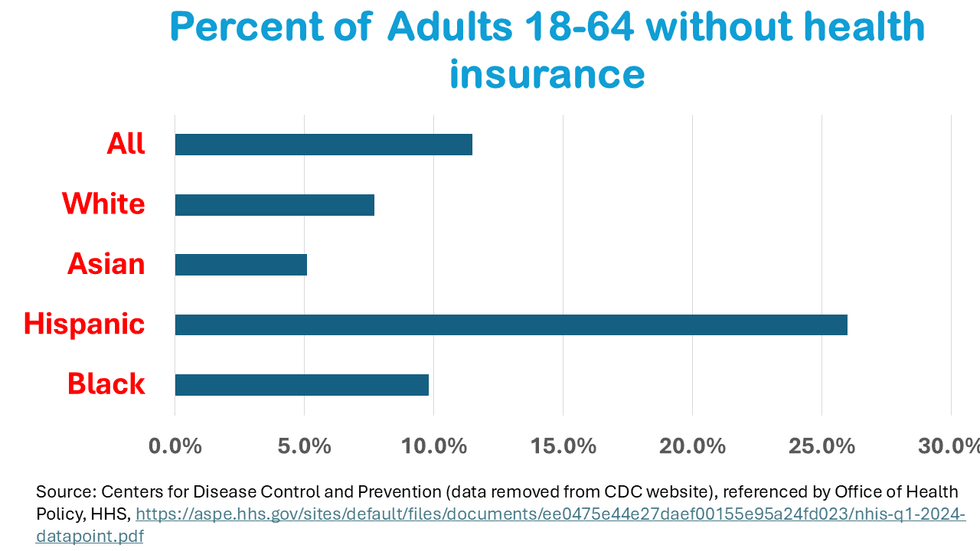
It consumes more societal resources than any country on earth. It doesn’t cover everyone. Its multi-payer complexity requires enormous administrative overhead. Its specialty-driven, fee-for-service payment system delivers more pricey tests and operations than people need. It shortchanges primary care and prevention. It generates worse outcomes than other countries whether measured by longevity, infant and maternal mortality or chronic disease levels. And those lousy outcomes are extremely unfair, with minority populations suffering far worse outcomes than their white fellow Americans. (I will address this issue in my next article.)

I agree with Krugman that the Obamacare exchanges need a public option for the uninsured and for any employer that wants to join. But the details, which he doesn’t address in his article, matter. Its pricing will have to be set at a percentage somewhat larger than what Medicare pays, which is what Washington state did when it became the first state to roll out a public option in 2021 (at 160 percent of Medicare prices). Colorado and Nevada have followed suit with their own higher-than-Medicare priced public options.

Providers need a guaranteed off-ramp. They and their millions of employees can’t absorb the sudden shock to the system required by the mass migration to the public option at Medicare rates, which, according to the Medicare Payment Advisory Commission, are somewhat below breakeven rates. Therefore, in addition to creating the public option, providers need to be regulated through government-set budgets that are set at current levels and guaranteed to grow, but only at a slower rate than the rest of the economy.

Over the past several decades, health care spending has risen faster than the rate of economic growth, ballooning from 13 percent of GDP at the start of this century to 18 percent of GDP today. If budgets are allowed to grow at one to one-and-a-half percentage points above inflation (that’s about half the economic growth rate), U.S. health care spending will gradually decline to international norms.

Invest in health

What else would guaranteed budgets accomplish? It would free hospitals, physician practices, clinics and other provider organizations from the treadmill of fee-for-service medicine, where the more you do the more you make. It would free up resources to invest in the nation’s woefully underfunded primary care and behavioral health providers.

It would encourage provider organizations to invest in community outreach to underserved populations suffering from undiagnosed and untreated diseases (think hypertension, pre-diabetes, obesity, and drug, alcohol and tobacco addiction). If we treat disease before its complications set in, people will spend less time in the emergency room, where care is costliest, and often comes too late to affect the trajectory of their chronic condition.

In short, the nation’s health care system needs to transform itself into one that promotes health, not one that profits when more people get sick. The Make American Healthy Again movement has that part right. Reformers on the left should grab that page from their playbook by providing a positive vision for how to produce healthier individuals as well as a plan to reduce how much the public has to spend.


Shop our Store

Headlines

Editor's Blog

Trending

World