How A Corrupt And Incompetent Justice Department Is Damaging Public Safety
We have focused, for good reason, on a series of cases brought by the Trump Justice Department in rank violation of the most basic principles of due process and federal prosecutorial practice. The attorneys general who green-lighted them will live in infamy when the history of the Department of Justice’s corrupt work during Trump 2.0 is written.
Reprisal prosecutions brought for nakedly political reasons, like against James Comey and Letitia James, or “talking point prosecutions” against innocent defendants like David Hearn, brought to bolster a false public narrative, or outrageous surrenders of taking care of responsibilities for lawless sweetheart deals to Trump buddies will themselves mark this Department as the most corrupt in history.
It’s only gotten worse in the transition from Pam Bondi to Todd Blanche, who has been out front defending the 180-degree reversal of long-honored Department practice.
These cases have exacted outrageous costs on Trump’s enemies and bestowed outrageous benefits on Trump’s allies. All of them have brought great dishonor to the Department of Justice. All of them are characteristic of the sort of counterfeit justice found in authoritarian societies, not democratic societies governed by the rule of law.
The administration’s conversion of the Department of Justice into a law firm to further the personal interests and grievances of Donald Trump has deeply eroded credibility, built up over generations, since at least Watergate. The so-called presumption of regularity, basically a matter of trust and confidence that the Department was doing the right thing, is now in tatters.
But there is yet another downside to these systematic derelictions, and in some ways it is even more damaging.
The damage comes home to roost in other righteous cases that have always been the hallmark of the DOJ. We’re seeing cases that likely would have and should have proceeded to conviction coming up short, with tangible costs borne by the public.
Case in point: The trial earlier this year in a Washington courtroom of Moises Rivera-Luna, which for a second time ended in a hung jury.
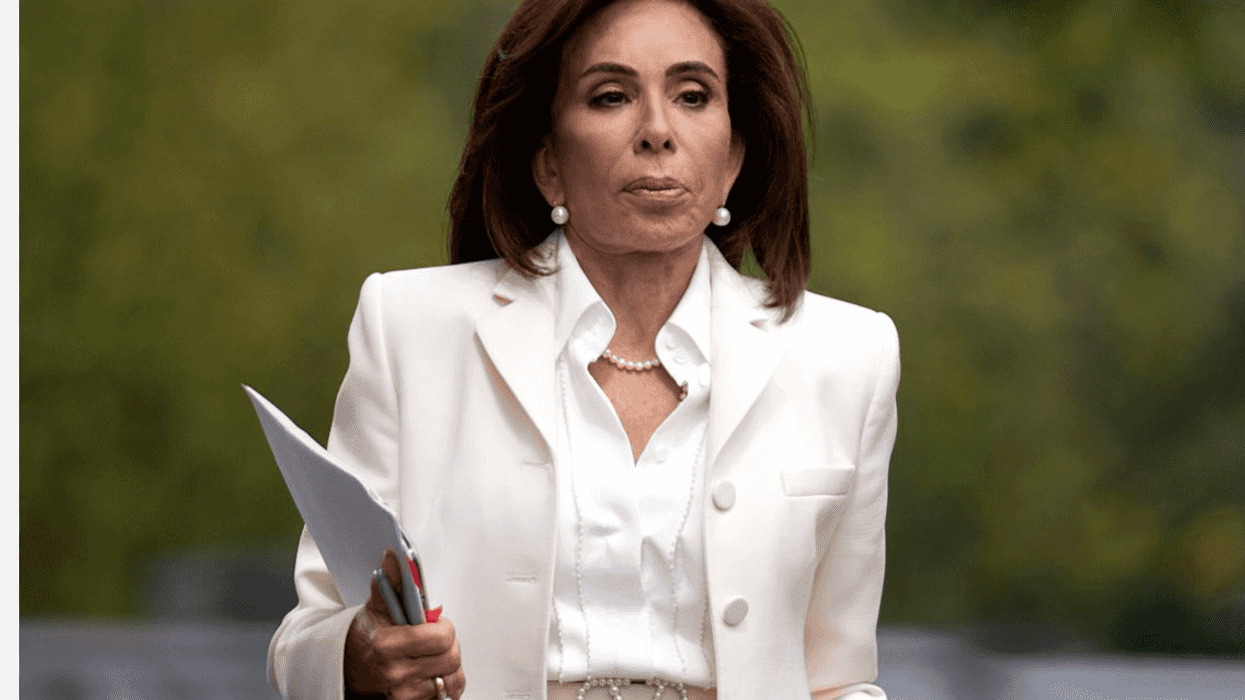
Rivera-Luna is no sandwich-thrower. The Justice Department says he’s a ringleader of MS-13 who ordered murders in the United States from inside a Salvadoran jail cell more than a decade ago—the shootings and stabbings of young men in the D.C. area who had breached the gang’s codes. He is, in other words, exactly the kind of defendant a United States Attorney’s Office exists to convict, and twice now Jeanine Pirro’s office could not do it.
Cases like this, against ringleaders of interstate or international gangs, are among the most important that the Department brings. The DOJ is uniquely positioned to combat large organizations, and Congress has supplied the legal tools to do so.
I believe in the presumption of innocence, so the point here is not to insist that justice wasn’t done—it was the jury’s call whether the government proved its case beyond a reasonable doubt, and two juries declined to make it.
But I have spent a lot of time around DOJ prosecutions of organized crime, including in D.C., and everything about this one carries the presumption of credibility that MS-13 conspiracy cases have always carried. The defendant is very likely a very bad man, properly charged. The lead prosecutor, Nihar Mohanty, is a veteran who won convictions of Rivera-Luna’s co-conspirators in the same case back in 2013. These are, as one defense attorney who has tried nearly a dozen of them put it, cases that come with a playbook—cases that the Department has learned to bring successfully.
So how do you lose twice?
You lose it the way Pirro’s office is now losing a great many things. Before the MS-13 case was retried in April, the D.C. U.S. Attorney’s Office had won convictions in only four of eight federal trials before Washington juries since January. In the roughly dozen cases since, two defendants were acquitted outright, and four more juries hung, deadlocked and hopeless, reporting to the judge that they had reached an impasse. Roughly half.
That against the national numbers: Jurors convict at a rate of about ninety percent. I have practiced and taught in this field for decades, and I have never encountered a record remotely like this one—not in any office, state or federal, anywhere in the country. Judge Royce Lamberth, after nearly forty years on the bench, was similarly struck, remarking on the second MS-13 trial that he had never seen one quite like it.
It is important to understand why that ninety percent figure exists. It’s not because the system is rigged, and not because the juries are pushovers. It exists because a well-functioning Department of Justice charges prudently. Prosecutors, in the ordinary run of things, have enormous discretion over which cases to bring. In normal times, it is axiomatic that they may not and will not bring cases that don’t satisfy the Principles of Federal Prosecution. That means that—and these are two separate requirements—the prosecutors and supervisors have concluded that the defendant did the offense and that it is likely that the government will prove it beyond a reasonable doubt at trial.
That rock-bottom test is the foundation of every criminal trial in this country. Accumulated over fifty years of practice, it has meant that the Department of Justice goes into battle with a certain presumption of regularity and overall credibility with at least the run of jurors.
No more.
Pirro’s office has spent the presumption down to nothing, and that means that a generic juror in the district may well take their seat already jaundiced. They know about the sandwich guy. They know about the indictments that collapsed, the prosecutions the president openly demanded, the office convulsed by Trump-prompted firings and departures. So when a defense lawyer stands up and suggests that a witness shaded the truth or that the government has overreached, that juror is a more receptive audience than they would have been two years ago—because they have been given every reason to wonder whether this office plays by the same rules. It broke the rules in the cases the president wanted. Why would a juror assume it kept them here?
These are the hidden costs of the Justice Department’s corruption and fecklessness, and it is the part few people are talking about. The DOJ’s outrageous cases—the Comeys, the sandwich guys—are largely being lost. There is a rough justice in that (although I emphasize, it is “rough” because the defendants are still being subjected to completely unjust financial, emotional, and reputational harm). The cost lands somewhere else entirely: it is born one hundred percent by the public.
When Rivera-Luna walks out of that courtroom because the jury could not bring itself to trust the government that charged him, the price is not paid by Jeanine Pirro or by the president who installed her. It is paid on the streets of Washington—in the possibility of more violence, more victims from a man the Justice Department insists, with very good reason, is a ruthless killer.
The office says it will try him a third time in September, running the same script that failed twice. Perhaps a third jury will convict, but the deeper problem does not go away with one verdict, because a transnational gang’s ringleader is far from the last hard case they will face.
Here’s a case coming down the pike in the same courthouse, which would be hugely challenging and important for any DOJ: a conspirator in the 1988 bombing of Pan Am Flight 103. The Department has worked the case indefatigably, and it is a critical test of the U.S. criminal justice system, but the prosecutors are going to stand before jurors who have every reason to squint and with the equivalent of one hand tied behind their backs.
The responsibility and dishonor rest squarely with Jeanine Pirro and a Department led by Todd Blanche that is proud to champion the abrogation of the norms of generations of DOJ prosecutors. But make no mistake: it’s the public that pays the wages of the corruption.
Harry Litman is a former United States Attorney and the executive producer and host of the Talking Feds podcast. He has taught law at UCLA, Berkeley, and Georgetown and served as a deputy assistant attorney general in the Clinton Administration. Please consider subscribing to Talking Feds on Substack.
Reprinted with permission from Talking Feds