Tag: norm eisen
Joyce Beatty

CNN Reveals Trump's 'Effing Crazy' Call To Kennedy Center Board Meeting

CNN anchor Kasie Hunt reports President Donald Trump called into his hand-picked Kennedy Center board, shrieking orders to close the Kennedy Center unless he is allowed to put his name on the JFK Kennedy Center building.

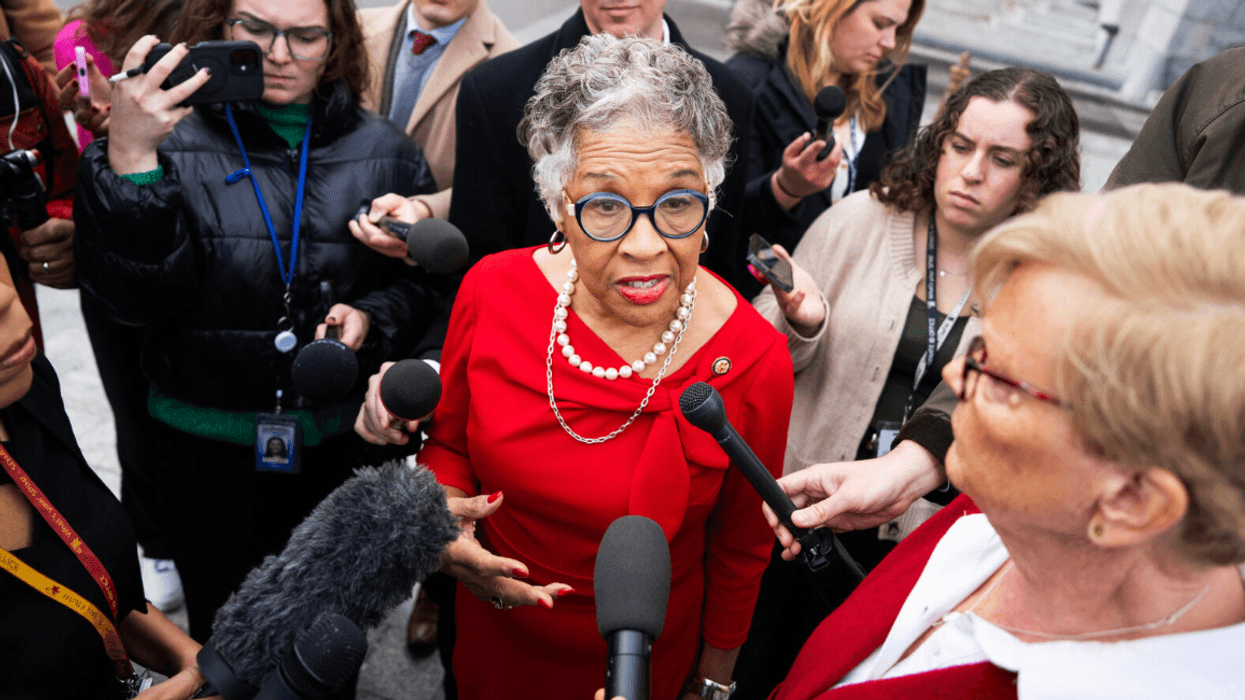
“One source told me today that the president himself called into the board meeting and yelled at members, including Democratic Congresswoman Joyce Beatty, whose lawsuit prevented the president's name from being added to the center's exterior,” reported Hunt on Tuesday.

“Another source telling [us] that the heated exchange between Trump and Beatty was, ‘effing crazy,’ with the president blaming the congresswoman for getting the courts involved, saying she was responsible for the downfall of the Kennedy center, according to a person familiar with the matter.”

Trump announced just moments earlier that the Kennedy center board had voted to close the cultural institution, effective immediately. The president also insisted in the post that the renovations to the center won't begin until his name is added to the building. This, after a federal judge prevented the board's latest attempt to do just that.

Hunt then turned to attorney Norm Eisen, who is representing Rep. Joyce Beatty (D-OH) in her lawsuit against the Trump administration.

“President Trump and his hand-picked cronies on this board are taking the Kennedy Center hostage, and they will not allow it to thrive unless his name is placed upon it. But that's illegal. Kasey,” Eisen said. “Congresswoman Beatty has been fighting this from day one. … She stood up for the law, for the, success of the Kennedy Center. And she stood her ground as we've been doing in court. One last thing. They can vote all they want to shut it down. There is a court order that the Kennedy Center cannot be closed, uh, precisely because of these shenanigans. We're going to keep fighting until we get the Kennedy Center back on its feet — and never with Donald Trump’s name on it.”

Hunt then turned to conservative panelist Scott Jennings, asking him to “help [her] understand — as the possible future White House Press Secretary,” why Trump cared about this amid rising gas prices and voter anger.

“Well, I assume it's because he cares about it,” answered Jennings. “We have a president who actually cares about the arts community, cares about the Kennedy Center. There's strong documentary...closing it...documentary evidence that it needs renovations.”

“But he’s closing it,” Hunt countered. “He's refusing to fund it unless they put his name on the outside of it.”

“Well, it needs to be taken care of. look, he's—”

“But he could take care of it without his name on it,” Hunt blared.

“Look, you asked me why, and I'm telling you: It's because he cares about it,” Jennings insisted.

Reprinted with permission from AlterNet

Brendan Carr

FCC Commissioners Face Ethics Complaints For Taking Luxury Gifts From Paramount

Two government watchdog groups have demanded investigations into whether Federal Communications Commission members violated ethics requirements by accepting luxury gala tickets from Paramount as the company sought government approval for its $111 billion acquisition of Warner Bros. Discovery.

The complaints filed by Democracy Defenders Fund and Citizens for Responsibility and Ethics in Washington cite a recent ProPublica investigation that detailed how CBS or its parent company, now Paramount, have for years given FCC commissioners tickets to the Kennedy Center honors gala, which the television network sponsors. The commissioners accepted the gifts even as the FCC was reviewing or about to review major Paramount business decisions, including two megamergers.

Commissioner Olivia Trusty’s most recent financial disclosure said Paramount gave her two tickets to the December 2025 honors gala that together were worth more than $12,000. Trusty was one of two commissioners who voted last year to approve Paramount’s merger with another media company, Skydance.

ProPublica’s investigation found FCC members had long enjoyed a night out at the Kennedy Center courtesy of CBS or its parent company. Seven of the 10 commissioners who served since 2016 accepted tickets worth more than $260,000, according to a ProPublica analysis of ethics disclosures.

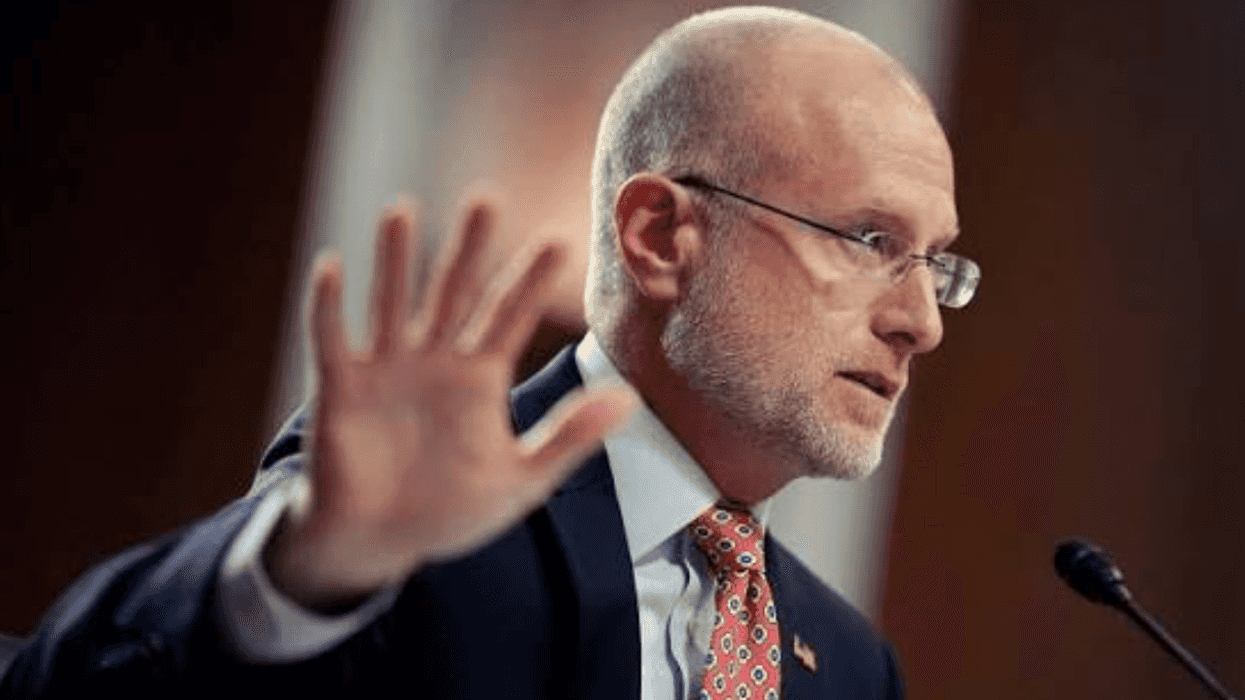
FCC Chair Brendan Carr’s financial statements show he has reported accepting honors gala tickets from CBS or its parent company eight times since his 2017 appointment to the commission, totaling over $75,000 in gifts.

Carr, who also voted in favor of the Paramount-Skydance merger last year, sat with his wife in a private skybox at the December gala with Paramount CEO David Ellison and other executives from Paramount and CBS. Such seats sold for $125,000 a ticket, according to Kennedy Center guidelines.

Carr disclosed on his latest financial statement that he accepted tickets from Paramount for himself and a guest to the 2025 gala and reception worth $12,390. Carr did not respond to a request from ProPublica to clarify the apparent difference in value between those tickets and the skybox seats.

The FCC only released Carr’s disclosure late on Friday, more than a month after ProPublica had first requested it. The document says the agency certified it on June 22.

Federal ethics rules ban employees from taking gifts from any entity that does business with, is regulated by or seeks official action from their agency.

“The federal gift regulations and the gratuities statute exist to ensure that government decisions are made on the merits, free from the influence of private benefits,” the Democracy Defenders Fund said in its complaint. “The public must have confidence that the FCC’s merger review process is not compromised by self-dealing or the appearance of impropriety.”

Carr, Trusty and the FCC did not respond to requests for comment. The agency’s inspector general declined to comment. An FCC spokesperson previously told ProPublica that agency ethics officers have for years cleared commissioners to accept the tickets, finding it consistent with ethics law. And Paramount’s chief of communications said it was a decades-long “CBS practice to invite government officials from both parties” to the Kennedy Center show. Carr last year defended the FCC’s approval of the Paramount merger with Skydance, saying it “advances the public interest.”

The FCC’s review of the Paramount-Warner Bros. merger is one of the final federal hurdles facing a historic consolidation of two of the five largest film studios in Hollywood. The deal would unite Paramount Skydance with Warner Bros., bringing under the control of one company Paramount+ and HBO Max streaming services; CBS and CNN; and scores of other major broadcast channels, cable networks and digital platforms.

Four ethics experts told ProPublica that by accepting the tickets, Trusty and Carr had compromised the FCC’s impartiality and should not take part in any upcoming decision on Paramount’s proposed merger.

The Democracy Defenders Fund — led by Norman Eisen, former ambassador to the Czech Republic and White House ethics czar under President Barack Obama — filed its grievance on Thursday with the federal Office of Government Ethics, the FCC’s inspector general and the FCC’s ethics office.

The group said the investigation should examine whether Carr and Trusty broke rules on accepting gifts or broke criminal laws prohibiting federal officials from accepting illegal gratuities.

Carr and Trusty should be required to repay Paramount the “fair market value” of any improper gifts and the federal ethics agency should refrain from certifying Carr’s annual disclosure report until he can prove that he has complied with ethics laws, Democracy Defenders Fund wrote. Its letter to the FCC and the Office of Government Ethics also requests that Carr be disqualified from further participation in the commission’s decision on the Paramount-Warner Bros. Discovery merger.

The nonprofit organization noted that hours after last year’s honors gala ended, Paramount announced it was launching its hostile takeover bid of Warner Bros. Discovery, a move that would later result in a merger agreement that requires FCC approval. About three months later, Carr publicly endorsed the deal on CNBC, promising swift approval.

“The facts that have been reported raise serious questions about the integrity and impartiality of FCC Chairman Carr in particular matters involving Paramount,” including the attempted merger with Warner Bros. Discovery, the letter said.

Citizens for Responsibility and Ethics in Washington, the other group that filed a written protest, requested an FCC inspector general probe of the luxury gifts.

“The reported gifts to FCC officials from businesses that are not only subject to agency regulation but presently engaged in billion-dollar mergers and acquisitions that must be approved by the commissioners themselves are extremely concerning threats to the integrity of FCC operations,” the CREW letter stated.

CREW, founded in 2003 as a nonpartisan organization dedicated to government accountability and ethics, is headed by Donald K. Sherman, a former House Ethics Committee attorney and special assistant to President Joseph Biden.

“Government officials have the power to make decisions that impact huge swaths of the American people,” Sherman said in a statement about the organization’s demand for an inspector general investigation. “With this tremendous power comes a higher ethical standard that apparently wasn’t met. The IG can and must get answers for the public.”

The proposed merger between Paramount and Warner Bros. Discovery has drawn a flurry of legal opposition.

California, New York, and ten other states filed a lawsuit seeking to block the merger under federal and state antimonopoly laws. The Writers Guild of America, the Freedom of the Press Foundation, and the Public Interest Project filed similar court challenges in recent weeks.

Paramount has recently agreed to pause its merger until the litigation is resolved or until June 1, 2027, whichever comes first.

Reprinted with permission from ProPublica

How The Select Committee Wrote A Prosecution Memo For Trump's Indictment

How The Select Committee Wrote A Prosecution Memo For Trump's Indictment

The House Select Committee investigating the January 2021 attack on the Capitol has referred former President Donald Trump and A handful of top aides to the Justice Department’s special counsel for criminal prosecution under four statutes related to impeding the transfer of power to Joe Biden after Trump lost the election.

The focused criminal referrals and short list of named possible defendants is a sign that the select committee is hoping to achieve accountability in federal court that was not forthcoming during Trump’s second impeachment – which was triggered by the insurrection -- according to former government lawyers.

“It’s important that the committee did not overcharge here,” said Norm Eisen, co-author of a Brookings Institution report on Trump’s post-election criminality. “The committee is disciplined in not naming a laundry list of individuals but pointing out that there are additional names that should be the subject of additional review by prosecutors that have powers that the committee did not [have] to get at the truth.”

After a final hearing Monday where committee members summarized a different aspect of their findings about Trump’s effort to seize a second term and unanimously voted to send the criminal referrals to the Justice Department, the committee issued an extensive executive summary that offered more details about the coup and the evidentiary basis for its criminal referrals.

“The committee’s report reads like a prosecution memo. It documents in meticulous detail the evidentiary basis for four separate crimes against Donald Trump and some key insiders,” said Barbara McQuade, former U.S. Attorney and professor at the University of Michigan Law School. “They take each of the four crimes, they break them down into their essential elements, and they list the evidence that applies to each and every one of those elements.”

The crimes range from straightforward actions to more complicated activities. On the simpler side of this ledger, the committee cited the statute making it a crime to obstruct a government proceeding – in this case, congressional ratification of 2020’s Electoral College vote. A second charge, conspiracy to defraud the United States, refers to two months of pressure campaigns aimed at state officials and federal agencies to reverse and publicly question the election results – such as Trump telling the Georgia Secretary of State to “find” votes, and a later effort to push the Justice Department to tell states that their certified election results were inaccurate or fraudulent.

A third charge, conspiracy to make a false statement, concerned one part of that state-centered pressure campaign, where, in seven states, 84 Republicans who were following orders from Trump and his lawyers, signed and submitted fake Electoral College certificates declaring that Trump was their state’s winner.

“There is some evidence suggesting that some signatories of the fake certificates believed that the certificates were contingent, to be used only in the event that President Trump prevailed in litigation challenging the election results in their States,” the executive summary said. “That may be relevant to the question whether those electors knowingly and willfully signed a false statement at the time they signed the certificates. But it is of no moment to President Trump’s conduct, as President Trump (including acting through co-conspirators such as [lawyers] John Eastman and Kenneth Chesebro) relied on the existence of those fake electors as a basis for asserting that the Vice President could reject or delay certification of the Biden electors.”

That paragraph was a rare instance of the executive summary naming Trump accomplices as co-conspirators, McQuade said, which suggests that they, like Trump, will almost certainly face prosecution if the special counsel pursues charges. Other named probable defendants include Trump’s lawyer Rudolph Giuliani, former White House Chief of Staff Mark Meadows, and former White House Deputy Chief of Staff Anthony Ornato.

The committee also referred four members of Congress to the House Ethics Committee for refusing to testify: Rep. Kevin McCarthy (R-CA), who is seeking to become the next Speaker of the House; Rep. Jim Jordan (R-OH), who is in line to become Judiciary Committee chair; Rep. Scott Perry (R-PA) and Rep. Andy Biggs (R-AZ).

The fourth charge against Trump and his top aides and allies was the most sweeping; to “’Incite,’ ‘Assist’ or ‘Aid and Comfort’ an Insurrection.”

This accusation encompasses Trump summoning supporters to come to Washington; urging them in a rally on the mall to march to the Capitol; targeting Vice President Mike Pence, who was presiding at the ratification; and then saying and doing nothing to stop the violence for nearly three hours that afternoon.

McQuade noted that the executive summary did not detail likely defenses to its recommended charges, such as Trump claiming that his speech on the mall before the riot was protected under the First Amendment. However, she said that the committee’s discussion of that charge noted Trump’s tweets during the riot inflamed the violence, which was not protected speech.

The report said:

“As explained throughout this Report and in this Committee’s hearings, President Trump was directly responsible for summoning what became a violent mob to Washington, DC, urging them to march to the Capitol, and then further provoking the already violent and lawless crowd with his 2:24 p.m. tweet about the Vice President. Even though President Trump had repeatedly been told that Vice President Pence had no legal authority to stop the certification of the election, he asserted in his speech on January 6 that if the Vice President “comes through for us” that he could deliver victory to Trump: “if Mike Pence does the right thing, we win the election.” This created a desperate and false expectation in President Trump’s mob that ended up putting the Vice President and his entourage and many others at the Capitol in physical danger. When President Trump tweeted at 2:24 p.m., he knew violence was underway. His tweet exacerbated that violence.”

The executive summary took a more cautious stance with seditious conspiracy charges, which involve coordinating with militias and fascist gangs like the Proud Boys before January 6. If Trump is charged and convicted on this count, the 14th Amendment would prohibit him from holding office, McQuade said, although that has “never been tested” in court.

It also said federal prosecutors should look at witness intimidation, and related issues -- such as how Trump used political donations to pay for lawyers and job offers to White House and campaign aides who had been subpoenaed to testify.

While the Justice Department’s Special Counsel Jack Smith will decide whether to bring charges, the select committee’s work is not symbolic. Never before has Congress referred a former president to the Justice Department for criminal prosecution. And the voluminous cache of evidence gathered by the committee has few modern precedents, apart from the Watergate hearings in the early 1970s.

The committee's inquiry over the past 18 months held nine televised hearings, issued 400 subpoenas, conducted 1,000 witness interviews, and has amassed more than one million pages of documents and other files. One reason that only Trump and his top co-conspirators were named in the committee report is that prosecutors will try to ask or pressure accomplices with lesser roles in these actions to become prosecution witnesses.

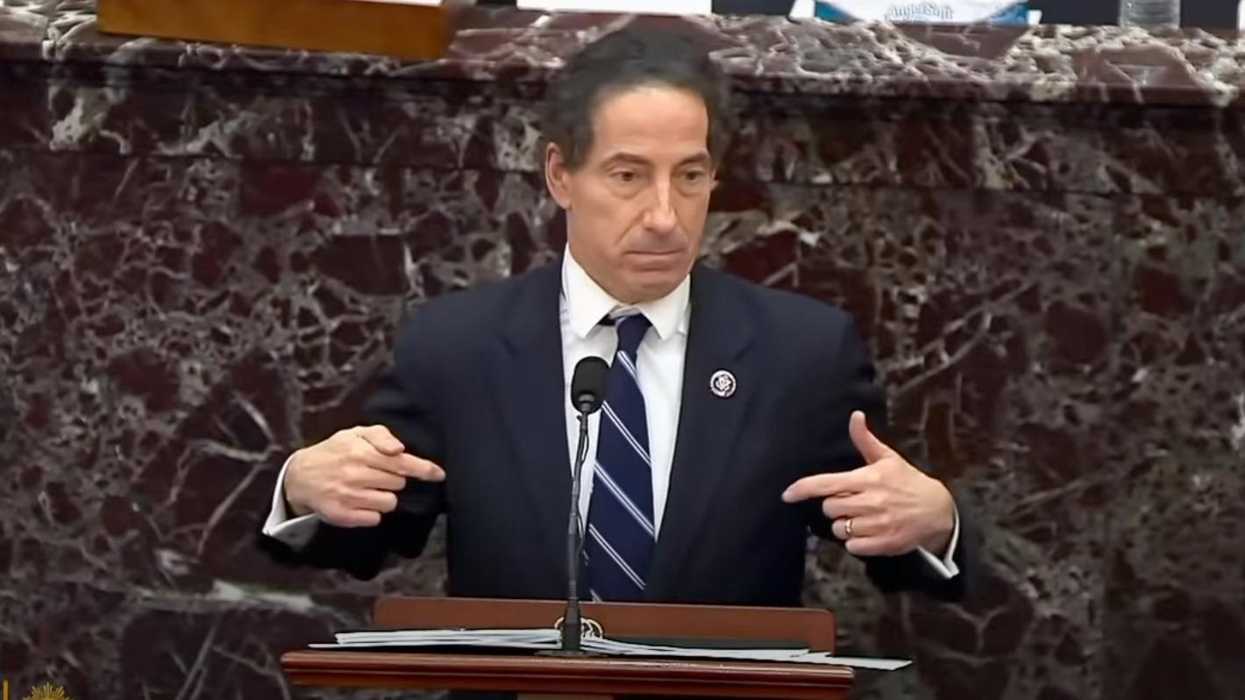
“The dangerous assault on American constitutional democracy that took place on January 6, 2021, consists of hundreds of individual criminal offenses. Most such crimes are already being prosecuted by the Department of Justice,” Rep. Jamie Raskin (D-MD) said. “Ours is not a system of justice where foot soldiers go to jail and the masterminds and ringleaders get a free pass.”

'Constitutional Patriot' Pence Is Central To Select Panel Probe

'Constitutional Patriot' Pence Is Central To Select Panel Probe

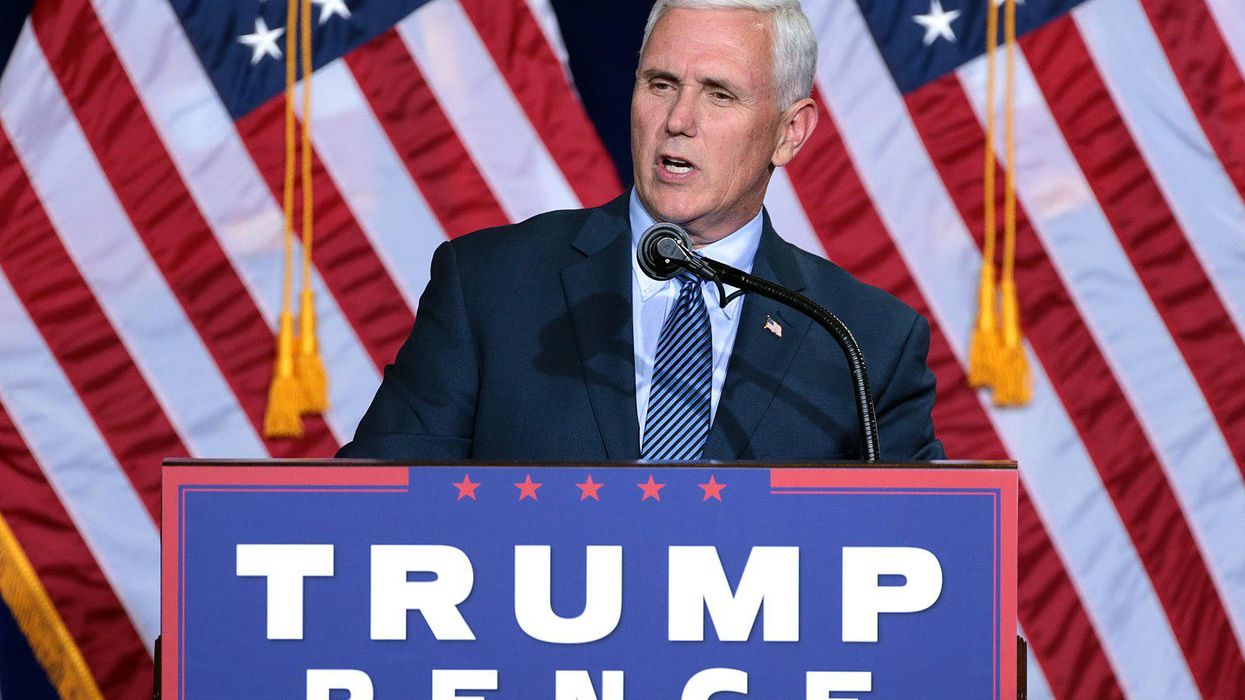
Former Vice President Mike Pence is not expected to appear when the House Select Committee holds its prime-time hearing — the first of its scheduled public hearings — on Thursday. Yet Pence’s key role in presiding over the counting of the Electoral College votes is expected to take center stage in the select committee’s presentation.

Pence didn’t cooperate directly with the select committee investigating the January 6, 2021, attack on the U.S. Capitol, but people close to the former vice president received invitations to appear for the public hearings.

The Washington Post reported that J. Micheal Luttig, a former federal judge who publicly rejected the notion that Pence had the authority to deny electoral votes, was invited by the select committee to testify at the public hearings. Pence aides Marc Short and Greg Jacob also received outreach from the select committee and are expected to testify.

Short, who served as Pence’s closest aides and vice presidential chief of staff, was with him the entire day on January 6, per CNN. He’s also a firsthand witness to the pressure campaign engineered by former President Trump and his top allies to get Pence to withhold certification of the 2020 election results.

New details have emerged in recent months about Pence’s actions on January 6, when he rebuffed overwhelming Republican pressure to reject electoral votes from states Joe Biden won while a pro-Trump mob breached the Capitol and threatened his life.

“I anticipate that we will hear about Mike Pence on Thursday night. You can’t tell the story without him," said Norm Eisen, a special counsel to Democrats during Trump’s first impeachment, who has co-authored a guide to the select committee hearings.

Eisen also noted that elucidating how Pence rejected the false suggestions proposed by top Trump allies would rebut GOP attempts to paint the committee and its findings as partisan.

“So, the other way that Pence comes in is as a dose of reality in response to these lunatic legal theories that were circulating. So that’s an important part of the narrative,” Eisen said.

To outline for viewers the GOP’s “coordinated, multi-step effort to overturn the results of the 2020 presidential election and prevent the transfer of power,” the select committee will stress the significance of Pence’s refusal to leave the Capitol after the rioters entered the building — a move that denied Trump supporters an opportunity to enact their plans.

"I think something that stood out to me is that there were certain people who were in the right place and did the right thing. They followed the law. They were courageous. They stood up to pressure, like the former vice president, for example," said Rep. Elaine Luria (D-VA), a member of the select committee. "It was a tragic event for our country, and there were villains that day, of course. But there were people who were heroic, who through their actions really prevented a much worse outcome."

Despite incurring widespread conservative wrath for refusing to overturn the 2020 presidential election in Trump’s favor, Pence has continued to insist he did the right thing. In February, the former vice president insisted that Trump had been wrong to suggest Pence could change the outcome of the 2020 election.

“Under the Constitution, I had no right to change the outcome of our election,” Pence said in a public statement.

Pence has distanced himself from the bipartisan House Select Committee, and his representatives have refused to confirm or deny whether the former president was invited to testify.

Shop our Store

Headlines

Editor's Blog

Trending

World