Tag: strategic petroleum reserve
Spinning Trump's Oil Crisis, Energy Secretary Flails And Apologizes

Spinning Trump's Oil Crisis, Energy Secretary Flails And Apologizes

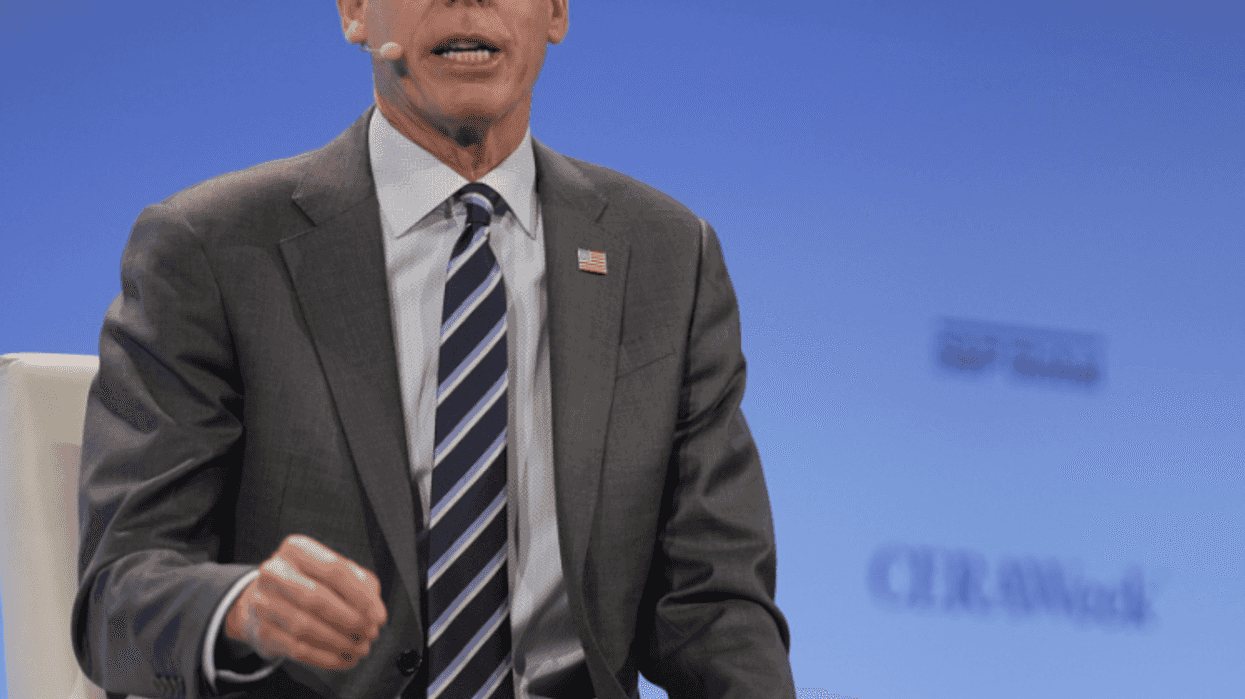
Energy Secretary Chris Wright attempted to do some damage control Thursday, as oil prices continue their rollercoaster climb. But unfortunately for Wright, it’s hard to sell a flaming bag of manure.

“Ultimately, this is going to help us fill the reserve, but we need the oil in the short term for the—short term pain for long term gain,” he told CNBC, defending the release of 172 million barrels of oil from the Strategic Petroleum Reserve.

Wright’s own department says it doesn’t expect gas prices to return to pre-war levels until well into 2027.

Also in the interview, Wright claimed that President Donald Trump’s war on Iran makes energy markets safer—which was quickly undercut by footage aired alongside him, showing Iran's strikes on oil tankers in the Strait of Hormuz.

Wright then appeared on CNN, where he worked his ass off trying to spin what is clearly an oil crisis of Trump’s own making.

“We're in the midst of a significant disruption in the short term to fix the security of energy flow for the long term,” he said, downplaying an International Energy Agency report released Thursday, which found that Trump’s Iran war “is creating the largest supply disruption in the history of the global oil market.”

And then when Wright appeared on the usually friendly shores of Fox News, he was forced to apologize for posting—and then deleting—a claim that the Trump administration had successfully escorted an oil tanker through the Strait of Hormuz, throwing the markets into chaos.

“I take full ownership of that as the person in charge of the department,” Wright said. “Very unfortunate. It will not happen again.”

Wright also acknowledged Thursday that the U.S. Navy currently has no way to escort tankers safely through the waterway.

“It can’t happen now,” he said. “We’re simply not ready.”

Fortunes Of War: How Will Trump Deal With Spiking Gasoline Prices?

Fortunes Of War: How Will Trump Deal With Spiking Gasoline Prices?

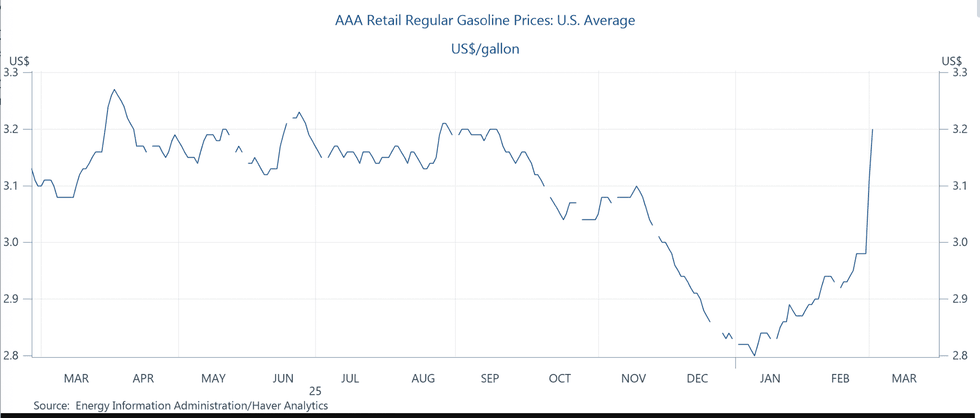
$3.20 a gallon—today’s national gas price—is not that high a price in historical terms. But it’s 40 cents higher than $2.80, where the pump price was a few months ago. A jump of the magnitude you see above is rare, and only happens when there’s some sort of supply shock. Fill up a 15-gallon tank twice a month and that's an extra $12, which isn’t game changing for anyone, but is noticeable.

When I left the Obama administration, the president was kind enough to have my family come in for a quick goodbye in the Oval. The gas price was up at the time, and I have a great memory of my nine-year old daughter asking the POTUS why he gets blamed for high gas prices. He gave her that big, broad Obama smile and said “I know, right?!” I’m pretty sure he high-fived her.

Fact is, the president gets credit and blame for the gas price, which makes about zero economic sense. If ever there was a global price set in global markets—with cartel influence, of course—it’s the oil price. That price per barrel is up about $17 since January, and given that a $10 increase corresponds to $0.25 more at the pump, the $0.40 increase is what you’d expect.

In this case, however, the Trump administration's choice to go to war is behind the spike. The West Texas Intermediate crude (WTI) oil price is up about $10 since the war started, and if you’ve followed the developments, you know that there are ongoing disruptions to shipping, production, and refining, and not just for oil but for natural gas too.

Source: Energy Information Administration/Haver Analytics

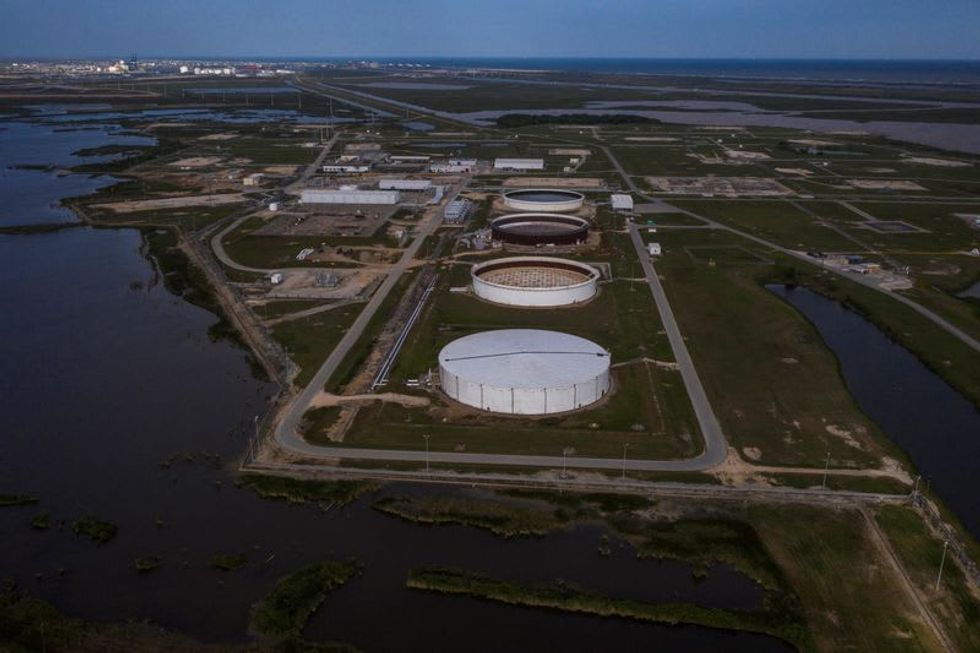
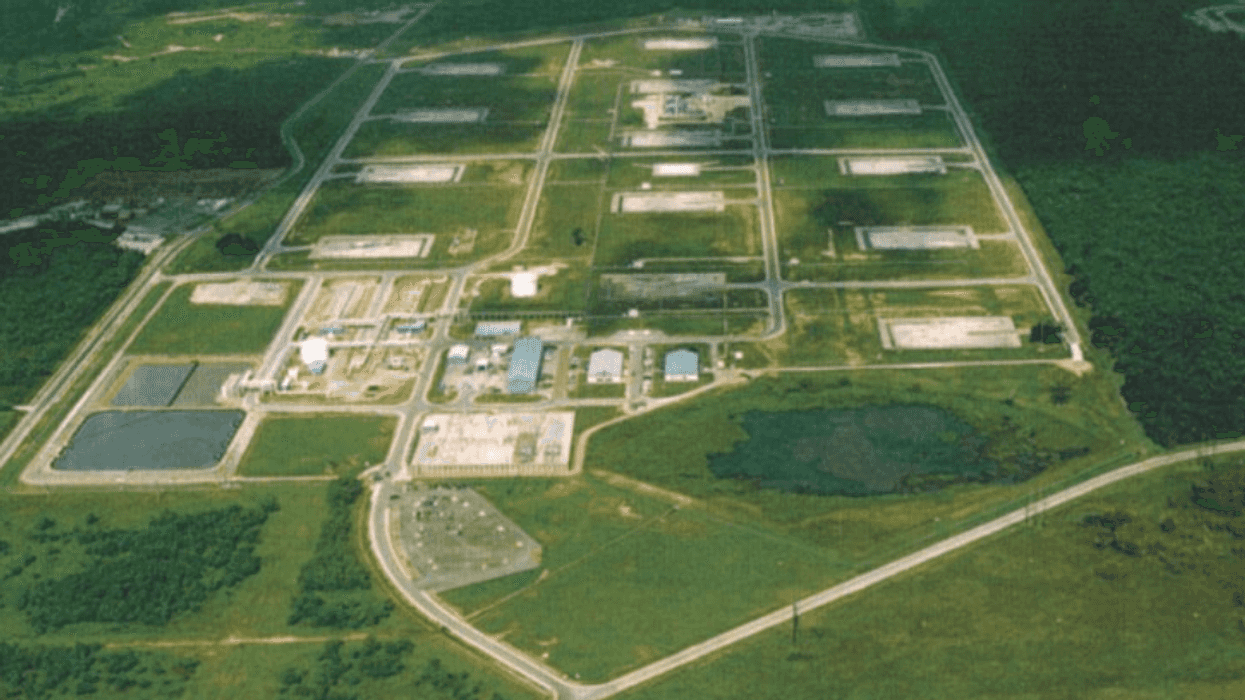
I guarantee you this isn’t going unnoticed at the White House and I also guarantee you they’re talking about the Strategic Petroleum Reserve (SPR), the “world’s largest stockpile of emergency crude oil.” The SPR, which is a bit over half-full right now (415 million barrels of ~700mb capacity), was last tapped by the Biden administration when, post-Russia’s invasion of Ukraine, oil topped $100 per barrel. That release, which occurred in sync with that of other countries’ reserves, pretty quickly lowered prices by about $0.35, according to estimates at the time (one wonders if the Trump administration, given their antipathy towards foreign governments, could organize any such multi-country intervention).

The Trump White House says they have no plans to tap the SPR, but I’m skeptical of their claim. As I’ve stressed here many times, Trump is justly getting clobbered on affordability, as he wavers between saying it’s a hoax and he’s solved it. But the one thing he’s had to tout in this space, and it’s a big one, is the low gas price. Again, even with this recent bump, that price is still low, but if we’ve learned anything about affordability dynamics, it’s that sudden price shocks of key household-market-basket components are a source of economic stress.

As I’ve stressed in discussions of the economics of this new conflict, its impact is a function of its duration. If it ends quickly, I’d expect blocked supply chains to reopen and oil/natural gas production/refinement to recommence pretty quickly.

But when it comes to the gas price, there’s rockets and there’s feathers.

When oil prices shoot upward, gas prices rise with them. And when oil prices fall, gasoline prices also fall; but they can fall at a slower rate. Economists refer to this market dynamic as “asymmetric pass-through.” A more colorful description of the phenomenon is “rockets and feathers.”

The explanation has to do with market power and consumer search patterns. Re the latter, apparently, when the gas price goes up, we tend to exert a bit more effort to search for cheaper options. But when it starts to fall, we’re just happy to see it come down and we don’t search as much, dampening price-reducing competitive forces.

None of this gas-price analysis speaks to the geopolitics of the war. There are, of course, just wars worth fighting regardless of their impacts on prices at home. With 80-90 percent of Iranians anxious to see the toppling of the oppressive theocracy under which they suffered, a few more cents at the pump is arguably worth it. But I don’t see how that’s the case when there’s no plan for a true regime change and an uncomfortably high chance that the power vacuum we and Israel have created is filled by an equally, or even more, repressive regime.

Meanwhile, we’ll see how this plays out in coming days in terms of oil, gas, and public opinion. My sense is that a lot of people are thinking this isn’t what they voted for.

Jared Bernstein is a former chair of the White House Council of Economic Advisers under President Joe Biden. He is a senior fellow at the Council on Budget and Policy Priorities. Please consider subscribing to his Substack.

Reprinted with permission from Econjared.



Biden Orders Record Strategic Oil Release To Stabilize Prices Amid War

Biden Orders Record Strategic Oil Release To Stabilize Prices Amid War

By Alexandra Alper and Timothy Gardner

WASHINGTON (Reuters) - President Joe Biden on Thursday launched the largest release ever from the U.S. emergency oil reserve to try to bring down gasoline prices that have soared during Russia's war with Ukraine, the White House said.

Starting in May, the United States will release 1 million barrels per day of crude oil for six months from the Strategic Petroleum Reserve, a senior administration official told reporters.

The 180 million barrels is equivalent to about two days of global demand, and marks the third time Washington has tapped the SPR in the past six months.

The release will more than cover oil exports to the United States from Russia, which typically produces about ten percent of the world's crude, but only accounts for eight percent of U.S. liquid fuel imports. Biden banned U.S. imports of Russian oil this month.

But the release will fall short of a loss of about three million barrels per day of Russian oil which the International Energy Agency estimates will be caused by Western sanctions and as global buyers avoid the oil.

Biden also called on Congress to make energy companies pay fees on wells from leases they have not used in years, for U.S. oil companies to drill more, and for boosts in production of electric vehicles and batteries.

The oil release will "serve as bridge until the end of the year when domestic production ramps up," the White House said.

The Biden administration has worked with allies in the IEA in recent weeks to coordinate releases which will bring the total volume to global markets to well over 1 million barrels per day, the official said.

The 31-member IEA, the world's energy watchdog, may announce a release when the member states meet on Friday. The group, representing industrialized nations including the United States, but not Russia, presided over the fourth coordinated oil release in its history on March 1 of over 60 million barrels of crude – its largest yet. The U.S. portion of that release was about half of the total.

Oil prices plunged about five percent on the news of the latest U.S. reserve draws while OPEC+, a production group including Saudi Arabia and Russia, stuck to a modest deal to slowly ramp up output. [O/R]

'Use It Or Lose It'

The Biden administration has long said that energy companies are sitting on thousands of unused leases and are slow to open the spigot. Biden will call for a "use it or lose it" policy that will seek to push oil companies to take advantage of unused oil leasing permits, a senior administration official told reporters.

"We do think there should be consequences if you're sitting on unused approved permits for production on federal lands," the official said. The policy would charge companies if they are sitting on wells and not developing leases, the official said.

Oil companies have said they like to have a deep inventory of permits to give them flexibility on future planning and that labor and logistical constraints can be a headwind in using them.

Biden invoked the Defense Production Act to support the production and processing of minerals and materials used for large capacity batteries used in electric vehicles - such as lithium, nickel, cobalt, graphite, and manganese, the White House said. He also urged Congress to pass his plan to move the country toward clean energy policies.

(Reporting By Timothy Gardner, Alexandra Alper, Steve Holland; Editing by Marguerita Choy)

Biden Acts To Relieve Oil Hikes -- And Trump Responds With Brazen Lies

Biden Acts To Relieve Oil Hikes -- And Trump Responds With Brazen Lies

Reprinted with permission from AlterNet

Donald Trump, the disgraced, former president who is reportedly planning a third campaign, on Tuesday released an exceptionally false statement criticizing President Joe Biden for taking action to combat increasing gas and home heating oil prices.

President Biden Tuesday morning announced he has authorized 50 million barrels of oil to be sold from the U.S. Strategic Oil Reserves, a move that should help lower oil and gas prices that have risen because of OPEC+ policies. Biden is making the move in conjunction with similar moves by five other countries: China, India, Japan, South Korea and the U.K.

"We expect the industry to be passing through these savings to consumers as quickly as possible," a White House official said, as The Wall Street Journal reports.

"The president stands ready to take additional action, if needed, and is prepared to use his full authorities working in coordination with the rest of the world to maintain adequate supply as we exit the pandemic," the White House added.

Trump, in a statement released to the press, outright lied about Biden's move, and about his own performance and that of other U.S. Presidents.

"For decades our Country's very important Strategic Oil Reserves were low or virtually empty in that no President wanted to pay the price of filling them up. I filled them up three years ago, right to the top, when oil prices were very low. Those reserves are meant to be used for serious emergencies, like war, and nothing else," Trump falsely claimed.

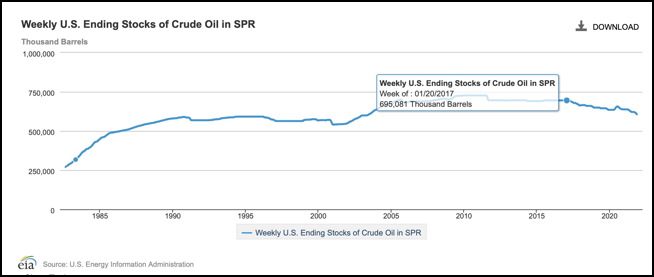
As The New York Times' Peter Baker notes, the Strategic Oil Reserves (technically the Strategic Petroleum Reserve,) were far from empty when Trump took office, but they were far less full when he left:

That's not the only lie Trump told.

The Strategic Petroleum Reserve is authorized to hold up to 714 million barrels (in 2009 it was 727 million barrels), so they were nearly full when Trump took office. He also exposed his ignorance about how the federal government "buys" the oil. The oil is effectively traded to the government as payment (royalties) for drilling leases so presidents not wanting to "pay the price of filling them up" is false as well.

Here's a graph from the U.S. government showing how many barrels of oil are in the U.S. Strategic Petroleum Reserves, starting in 1980. At no time were they "low or virtually empty," not ever. The chart is highlighted to indicate the day Trump was sworn in to office:

The Reserves have been tapped about 20 times since they were first created in 1975, including to reduce the deficit in 1996 and 1997, in 2011 during the Arab Spring, and as loans to oil companies.

Shop our Store

Headlines

Editor's Blog

Corona Virus

Trending

World