Tag: uninsured rate
Before The Fall: What American Healthcare Lost After Trump Took Over

Before The Fall: What American Healthcare Lost After Trump Took Over

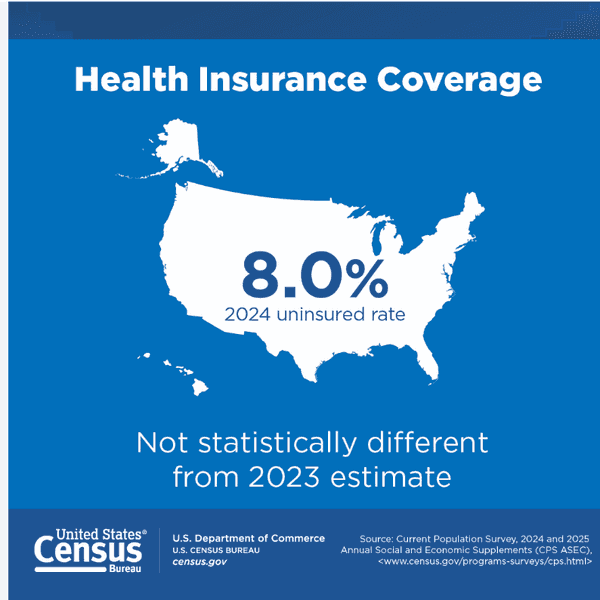
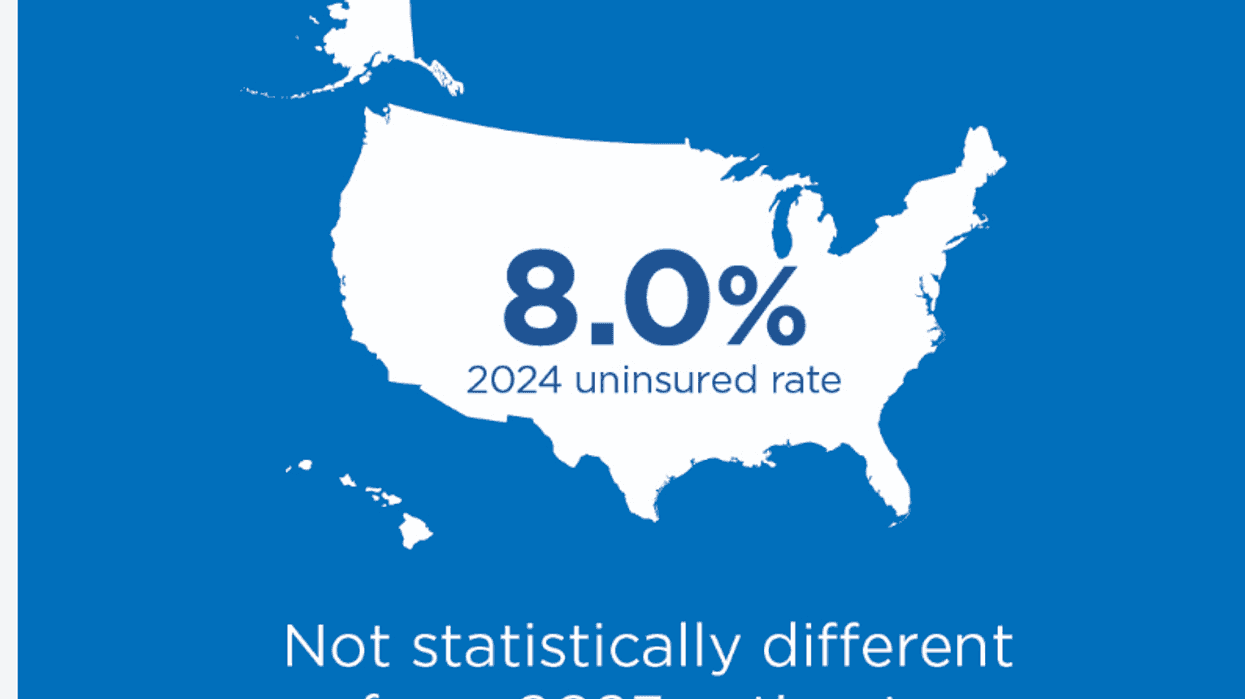
When the Census Bureau reported on September 15 that the uninsured population remained steady at its all-time low of eight percent of the adult population in 2025, I immediately thought of this visual metaphor to describe the news:

Wile E. Coyote

The picture is of one Wile E. Coyote, whose imminent fall into the canyon of despair always came at the hands of the Acme Manufacturing Co., which, to continue the metaphor, stands for the malfunctioning products of the Trump regime and an obsequious Congress. The GOP’s One Big Ugly Bill didn’t pass until mid-2025. Its destructive impact on the nation’s health insurance rolls didn’t begin until this year.

In other words, today’s news is the final snapshot of the successes of the Biden administration. During its four years in office, the government beefed up subsidies for low- and moderate-income people buying insurance plans on the exchanges, and expanded Medicaid to include many more women, children and low-wage workers.

“These data do not reflect the impact of recent rising inflation or most of the cuts to food assistance and health coverage enacted in the 2025 Republican reconciliation law,” the Center for Budget and Policy Priorities posted on its website. “That law made the largest cuts to SNAP and Medicaid in our nation’s history and failed to extend the premium tax credit enhancements that made the ACA marketplace more affordable and successful in expanding coverage and lowering costs. These cuts are already taking food assistance and health care away from millions of people who need it, driving up poverty and hardship.”

Nearly three million people dropped ACA plans this year because of soaring premiums and the Trump regime’s failure to extend the additional subsidies passed during the Biden years. Nearly four million people have already been thrown off Medicaid.

The Census Bureau also reported wage gains in 2025 outpaced inflation. But again, this largely reflects the temporary waning of inflation during Biden’s last year in office and preceded the White House pursuing its undeclared war against Iran, which has shut Straits of Hormuz and sent food and fuel prices soaring.

While we should use this last “good” year as a benchmark for what is to come, let’s also remember that leaving 27 million Americans without health insurance — an eight percent rate — is an anomaly in the advanced industrial world. So is the fact that 44 million people or one in eight overall live in poverty.

CBPP points out that income inequality after taxes stood last year at its highest point in nearly two decades. That average wage gains outpaced inflation is of little solace to people in the bottom half of the income distribution when those gains are disproportionately distributed to the rich and well-to-do.

Merrill Goozner, the former editor of Modern Healthcare, writes about health care and politics at GoozNews.substack.com, where this column first appeared. Please consider subscribing to support his work.

Reprinted with permission from GoozNews
Will Surging Tide Of Uninsured And Spiking Hospital Costs Trigger A Recession?

Will Surging Tide Of Uninsured And Spiking Hospital Costs Trigger A Recession?

All of the health care sector’s major economic indicators are headed in the wrong direction.

Major hospital chains last week began reporting a substantial rise in their uncompensated care costs after millions of people dropped health insurance. The Republican Party’s refusal to retain the Biden administration’s expansion of Affordable Care Act subsidies has already forced at least three million people into the ranks of the uninsured.

Meanwhile, the Centers for Medicare and Medicaid Services under Dr. Mehmet Oz announced Friday it will grant hospitals a 2.3 percent increase for their 2027 in-patient Medicare rates. That’s well below the general inflation rate (3.5 percent over the past 12 months) and a half percentage point behind the Bureau of Labor Statistics' measure of inflation in overall medical services (2.9 percent).

If you’re sitting in the chief financial officer’s seat at one of the nation’s hospitals, the next 12 months look bleak. Private insurers have already announced they will seek double-digit rate increases for individual and family plans sold on the exchanges later this year. Those rates are usually finalized in late October, just ahead of the start of open enrollment, which this year falls on the day before the mid-term election. Rate-shock will likely force millions more people to drop coverage.

Then there’s the One Big Ugly Bill’s imposition of work requirements in Medicaid, which will go into full effect next January (some states have already begun winnowing their roles). That’s expected to lead to nearly 12 million poor people losing coverage over the next few years, mostly due to eligible enrollees’ failure to leap over the bureaucratic hurdles established by the law.

The coming huge increase in the ranks of the uninsured — the first since passage of the Affordable Care Act in 2010 — is certain to raise the uninsured rate well into double digits. It reached an historic low of eight percent during the Biden years. The accompanying sharp rise in uncompensated care delivered by hospital emergency rooms and other providers will inevitably lead to major spikes in premium costs for employer-provided health plans, which covers an estimated 160 million workers and their family members.

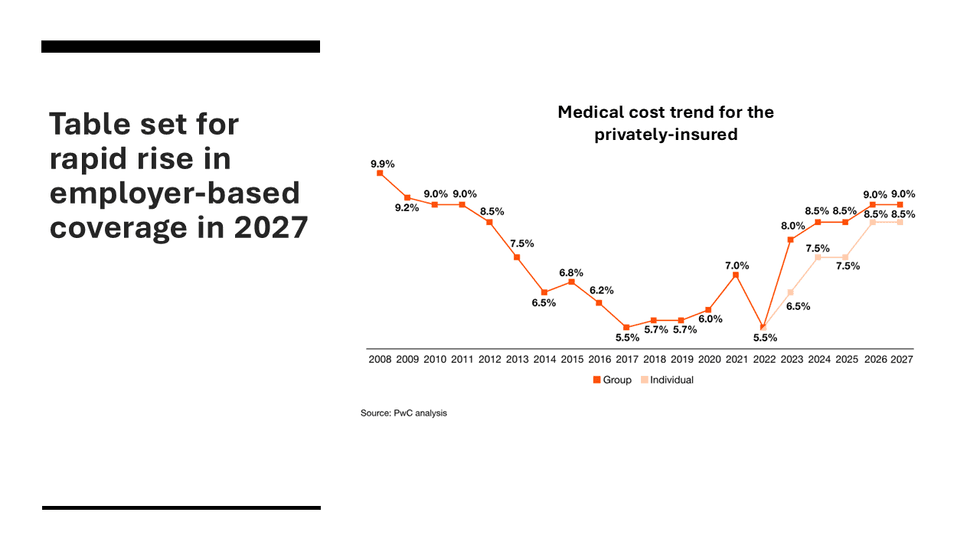
A recent survey of major insurers’ actuaries found the cost of employer-based health insurance prices is expected to rise nine percent on average next year. That increase — more than two percentage points greater than this year and nearly twice the rate of economic growth — will sharply increase both employer premiums and their employees’ co-premiums, co-pays and deductibles.

Given the price pressure in other household necessities, many more workers will opt for high-deductible plans to hold down their out-of-pocket expenses. Some will decide to drop out of their employers’ plans. That’s a viable if risky option for the young and healthy, who use far less health care on average than older workers. But it’s a disaster for older, sicker employees and their families, who will see their premiums rise even faster than anticipated because the young and healthy have left the pool.

Labor costs are rising

Major health care institutions are no doubt formulating plans now for how to deal with their deteriorating financial position. Given that labor costs generally account for about half of all hospital spending, hiring freezes and job cuts will probably be on the agenda.

We’ll know more on Friday this week when the July jobs report comes out. There is a high likelihood that the central role that health care has played in U.S. job creation over the past decade, and especially in the past year, is coming to an end. Should that happen due to the sudden shock to the system from the soaring uninsured rate, it could prove devastating for the rest of the U.S. economy, where job growth has slowed dramatically this year due to the Trump regime’s tariffs, the war against Iran, and government job cuts.

The overall jobs numbers tell an interesting tale if we look at the past year and compare that to the past decade. Over the last ten years, the entire health care sector added 3.1 million new jobs. That was one in every five new jobs in the economy (roughly commensurate with a health care sector that makes up 18 percent of GDP). Hospitals alone accounted for 758,000 of those new jobs or just a shade under 25 percent of the total new health care jobs.

But in the past year, the overall economy added just 506,000 new jobs as manufacturing declined (so much for Trump’s claim he is bringing back goods-making industries). Overall service job growth couldn’t keep pace. Indeed, just one sector kept the unemployment rate from leaping into recessionary territory.

What sector was that? Health care, which added 437,000 new jobs over the past year, accounting for fully 86 percent of the new jobs total. Hospitals accounted for 118,000 or 27 percent of those new jobs.

The only way hospitals have been able to keep adding jobs is by using their market power to raise prices on the privately insured. According to the most recent Kaufman Hall National Hospital Flash Report (May), hospital expenses are up seven percent from a year ago while average patient days are down two percent.

The higher expenses are being driven mostly by the need to raise pay for physicians, nurses and support staff to keep pace with inflation, which is rising at one-and-a-half to two times the rate the Federal Reserve Bank considers optimal. Yet even with those price increases (which are angering everyone), hospital margins and profitability are shrinking compared to a year ago.

Given those numbers, there’s no way that hospitals or health care will be able to maintain its recent role as the U.S. economy’s main job generator. Given the Trump regime’s mismanagement of the rest of the economy, one can’t rule out the possibility that the emerging health care financing crisis will trigger a recession.

Merrill Goozner, the former editor of Modern Healthcare, writes about health care and politics at GoozNews.substack.com, where this column first appeared. Please consider subscribing to support his work.

Reprinted with permission from Gooz News

Health Insurance Premiums Are Set To Soar Just Before Midterm Elections

Health Insurance Premiums Are Set To Soar Just Before Midterm Elections

Anyone whose employer provides health coverage knows the drill. Each fall, they are offered a menu of potential health care plan choices for the following year.

It usually includes three options. First, there is a preferred provider plan, which pays most of the bills, has few limits on provider choice, and has the highest paycheck deduction. Second comes a mid-priced health maintenance organization plan, where provider networks are limited, prior authorization rules are strict, and co-pays and deductibles are moderate. Finally, there is a high-deductible plan, which has the smallest paycheck deduction, but can leave an individual or family with large, unaffordable bills when anyone covered by the plan requires hospitalization or expensive treatment.

The employer share for any one of those plans (the average family plan cost is nearing $30,000 a year) usually hovers around 75 percent of the total cost. Workers pick up the other 25 percent through a payroll deduction. In the decade after passage of the Affordable Care Act, the annual increase averaged around 6-7 percent or about the same rate as economic growth after inflation was taken into account.

But during the pandemic, health care cost began a rapid ascent to around 8-8.5 percent annually. Now, it has taken another upward lurch.

A new survey of health care actuaries by PwC (formerly known as Price Waterhouse Coopers) found private health insurers medical claims costs are rising at a nine percent clip this year and are expected to rise by a similar rate next year. Last year’s survey pegged this year’s expected cost increase at 8.5 percent.

“Health plans are projecting the highest medical cost trend in nearly two decades,” the consulting group said in its analysis. “Payers and employers face mounting pressure to act.”

This could prove a financial fiasco for people on employer-based plans, which cover about 160 million workers and their families. They will likely face co-premiums, co-pays and deductibles in their 2027 plans that are rising at nearly three times the rate of inflation.

And it could be a lot worse than that. As actuaries inside the insurance companies map out their costs, they will have to take into account the additional price increases levied by hospital systems due to rising utilization, AI-enabled billing tactics, and what’s likely to be a rapid rise in unpaid bills.

The sharp cutbacks in Medicaid contained in the One Big Ugly Bill signed by President Trump last year will hit in full force in 2027. Well over ten million impoverished Americans are expected to lose coverage due to their inability to leap over the bureaucratic hurdles erected to enforce the legislation’s work requirements.

Millions more are dropping coverage and falling into the ranks of the uninsured due to the Republicans’ refusal to extend the expanded subsidies in ACA plans enacted by Democrats during the Biden administration. Both cuts will trigger a huge increase in uncompensated care at the nation’s safety net hospitals that serve low- and moderate-income communities.

Like all hospitals, safety net hospitals must provide emergency treatment for anyone who lands on their doorstep thanks to the 1986 Emergency Medical Treatment and Labor Act, which was signed into law by President Ronald Reagan. Unlike their suburban counterparts, who face far fewer cuts because they serve mostly the privately insured, these safety nets have fewer resources and small or no endowments to fall back on.

The final rates will be determined by medical actuaries inside the insurance firms over the next few months. The rates for 2027 are usually unveiled in mid-October.

How will employees respond if they see their paycheck premiums rising at a near double-digit rate? Many more low-income workers will opt into high-deductibles plans, which will leave many with unpayable medical debt because they can’t afford the out-of-pocket expenses when someone in the family gets sick. More middle-class workers will opt into HMOs with their network limitations and prior authorization restrictions to save on their upfront costs.

The nation’s employees with employer-sponsored coverage will be making those decisions starting on November 1, the traditional date for open enrollment for the ensuing year. That’s two days before the midterm elections.

Merrill Goozner, the former editor of Modern Healthcare, writes about health care and politics at GoozNews.substack.com, where this column first appeared. Please consider subscribing to support his work.

Reprinted with permission from Gooz News


Millions Could Lose Health Coverage When Medicaid Emergency Ends

Millions Could Lose Health Coverage When Medicaid Emergency Ends

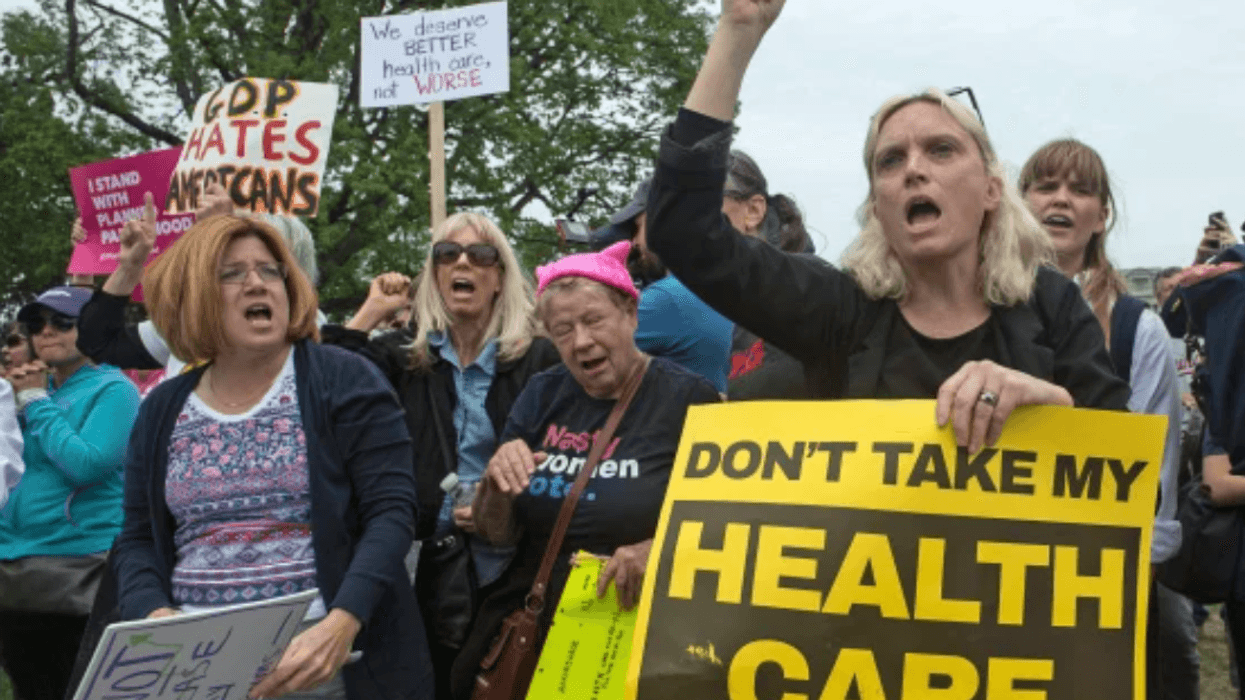
According to research from the Kaiser Family Foundation, somewhere between 5.3 million to 14.2 million low-income Americans could lose their Medicaid coverage if COVID public health emergency declarations expire on July 15.

The declaration is expected to be renewed, however, the KFF analysis points to the precarious health care faced by many Americans .

Medicaid enrollment increased by nearly 25 percent throughout the pandemic as the federal government implemented a continuous enrollment requirement. This cost $47.2 billion, but the federal government granted Medicaid about $100 billion to cover the costs related to continuous enrollment.

The wide estimate of 5.3-14.2 million Americans at risk of losing their Medicaid coverage is due to uncertainty over how individual states will respond to the looming end of the emergency declaration.

The Department of Health and Human Services has renewed the emergency declaration regularly throughout the pandemic, and HHS is required to provide a 60-day notice to states if the declaration will not be renewed. However, HHS has not yet set an extension date.

More Expensive Healthcare?

In addition to questions about how long continuous enrollment will keep Americans on Medicaid, the federal subsidies that reduced the price of marketplace health insurance could be gone at the end of 2022.

In tandem with increased Medicaid coverage, the federal government subsidized private insurance beyond what the ACA already does. If those additional subsidies end at the end of 2022, millions will likely see their monthly premiums increase.

Not only did Medicaid see an enrollment spike, but Obamacare enrollment reached its highest level ever during the pandemic at 14.5 million Americans. Enrollees received subsidized marketplace insurance as well as a longer enrollment period, and more public messaging was spent on ACA enrollment.

Some healthcare advocates have argued that the increased subsidies for marketplace insurance should remain in place when the public health emergency declaration and continuous enrollment for Medicaid are peeled back. People who lose Medicaid coverage would then have the option to enroll in the subsidized marketplace insurance.

The Build Back Better Act had a provision in place to decouple Medicaid continuous enrollment and subsidized marketplace insurance from COVID emergency measures. The legislation would extend subsidized insurance until 2025, but the bill is currently in legislative limbo after Democratic Senator Joe Manchin pulled his support in March.

What the Future Holds

Another renewal of the COVID emergency declaration would postpone worries of lost Medicaid coverage until mid-October, but many Americans will still be living in healthcare insecurity when the next deadline rolls around.

A lack of clarity about the future also puts healthcare workers, already facing long hours and staffing shortages, in a worrisome position, already facing long hours and staffing issues

Jana Eubank, executive director of the Texas Association of Community Health Centers told The Texas Tribune, “We already have a huge uninsured issue in this state, and this [the end of continuous Medicaid enrollment] just could be a perfect storm. We’re busting at the seams. … The last thing we need are more uninsured people.”

Americans living in red states face a particularly daunting task when acquiring healthcare. Texas has the highest number of uninsured people per capita and is one of the 12 states that has refused to expand access to Medicaid as part of the ACA. The other states are Alabama, Florida, Georgia, Kansas, Mississippi, North Carolina, South Carolina, South Dakota, Tennessee, Wisconsin, and Wyoming.

Individual states have considerable power over who can enroll in Medicaid, and their power is set to further expand in the realm of abortion rights after the leaked Supreme Court draft that would overturn Roe vs. Wade.

To expand access to healthcare in these states, some have proposed increasing the subsidies for marketplace insurance to include higher levels of income.

What remains clear in these debates is that a significant number of Americans are at risk of losing health insurance and more permanent action is needed to prevent an increase in the uninsured.

Shop our Store

Headlines

Editor's Blog

Trending

World