Trump Judge Orders White House To Reinstate CNN, MSNOW And Politico
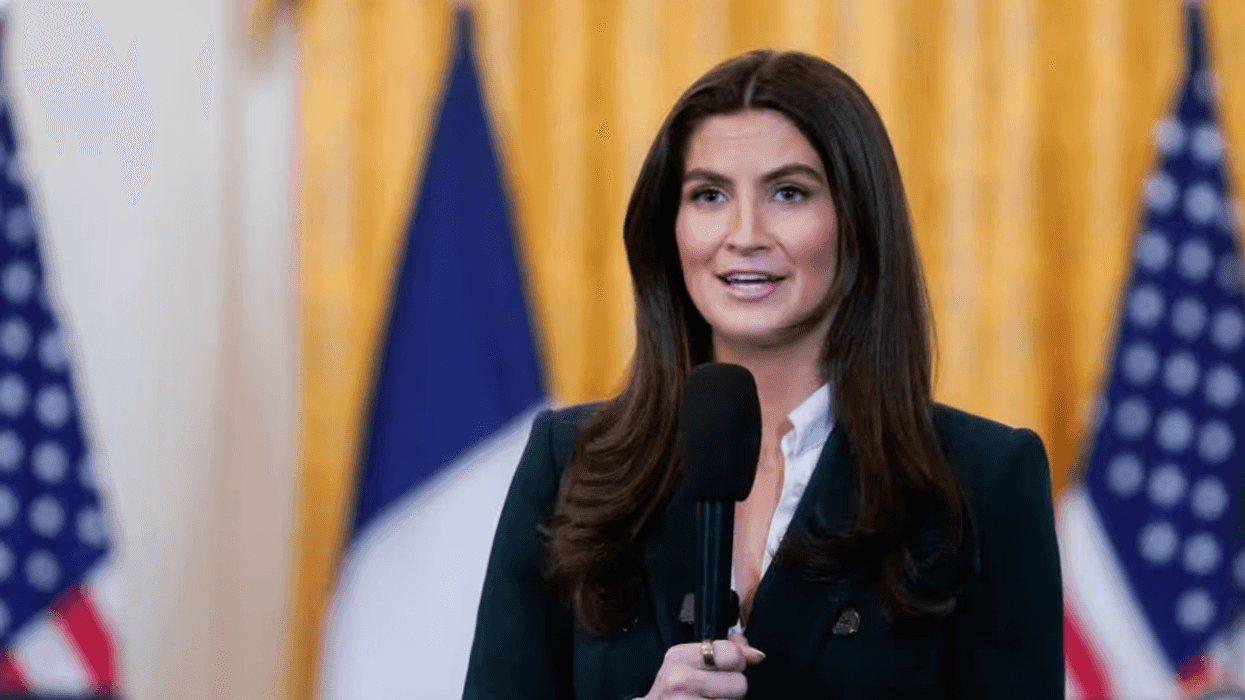
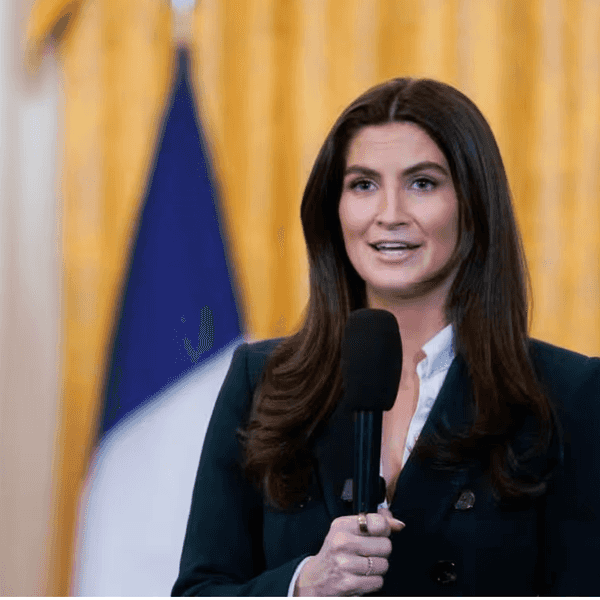
CNN Chief White House Correspondent Kaitlan Collins
After an early morning fire drill—when the administration, incredibly, failed to comply with Judge Timothy J. Kelly’s order to immediately restore the White House hard passes of reporters for CNN, MS NOW, and Politico—the reporters that Trump had ousted have now had their access restored.
The final back-and-forth may recede from prominence, but it was breathtakingly unprofessional, if not contemptuous, that after Kelly’s order, the reporters showed up at the White House only to again be turned away.
The Department explained its failure to follow the order with a bland statement to the court, giving a chronology that included restored access as of eight minutes after the media’s emergency motion. The belated and shoddy compliance means that Kelly needn’t consider, at least for now, a civil contempt finding against the administration. In light of the Department’s representations, the judge issued a brief order denying the request for an emergency hearing but inviting the plaintiffs to brief him about any further instances of noncompliance.
That returns the focus to the opinion itself and what it augurs in the event that the administration chooses unwisely to violate the rule of holes and keep trying to selectively bar members of the media, while digging itself ever deeper.
It was no surprise that Judge Kelly on Thursday ordered the Trump administration to immediately restore the journalists’ White House hard passes. Kelly, who reinstated Jim Acosta’s pass in 2018, rested his restraining order on due process grounds. It was the path of least resistance, because binding D.C. Circuit precedent requires the White House to give reporters notice and a chance to be heard before it pulls a hard pass. Trump gave them neither—“not a semblance of due process,” as the outlets’ lawyer, Ted Boutrous, put it.
The administration had essentially no answer to the precedent point. It could only argue that the cases were wrongly decided. Kelly, a Trump appointee, served up a door-slamming reply: “Maybe—but this Court is bound by D.C. Circuit precedent, full stop”
Putting the ruling on due process grounds meant that Kelly didn’t need to address the outlets’ First Amendment claims, at least for now. But his ruling was assured and emphatic. Kelly also refused the government’s request to stay his order, which runs 14 days while the parties brief a preliminary injunction.
The government didn’t dispute that the reporters got no notice beforehand. Instead, it played a familiar but, in this case, very weak hand, waving the mantra of national security. The Justice Department argued that the outlets’ reporting created an “extraordinary” circumstance that excused the White House from giving any process up front.
To make the case, it produced letters, sent four days after the ban, accusing the outlets of reporting that “threatened national security and/or spread falsehoods,” along with declarations from two Pentagon officials.
The letters were beside the point on both the due process claim and the retaliation and viewpoint discrimination claims. That’s because it was Trump’s decision under review—not the after-the-fact musings of officials who had nothing to do with it about how it might have implicated national security. As I wrote yesterday, Trump made it very easy for CNN, MS NOW and Politico by leaving no doubt that he acted because he didn’t like what they wrote.
In fact, a particularly foreboding part of the opinion for the administration was Kelly’s finding that “nothing in the record that predates this suit suggests that the revocation of Plaintiffs’ hard passes was motivated by national security concerns.” That’s a polite way of saying the administration was feeding him a load of hooey. Boutrous put it more plainly still, telling Kelly the letters “completely do not reflect what the president himself has said.”
Kelly went on to find no factual support for the claim that pulling the passes would protect national security. The government offered “no declarations or other support—classified or unclassified—explaining how any of the reporting they identified in their letters to Plaintiffs damaged the national security.”
As it has done in the past, the Department trotted out two declarants to try to make a case for national security. Kelly shot it down, noting that the declarants “have no direct knowledge of how reporters operate in the White House, or about any of the facts at issue here.” In most cases, he wrote, the reporters who wrote the stories cited in the White House letters “did not even hold hard passes,” And the White House had renewed CNN reporter Betsy Klein’s pass months after she published some of the very reporting it now cites.
Significantly, Kelly reached this bottom line while reciting the administration’s beloved principle that courts owe the executive’s national security judgments “highly deferential” review. The problem is that the administration supplied nothing to defer to. Deference attaches to a national security judgment the executive actually made, and by Trump’s own account, he made none.
The same goes for the outlets’ First Amendment claim of viewpoint discrimination, which is the more serious charge and the one that best captures the perniciousness of Trump’s conduct. Kelly didn’t have to reach it, because the due process violation was so straightforward. But the claim will be waiting in the preliminary injunction round, and it is every bit as strong.
Continuing his series of superlatives—but absolutely justified ones—Boutrous called the suit “probably the clearest case in history” of viewpoint discrimination. And it’s hard to imagine a cleaner one. Trump himself made the decision and broadcast his reasoning for it. No amount of government obfuscation can get around those conclusive points.
“He keeps proving our point,” Boutrous told Kelly. “He’s really our lead witness here.
Indeed.
Trump vowed Monday to appeal any ruling against him, in the process signaling that he knew he was going to lose. Temporary restraining orders generally aren’t appealable, as Kelly noted, though the administration can try to argue that the order already functions as a preliminary injunction—which is why it asked Kelly to convert it into one in the first place. However that plays out, if the case advances, the viewpoint discrimination claim and Trump’s own words will be waiting.
He’d be wise to fold (and if he does, expect him to somehow spin it as a win). The television networks suspended pool coverage in solidarity, and for the first time in more than a decade, Trump found himself without the cameras that have recorded nearly his every move. On Monday, he cut the ribbon on his new helipad before a lone second-tier camera that couldn’t pick up his voice over the roar of Marine One. In fact, an important collateral benefit of the whole episode is that the members of the press pool have banded together, having absorbed the lesson that collective resistance is the best way to beat a tyrant.
For Trump, there’s an equally clear lesson: Even a president may not punish a news outlet because he doesn’t like what it writes. Especially a president. As Justice Robert Jackson famously wrote more than 80 years ago, “no official, high or petty, can prescribe what shall be orthodox in politics, nationalism, religion, or other matters of opinion.”
Trump being Trump, the lesson will go unlearned. And we always have to anticipate the prospect that a feckless and reflexively defiant White House will inject heart attacks into the legal system as it did this morning. But if the media hangs tough and the courts stay faithful to the law, we can continue to ride out the storm.
Harry Litman is a former United States Attorney and the executive producer and host of the Talking Feds podcast. He has taught law at UCLA, Berkeley, and Georgetown and served as a deputy assistant attorney general in the Clinton Administration. Please consider subscribing to Talking Feds on Substack.
- Trump Constantly Accuses Mainstream Outlets Of 'Treasonous' News Coverage ›
- The Press Finally Stands Up To Trump! Courage Is Contagious ›
- Trump's War On Press Has Intensified Since Speech At Correspondents Dinner ›
- Judge Appears Skeptical of Trump’s Ban on 3 Media Outlets - The New York Times ›
- Trump must restore access to banned news outlets CNN, MS NOW and Politico, judge orders | AP News ›
- CNN, MS NOW and Politico allowed back into the White House after judge orders Trump admin to restore access | CNN Politics ›