Tag: doctors
In Her Own Words: Why This Doctor Fled Texas To Help Women In Virginia

In Her Own Words: Why This Doctor Fled Texas To Help Women In Virginia

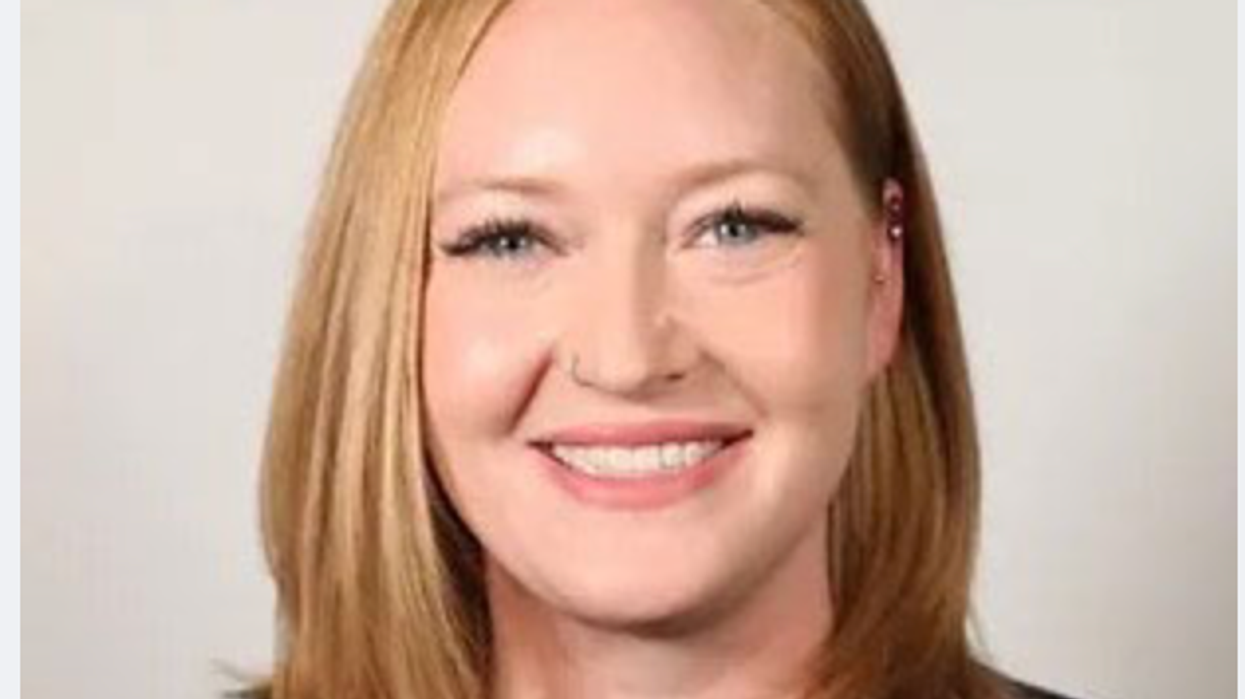
Dr. Lou Rubino is just one of many physicians who’ve left Texas as a result of the state’s multiple abortion bans—laws that prevent doctors from treating pregnant women with not just abortion care, but life-saving emergency care. She’s now practicing in Virginia.

Dr. Rubino told her story to writer Bonnie Fuller for Dogwood.

I remember very clearly the moment I knew I was done. I could no longer practice as a women’s health care doctor in Texas.

I had a patient, probably 18 or 19 years old. I was doing an ultrasound, and she told me she needed an abortion for her safety. She said, “I’m too young. I don’t feel safe with my partner. I’m scared. I need an abortion.”

When a patient tells me they feel unsafe with a partner, I take that very seriously. Pregnant people are at high risk of harm from abusive partners. It’s a dangerous time. She knew what she needed, and I knew it was wrong for me to say no.

She was very early in her pregnancy, between six and eight weeks. I should have been able to prescribe abortion pills or perform a quick five-minute procedure. Instead, I had to tell her she could not get care in Texas. I explained she’d have to travel nearly nine hours to the nearest clinic.

She cried, and I cried. I told her this was wrong, that her rights were being violated, and that I couldn’t let her believe she was the one at fault. After that, I knew I couldn’t go on. I put down my things, walked out, and decided to leave Texas for good.

I asked myself: Am I the kind of doctor who does the wrong thing?
I’m not. And Texas couldn’t force me to be.

Not long after, my husband and I moved to Virginia, where I now practice.

‘I moved to Austin for something different’

I’m originally from Detroit and went to medical school at Southern Illinois University. I moved to Austin in 2015 for something different, met my husband, and did my residency at UT Southwestern in Dallas.

At first, I didn’t think of abortion as a political issue. But quickly, I realized that without abortion and miscarriage training, I’d be ignoring an essential part of women’s health.

Miscarriages are common—about 15 percent of pregnancies end that way. Abortions are also common—one in four women will have one. To ignore that would mean I wasn’t fully trained.

In Texas, there was no formal abortion training. Instead, I apprenticed with an OB-GYN in Austin and learned to perform medication abortions and procedures up to 18 weeks. I became the main doctor at the Austin Women’s Health Center for several years, and I loved it. Providing a safe abortion can completely change someone’s life.

Then came the bans. After Senate Bill 8 passed in 2021, prohibiting abortions after six weeks, I began making plans to leave. I didn’t want to abandon my patients, but I also knew the state was stripping me of my job and my oath as a physician. When the Supreme Court overturned Roe v. Wade in 2022, Texas’s trigger ban outlawed abortion from conception.

I realized I couldn’t protect my staff while breaking the law. The day I had to turn away that young patient made me understand: By following the law, I was doing the wrong thing medically. I walked out of the clinic for good.

‘We get anti-abortion patients coming in for abortions, too’

I took work in Virginia and eventually helped open Meadow Reproductive Health and Wellness Clinic in McLean, just outside Washington, D.C. I’m now its medical director. We provide abortions up to 15 weeks and hope to expand to 18 when we grow our staff. About 20 percent of our patients come from out of state—often driving through the night from places like Florida, Georgia, or Alabama. Some bring children because they don’t have childcare. We started stocking microwaveable meals because a lot of people can’t afford food while traveling.

Every out-of-state patient has a story of desperation—needing time to gather money, arrange childcare, or escape an abusive partner. Too many people who need abortions aren’t getting them at all.

Now, in Virginia, I can practice the way I was trained. I no longer have to wonder whether my medical advice could land me in court. In Texas, at one point, I even asked myself, “Am I supposed to follow state laws or a tweet from the attorney general?”

I understand at a really fundamental level that the most basic human right is bodily autonomy. Without the right to control your pregnancy, you don’t have it. And without good reproductive health care, you risk your quality of life—or your life itself.

We get “anti-abortion” and deeply religious people coming in for abortions, too. They come to us for the same reasons anyone does: financial hardship, health risks, education, safety. They’re human, too.

I was nervous to tell my conservative grandmother in Tennessee about my work. But when I did, she surprised me. She said: “If someone needs an abortion, I’d want you to be the one doing it. I’m glad you’re doing that.”

Leaving Texas has been a relief. Here in Virginia, I can focus on patients and provide care in the right ways—medically, safely. You see, I took an oath as a doctor and I take it very seriously.

From the editor: How abortion bans are impacting Virginia and its neighbors

Abortion bans in Southern states have compelled expert doctors like Dr. Lou Rubino to relocate to Virginia, where laws allow medical professionals to provide essential reproductive health care. Clinics such as Meadow Reproductive Health and Wellness now serve not only Virginians, but also a growing number of women traveling from states where access is restricted—including Texas. These patients often arrive after long and difficult journeys, seeking safe and legal abortion care that is increasingly unavailable closer to home.

Reprinted with permission from VaDogwood.

California Senate Passes Assisted-Suicide Bill

California Senate Passes Assisted-Suicide Bill

Los Angeles Times (TNS)

SACRAMENTO, Calif. — After a debate marked by raw and personal tales of loss, the California state Senate on Thursday advanced a proposal to allow terminally ill people to end their lives with drugs prescribed by physicians.

If the measure wins approval by the Assembly and Gov. Jerry Brown, California will join five other states in legalizing assisted suicide for dying patients. The legislation would apply to requests by mentally competent adults with six months or less to live.

The Senate proposal, titled the End of Life Option Act, is modeled after a voter-approved law that took effect in Oregon in 1997.

Although debated here for decades, the issue gained momentum after Brittany Maynard, a 29-year-old Californian who was terminally ill, decided to move to Oregon last year to end her life rather than suffer pain and debilitation from an aggressive brain cancer.

Maynard recorded a video appeal to California lawmakers to give residents an aid-in-dying option that was not available to her. Brown called Maynard in the weeks before her death to discuss the legislation, according to his office.

Maynard’s husband and mother were in the Senate chamber Thursday during the two-hour debate.

The Senate measure “is about how we die in California,” said Sen. Lois Wolk, a Democrat, as she opened the discussion. Passage of the bill, written by Wolk and fellow Democrat Bill Monning, would permit the terminally ill “to voluntarily end their lives in peace,” she said.

Wolk talked of the prolonged, “brutal” death of her own mother from cancer and said the proposed law would give Californians an alternative to such suffering.

“Simply having a prescription is in itself a source of relief, knowing that if things got really bad that one would have an option to end one’s life with less suffering and in peace,” Wolk said.

Republican Sen. John Moorlach of Irvine questioned the morality of the proposal.

“For me, it’s unconscionable, and I can’t be a party to it.”

Other senators cited religions that consider suicide a sin and said elderly people might be coerced into taking their own lives if they felt they were a burden on their families.

“Greedy heirs can have an influence,” said Republican Sen. Jeff Stone.

The measure passed on a largely party line vote of 23 to 14. Its prospects in the Assembly are unclear, and Brown has not taken a public position on the proposal.

A patient would have to make two oral requests to a physician for help in dying, at least 15 days apart, with witnesses to the requests. The medication would have to be self-administered. In addition, the bill would create felony penalties for coercing a patient into making a request or for forging a request.

California voters voted down a 1992 proposal that would have allowed physicians to administer lethal injections to their patients.

Since Oregon adopted its law in 1997, medical aid in dying has been authorized in Washington state, Montana, Vermont and New Mexico.

Photo: Physician-assisted suicide isn’t this easy, and it shouldn’t be. Via Wikipedia

Maximizing Your Health Benefits Before Year’s End

Maximizing Your Health Benefits Before Year’s End

While the holiday season usually involves spending on gifts, feasting, and parties along with other festive (and perhaps not so healthy) indulgences, the end of the year can also bring significant savings on annual health costs — especially for consumers who understand the details of their own insurance coverage.

The first and potentially most lucrative target is the annual deductible – the amount that your plan requires you to pay in out-of-pocket costs for medical procedures, tests, or other services before the insurer pays all (or almost all) additional health expenses. Knowing the amount of your plan’s deductible, which can vary widely from hundreds to thousands of dollars annually, apportioned either individually or for your entire family, is essential to minimize costs and maximize benefits.

For most plans, the deductible rolls over again on January 1, meaning that you will need to climb that same financial hill again as soon as the new year begins. (Some plans, such as those obtained through a school or university, may use the academic year instead – check with your insurer to be certain.) And most consumers are likely to meet the deductible toward the end of the year – which means that now is the time to take advantage of whatever elective procedures or services you or your family members may need that can be obtained for free or very low cost.

As soon as your health spending reaches the deductible amount — whether that comes to $500 or $5,000 — it makes eminent sense to arrange those procedures or services in most cases before December 31. Medical providers know by now to expect a rush of visits before year’s end, and many will set up additional office hours to meet the demand.

But be certain that you know the specific rules governing your plan before making any appointments, because various preferred provider plans may require separate deductible amounts for in-network and out-of-network care. The same caution applies to family policies, which may include either combined or separate deductibles for each covered family member.

Even if you have reached the in-network deductible, you may still have to pay for out-of-network providers, or vice versa. And always find out whether the physician you’re seeing is in or out of network before your appointment – neglecting to check can turn out to be very expensive. It’s also wise to check that everything involved is in network… even if your initial appointment is with an in-network physician or facility, you may well get a surprise bill later if they send your tests (especially in the case of MRI or X-ray films) to an out-of-network provider to be read or evaluated.  

Similarly, dental and vision plans as well as flexible spending accounts almost always offer benefits that must be used before the new year begins. Check with your insurance plan’s customer service department, either by phone or online, to determine whether you are eligible for unused benefits – for instance, a new pair of glasses or contact lenses, or a dental cleaning.

Every insurance plan must now provide a simple summary of benefits and coverage, similar to this sample sheet published by Consumer Reports. The summary should quickly enable you to find the deductibles, benefits, and co-payments included in your plan. But you are still likely to have questions, so don’t hesitate to contact your insurer for clear and specific answers.

With the passage of the Affordable Care Act, nearly every insurance plan is now required to provide a schedule of free or very low-cost preventive health benefits for menwomen, and children  including annual checkups, blood pressure and cholesterol screening for adults, several kinds of vaccinations, tobacco cessation services and more – a complete list can be found here.

For Medicare Part B patients, a yearly “wellness” visit  designed to monitor your vital signs, weight, and other health indicators is also free, with no co-pay. Patients newly signed up for Part B are entitled within their first 12 months of coverage to a “Welcome to Medicare” preventive care visit that includes height, weight, and blood pressure measurements, a body mass index calculation, a vision test, a review of depression risk, a discussion of advance directives, and a written plan that outlines the screenings, inoculations, and other preventive services you may need in the coming year.

AFP Photo/Joe Raedle

Fighting Addiction With Another Drug

Fighting Addiction With Another Drug

By Sandi Doughton, The Seattle Times (TNS)

SEATTLE — Amber Mellen was a newlywed when her soldier husband was killed in Iraq. Just 18 years old, she turned to pain pills to dull the grief.

But Mellen got hooked on the drugs and spiraled into addiction. Before long, she was shooting up heroin.

“It was so easy to get, and so many people are doing it,” she said. “People who you see in the grocery store, people you would never expect are using it.”

New data from the University of Washington show that heroin use among young adults in Washington state is soaring, particularly in rural and suburban areas where treatment and counseling can be hard to find.

Last year, heroin was the leading reason people ages 18 to 29 sought treatment for substance abuse, far surpassing admissions for alcohol, methamphetamine or prescription drugs. The number of young people admitted for heroin treatment has more than quadrupled since 2007.

Experts believe many drug users are turning to heroin because recent rules have made it harder to get prescription painkillers like oxycodone. Drug cartels have rushed to fill the gap with Mexican black tar and other forms of heroin, which can sell for as little as $20 a dose.

Yet many doctors remain reluctant to prescribe a medication that can help some patients overcome addiction without having to travel to a methadone clinic every day.

Buprenorphine, marketed under the name Suboxone, is available for addiction treatment. But an analysis published this year found that fewer than a third of certified physicians surveyed were giving patients the drug.

Many doctors who don’t prescribe buprenorphine said they were wary of working with addicts without a more robust system of counseling and social assistance.

“It’s really a crisis,” said Dr. Roger Rosenblatt, an author of the study and associate director of the University of Washington’s Rural/Underserved Opportunities Program. “People are suffering, people are dying, and we have the therapy for it.”

Only 10 to 20 percent of people who need some form of addiction treatment are getting it, said Dr. Charissa Fotinos, deputy chief medical officer for the Washington State Health Care Authority.

Like methadone, “bupe,” as it is sometimes called, blocks symptoms of withdrawal and craving, and it helps users avoid the temptation to relapse. The risk of overdosing on bupe is much lower than on methadone. And while methadone must be administered at a clinic, buprenorphine can be prescribed for use at home.

That’s particularly helpful for young adults, who may be facing years of treatment while juggling school, work and families, said Caleb Banta-Green of the university’s Alcohol and Drug Abuse Institute. Rural residents also can benefit significantly, because most of the state’s methadone clinics are in urban areas.

“Getting to a methadone clinic every day can be a pain in the butt for a lot of people,” he said.

By the time Mellen decided to seek treatment, she had been shooting up for three years. “I was the worst of the worst,” she said. “At the end, I was on the street.”

She tried methadone, but it put her into a stupor. Suboxone eased the gnawing desire for heroin, and helped clear her head.

“It made me myself again,” she said.

Now 26, Mellen has been on the medication for two years. She gets it from Dr. Lucinda Grande, a primary-care physician in Olympia. With a long-standing interest in chronic pain and drug abuse, Grande was eager to take the eight-hour class required of doctors who want to prescribe buprenorphine for addiction.

Grande often has to turn patients away. “I just feel so guilty because somebody might be a good candidate, and they really need this drug, but I can’t take them.”

The Affordable Care Act requires Medicaid and most private insurance to cover substance-abuse treatment. That includes buprenorphine, which can cost $300 a month or more.

But many physicians don’t want to work with addicts or add a new type of treatment to their already-busy practices. None of Grande’s five partners at Pioneer Family Practice decided to prescribe buprenorphine.

“It’s a very demanding group of patients,” said Dr. Edward Cates, one of those partners. He also worries that the benefits of the medication have been exaggerated.

Clinical trials show that buprenorphine is slightly less effective than methadone in eliminating opioid abuse. Like methadone, it can also be dangerous.

The drug is an opioid and can generate a high in people who aren’t regular users. It has become part of the illegal drug market — diverted by unscrupulous patients and purchased by recreational drug users and addicts who can’t get a prescription. Buprenorphine has also been linked to several hundred overdose deaths nationwide. In most cases, though, the victims had ingested several different drugs.

“I’m not trying to undersell its risks,” Banta-Green said. “But I personally don’t have any doubts that the benefits outweigh the risks.”

Addiction is a chronic, relapsing condition, and many people have to go through multiple cycles of treatment before it sticks, Banta-Green said. But decades of studies show that maintenance medication, like methadone and buprenorphine, is the most powerful tool available to help users stay off heroin and related drugs.

Meanwhile, health experts also hope to raise awareness of an antidote that could reduce the number of overdose deaths in the state if administered quickly.

Naloxone, sold under the trade name Narcan, can save people who take too much heroin, methadone or prescription pain pills.

Some ambulance crews carry the drug, and several pharmacies around the state stock a nasal-spray version. It’s available without a doctor’s visit to opiate users and their friends and families.

AFP Photo/Andrew Burton

Shop our Store

Headlines

Editor's Blog

Corona Virus

Trending

World