How Can We Avoid Blowing Up The Democratic Coalition (And Keep Winning Instead)?
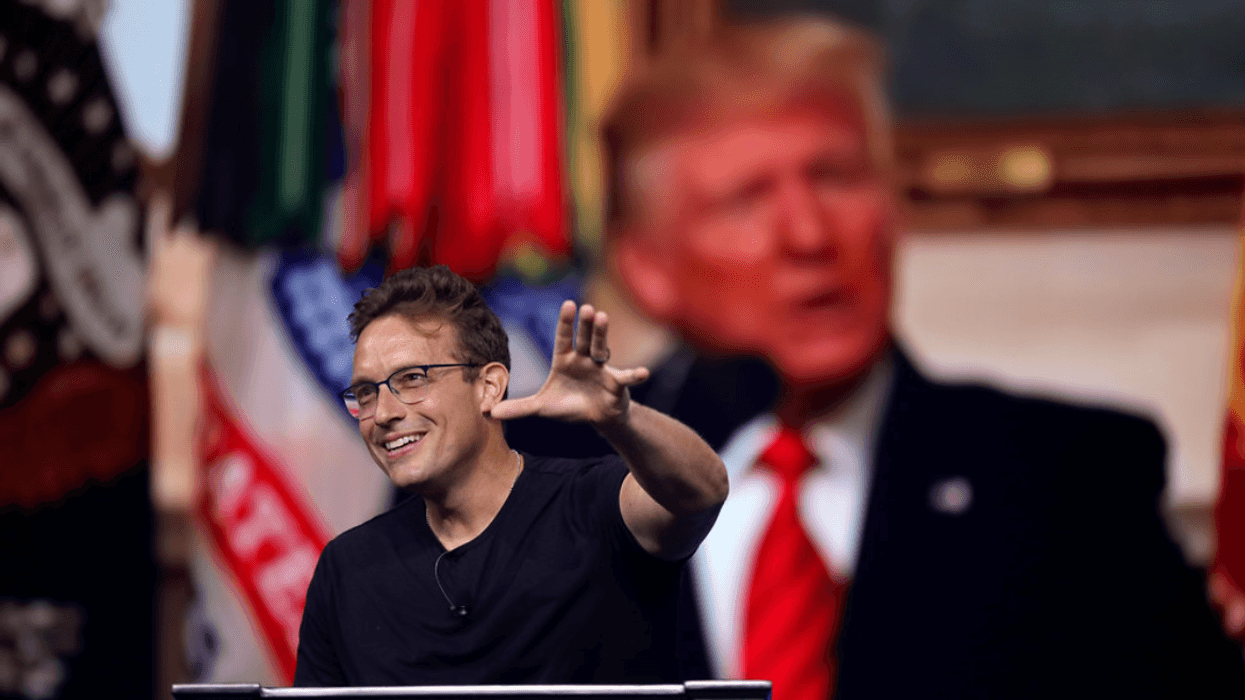
Right-wing influencer Benny Johnson has been, like many of his brethren, struggling to cope with his party’s extinction-level drubbing in these midterm elections.
“The midterms largely purged the Republican Party of weak moderates,” he posted on X. “The lesson here is that when people vote for a Republican, they expect them to govern like one. Not side with Democrats.”
We can all laugh at the idea that Republicans “sided with Democrats” even once in the years since MAGA emerged. But their reality is that extremism has utterly decimated the Republican Party, and that’s a lesson for our side to learn as well.
One account on X, RationalPurview, tallied the damage: When Donald Trump launched his first presidential campaign in 2015, Republicans held 54 Senate seats, 247 House seats, 31 governorships, and 68 state-legislative chambers. After this year’s election, they’ll be down more than 10 Senate seats, dozens of House seats, 11 governorships, and 23 legislative chambers.
And can they count a single actual policy victory that has improved the country? Tax cuts for billionaires and mass deregulation certainly haven’t.
But sure, Benny, now that the “weak moderates” are gone, things will surely get better. Please nominate more MAGA extremists next time around. Make our job holding those majorities easier.Still, there’s a lesson here for Democrats, too: As I noted on Sunday, don’t interpret every election as proof that voters want whatever you already wanted.
And that applies to both sides of our brewing fight between moderates and leftists.
My position will probably make no one happy: Democrats should use the next two years to deliver on their campaign promises, protect the coalition that elected them, and aggressively exercise their congressional oversight powers and power over the purse. Meanwhile, we should debate—and build support for—the larger changes we want to enact with a Democratic president in 2029.
Those goals can coexist.Progressives have a legitimate argument. Voters rejected a disastrous status quo. Why should Democrats respond by restoring business as usual? Why trust the same leaders to confront Trump when so many Democratic voters believe those leaders have failed to meet the moment?
They want a party willing to fight concentrated wealth, confront corruption, challenge American support for Israel’s abuses, and offer a more ambitious answer to the country’s healthcare crisis. They worry that another round of Democratic timidity will squander this opening and leave voters wondering why they bothered.
All fair, and I don’t disagree in concept. I’ve made very clear that I think the system needs to be smashed before the next popular uprising gives us another Trump, or worse.
But I am also, above all else, a pragmatist.
Our new congressional majorities were built with Democrats who won red states and districts. A platform that works in New York City won’t necessarily work in Mississippi, Ohio, or a Republican-leaning House district.
Those candidates made promises to their own voters. We should listen to what got them elected and give them room to deliver.And we need those voters again. Holding the House in 2028 will require defending difficult districts. Sen.-elect Sherrod Brown, who won a special election this month, will be back on the ballot in Ohio, seeking a full term. Winning the presidency won’t give us a governing trifecta if we lose Congress along the way.
Our path to 270 electoral votes is also much easier if we can lock down Arizona and Georgia the way we did this year, while making Texas competitive. Don’t mistake turnout this year for presidential-year turnout. Republicans may suffer from the lack of Trump at the top of the ticket, but we can’t bank on it. Let’s bring a nationally competitive party to the fight.
Honestly, I’m most interested in how Brown thinks we should approach the next two years. As a progressive in a red state who must face voters again in 2028, he has a particularly urgent stake in getting this right.
And it isn’t an either-or situation! An election this sweeping clearly includes voters seeking normalcy and stability and voters demanding fundamental change. Our job is to hold that coalition together long enough to improve their lives.
For the next two years, that means pursuing the healthcare commitments Democrats ran on, investigating MAGA’s political corruption, and using Congress’ spending and oversight powers to constrain Trump.
We should also give our red-state Democrats some grace. Everyone is celebrating Sen.-elect Scott Colom in Mississippi right now. That grace will matter when he casts a vote we hate or works with Trump on something he believes will help his constituents.We won’t have to like every decision. We should remember what it took to win that seat.
None of this requires abandoning ambition.
Rebuilding our broken system will require Democrats to use every lawful power available to them. Trump has shown how much power the presidency holds once you dispense with notions of “tradition” and “collegiality” and whatever other bullshit is used to justify protecting the perks and benefits of the rich and powerful. A Democratic president should be prepared to use that power to serve everyone else.
That calls for a serious agenda to repair our democracy, starting with Supreme Court expansion and term limits. We can’t implement deep systemic change with a corrupt, unelected, and unaccountable Supreme Court that selectively judges based on which party is in power.
The 2028 presidential primary will give us a robust debate over the party’s future. Our nominee will then have to sell their vision to the broader electorate, alongside congressional candidates that can help enact it.
Until then, we have substantial power and substantial responsibilities. Trump’s veto will limit what becomes law, but Democrats can use spending negotiations to demand concessions and pass bills showing voters what a Democratic president would sign. Those bills should focus on the things voters said they cared about, like tariffs and health care costs. And we can tackle corruption through oversight investigations and hearings.
How much change can Democrats promise and still hold our new majorities? That’ll be a central question in the coming presidential primary.
Voters just delivered Republicans an ass-whoopin’. Let’s honor the promises that made it possible, give our members room to represent their constituents and build the case for what comes next.
That also means moving past tiresome “leftist vs moderate” arguments. Brown is a progressive who won Ohio. Colom is a moderate who won Mississippi. We need both of them, and neither needs the same politics as a Democrat representing Brooklyn.
Argue about the policies. Argue about who should lead us and how aggressively we should wield power. Those fights matter. But “my faction deserves to run everything” isn’t a viable strategy for improving people’s lives or holding this coalition together.
We can fight for a different system while doing the work voters elected us to do right now. Let’s judge each other by how well we do both.
Markos Moulitsas is founder and editor of the blogging website Daily Kos and author of three books.
Reprinted with permission from Daily Kos. Please consider subscribing or donating to Daily Kos here.