Trump Heads To Summit As China Hands Warn His Big Gamble Is 'Backfiring'
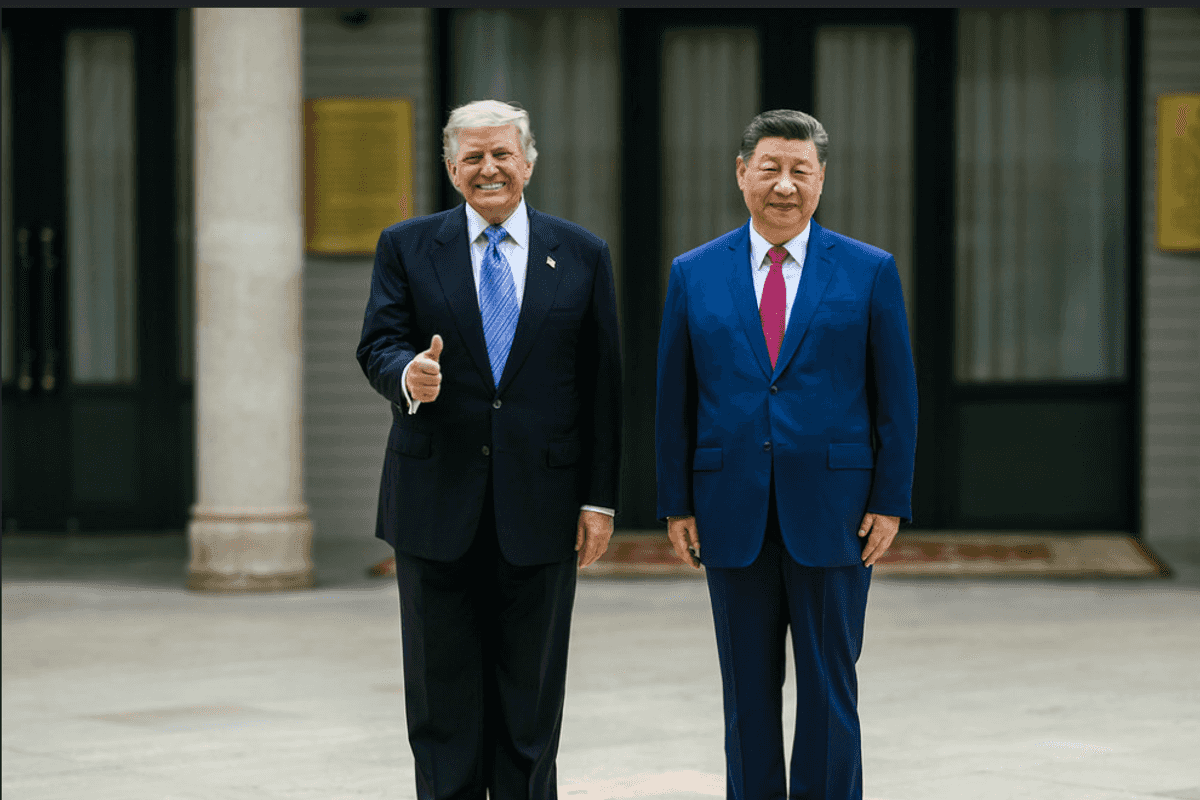
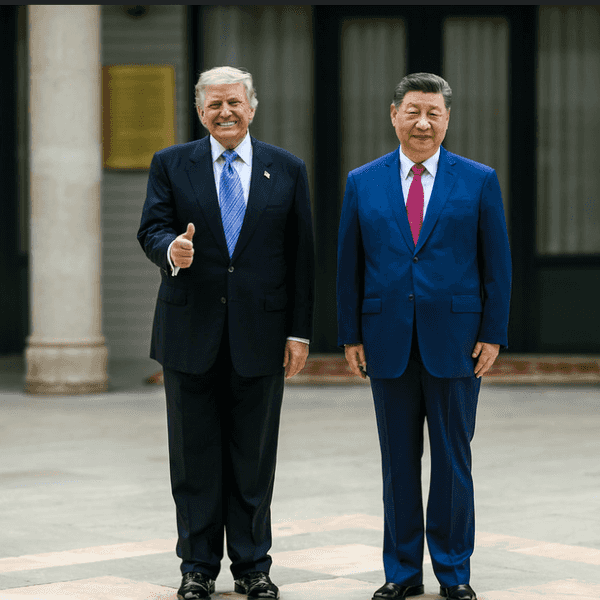
President Donald Trump and President Xi Jinping in Beijing on May 15, 2026
As President Donald Trump embarks on another major trip to China, a pair of White House Asia policy veterans warned in a piece for The New York Times that his "gamble" on a softer approach to the nation is "backfiring" badly and urged the incoming Democratic Congress to push back.
Mira Rapp-Hooper and Ely Ratner each served in high-ranking Asia policy roles within the Biden administration, and writing for The Times on Monday morning, they explained that, in his second term, Trump seemed to hope that treating China in a more "accommodating" way might encourage them to respond in kind. In reality, however, things have certainly not played out that way.
"The Trump administration has scaled back key military operations in the region and withheld support for Taiwan and U.S. allies facing Chinese coercion," the pair wrote. "The hope has been that such measures would help avert a potential clash with China. But nearly two years into his second term, Mr. Trump’s approach is backfiring, emboldening China to throw its weight around Asia and raising the risk of a military crisis."
They added later: "China’s leaders have long made clear that they want the United States to keep its warships away from China’s coast, end arms sales to Taiwan, leave Beijing’s expansive maritime claims unchallenged, pull American forces from the region and refrain from siding with allies who cross China. Over the past two years, the Trump administration has granted much of that."
In doing so, the pair argued, the Trump administration had hoped it would "buy time for America to reduce its dependence on Chinese rare earths, rebuild the U.S. defense industrial base and manage the war with Iran." Instead, China has refused to let up, continuing to exert pressure on the region and expand its presence.
To address this ballooning issue, Rapp-Hooper and Ratner urged the forthcoming Democratic Congress to act, even if their Republican counterparts remain unwilling to break with the president.
"The Senate also can make confirmation of pending and future appointments to the Pentagon and State Department contingent on a commitment to restoring regular U.S. Navy transits of key waterways in the region and supporting allies facing Chinese intimidation," they explained. "In next year’s annual defense bill, Congress should commit more money to the Pacific Deterrence Initiative, a program it established in 2021 to strengthen America’s military position in the region but which came with no dedicated funding."
They concluded: "A bipartisan approach is more likely to succeed and endure. Leading Democratic and Republican members of Congress have already called on Mr. Trump to release the stalled Taiwan arms package. The midterms offer a chance to go further in restoring America’s commitment to its allies in Asia and rebuilding an approach to the region that actually keeps the peace."
Reprinted with permission from AlterNet
- No Contest: Under Trump, China's Growth Hugely Outpaced The United States ›
- How Did Trump Flub China Policy? Let's Count The Ways ›
- Trump Posts 'Absurd Spin' On Meeting Where Xi Told Him America Is In Decline ›
- Trump's China Visit Displayed His Weakness, Narcissism And Insecurity ›
- How Trump is hoping to use an Asia trip to reassert his authority | CNN Politics ›
- Trump says he may meet with North Korea's Kim Jong Un during China trip - ABC News ›
- Trump to embark on Asia trip in apparent foreign policy push before end of term | Donald Trump | The Guardian ›
- Trump heads to China amid Nvidia scandal: Will he get tougher on Beijing? | Politics News | Al Jazeera ›