Tag: dsa
Why The 'Democratic Socialists' Have Repelled So Many Black And Latino Voters

Why The 'Democratic Socialists' Have Repelled So Many Black And Latino Voters

The Democratic Socialists of America use people of color as fashion accessories. Sure, they put black or brown faces on ballots, and they talk a big game about racism. But black and brown voters are not choosing their candidates. The DSA national membership chooses, and it is 85% white.

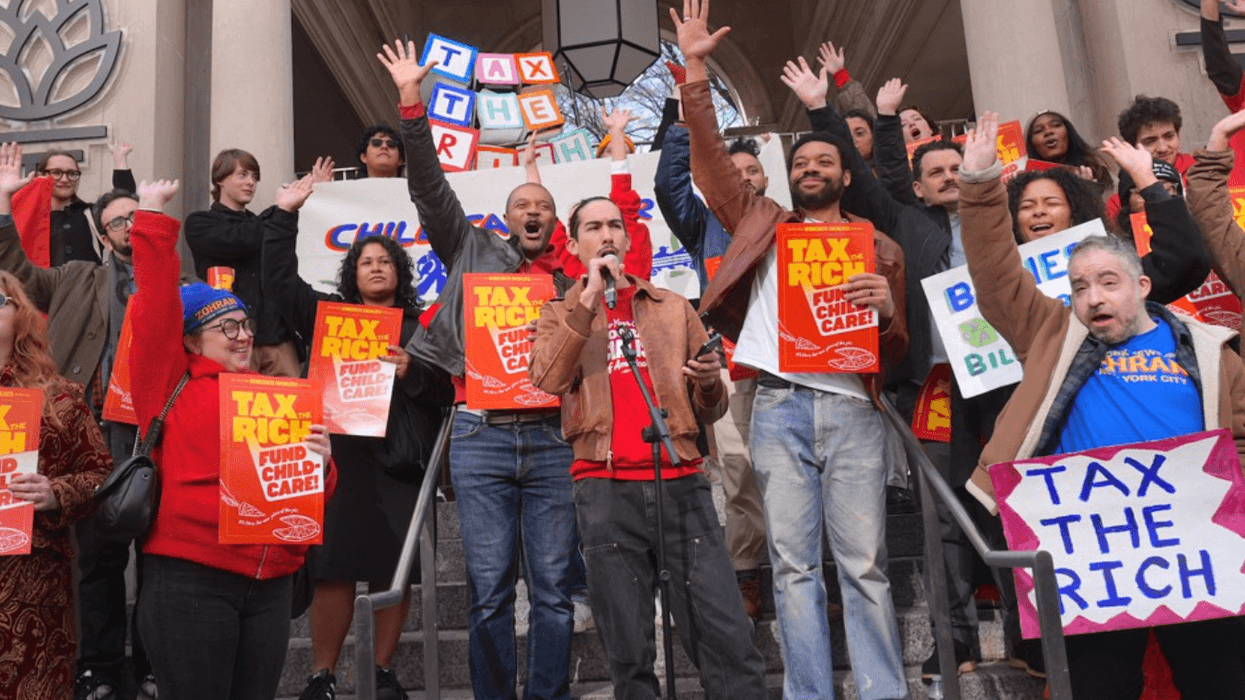
Look at the crowds. In October 2019, Reps. Alexandria Ocasio-Cortez and Bernie Sanders staged a rally at the Queensbridge housing project, across from Manhattan. Its residents are 47% black, 34% Latino and 10% Asian. News photos showed a nearly unbroken sea of white enthusiasts.

The head of the Queensbridge Resident Association called the organizers "disrespectful." They didn't even bother to place flyers in the buildings.

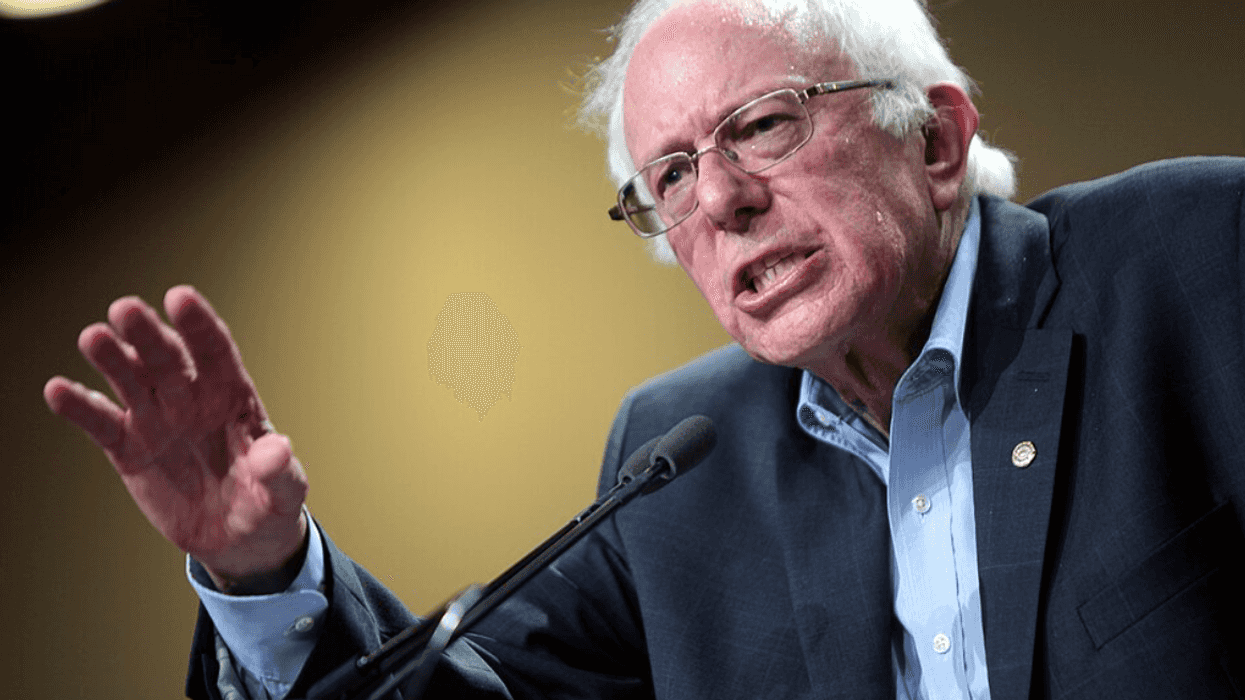
During the 2020 presidential race, Bernie Sanders rode high in the early Democratic primaries, where voters are mainly comfy whites. But when the primaries moved south, where Democratic voters are overwhelmingly black, he got creamed. In South Carolina, he lost to Joe Biden by 29 percentage points.

Asked to respond to that massive comeuppance, Sanders waved off the importance of those black voters. They were "conservative," he said. "But you know what? We're out of the Deep South now. And we're moving up."

That rankled several prominent black officials. "I was very concerned with that comment," said New York Rep. Hakeem Jeffries. "Black voters in the South are not very conservative" and "essentially dismissing the South was a slight at African American voters."

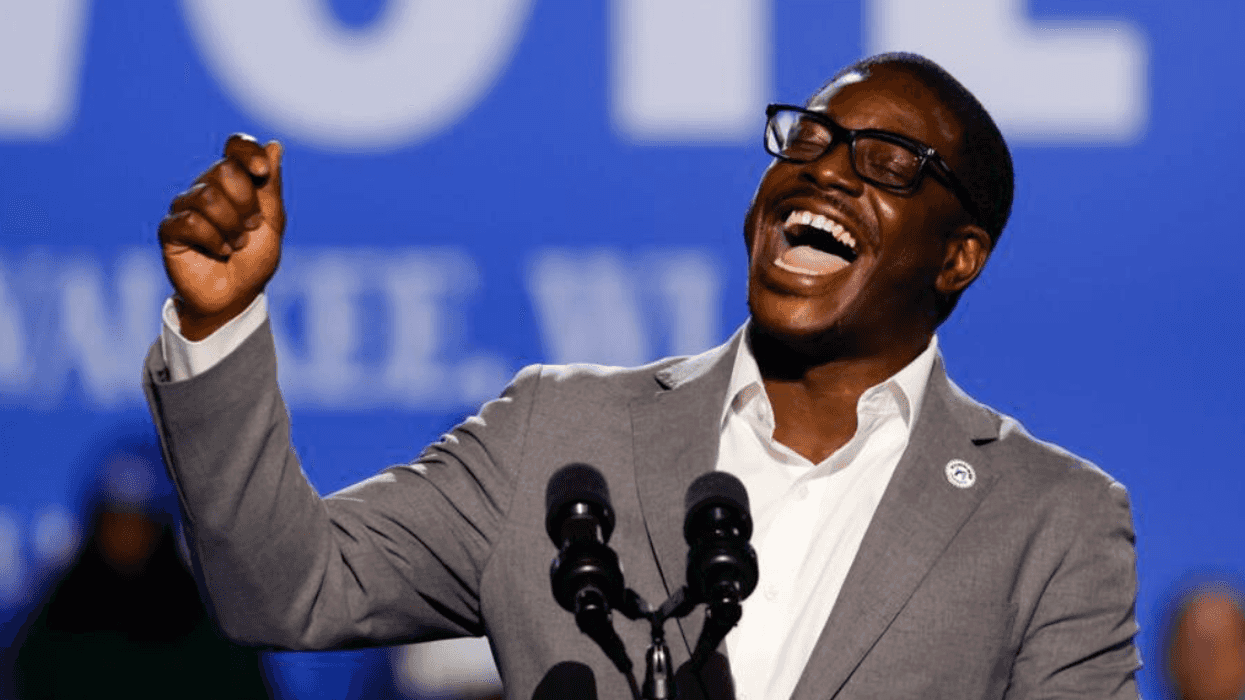
A recent poll in the Michigan Democratic Senate primary has 67 percent of blacks supporting the white candidate, Rep. Haley Stevens. Only 21 percent back the DSA's Abdul El-Sayed. A prominent El-Sayed supporter, William Lawrence, is on record denouncing black political leaders as a "pillar" of the "capitalist, imperialist" American establishment. Their support of the Democratic leadership, Lawrence said, "defangs the white left."

He really said that.

Sanders has a spotty history on race. He had joined the white flight out of New York City in the 1960s, when a new generation of black activists didn't care to take orders from white liberals. Sanders repaired to Burlington, Vermont, then less than one percent black. There he built a white-dominated socialist movement, using people of color as window dressing from the very start.

In his 2020 presidential campaign, Sanders' chief black intellectual, Cornel West, called Barack Obama a "Rockefeller Republican in blackface." (Also, a "war criminal.")

New York Mayor Zohran Mamdani has followed the playbook. He has an odd character named Gustavo Gordillo defending his city-run grocery stores. Co-chair of DSA's New York chapter, Gordillo is an immigrant from Peru who studied "radical Latin American cinema" in college. He tried to move up in the art world, but after apparently not succeeding, decided to try his hand as a DSA celebrity.

Gordillo is now on TV "explaining" Mamdani's plan for government groceries, one costing taxpayers an amazing $30 million. Asked whether it's OK for publicly owned stores to put nearby bodegas out of business, Gordillo chirped that if bringing down prices in the neighborhood "is enough to put someone out of business, then maybe they shouldn't have been in that business in the first place."

The bodega owners are largely Dominican, Yemeni or from other recent immigrant groups. Their little stores are entrepreneurial ventures that put families on the path of economic advancement. The owners work their tails off long into the night, often confronting criminals bent on everything from shameless shoplifting to armed robbery.

And now Gordillo is on TV arguing that bodega owners who can't compete with stores built with taxpayer dollars — and that don't have to pay rent or property taxes — are somehow deficient businesspeople.

None of the above is made up, I swear.

Froma Harrop is an award winning journalist who covers politics, economics and culture. She has worked on the Reuters business desk, edited economics reports for The New York Times News Service and served on the Providence Journal editorial board.
Reprinted with permission from Creators.

Is The DSA Actually Democratic? Or Are Its Candidates An Extremist Gift To MAGA?

Is The DSA Actually Democratic? Or Are Its Candidates An Extremist Gift To MAGA?

Should those of us who want to defeat the proto-fascists in charge of the Republican Party be worried about a few blue districts that have recently indulged their ids and voted for members of the Democratic Socialists of America? Yes. If their victories become a trend, it could sabotage the Democratic Party.

In a way, Democrats should be grateful to Trump. In the past 18 months, he has done all he can to alienate the swing voters who boosted him to victory in 2024. Young voters, black men and Hispanics are particularly disappointed. This is, or should be, a rare moment of hope for the opposition.

Yet it's almost as if a subset of Democratic primary voters rubbed their hands together and asked: "What can we do to improve the GOP's prospects? Let's vote for Democratic Socialist candidates like Claire Valdez, Darializa Avila Chevalier, Melat Kiros, and Janeese Lewis George!" The primary voters who chose those candidates have done Republicans a huge favor. Six months ago, Republicans had almost nothing to run on. Now, instead of attempting to explain high prices, a terrible war, an immigration crackdown that has shocked the conscience, and corruption beyond anything in American history, Republican candidates can and will put these DSA candidates in the front window as emblematic of the "communist" turn the Democrats are taking.

When one party has gone mad, it's understandable that some in the other party feel radicalized, too. But that's a trap. In the first place, the GOP's idiocy opens an opportunity to win back some of the moderates Democrats have recently lost. But by embracing ideas that are on the fringes of American public opinion, Democrats risk further alienating swing voters.

Democrats don't have the same luxury as Republicans to indulge extreme ideas because the baseline political environment is moderately conservative. Gallup found in January that 35 percent of Americans call themselves conservative, 33 percent moderate and 28 percent liberal. Most Democrats recognize this balance. A May New York Times/Siena poll found that 52 percent of Democrats and those who lean toward the Democrats believe the party should move to the center to win the next presidential election.

Finally, in addition to the ideological makeup of the electorate, the Electoral College gives a structural advantage to small states that tends to help the GOP. As a result, Democrats need to win 60 percent of moderates in order to win presidential elections.

That's the pragmatic case. The substantive argument could fill volumes, but let's address a few issues.

Responding to the flurry of victories by DSA candidates, some complacent souls ask, "What's so bad about socialism? It's working well in Sweden."

That's a common misconception. Sweden implemented semi-socialist policies in the 1960s featuring extremely high taxes, government ownership of key industries, extensive regulation of the economy, and generous welfare benefits. But growth slowed, wages stagnated, debt accumulated, and in the early 1990s, the country experienced a terrible financial crash. In the short term, it spent as much as four percent of GDP and even nationalized two banks to prevent a financial collapse and save its banking sector — but the long-term reforms that followed focused more on fiscal discipline.

Johan Norberg has written convincingly of Sweden's post-crisis turn away from government control of markets:

"Public spending was reduced, and fiscal rules that lowered debt were introduced. Taxes were cut and abolished entirely on wealth, gifts, and inheritances. Business sectors were deregulated, government-owned enterprises privatized, and social security reformed.

"Sweden also became a pioneer in privatizing welfare services, giving citizens the freedom to choose private providers, including for-profit businesses, of elder care, health care, preschool, and education. Most notably, Sweden introduced a national school voucher system. The private sector now provides around a fifth of all tax-funded welfare services."

While Sweden has a high tax-to-GDP ratio and a very high top individual tax rate, it has a very low corporate tax rate and an average individual tax burden below the mean for OECD countries.

The stories of the other Nordic countries are similar — with the exception of Norway, which is both more capitalistic than its American reputation would suggest and a petrostate. In general, the highly egalitarian countries of Northern Europe are not socialist, but free-market, capitalist countries with large safety nets underwritten by high taxes on the middle class. Like the United States, they tax income, but they also levy high value-added taxes on consumption, which hit the middle class harder than American sales taxes do.

If it were possible to fund a generous welfare state by taxing only the rich, someone would have figured out how to do so. But France tried a millionaires tax and soon repealed it, as did Austria and Denmark with similar measures. Sure, we could raise taxes on the rich, but it's simply wrong to imagine, as Bernie Sanders tirelessly insists, they have enough to carry the load themselves. Even confiscating all the wealth of America's 800 or so billionaires wouldn't be enough to fund a more generous safety net for more than a year or so.

Some naive souls say: "We have nothing to fear from Democratic Socialists of America. After all, the word 'democratic' is in their name." A word about names. There is a spectrum of left-wing parties and ideologies. There are socialists who believe in and abide by democratic norms. They sit in parliaments throughout the world. But those who didn't live through the Cold War may not be aware that communist countries had a habit of calling themselves democratic and socialist.

It was the unfree East Germany whose official name was the German Democratic Republic. West Germany, which was actually democratic, was the Federal Republic of Germany. The USSR, the ur-communist nation, was the Union of Soviet Socialist Republics. North Korea is formally the Democratic People's Republic of Korea, Yugoslavia was the Socialist Federal Republic of Yugoslavia, and so on. The joke went around in those days that the easiest way to tell if a country was undemocratic was whether it had "democratic" in its name. Names can be deceiving.

The Democratic Socialists of America are not the Stasi or Juche zealots, but neither are they benign Nordic redistributionists. The DSA platform calls for abolishing the police and prison system; defunding the U.S. military entirely and closing all international military bases; ending sanctions on Cuba, Venezuela, Iran and other nations that have merely "acted independently of the United States"; replacing the presidency and Supreme Court with bodies chosen by Congress; instituting a 32-hour work week; canceling all student debt; and basically free everything: housing, healthcare, retirement and schooling. The DSA holds the United States and NATO responsible for Russia's invasion of Ukraine, Israel responsible for October 7, and capitalism responsible for every sparrow that falls anywhere in the world.

The DSA's political leadership is divided between a menshevik faction that supports something that could be fairly described as democratic socialism, and a bolshevik faction that is avowedly communist — though itself split among Marxists, Marxist-Leninists, Maoists, Trotskyists, and various other flavors. The structure of the DSA is as convoluted as any communist party's, but in toto, the communists seem to be dominating. And while their economic views are mockable, the implications of communist sympathies are dead serious.

Unlike socialists, communists do not believe in democracy. There has never been a communist country that delivered prosperity or freedom to its people. On the contrary, communism is an assault on human rights and human dignity. Communist regimes claim to take power from oligarchs or royalists or capital, but in fact they always and without exception take power from the people. They abolish not just free exchange of goods and services but free expression, religious observance, artistic freedom, the right to vote, the right to travel — and, by the way, the right of workers to organize. Past proletarian paradises had to erect walls and shoot people to keep them inside. In the words of George Orwell, "A boot stamping on a human face — forever."

The Democratic Party has a long history of misinterpreting or being blind to the abuses of communism. But from the founding of Americans for Democratic Action in 1947 by Eleanor Roosevelt, Reinhold Niebuhr, Arthur Schlesinger, Jr. and others, to the exclusion of communist-dominated unions from the CIO, to the marginalization of Henry Wallace, Democrats took decisive steps to keep the far left at bay. And while some Democrats in the post-Vietnam era took a "no enemies to the left" approach to foreign policy, they got over it when the Berlin Wall fell and the reality of the communist oppression became indisputable.

Today, only six percent of Democrats label themselves as socialists. Rachel Janfaza, who studies Generation Z and has interviewed hundreds of young voters, has yet to find a single one who identifies as a Democratic Socialist.

The vibes may be exciting, especially because New York Mayor Zohran Mamdani's smiling face disguises the authoritarianism of the movement that nurtured him, but if Democrats are going to win this year and in 2028, they must reject the DSA. If you're tempted by a Democratic Socialist this year, think of what use Republicans will make of these victories, and ask yourself whether you want to do favors for fascists.

Shop our Store

Headlines

Editor's Blog

Trending

World