Behind Tomorrow's Federal Reserve Decision, A Delicate Economic Balancing Act
They just keep comin.’
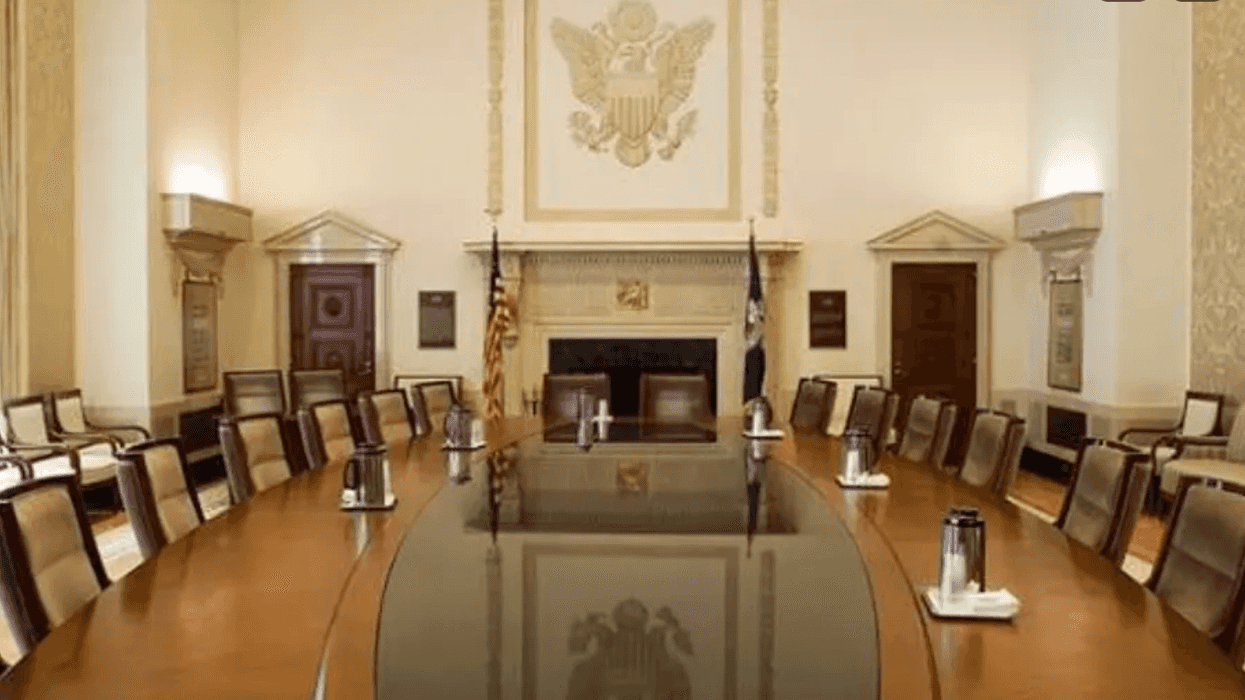
I’m talking about those FOMC (Federal Open Market Committee) meetings that take place about every six weeks in the big boardroom at the Federal Reserve’s headquarters in Washington, D.C.
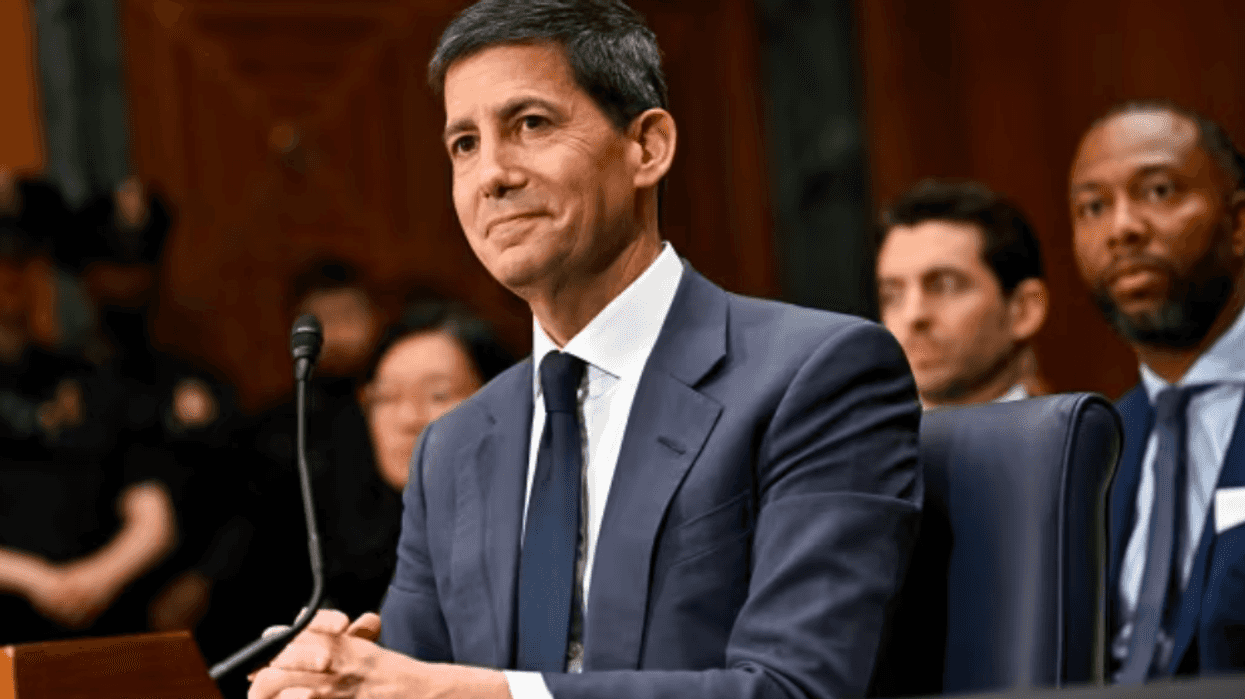
The committee is meeting as we speak, and will announce their rate decision tomorrow at 2pm ET, as per usual, followed by a presser with Chair Warsh, his second since he was confirmed. Given Warsh’s campaign to do a lot less telegraphing about how the Fed is assessing the economy and the monetary policy path, there was some question as to whether Warsh would keep these every-meeting pressers going. But, at least for now, he’ll evade answer questions from the press tomorrow at 2:30.
(Note to the chair: You’re not fooling me, Kevin! Your strategy, which I grant you is clever, is to be so opaque and elusive at these pressers that the reporters give up and the markets tune out. FTR, that could work! Though it does leave a lot of investors scratching their heads in ways that seem sub-optimal to me, as I stress below.)
The big question, given inflation’s persistence above target, is will the FOMC come off of neutral and raise the interest rate they control. As I write, the market probability of a 25bps hike is 36%, up 10 ppts from a week ago.
In this brief note, I’d like to talk about the macroeconomics of the Fed’s balancing act right now, as we are in a somewhat weird macro/monetary moment. I wouldn’t call it stagnation—slow growth with high inflation—because growth is pretty good. Expectations for Q2 GDP, out later this week, are tracking around 2% (though GDPNow is at 1.6%). Job growth has picked up lately, and is probably a bit above breakeven (the number needed to keep unemployment stable). Wage growth, at around 3.5%, nominal, is a bit low relative to productivity, meaning no inflationary pressure there.
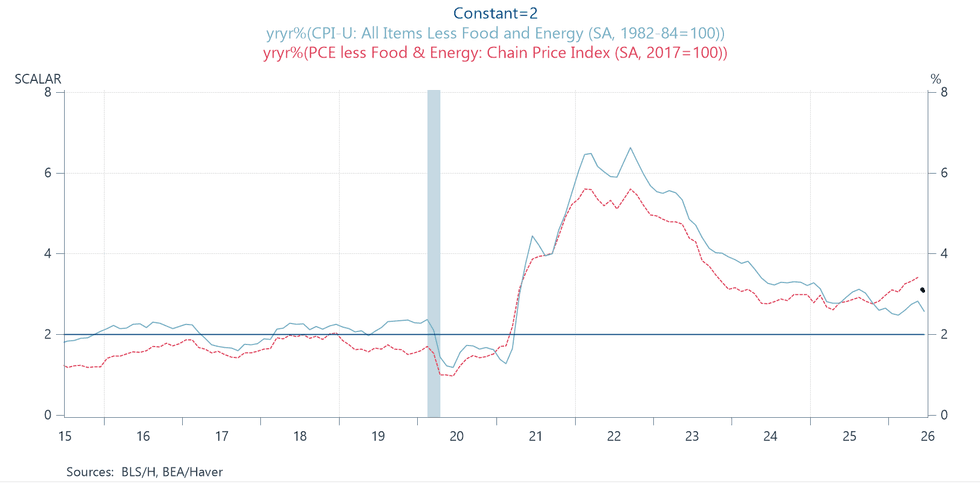
In other words, no macro overheating, yet inflation remains elevated. The figure below shows core CPI and core PCE, with a dot for the latter’s June value (also coming later this week), expected to come in at ~3%, a point above target. And that’s before energy prices, which bleed a bit into the core, picked up this month as Trump’s Iran war heated up again.
This puts us in a familiar place, one I’ve personally lived through in the Biden years, with good but not overheated growth and high inflation, in this case—a stark difference with the sitch back in my day—due mostly not to exogenous shocks (pandemic-induced supply chain disruptions), but to Trump’s inflationary policies, including tariffs and the war (there’s also demand-side inflationary pressures from AI spending).
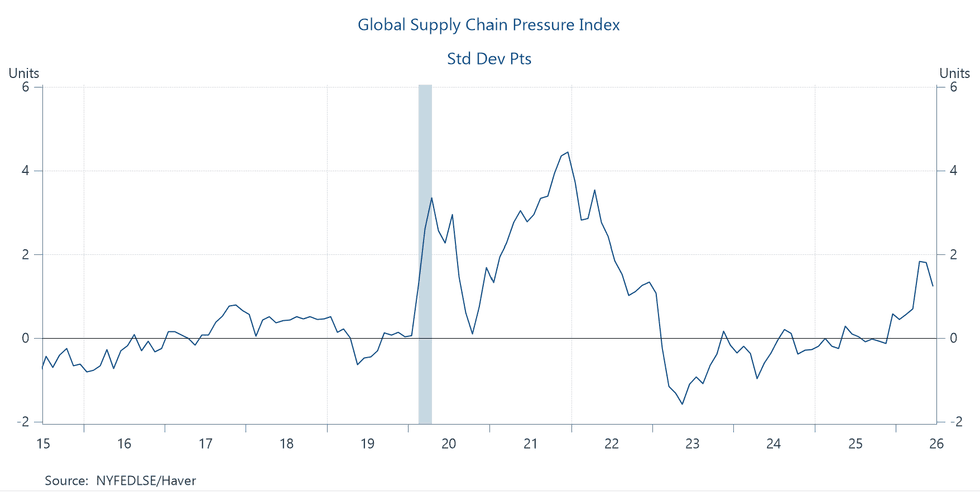
Of course, supply chains are not as battered now as they were then (see figure), but they’re clearly elevated. And isn’t the Fed supposed to “look through” that sort of thing? Doesn’t that militate against raising rates?
To an extent, yes, for two reasons. One is that such shocks tend to dissipate. Tariffs, like any tax, should give a one-time bump to the price level and then underlying inflation takes over. And the war could end. The problem with that thinking, however, is that it ignores the elephant Orange Menace in the room. Trump can’t let the tariffs rest anymore than he can extract us from his war of choice.
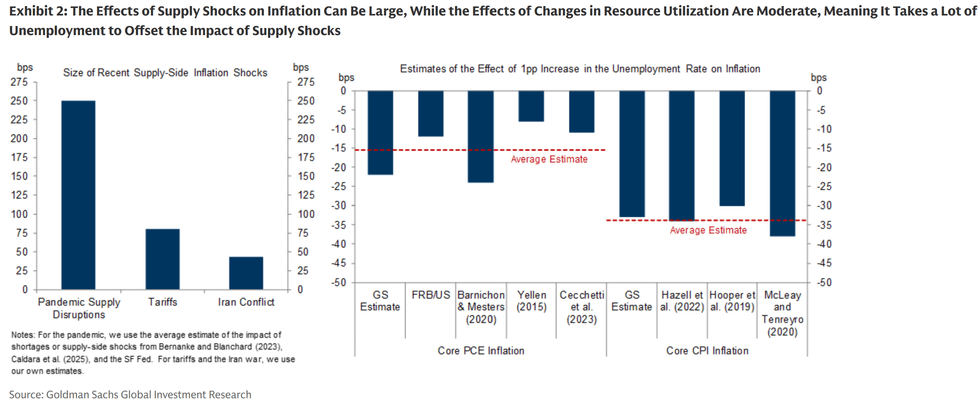
The second reason the Fed might be averse to hiking into mostly supply-shock driven inflation is that it takes too much damage to the economy’s demand side to blunt supply-side inflationary impacts. As GS recently put it: “…a key lesson of recent years is that the effects of supply shocks on inflation are often large, while the effects of changes in resource utilization [demand] are moderate.”
They cited a recent Yellen speech underscoring this point, and Janet knows a bit about this:
“Monetary policy cannot tame supply-driven inflation without exacting unacceptable unemployment costs.” Those steep costs, she added, lie behind the standard central bank wisdom that “Looking through supply shocks should remain the default strategy unless inflation expectations are at genuine risk of becoming unanchored.”
There are numbers to back up this thinking. Below you see GS’s basis-point impacts of supply shocks vs. demand shocks (a one ppt higher unemployment rate) on inflation. They’ve got the tariffs adding about 75bps and the war, about 40bps, so 1.15 ppts higher inflation. Then, on the right, they’ve got one point more unemployment reducing core PCE inflation by just 15bps, averaging over a few studies. Do the math and that’s far too much unemployment to offset Trump’s supply shocks.
But, my fellow Fed-watchers, the story does not end there. I put heavy weight on Janet’s caveat: “…unless inflation expectations are at genuine risk of becoming unanchored.”
If you’re on the FOMC, there’s no way you can be cavalier about that warning. Eyeball that first figure above and you’ll see that core inflation has exceeded the target for years. It’s fine, in specific, time-limited cases to call “supply-shock…nothing to see…move along folks.” But this isn’t that. David Mericle, GS’s Chief US economist put it exactly right in a recent podcast:
…they’re done litigating what exactly is causing inflation, asking the question of whether or not it’s appropriate to look through the different factors causing high inflation. If we continue to see high inflation, many of them feel like at this point we really need to respond to that because this has just gone on for too long, and I think everyone agrees that at some point, in principle, even if this is a long series of one-time supply shocks, it would become dangerous. It would risk making people a little bit too accustomed to high inflation and make it potentially take on a life of its own.
So, I don’t think they hike tomorrow, and based on the economic analysis above, I wouldn’t go there. But I would hope they lean into a hawkish bias in the statement. I additionally hope Warsh puts aside his man-of-mystery schtick and gives some version of the above analysis in his presser tomorrow.