Tag: george washington
ICE Tactics Disgrace Us -- And Resemble Abuses Closer To Home Than 'The Gestapo'

ICE Tactics Disgrace Us -- And Resemble Abuses Closer To Home Than 'The Gestapo'

When Joe Rogan compares your tactics to that of the Gestapo, your rock-solid coalition might be in trouble. In January, the popular podcaster, who famously interviewed Donald Trump in the lead-up to the 2024 presidential election and endorsed him, expressed his disgust at the tactics of Immigration and Customs Enforcement on American streets.

“Are we really going to be the Gestapo? ‘Where’s your papers?’ Is that what we’ve come to?”

And Rogan is not alone.

Democratic Rep. Seth Moulton denounced “Gestapo-type stuff happening in the streets of America” after the killing of protester Alex Pretti in Minneapolis, joining other politicians, such as Minnesota Gov. Tim Walz, who have made that connection.

But the critics who flinch at the scenes out of Minneapolis need not have traveled so far back or far away for a combustible example of a clash between the power of the state and the public.

In a time before cellphones but with photographers documenting the scenes, American law enforcement acted as an occupying force rather than protectors. The citizens they came after were simply asserting their rights — to live where they wanted, to access shops and hotels and jobs they were overqualified for, to vote.

Those citizens were joined by allies who may not have been the targets of a government intent on control and subjugation but who still recognized that attacks on some were attacks on the very idea of America itself.

Ironically, during the civil rights movement, it was the federal government that provided a relief, of sorts, by sending in federalized National Guard troops to enforce laws that rebellious states resisted.

Today, it’s federal agents who storm in to grab power, smash things and people, and claim, in the false words of Vice President JD Vance, “absolute immunity.”

This isn’t an oppression Olympics, or an attempt to diminish the atrocities Hitler’s Germany unleashed or the experiences of the millions who suffered and died because of the actual Gestapo.

It’s about judging the Third Reich as singular, about seeing it for what it was, and seeing America for exactly what it is and has been. It’s an acknowledgment that fighting the powerful has always been a long and bloody struggle — abroad yes, and definitely at home.

You can be shocked at the scenes all the world now views through a haze of tear gas in previously calm Minneapolis neighborhoods, while recognizing their familiarity.

When we are used to digesting American history in TV-movie fashion, with clear heroes and villains and a clean resolution of justice by the closing credits, it fosters frustration when real life isn’t so cooperative and the people who resist don’t always win.

In fact, sometimes they die. And when that happens, it seems a senseless invitation to despair.

That’s why I’m not mad at those who observe unarmed citizens being tear-gassed, shoved and beaten, approached by masked men pointing weapons, and immediately reach to another country’s worst abuses.

We want to believe that it can’t happen here, at least not for long.

It makes it so much easier to judge what has happened and is happening in American cities from Chicago to Portland (Oregon and Maine) as aberrations in a country that mostly gets it right.

There is a reason the Trump administration is absolving and elevating U.S. soldiers who massacred Native Americans. There is strategy in attempts to obliterate any uncomfortable history about enslaved Americans who fought back, such as Ona (Oney) Judge, who fled George Washington’s President’s House, choosing a difficult and at times impoverished freedom, and never regretted it. (You will no longer find stories like hers in the Washington exhibit in Philadelphia, courtesy of America’s new rulers.)

But that erasure is a lot harder when veteran civil rights activists are alive and well, with memories of armed enforcers, police officers, sheriffs and judges who truly had absolute immunity from consequences. The children set upon by dogs and knocked down by the force of fire hoses can and do tell their stories.

Maybe I clearly see the connection because, though I was too young to know the meaning of what was going on, I remember the worry of parents who sent their three oldest out to protest, with nothing but a poster as protection.

As a journalist, I’ve interviewed folks like Democratic Rep. Jim Clyburn of South Carolina and the late John Lewis of Georgia, who often gave witness before his death.

Lewis said that when he started his trek across the Edmund Pettus Bridge in 1965, a young man in a trench coat and toting a back pack, he didn’t know if he would make it to the other side alive. And though he did, photos of Lewis aiding women felled by policemen’s batons proved his fears were righteous.

Then and now, images made America notice, especially when the faces beamed around the world included white college students, clergy and housewives, protesters who saw Black Americans as neighbors rather than “the other” and joined the fight.

Then and now, there was shock when law enforcement treated them with the same disregard as Black men, women and children on the front line.

Anyone is free to make those parallels to authoritarian countries run by lawless secret police with orders from the top.

But never forget that what we’re going through now is all-American.

It’s especially important in the year of our country’s 250th birthday, one that, let’s face it, marks a “founding” that doesn’t consider those who lived here before the British, the colonists, and the United States of America.

In the lead-up to America’s anniversary celebration, it’s necessary to highlight how we achieved the progress that deserves celebration, and to remember that there has never been progress without pushback, often from those who should be on the side of justice.

Mary C. Curtis has worked at The New York Times, The Baltimore Sun, The Charlotte Observer, as national correspondent for Politics Daily, and is a senior facilitator with The OpEd Project. She is host of the CQ Roll Call “Equal Time with Mary C. Curtis” podcast. Follow her on X @mcurtisnc3.

Reprinted with permission from Roll Call

Sucking Up: House Republicans Want To Give Trump A Gold Medal

Sucking Up: House Republicans Want To Give Trump A Gold Medal

The first Congressional Gold Medal was struck in 1776 as a way of saying thanks to George Washington. Since then, the medal has been awarded just 184 times to hallowed figures including Mother Teresa, Rosa Parks, Nelson Mandela, and the Dalai Lama. Compared to the 647 civilian Presidential Medals of Freedom or the 3,517 military Medals of Honor, the Congressional Gold Medal is the rarest of the great honors awarded in America.

Naturally, a group of Republicans is angling to present one to Donald Trump.

As Politico reports, Rep. Anna Paulina Luna of Florida is leading a squad of six Republicans determined to bestow a medal on Trump. Adding to the absurdity, they claim they want to award the medal because of Trump’s “dedication to strengthening America’s diplomatic relations.” Which apparently means threatening to abandon allies, enabling Vladimir Putin, and exchanging “love letters” with Kim Jong Un.

Finding the best way to show obeisance to Donald Trump is every modern Republican’s major obsession. Checking in at Trump’s criminal trial for falsifying documents to hide a sexual encounter with a porn star and protect his candidacy in the 2016 election is the hot new ticket for Republicans hoping to survive the 2024 election—and the purges that would follow a Trump victory.

However, not everyone can blow off a day of work and run to a New York courthouse to help Trump get around his gag order.

Scoring some sweet time in front of Fox News cameras to tell Trump they want to give him the greatest honor Congress can award must sound pretty good to this group of House Republicans, which includes Rep. Lauren Boebert and Chief Deputy Whip Guy Reschenthaler.

They get to talk about Trump’s accomplishments in the field of diplomacy, like that time Trump decided to launch a verbal war on Canada. Or how Trump prepared individual insults for G20 leaders. Or his no-U.S.-translator-allowed meetings with Putin. Or how world support for the U.S. crashed under Trump and rebounded under Joe Biden.

But they know it’s all just pretend. There’s absolutely zero chance that Trump will get a Congressional Gold Medal for his “exceptional leadership.”

That’s because the medal can only be awarded through an act of Congress. Two-thirds of the members on the House Committee on Financial Services and the Senate Committee on Banking, Housing, and Urban Affairs are required to sponsor any proposed recipient before the measure can even make it to the House and Senate floor for a vote. And then the measure has to pass the full House with two-thirds of the vote.

Trump isn’t going to get past square one, and all six of those pushing this little scheme know it. This is just another example of so-called virtue signaling by Republicans—where the only virtue they understand is bolstering Trump's ego.

There is another shiny option Trump can strive for: the Congressional Award Gold Medal, which has been awarded to thousands of Americans. To get one, Trump would only have to do 400 hours of voluntary public service, 200 hours of personal development, 200 hours of physical fitness, and a five-day, four-night expedition or exploration. It sounds unlikely, but Republicans might declare that Trump’s rallies, social media attacks, golf outings, and court time in Manhattan satisfy those requirements.

He would also need to be between 14 and 18 years old. But considering the things Republicans are willing to believe about Trump, that doesn’t seem like an insurmountable problem.

Reprinted with permission from Daily Kos.

Why General Lee Doesn't Deserve A Statue But Jefferson Does

Why General Lee Doesn't Deserve A Statue But Jefferson Does

Reprinted with permission from Creators

In New York City, a statue of Thomas Jefferson has graced the City Council chamber for 100 years. This week, the Public Design Commission voted unanimously to remove it. "Jefferson embodies some of the most shameful parts of our country's history," explained Adrienne Adams, a councilwoman from Queens. Assemblyman Charles Barron went even further. Responding to a question about where the statue should go next, he was contemptuous: "I don't think it should go anywhere. I don't think it should exist."

When iconoclasts topple Jefferson, they seem to validate the argument advanced by defenders of Confederate monuments that there is no escape from the slippery slope. "First, they come for Nathan Bedford Forrest and then for Robert E. Lee. Where does it end? Is Jefferson next? Is George Washington?"

No historical figure is without blemish, they protest. And it's unfair to condemn our ancestors using today's standards. If owning slaves is the discrediting fact about Lee, how then can we excuse George Washington? As if on cue, "TFG" chimed in with a statement chiding the city for "evicting" the "late, great Thomas Jefferson, one of our most important founding fathers." Not so important, apparently, that former President Donald Trump felt the need to learn about him though, because the next phrase was "a principal writer of the Constitution of the United States." Sigh. No, Jefferson was in Paris during the Constitutional Convention. He authored another founding document Trump hasn't read. But never mind.

There is an answer — a reason why it's right to remove Robert E. Lee from his pedestal in Richmond, Virginia, yet wrong to exile Thomas Jefferson from a place of honor in American life. It requires grappling with the full complexity of human beings and the mixed legacy of history. We must, as William Shakespeare said, "Take them for all in all," that is, judge them for their entire lives, not just a part.

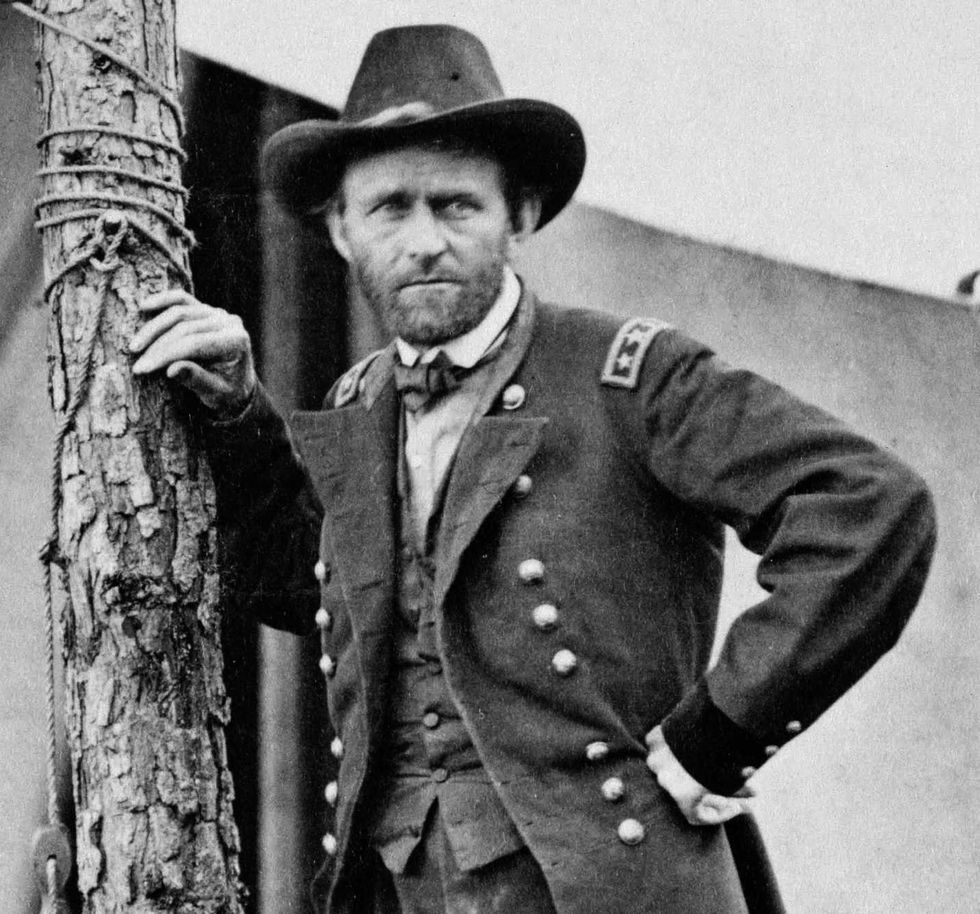
People who defend monuments to Lee on the grounds that he played an important role in our history are confusing significance with honor. Lee surely played a huge role in our history, but as the leader of an army whose aim was to destroy the union. That made him a textbook traitor. As Ulysses Grant put it in his memoir, recalling his feelings upon accepting Lee's surrender at Appomattox Court House, Lee had fought "valiantly" but for a cause that was "one of the worst for which a people ever fought, and one for which there was the least excuse."

Is it fair to judge Lee by our modern standards? Perhaps not, but even by the standards of his own day, he is wanting. Much has been made of Lee's supposedly agonizing decision to resign his U.S. Army commission because he could not "raise my hand against my birthplace, my home, my children." But others, including Gen. Winfield Scott, who offered Lee command of the Union army in 1861, also hailed from Virginia, yet remained loyal, as did Virginian Gen. George Henry Thomas, the "Rock of Chickamauga," and an estimated 100,000 white Southerners who fought for the Union.

Lee's image has been sanitized and even beatified by purveyors of the "Lost Cause" narrative about the Confederacy. They've depicted Lee as an upright, chivalrous defender of tradition, a moral man and a Christian. But, as Adam Serwer reminds us, Lee was a cruel slave master. In the words of Wesley Norris, one of his slaves who attempted to escape and was whipped, "Not satisfied with simply lacerating our naked flesh, Gen. Lee then ordered the overseer to thoroughly wash our backs with brine, which was done." As the leader of the Army of Northern Virginia, Lee enslaved all of the Black Union soldiers he captured as well as free Black Pennsylvanians his army encountered.

As the author of the Declaration of Independence, Jefferson enshrined the ideals that made this nation. Jefferson's words formed our national identity as free people and marked a departure in human affairs. A 19th-century Hungarian nationalist, Lajos Kossuth, called the American Declaration of Independence "the noblest, happiest page in mankind's history."

Was Jefferson a hypocrite? Oh, yes. One of history's most flamboyant. He owned slaves and almost certainly fathered children with his dead wife's half sister, Sally Hemings, an enslaved woman. But he never defended the institution (as Lee did), quite the contrary. He wrote, "I tremble for my country when I reflect that God is just."

Do we overlook Jefferson's shameful private behavior? No, but we take him in full. His contribution to human liberty, despite his personal behavior, entitles him to a place of honor. There will always be an asterisk, but to say that statues honoring him "shouldn't exist," as the New York City assemblyman did, is to dismiss the Declaration, the American anthem.

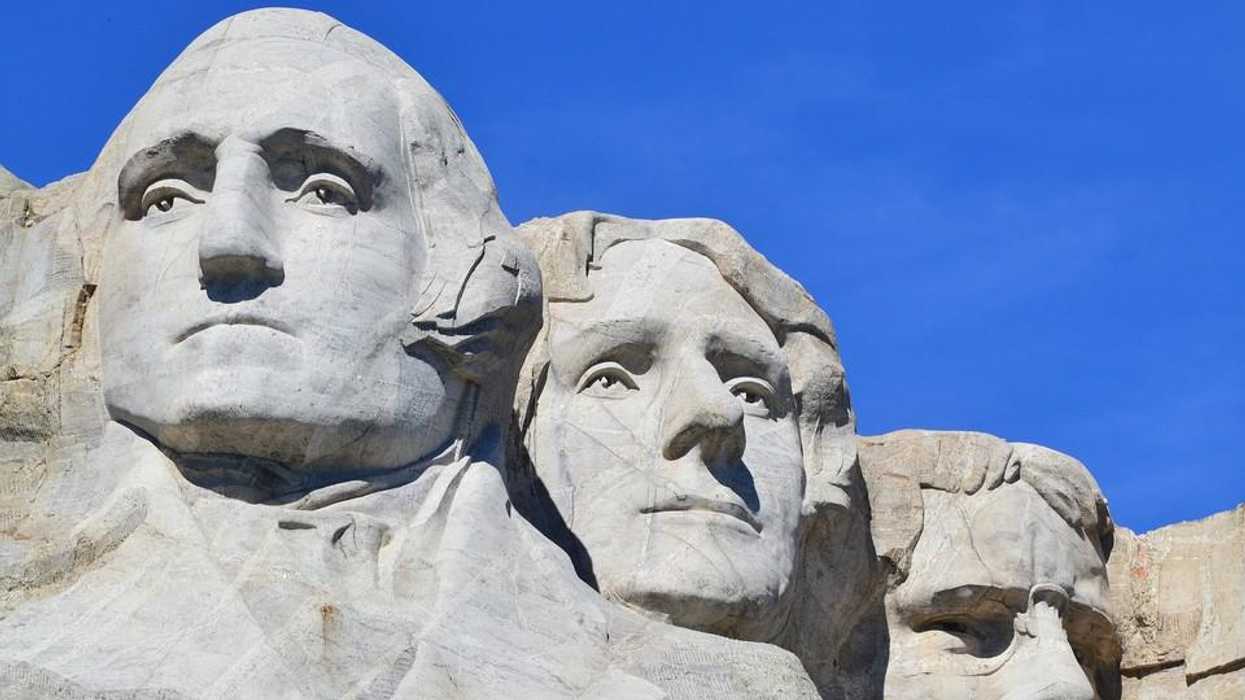
As for George Washington, there would have been no nation to criticize or lionize without him. If Jefferson was the poet laureate of liberty, Washington was the living exemplar of republican virtue. Having led the revolution, he could have proclaimed himself king or dictator. Some urged him to do so. When King George III was told by the American artist Benjamin West that Washington intended to resign and return to private life after winning his country's freedom, the king said, "If he does that, he will be the greatest man in the world."

He was. Many a revolutionary leader came after him. Most became despots in turn. None has achieved his greatness.

Yes, Washington held human beings in bondage, and that was terrible. Owning slaves is a blight on his record, but the rest shines bright. No nation that has judgment — and gratitude — can fail to honor him forever.

Mona Charen is policy editor of The Bulwark and host of the "Beg to Differ" podcast. Her most recent book is Sex Matters: How Modern Feminism Lost Touch with Science, Love, and Common Sense."To read features by other Creators Syndicate writers and cartoonists, visit the Creators Syndicate webpage at www.creators.com.

Photo credit: mercuryatlasnine at Pixabay

Rep. Jim Jordan

Jim Jordan Gets A History Lesson On Vaccine Mandates

Reprinted with permission from Alternet

Always determined to attack Democrats any way he can, Rep. Jim Jordan of Ohio has been loudly pushing anti-vaxxer ideas. On Monday, September 6, the far-right Republican congressman tweeted that "vaccine mandates are unamerican." And it didn't take Twitter users long to remind Jordan that in fact, vaccine mandates have a long history in the United States.

From businesses to the U.S. Armed Forces to schools, vaccine mandates existed in the United States long before the COVID-19 pandemic. And one of the medical experts who gave Jordan a badly needed history lesson was Houston-based Dr. Peter Hotez, who has made countless appearances on MSNBC and CNN in 2021. In response to Jordan, Hotez tweeted:

Twitter user Morten Øverbye, based in Oslo, Norway, reminded Jordan that a vaccine mandate came from George Washington, the United States' first president, back in 1777:

Here are some of the other tweets that fact-checked Jordan:

Shop our Store

Headlines

Editor's Blog

Corona Virus

Trending

World