Tag: haley stevens
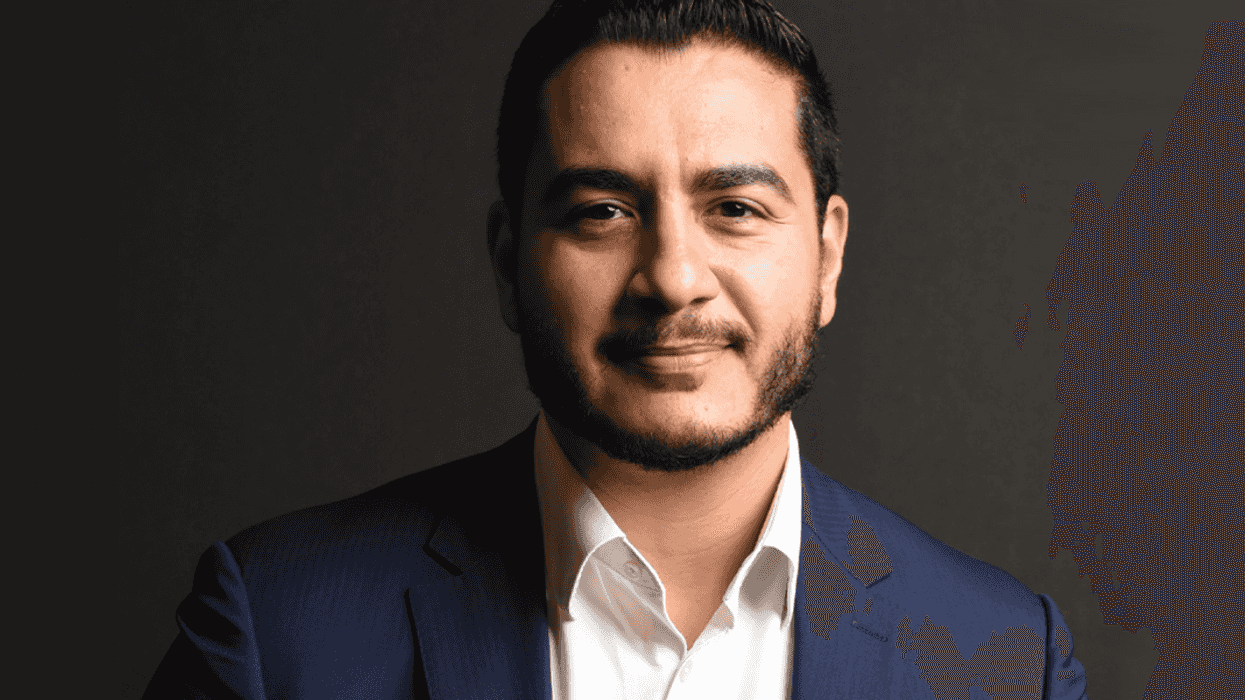
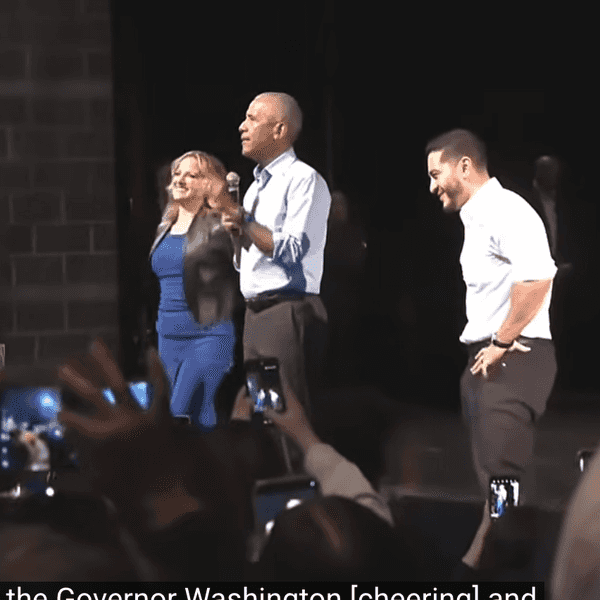
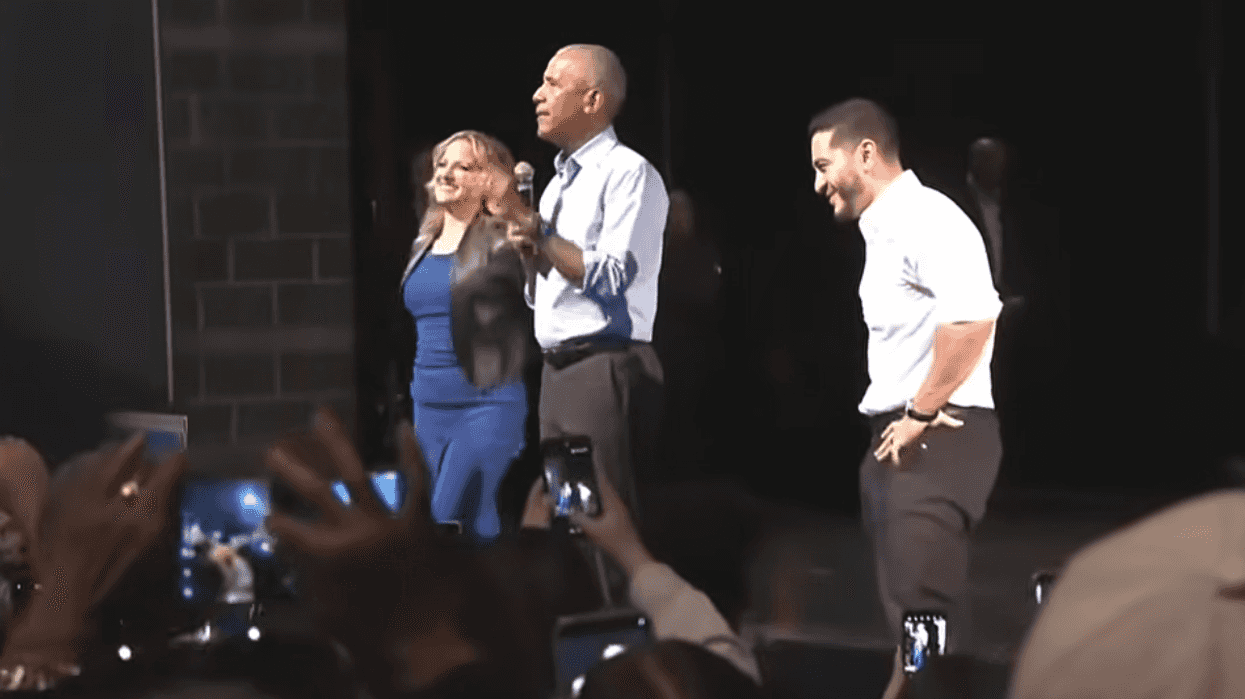
Benson, Obama and El-Sayed

In Michigan, Former Democrat Haley Stevens Goes Over To The Dark Side

Michigan Democratic Rep. Haley Stevens has stunned the political world by endorsing Republican Mike Rogers in the Senate race.

Stevens narrowly lost the Democratic Senate primary to Dr. Abdul El-Sayed in August, after a bitter campaign that featured more than $30 million in spending by groups affiliated with the pro-Israel lobby AIPAC supporting Stevens.

Stevens endorsed El-Sayed after the primary, but the two have barely spoken since, and have not campaigned together. Their biggest disagreement has been over Israel, with Stevens a strong supporter of the country and El-Sayed a vocal critic of its war in Gaza and U.S. military assistance.

Things escalated Wednesday when Stevens’ fiancé, Jason Turkish, told The Detroit News that he would vote for Republican Senate nominee Mike Rogers, citing concerns about El-Sayed’s positions on Israel. Still, Stevens appeared on CNN to reaffirm that she would vote for El-Sayed, but the vibes certainly seemed off, so much so that the El-Sayed campaign asked her to stay away from his campaign, canceling a joint appearance planned for Sunday.

On Friday, Stevens issued a lengthy statement demanding that El-Sayed condemn an advertisement from Cenk Uygur’s Rebellion PAC, an independent progressive group supporting his candidacy. The ad featured grocery shoppers nonsensically blaming Israel for high grocery prices at home. In fact, it was a recycled ad Uygur cut for his own quixotic 2024 presidential bid (did you know that was a thing?). Stevens called the ad antisemitic and accused El-Sayed of blaming Israel for Michigan’s economic problems.

More bizarrely, Stevens demanded that El-Sayed remove an ad featuring Tucker Carlson criticizing Rogers, claiming it disrespected the state’s Black community. (Endorsing Rogers, on the other hand, somehow honors that community?) On Saturday, El-Sayed explicitly rejected that Rebellion PAC ad, saying, “I do not agree with the contents of that ad.”

Stevens seemed to be okay with things at that time. Prominent LGBTQ+ writer Charlotte Clymer says she actually spoke to Stevens Saturday. “Feeling a bit absurd in pointing out the obvious and being far kinder than I should have been, I reminded her that the outcome of this senate race will be viewed in the light of a future Supreme Court vacancy, and I expressed a hope that all of us understand the stakes,” she wrote on X. “She assured me she’s supporting Dr. El-Sayed, sent me a video of a recent speech she gave blasting Mike Rogers and said this: ‘Still stands. I promise.’”

She added: “Whatever other political differences we have, she has always made it clear to me she would stand with LGBTQ people. It was a red line she refused to cross. Instead, she has made the inexplicable decision to endorse a man who views LGBTQ Americans as second-class citizens unworthy of full equality.”

Stevens’ staff has been resigning en masse.gu

El-Sayed responds:

This will have zero impact on the race. It has effectively ended Stevens’ career as a Democrat.

She’ll likely end up on Fox News as one of those “the party left me” tokens they love so much.

Update:
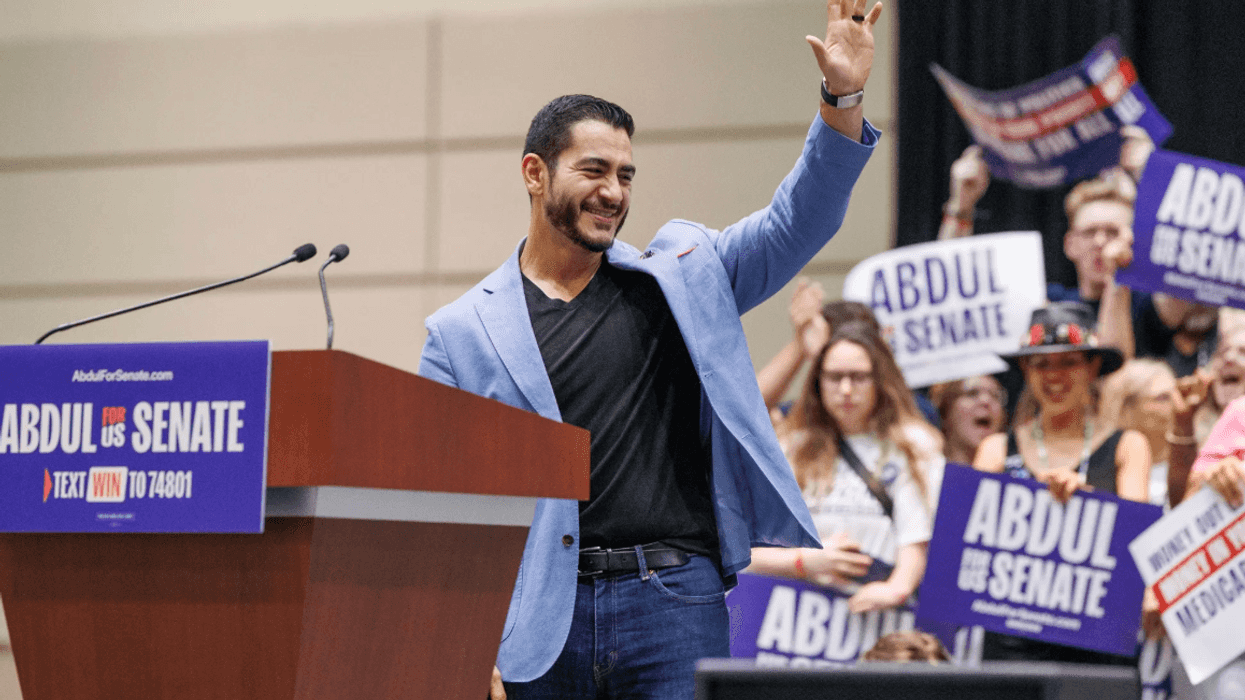

Abdul el-Sayed

Michigan Delivers A Hard Lesson For AIPAC, But Will They Ever Learn?

There are plenty of explanations for what happened in the Michigan Senate Democratic primary, where Dr. Abdul El-Sayed, a progressive, was declared the victor over Rep. Haley Stevens, a moderate, by a razor-thin margin of one percent.

For starters, he was the outsider, a former public health official talking about the fundamental economic issues, while she was Senate Minority Leader Chuck Schumer's second choice (after Gov. Gretchen Whitmer) for the seat. He was, according to observers, the better communicator, the better orator, connecting on issues of affordability while she was expounding on her love for Michigan. He worked harder. He started campaigning well over a year ago and did some 500 public events against a candidate who stayed mostly out of the public eye and dodged tough questions.

And the polls were wrong, as usual. The polls were projecting a double-digit El-Sayed victory. That didn't happen. It turned into a cliffhanger, and El-Sayed only won by a razor-thin margin. So in that sense, as is always true of very close races, anything could have made the difference.

But there are certain facts coming out of Michigan that cannot be denied. Rep. Stevens was supported by some $60 million in outside money, including more than $30 million from the American Israel Public Affairs Committee. That's AIPAC, for short, the pro-Israel lobby that used to wield enormous clout in Washington and in national politics. Her extraordinary support from AIPAC became an issue in the campaign, as did her opponent's stance on Israel.

Dr. El-Sayed is the sort of candidate that AIPAC exists to defeat. He believes that Israel committed genocide in Gaza. He has pledged to cut U.S. military aid to Israel. And, according to The New York Times, he has said he does not believe Israel should exist as an explicitly Jewish state. Throughout the campaign, El-Sayed attacked Stevens for her pro-Israel position, and said he hoped to go to Washington to influence policy on Israel, especially among the party's 2028 hopefuls.

AIPAC spent more money, according to the Times, trying to beat El-Sayed than any outside group has in a primary this year. They put $30-plus million on the scale and became a much-debated issue in the campaign for doing so. The message to other candidates is clear: AIPAC money comes with a price. Did it hurt Stevens more than it helped her? While apologists for AIPAC may spin that even with prevailing winds against them, they almost pulled it off, the fact of the matter is that they didn't pull it off. They lost.

A few years ago, there would have been no place in the Democratic Party for a candidate like El-Sayed. His views on Palestine would have been unacceptable. He would not have been given a speaking role at a national convention. As I write this, the party is unifying behind him to give him a speaking and voting role in the U.S. Senate.

As the polls have measured, accurately, public opinion on Israel has shifted dramatically, and negatively. Some of us continue, albeit with difficulty, to draw a line between our support for Israel and our opposition to its current government, but most people don't. They don't view Israel through the Holocaust-tinged glasses of my generation. We know this. AIPAC has to know this. The lesson of Michigan cannot be that they just needed a little more money. The message is not working.

Susan Estrich is a celebrated feminist legal scholar, the first female president of the Harvard Law Review, and the first woman to run a U.S. presidential campaign. She has written eight books.


el-sayed

Michigan Democrats Urging Unity After El-Sayed Wins Close And Costly Primary

Abdul El-Sayed narrowly won Michigan’s Democratic nomination for U.S. Senate on Tuesday, defeating Rep. Haley Stevens in a major victory for the party’s progressive faction.

Stevens conceded in a congratulatory call to El-Sayed and immediately endorsed him after a bitter race that featured more than $60 million in spending on her behalf by the American Israel Public Affairs Committee (AIPAC). She joined other Democrats critical of the insurgent candidate’s position on Israel, Gaza, and the Mideast conflict -- including State Sen. Mallory McMorrow, who dropped out of the primary, and Sen. Elissa Slotkin – to call for unity in the general election against Republican nominee, former Rep. Mike Rogers.

“Congratulations to Abdul El-Sayed for winning the Democratic nomination for Senate.,” Slotkin posted on social media. “It’s been a long primary, but now it’s time to gear up to beat Mike Rogers (again) and win up and down the ticket. There is nothing more important than the mission of the next 90 days: uniting, keeping this seat blue, flipping the House and Senate, and providing a real check on President Trump.”

After noting that his upset victory “shook up the world,” El-Sayed reciprocated with an equally conciliatory tone, noting the “great conversation” with Stevens, whom he described as “one of the most committed public servants that you’ll ever meet…whatever differences that we might have had in the primary, they pale in comparison to what unifies us.”

In other Michigan primaries, Sunrise Movement co-founder Will Lawrence defeated former Ambassador Bridget Brink and former Navy Seal Matt Maasam to face GOP Rep. Tom Barrett in the state’s Seventh District, while State Rep. Donovan McKinney, a Democratic Socialists of America (DSA) member, beat incumbent Democratic Rep. Shri Thanedar in the 13th District. Observers regared McKinney’s victory over Thanedar as determined more by ethnic solidarity in a Detroit community – the winner is Black, the loser Asian-American – than ideology.

Aside from the DSA-flavored results in the Great Lakes State, there were few triumphs for the left. In Missouri, Rep. Wesley Bell overwhelmingly defeated former Rep. Cori Bush, a DSA stalwart supported by Sen. Bernie Sanders (I-VT) and highly critical of party leadership. Centrist or moderate candidates also won primaries in Virginia, while the more progressive candidate won the Democratic gubernatorial nomination in Kansas.

Missouri voters also rejected a Republican initiative to abolish the state income tax by a margin of four-to-one – a sign that middle America is in no mood to entertain the GOP’s oligarchic platform.

Why China's EV Industry Should Honor Trump As 'Salesman Of The Year'

Why China's EV Industry Should Honor Trump As 'Salesman Of The Year'

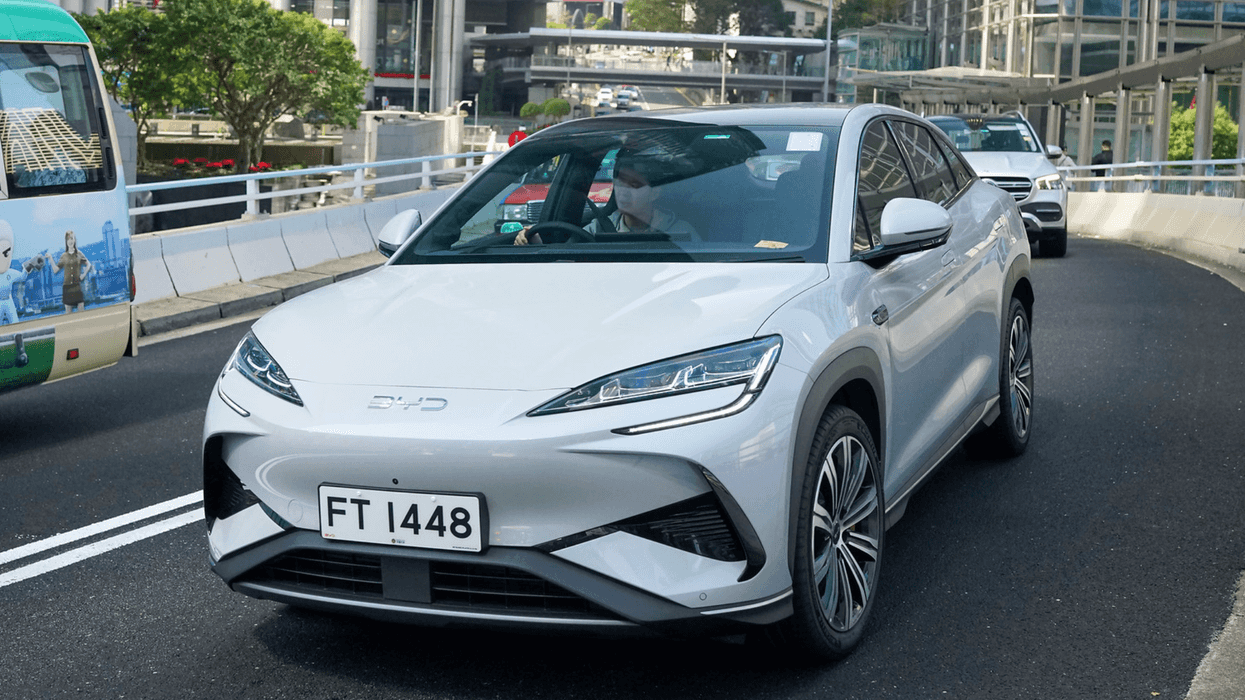
China exported 435,000 electric vehicles (EV) in May, a 100 percent increase from its exports in 2025. Its total exports of cars was 809,000, an increase of 73 percent from last year. By comparison, domestic U.S. vehicle sales in May were 1,470,000. That means China’s exports of cars were equal to 55 percent of U.S. purchases in the month, while its EV exports were almost 30%.

Donald Trump can legitimately take credit for the surge in China’s EV exports. As he might say, “frankly, if it wasn’t for me, their EV exports would not be growing like that.”

Trump has lit a rocket under China’s EV industry. While EV sales by producers worldwide are rising, no one was better situated to benefit from the surge in demand created by Trump’s war on Iran than China’s producers. Chinese producers account for more than 70% of global EV sales. That share is likely to rise, even as the market expands rapidly.

Trump’s war helped to boost sales not only by raising the price of gas, it also created enormous uncertainty about future prices. With one of the world’s major superpowers run by a person who apparently gives no consideration to the impact his actions have on the world economy, driving a gas-powered car looks like a much riskier proposition.

What is neat about this surge in EVs is that it is irreversible. People who buy EVs rarely switch back to gas-powered cars, especially in countries that have the infrastructure and charging stations to support EVs. And more EVs on the road create political and economic pressure to upgrade the infrastructure to facilitate their use.

EVs can be thought of as being like a virus; the more that get sold, the more they spread. When a large segment of car users has EVs, governments and businesses set up charging stations and repair shops. Also, when people see their co-workers, friends, and neighbors driving EVs and saving a fortune on gas and maintenance, they become interested in owning one themselves. Once EVs get a big foot in the door, their spread is pretty much impossible to stop.

That is one reason why some of us have argued for allowing at least some number of high-quality, low-cost Chinese EVs into the U.S. market. People could then see the benefits of EVs. Ideally, we would work out an arrangement where China transferred the technology so that the cars could be produced here, with union labor.

Unfortunately, the Trump administration has zero interest in going this route. It would rather double down on archaic technology.

The story is actually getting worse. There has been legislation introduced in Congress that would prohibit Chinese cars from even entering the United States. This would prevent someone from Canada or Mexico from driving their car over the border for a visit.

Apparently, the bill’s sponsors, Sen. Elissa Slotkin and Rep. Haley Stevens, both Democrats from Michigan, are worried about allowing people in this country from even seeing Chinese cars. This shows that not all whack job stuff in U.S. politics originates with Donald Trump.

But getting back to Trump and the green transition, it’s not just China’s EV exports that Trump sent skyrocketing. Its exports of solar panels are up 60 percent year over year. China’s exports of wind turbines to the EU rose 66 percent over 2025, and its battery exports worldwide were up 42 percent.

The bottom line is that Donald Trump’s war in Iran has done far more to jumpstart the green transition than almost any conceivable policy that a Biden-Harris administration might have put in place. That is great news. The unfortunate part is that China is at the center of it, and that it had to come about through war.

Dean Baker is a senior economist at the Center for Economic and Policy Research and the author of the 2016 book Rigged: How Globalization and the Rules of the Modern Economy Were Structured to Make the Rich Richer. Please consider subscribing to his Substack.


Shop our Store

Headlines

Editor's Blog

Trending

World