Tag: interest rates
Housing Finance Chief Pulte Instigated Subpoena Threat Against Powell

Housing Finance Chief Pulte Instigated Subpoena Threat Against Powell

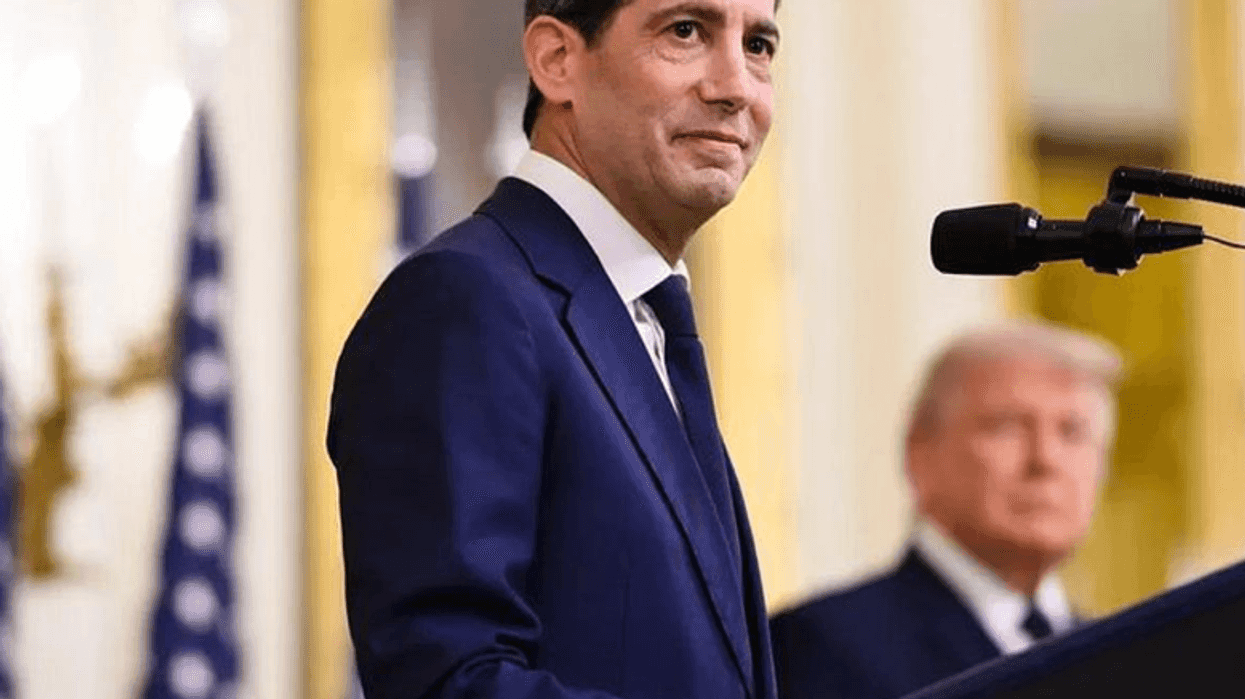
Multiple news reports show that Federal Housing Finance Agency Director Bill Pulte, who has long participated in Fox News' and President Donald Trump’s pressure campaign to encourage Federal Reserve Chair Jerome Powell to cut interest rates, played a prominent role in the Trump administration’s decision to send subpoenas to the Fed and threaten Powell with criminal indictment on Friday.

Powell has called the investigation a “pretext” and said the real reason for the subpoenas and threats is his clashes with the president on interest rates.

Pulte began pressuring Powell via social media to lower interest rates beginning last May and repeatedly called for him to resign. Pulte also claimed that Powell had lied in his Senate testimony when questioned about the costs associated with renovating the Federal Reserve Board Building in Washington, D.C., and called for a congressional investigation into Powell. Last summer, Pulte even reportedly drafted a letter for Trump to fire Powell.

Pulte also urged the Justice Department to investigate other targets of Trump’s ire, including Fed board member Lisa Cook, who was perceived to be an opponent of Trump’s interest rate agenda, as well as Sen. Adam Schiff (D-CA) and New York Attorney General Letitia James, who had both investigated Trump. Fox News was a major platformer of Pulte’s attacks against Trump’s targets. After Pulte’s attacks against Cook apparently crumbled, he disappeared from Fox for several weeks.

On Sunday, Bloomberg News reported that Pulte “was a driving force” behind Friday’s subpoenas targeting Powell. From Bloomberg’s report:

Federal Housing Finance Agency Director Bill Pulte was a driving force behind the Trump administration’s decision to subpoena the Federal Reserve, according to people familiar with the matter, intensifying pressure on the central bank as President Donald Trump prepares to pick a new Fed chief.

The head of the typically staid FHFA has been a vocal force within the administration, pushing controversial housing policy ideas and investigating Trump’s foes for mortgage fraud. Pulte submitted a criminal referral to the DOJ about Fed Governor Lisa Cook that is at the root of Trump’s push to fire her. The Supreme Court is set to take up the Cook case later this month.

The next day, Politico reported that backlash to the threat to indict Powell has ironically led to some Trump administration “officials and allies again calling for the ouster of” Pulte, whom they “suspect” is “behind the latest inquiry.” Politico additionally reported:

Pulte, who spent months last year lambasting Powell on social media and on television, recently pitched Trump on ousting Powell, going so far as to bring “wanted” posters of the Fed chief along with him, according to three of the people familiar.

Indeed, Axios also reported that the day the subpoenas were served to the Federal Reserve, Pulte said to reporters outside of the White House: “We do need to get rid of Jay Powell. He's a disaster.” Pulte reportedly added: “What he's caused with the building is a disgrace to the Fed. The Fed has no credibility as a result of him.”

On January 13, The Wall Street Journal reported: “In recent weeks, one administration official who lobbied for a probe was Bill Pulte. … Pulte had previously argued in favor of opening an investigation into Powell in private conversations with the president and senior administration officials.”

An editorial from the Journal noted that “our sources say Bill Pulte of the Federal Housing Finance Agency wrote a report that made its way to Jeanine Pirro, the U.S. Attorney for Washington, D.C.,” whose office sent the subpoena.

The editorial also called for “firing Mr. Pulte before he can cause any more embarrassment” to the administration.

Amid all the reporting of Pulte’s key involvement in the subpoena against Powell, he turned to Fox Business anchor Maria Bartiromo for her softball treatment in an apparent effort to control the damage. Even though Bartiromo had expressed her own reservations about the threatened indictment against Powell earlier, she pressed Pulte on this news for less than one minute, during which he denied involvement, and let him ramble about other topics for the remainder of the interview.

Reprinted with permission from Media Matters

Assault On Federal Reserve Is Not Only Unlawful -- It's Economically Insane

Assault On Federal Reserve Is Not Only Unlawful -- It's Economically Insane

News broke last night that at Trump’s behest, the Federal Reserve received grand jury subpoenas from the Justice Department, threatening a criminal indictment against Chair Jay Powell. The charges are nonsense—nothing about monetary policy; just ginned up, phony accusations that Powell lied to Congress regarding the renovations of Fed buildings—and markets are reacting negatively this morning to this threat to the central bank’s independence, as they should, with equity futures down, gold and interest rates up.

Trump’s attack on Powell and the Fed for not lowering interest rates more aggressively than they’ve been doing has been ongoing since he got back in office. And until now, Powell’s response has been to keep his head down, even when that head was covered with a hardhat, not engaging with Trump and calmly doing data-driven monetary policy.

No mas. It takes a lot to get our embattled Fed chair to take the gloves off but that’s what he did, releasing this powerful statement and video last night (my bold).

This new threat is not about my testimony last June or about the renovation of the Federal Reserve buildings. It is not about Congress’s oversight role; the Fed through testimony and other public disclosures made every effort to keep Congress informed about the renovation project. Those are pretexts. The threat of criminal charges is a consequence of the Federal Reserve setting interest rates based on our best assessment of what will serve the public, rather than following the preferences of the President.
This is about whether the Fed will be able to continue to set interest rates based on evidence and economic conditions—or whether instead monetary policy will be directed by political pressure or intimidation.
I have served at the Federal Reserve under four administrations, Republicans and Democrats alike. In every case, I have carried out my duties without political fear or favor, focused solely on our mandate of price stability and maximum employment. Public service sometimes requires standing firm in the face of threats. I will continue to do the job the Senate confirmed me to do, with integrity and a commitment to serving the American people.

There are many reasons why Trump’s latest attack is just plain dumb.

First, the renovation pretext is phony baloney. Powell’s statement re this is correct. He did not lie to Congress, and I wouldn’t be surprised if Trump and co. fail to even get the grand jury to indict. As you likely know, there’s precedent for such failures lately as high-level cases (Letitia James, Comey) brought on flimsy evidence and flawed procedure have collapsed.

Second, Powell’s term ends in a few months. True, he could move from the chair to the committee, wherein his term would last two more years. But to the extent that Chair Powell is a problem for Trump, May is not far off. Why create all this market-moving angst? (I have an answer to that below.)

Third, while Trump can and will replace Powell with a someone to do his bidding on rates, the chair is but one member of the committee that votes on Fed interest rates, so for Trump to prevail he’d have to replace more members with his puppets. True, he’s working on that too, and perhaps this latest move is intended to intimidate the others.

Fourth, market investors are, as noted, not happy with this new action. Many of these participants are aware of the fact that history is littered with economies that have been severely damaged, typically through runaway inflation, when the political independence of the central bank is compromised. There’s a plausible scenario wherein even as a Trump-driven Fed is lowering rates, markets could push hard in the other direction.

Fifth, the Fed is already lowering interest rates! They have to do so step-by-step, versus Trump’s demands for bigger cuts, but there’s no credible, responsible Fed that would cut at the rate he demands.

Finally, this Fed under Chair Powell’s direction is doing precisely what we need him to do and what he said in his statement: “set[ting] interest rates based on evidence and economic conditions.” Not on political considerations, but on economic and financial ones. And, while close Fed-watchers will always have some legitimate beefs with the central bank’s implementation of monetary policy, they’ve got a very solid record, most recently helping to pull off a rare “soft-landing,” helping to bring down inflation without causing an economic downturn.

Source: Federal Reserve Board/Haver Analytics

I am fortunate to be friends with David Wilcox, a former high-ranking Fed staffer (director of research) who is one of the most respected voices these days on all issues regarding the institution. Here’s his highly efficient summary of this moment.

President Trump is clearly frustrated that he hasn’t been able to force the Fed to set rates based on his wishes rather than the cold analytics of the situation. This is his latest effort to escalate the battle. Unfortunately for the President, he has chosen to do battle with someone not prone to being intimidated — because that’s not Jay Powell’s personal character and because Powell has some pretty robust institutional protections coded in the Federal Reserve Act.

Exactly.

Like I said, this case may not even have the legs Trump seems to think it does. What I think he’s doing here is just desperately flooding the zone on a daily basis, weekends included. Whether it’s illegally invading a sovereign nation, shamefully avoiding accountability for ICE killings, throwing out one bad “affordability” idea after another, harassing private businesses to do his bidding (most recently, oil companies who are wisely cautious about investing in a highly unstable country), or trying to undermine the independence of the Fed, he’s flailing like a madman. The only king he reminds one of at this point is King Lear.

The goals are to push the Epstein files out of the news, to “stick it to the libs,” to manifest his xenophobia, enrich himself, distract the media, etc. And don’t get me wrong: I’m not dismissively saying none of this matters. Of course, it does. But at this point, it’s just a constant firehose of destructive, and even murderous, chaos.

Jared Bernstein is a former chair of the White House Council of Economic Advisers under President Joe Biden. He is a senior fellow at the Council on Budget and Policy Priorities. Please consider subscribing to his Substack.

Reprinted with permission from Econjared.

Federal Reserve's Rate Cut Won't Do Harm, But Its Next Chair May Be Ruinous

Federal Reserve's Rate Cut Won't Do Harm, But Its Next Chair May Be Ruinous

Yesterday the Federal Reserve cut the federal funds rate — the interest rate on overnight loans between banks, which the Fed effectively controls — by a quarter point. There are four things you should know about that cut:

· Although Donald Trump has been screaming at the Fed, demanding big rate cuts, there isn’t actually a compelling case for cuts right now

· On the other hand, this cut is unlikely to do any harm

· In fact, Fed policy over the next few months barely matters

· The important questions now are political: Will Trump destroy the Fed’s independence, and do to monetary policy what he has done to health policy — put it in the hands of charlatans and cranks?

Why do I say that there isn’t a compelling case for a rate cut? The Fed has a “dual mandate”: It’s supposed to seek both price stability and full employment. To fulfil this mandate as best it can, the Fed normally cuts interest rates when the job market is weak, raises rates when inflation is running hot.

Right now, however, the job market and the inflation rate are giving conflicting signals. Unemployment is somewhat elevated — 4.4 percent compared with an average of four percent last year — and other indicators, like the time it takes workers to find jobs, are showing weakness. On the other hand, inflation is running at around three percent, above the Fed’s target of two percent. So you can make the case either for or against yesterday’s cut.

Indeed, the Fed’s official statement about the interest rate decision highlighted the ambiguity, noting the risks on both sides and justifying its move with a guarded reference to rising “downside risks to employment.”

For the wonkishly inclined: We can get more specific about the dual mandate by invoking the Taylor Rule, devised by the economist John Taylor in the 1990s, which offers a formula for setting the fed funds rate based on unemployment and inflation. Or actually I should say Taylor Rules, plural, since there are a number of variants. The Atlanta Fed offers a “Taylor rule utility,” which lets you pick among the variants or roll your own. But most versions say that the current level of rates is more or less right. Here’s what one comparison looks like:

Source: Version FOMCTaylor93UR

On the other hand, nobody thinks these estimates are precise, and as the Fed statement suggested, there are hints in the data that the labor market is weakening. So a 25 basis point cut is defensible too.

And none of this matters very much. Short-term interest rates, like the fed funds rate, have very little impact on the real economy.

And long-term rates, which matter a lot more than short-term rates, especially for housing, mostly reflect market expectations of Fed policy over the next few years, not the next few months. As a result, long-term rates and short-term rates can diverge. They can even move in opposite directions. The Fed began its current cycle of rate-cutting in September 2024. Since then the fed funds rate has come down significantly but the benchmark 10-year interest rate has gone up from a low of 3.6 percent to the current level of just under 4.2 percent:

Sources: Board of Governors of the Federal Reserve System, New York Federal Reserve, St. Louis Federal Reserve

What’s that about? Because the Fed tries to fulfil its dual mandate, it normally tries to set interest rates neither too high, which can lead to unnecessary unemployment, nor too low, which can lead to excessive inflation. If you ask me, the Fed should call its target the “Goldilocks rate.” Sadly, however, it’s usually referred to, unpoetically, as r* or r-star.

R-star can’t be observed directly, only estimated. And what has happened since last year is that many estimates of r-star have been marked up, for at least two reasons. First, the tax cuts in the One Big Beautiful Bill will lead to larger budget deficits — no, tariff revenues won’t make up the difference, even if the Supreme Court lets Trump’s clearly illegal tariffs stand. And these deficits will put upward pressure on long-term rates. Second, the AI boom has led to huge spending by tech companies, especially on data centers, which also puts upward pressure on long rates.

So if the Fed continues to operate normally – that is, without political interference -- movements in r-star will be the main driver of future interest rates. In particular, long rates will come down if AI is a bubble and that bubble bursts.

But will the Fed continue to operate normally? Or will monetary policy, like so much else in America these days, end up being ruled by Donald Trump’s whims?

I wrote last week about Kevin Hassett, Trump’s likely pick as the next Federal Reserve chairman, whom I described as an “ideological DEI hire” who is intellectually and morally unqualified for the job. It turns out that I’m not alone in that assessment, although I may be using unusually blunt language. CNBC regularly surveys financial experts for their views on Fed-related matters. According to their latest survey, featured in the chart below, almost all their experts believe that Hassett will get the job, but almost none of them think he should.

And even if Hassett doesn’t get the job, whoever does is almost certain to be totally subservient to Trump. And this will be a negative for the economy. First, if Trump succeeds in controlling monetary policy, he can exact a policy according to his whims, which are both incoherent and dangerous. He is demanding massive interest rate cuts even as he insists that the economy is A+++++ — in which case why does it need these cuts? Nor can we expect him to show proper concern about the inflationary consequences of big rate cuts given that he keeps claiming that overall prices are falling, which is simply false.

And second, even if Trump isn’t able to capture full control over monetary policy through his pick for Fed chair, the effects will still be negative. Because as I pointed out in my critique of Hassett, in times of crisis the Fed chair has to be capable of showing leadership and gravitas, as well as garnering trust. Given that the Fed’s future task has been made especially difficult by Trump’s chaotic policies, higher-than-desired inflation, a weakening job market, very high future deficits, and a falling dollar, installing a Trump sycophant as Fed chair would mean facing any future crisis without any of the reserves of credibility that got us through the global financial crisis in 2008 and the COVID crisis in 2020.

So however this turns out, politics is now what matters for the future of the Fed — not whether we have one or two rate cuts in 2026.

Paul Krugman is a Nobel Prize-winning economist and former professor at MIT and Princeton who now teaches at the City University of New York's Graduate Center. From 2000 to 2024, he wrote a column for The New York Times. Please consider subscribing to his Substack.

Reprinted with permission from Paul Krugman.

Yes, The Fed Should Lower Interest Rates (Because Trump Is Wrong On The Economy)

Yes, The Fed Should Lower Interest Rates (Because Trump Is Wrong On The Economy)

We all have come to accept that Trump makes totally whacked out claims about the economy, which his cabinet and other top aides must mindlessly repeat and embellish. His favorite invention is the booming economy.

Trump tells us that no one has ever seen anything like it. He boasts about $20 trillion dollars of investment coming into the country. At the same time, Trump is demanding that the Fed lower interest rates. If anything like Trump’s boasts were true, the Fed would be crazy to lower interest rates.

Twenty trillion dollars is two-thirds of GDP. If even one tenth of this amount of money was being added to investment it would imply a huge surge in demand. Rather than trying to boost the economy with a rate cut, with this sort of surge in investment, the Fed would be looking to raise rates to prevent inflation.

But everyone knows that Trump is lying about the massive inflow of investment. That exists only in his head. That is why the Fed will lower interest rates this week.

A rate cut should not be a close call, precisely because the economy is weak, not strong. The jobs data from the Bureau of Labor Statistics is now more than two months old due to the shutdown, but it was clear that it was weakening at the time and there is nothing in the data from private sources that change that picture.

The September jobs report showed the unemployment rate had risen to 4.4 percent. That is still low by historical standards, but it’s a full percentage point above the low hit in 2023. It’s also 0.5 percentage points above the average for the years 2018-2019, when there was no evidence of accelerating inflation.

The weakness is also more visible for the most vulnerable segments of the workforce. The unemployment rate for Black workers was 7.5 percent in September. That is 1.4 percentage points above the year ago level and 2.7 percentage points above the low hit in April 2023.

The unemployment rate for young workers between the ages of 20-24 was 9.2 percent in September. That was the highest rate since May of 2021. It is 3.7 percentage points above the low hit in April of 2023.

The job growth numbers also suggest a weakening labor market, although this is harder to read due to the curtailing of immigration. Without any substantial flow of immigrants into the labor market, the underlying rate of labor force growth is likely in the range of 30,000 to 60,000 a month.

Over the four months ending in September, the economy added an average of just under 40,000 jobs. This could be consistent with the underlying growth rate of the labor force, so the figure is not necessarily disturbing even though it is down from an average of 170,000 a month in 2024.

However, the distribution of the job growth does provide cause for concern. More than 90 percent of the jobs created over this period were in healthcare. Manufacturing has continued to lose jobs and construction employment was flat. With the DOGE attack on federal workers, the federal government is shedding jobs, while job growth at the state and local level has slowed to trickle.

The DOGE influence is also visible in the private sector. The category, “scientific research and development services” has lost almost 20k jobs this year (2.0 percent), undoubtedly in part the result of reduced grant funding. It had been growing modestly, adding 6,400 jobs in 2024.

The private labor market measures that have come out in the last two months support the view of a weakening labor market. The Indeed jobs posting index continued to decline into November, although it did have a modest uptick at the end of the month.

The ADP jobs measure has been weak since the Spring and showed a loss of 32,000 private sector jobs in November. Manufacturing was especially hard hit in the ADP data, losing 18,000 jobs.

It is pretty much impossible to look at any of these data series and have any concerns about the labor market overheating. There are clearly some inflationary pressures in the economy, but they are not coming from the labor market.

The most important source of inflation pressure is the Trump tariffs. Without these tariffs, inflation would likely be very close to the Fed’s 2.0 percent target right now, instead of hovering near 3.0 percent. The Trump administration’s mass deportation is likely also causing some upward pressure on prices by disrupting production in sectors like restaurants and construction. There also is upward pressure on electricity prices as a result of the AI boom and the resulting surge in energy prices.

Higher rates will not have any noticeable effect on these causes of inflation. If the Fed were to do a Volcker and raise rates enough to cause mass unemployment this could eventually lower wages, and thereby reduce inflation, but it doesn’t seem like anyone at the Fed has the stomach for double-digit unemployment.

Short of pulling a Volcker, it is not clear what the Fed could hope to accomplish with high rates. Perhaps that will slightly hasten the end of the AI bubble, which will reduce inflation, but that is a rather indirect way of accomplishing this goal.

In short, a rate cut at this week’s meeting should be a no-brainer with a clear signal that another cut at the next meeting is also likely. But these cuts will be because everyone at the Fed knows Donald Trump is lying about the state of the economy, not because anyone takes his claims seriously.

Dean Baker is a senior economist at the Center for Economic and Policy Research and the author of the 2016 book Rigged: How Globalization and the Rules of the Modern Economy Were Structured to Make the Rich Richer. Please consider subscribing to his Substack.

Reprinted with permission from Dean Baker.

Shop our Store

Headlines

Editor's Blog

Corona Virus

Trending

World