Yes, The Fed Should Lower Interest Rates (Because Trump Is Wrong On The Economy)
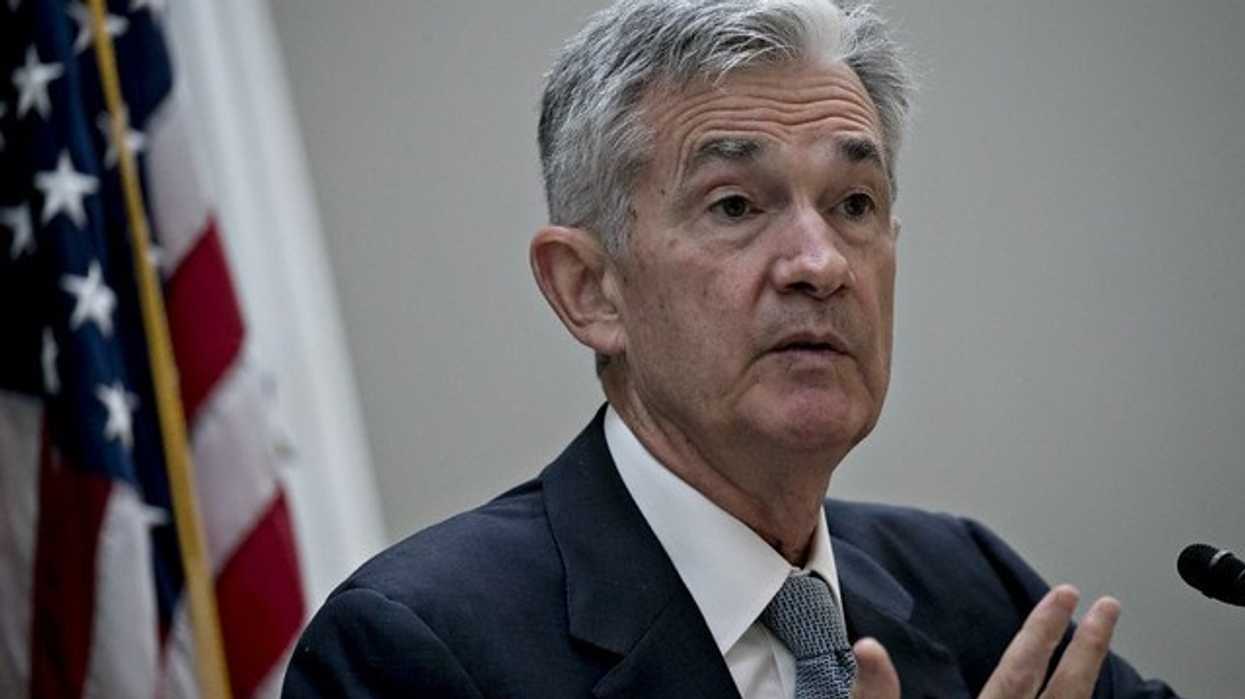
Fed Chair Jerome Powell
We all have come to accept that Trump makes totally whacked out claims about the economy, which his cabinet and other top aides must mindlessly repeat and embellish. His favorite invention is the booming economy.
Trump tells us that no one has ever seen anything like it. He boasts about $20 trillion dollars of investment coming into the country. At the same time, Trump is demanding that the Fed lower interest rates. If anything like Trump’s boasts were true, the Fed would be crazy to lower interest rates.
Twenty trillion dollars is two-thirds of GDP. If even one tenth of this amount of money was being added to investment it would imply a huge surge in demand. Rather than trying to boost the economy with a rate cut, with this sort of surge in investment, the Fed would be looking to raise rates to prevent inflation.
But everyone knows that Trump is lying about the massive inflow of investment. That exists only in his head. That is why the Fed will lower interest rates this week.
A rate cut should not be a close call, precisely because the economy is weak, not strong. The jobs data from the Bureau of Labor Statistics is now more than two months old due to the shutdown, but it was clear that it was weakening at the time and there is nothing in the data from private sources that change that picture.
The September jobs report showed the unemployment rate had risen to 4.4 percent. That is still low by historical standards, but it’s a full percentage point above the low hit in 2023. It’s also 0.5 percentage points above the average for the years 2018-2019, when there was no evidence of accelerating inflation.
The weakness is also more visible for the most vulnerable segments of the workforce. The unemployment rate for Black workers was 7.5 percent in September. That is 1.4 percentage points above the year ago level and 2.7 percentage points above the low hit in April 2023.
The unemployment rate for young workers between the ages of 20-24 was 9.2 percent in September. That was the highest rate since May of 2021. It is 3.7 percentage points above the low hit in April of 2023.
The job growth numbers also suggest a weakening labor market, although this is harder to read due to the curtailing of immigration. Without any substantial flow of immigrants into the labor market, the underlying rate of labor force growth is likely in the range of 30,000 to 60,000 a month.
Over the four months ending in September, the economy added an average of just under 40,000 jobs. This could be consistent with the underlying growth rate of the labor force, so the figure is not necessarily disturbing even though it is down from an average of 170,000 a month in 2024.
However, the distribution of the job growth does provide cause for concern. More than 90 percent of the jobs created over this period were in healthcare. Manufacturing has continued to lose jobs and construction employment was flat. With the DOGE attack on federal workers, the federal government is shedding jobs, while job growth at the state and local level has slowed to trickle.
The DOGE influence is also visible in the private sector. The category, “scientific research and development services” has lost almost 20k jobs this year (2.0 percent), undoubtedly in part the result of reduced grant funding. It had been growing modestly, adding 6,400 jobs in 2024.
The private labor market measures that have come out in the last two months support the view of a weakening labor market. The Indeed jobs posting index continued to decline into November, although it did have a modest uptick at the end of the month.
The ADP jobs measure has been weak since the Spring and showed a loss of 32,000 private sector jobs in November. Manufacturing was especially hard hit in the ADP data, losing 18,000 jobs.
It is pretty much impossible to look at any of these data series and have any concerns about the labor market overheating. There are clearly some inflationary pressures in the economy, but they are not coming from the labor market.
The most important source of inflation pressure is the Trump tariffs. Without these tariffs, inflation would likely be very close to the Fed’s 2.0 percent target right now, instead of hovering near 3.0 percent. The Trump administration’s mass deportation is likely also causing some upward pressure on prices by disrupting production in sectors like restaurants and construction. There also is upward pressure on electricity prices as a result of the AI boom and the resulting surge in energy prices.
Higher rates will not have any noticeable effect on these causes of inflation. If the Fed were to do a Volcker and raise rates enough to cause mass unemployment this could eventually lower wages, and thereby reduce inflation, but it doesn’t seem like anyone at the Fed has the stomach for double-digit unemployment.
Short of pulling a Volcker, it is not clear what the Fed could hope to accomplish with high rates. Perhaps that will slightly hasten the end of the AI bubble, which will reduce inflation, but that is a rather indirect way of accomplishing this goal.
In short, a rate cut at this week’s meeting should be a no-brainer with a clear signal that another cut at the next meeting is also likely. But these cuts will be because everyone at the Fed knows Donald Trump is lying about the state of the economy, not because anyone takes his claims seriously.
Dean Baker is a senior economist at the Center for Economic and Policy Research and the author of the 2016 book Rigged: How Globalization and the Rules of the Modern Economy Were Structured to Make the Rich Richer. Please consider subscribing to his Substack.
Reprinted with permission from Dean Baker.
- Will Supreme Court Nix Trump Tariffs, Boost Economy -- And Aid GOP In 2026? ›
- Yes, Republicans Are Happy To Raise Taxes -- On Poor And Working People ›
- Ken Griffin Says Soaring Gold Is A Key Signal -- And He May Even Be Right ›
- Republicans Push Skimpy, Unaffordable Health Coverage As Costs Keep Rising ›
- Assault On Federal Reserve Is Not Only Unlawful -- It's Economically Insane - National Memo ›
- With Courage And Grit, AI Workers Could Save Democracy - National Memo ›