Tag: kash patel
Cassidy Hutchinson

Bring Me The Head Of Cassidy Hutchinson! Why Trump's Vendetta Will Fail

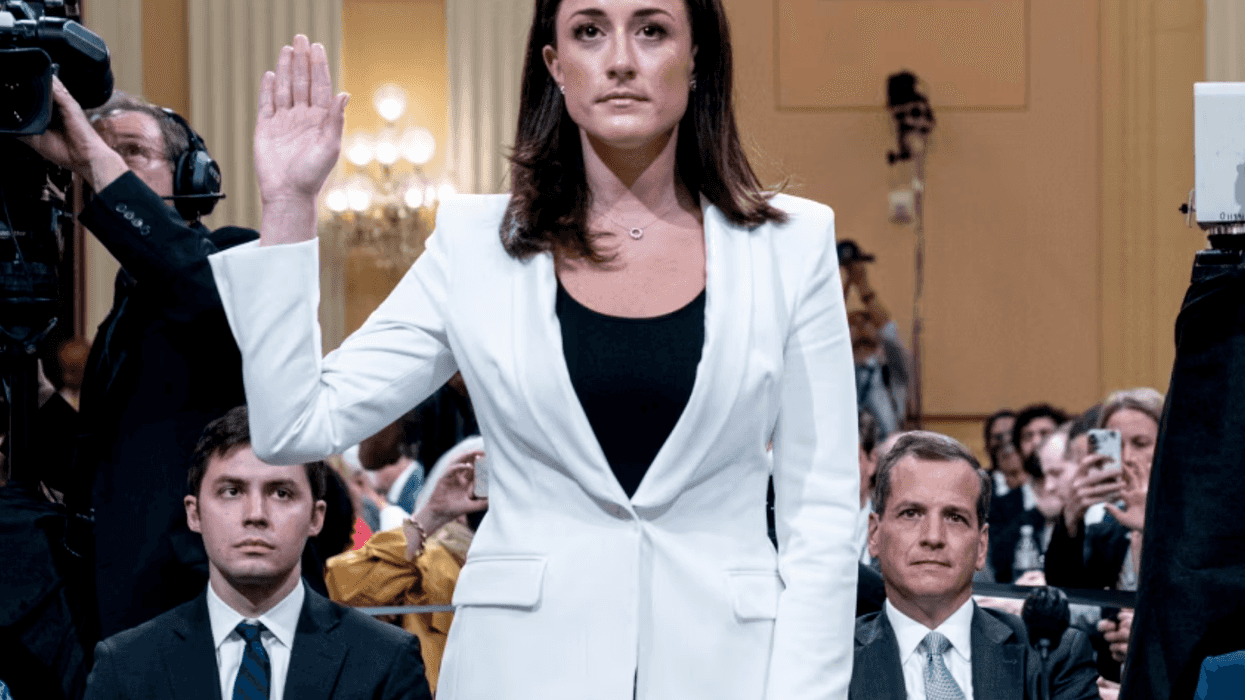
There’s an unsurpassed ugliness in watching the full might of the federal government bear down on a young woman whose offense was bravely telling the nation the truth about the president. Even by the standards of this administration’s long campaign of reprisal, the pursuit of Cassidy Hutchinson may be its nastiest and most repulsive move yet.

In June 2022, some 20 million Americans watched the 25-year-old aide to White House chief of staff Mark Meadows tell the House January 6 committee what she had seen unfold inside the Trump White House during the Insurrection. She had every reason to stay quiet: a career in Republican politics ahead of her and, by her account, a Trump-world lawyer who steered her toward saying less than she knew while dangling jobs in exchange for loyalty. She broke with him and spoke up anyway, at enormous personal cost. Her testimony was riveting and, to me and I think to the country, completely credible.

Now the villains she stood up to have seized power, and the president wants to see her in the dock. Prosecutors presented evidence against her to a D.C. grand jury. The Department of Justice is reportedly weighing perjury and obstruction charges, with an indictment request expected after the midterms.

Three points stand out: First, the investigation’s assignment to the Civil Rights Division is bizarre and a reflection of its political genesis. Second, it will never produce a conviction, as Hutchinson’s tormentors almost surely recognize. Third, if it ever sees the light of day, it likely will boomerang, with considerable damage to Trump and his administration.

The clearest indication of the political impetus is that the Civil Rights Division is running the case. For a DOJ alum, that detail leaps off the page.

The division, traditionally one of the crown jewels of the Department, is now a hollowed-out hackery run by Harmeet Dhillon, a Trump loyalist through and through. And it has no business near this case: the division oversees, or used to, a discrete set of offenses, and lying to Congress isn’t among them. The assignment smacks of a delivery to a hand-picked loyalist who makes up in devotion what she lacks in prudence and experience.

A perjury or false-statements case would normally run out of the U.S. Attorney’s Office in D.C., headed by Jeanine Pirro. But Pirro has suffered an astonishing run of grand jury defeats, from the “sandwich guy“ to six Democratic lawmakers whose only offense was reminding troops not to follow illegal orders to would-be fall-man for the Reflecting Pool debacle, David Hearn. Had this case landed on her desk, she probably would have been found hiding under it. So the case went to Dhillon, and it seems likely that the order came from Todd Blanche or someone above him.

We know what that someone wants. The Atlantic’s Sarah Fitzpatrick reported last week that Blanche’s and FBI Director Kash Patel’s jobs may ride on delivering indictments of Trump’s enemies, Hutchinson among them. One former official put it plainly: “The president wants indictments. He wants people in handcuffs. He wants the headlines.” Trump already fired one attorney general, Pam Bondi, in part for failing to jail his adversaries. The Hutchinson investigation, prompted by a referral from Trump allies Jim Jordan and Barry Loudermilk, began on Bondi’s watch. Blanche and Dhillon saw what happened to Bondi, and they can see Pirro hanging by a thread. More heads, more scalps. Get me Cassidy Hutchinson.

A president in political free fall weeks before the midterms might have better uses for his energy than pumping his legs in midair like Wile E. Coyote. But the reprisal agenda seems to matter more to Trump than anything, including his party’s fortunes.

Second, the case is a stone-cold loser, and any experienced prosecutor knows it.

Robert Jackson warned that the gravest danger in federal prosecution is the prosecutor who picks the person first and then goes looking for a crime. The corollary is maybe the most sacrosanct rule a federal prosecutor lives by: you don’t indict unless you’ve concluded the person is guilty and that 12 jurors will likely convict. Here, as with Comey, forget about it.

The geniuses in MAGA-land have fixed on Hutchinson’s testimony that deputy chief of staff Tony Ornato told her a story—in the presence of Bobby Engel, the head of Trump’s detail—that captured Trump’s crazed determination to join the marauders at the Capitol. According to that account, Trump said “something to the effect of, ‘I’m the f----ing president, take me up to the Capitol now.” He then reached for the steering wheel and, when Engel stopped him, lunged at Engel.

The supposed contradiction is that the Secret Service driver, in an interview months later, said he never saw Trump grab the wheel. That says nothing about whether Ornato told Hutchinson the story—in front of Engel, who said nothing to contradict it. And when the committee later questioned Ornato, he reportedly said not that the conversation never happened, but that he didn’t recall it. That’s the well-known dodge of a witness caught between a rock and a hard place, à la Emil Bove professing not to recall saying the Department might have to tell the courts “fuck you.”

What about building a case on the differences between what she told the committee early on, under the guidance of the Trump-supplied lawyer, and her later testimony? It won’t work. Federal law permits that theory—that one of two contradictory sworn statements must be false—for court and grand jury testimony, but not for congressional testimony. The DOJ would have to pick a specific lie and prove it. And for political reasons, the statement it picks has to be her truthful public testimony to the committee.

The same goes for prosecutors’ reported interest in who wrote a notecard for Trump during the riot. Hutchinson says she did; former White House counsel Eric Herschmann says he did. I’d bet on Hutchinson’s memory. But in any event, that’s what we’re talking about: a difference in memory, nowhere remotely near a crime.

Finally, we know what the prosecution would look like, and the likely jury reaction to it, because we have seen it before with our own eyes: a young woman under enormous pressure, inviting total ostracism in Trump-land, stepping forward to tell the truth. It’s doubtful a single juror, much less all 12, would vote to convict. And that is assuming the Grand Jury agrees to the prosecutors’ request to indict. That’s typically a layup, but with the office’s record and the weakness of the case, it looks more like a half-court heave.

Third, a prosecution would dredge up some of the most forceful evidence of the nature and gravity of Trump’s crimes, pushing back against his Orwellian project of erasing January 6.

That begins with Hutchinson’s boss. Meadows was by Trump’s side most of January 6, acting as the switchboard for the panicked calls from the Hill—including from senators like Ted Cruz and Josh Hawley who now profess outrage that Jack Smith obtained their toll records (a catalog of numbers dialed and duration of calls, and notably not the content of the calls), a completely routine and necessary move. Nobody knows more about Trump’s conduct that day. And most of what Hutchinson knows, she knows through him.

Meadows defied the committee’s subpoena, and the Garland Justice Department declined to prosecute him for contempt, a responsible call given his non-meritorious but plausible executive privilege defense. He cooperated in part with the Jack Smith investigation, a development that must have unnerved Team Trump. Since then, the administration has dodged that cannonball. A Hutchinson trial would put Meadows and his panoramic knowledge of Trump’s doings on January 6 at the center of the proceeding.

It would also resurrect the rest of her testimony: Trump hurling his lunch at the wall after Bill Barr told the AP there was no widespread fraud, ketchup dripping down the wallpaper; Trump urging the crowd toward the Capitol knowing many were armed.

Hutchinson herself would likely testify, a rarity for federal defendants but a natural move for her. And if the government called Ornato and Engel to contradict her, the cross-examination would be brutal. A jury, and the country, would get a fuller account than ever of what people inside the White House saw and thought that day.

Finally, the hounding of Hutchinson has an outsize moral dimension that lays bare the rot at the heart of the administration. James Comey, John Brennan, and Letitia James were all formidable figures, seasoned combatants with platforms, résumés, and the means to fight back against their reprisal prosecutions. Hutchinson was a brave 25-year-old junior aide who literally spoke truth to power.

It’s a contemporary-life version of timeless stories of dishonest and decrepit powers that be tormenting a young and righteous hero: Les Misérables, Joan of Arc, The Crucible, The Hunchback of Notre Dame. The moral chasm between the hunters and the hunted is oceanic.

They’d have to be blind with bloodlust, or terrified of Trump, to pursue this case. But as we know, that describes them precisely.

Harry Litman is a former United States Attorney and the executive producer and host of the Talking Feds podcast. He has taught law at UCLA, Berkeley, and Georgetown and served as a deputy assistant attorney general in the Clinton Administration. Please consider subscribing to Talking Feds on Substack.
Donald and Melania at UN

Trump's Assaults On The First Amendment Won't Stand But Still Damage Democracy

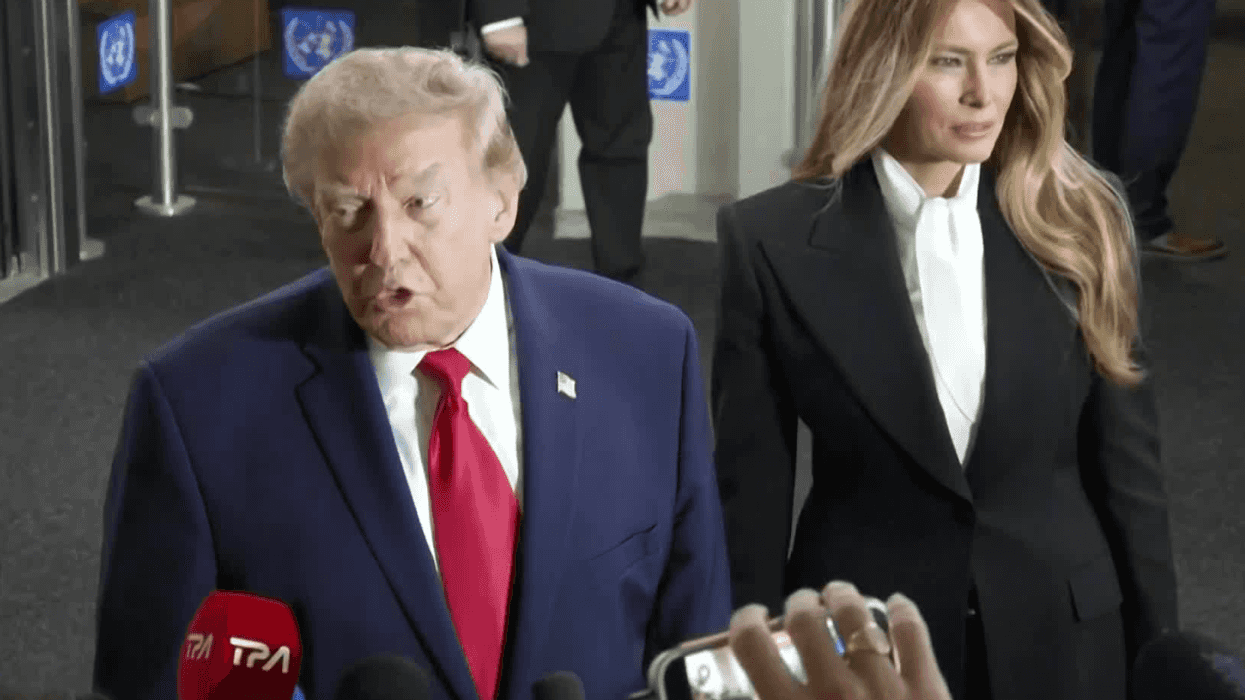
Good for CNN, MS NOW, and Politico for filing an immediate lawsuit Monday against Donald Trump’s order barring them from the White House grounds. Better still, the rest of the press pool refused to fill their slots, suspending a shared arrangement that has put an independent camera on every president since Eisenhower. Trump traveled to the United Nations on Monday with no network crew recording his official movements, the first such blackout in modern memory.

It was a collective flexing of muscle, and twenty months of Trump 2.0 have taught us that this—institutions acting together, refusing to be picked off one at a time—is exactly the right way to push back against a tyrant. And of course it hit Trump where it hurts him most, cutting off the oxygen of the public’s attention to his every move.

There will be a hearing before Judge Timothy Kelly tomorrow afternoon, Wednesday, September 23, on the networks’ motion for a temporary restraining order.

The networks’ solidarity was historic, if not quite unprecedented. A far smaller version happened in 2009, when the Obama White House tried to exclude Fox News from a round of pool interviews with pay czar Kenneth Feinberg. The other networks refused to take part unless Fox was included, and the administration backed down within days. Something similar will happen here.

And as the Fox News precedent demonstrates, the perniciousness of Trump’s move has nothing to do with politics, i.e., with the particular viewpoint that the government is trying to ostracize. The principle is about the structure of a free press, not the politics of any one network.

The collective action figures to hasten the collapse of Trump’s order even faster than the lawsuit will. And if the courts do not quickly reverse him, he will likely find a way to declare victory and undo it himself. We can take heart in that, and in the show of vigor by the press and the courts, which have been among the more stalwart institutions resisting Trump’s authoritarian moves throughout this presidency.

But before popping the champagne, we should take stock of the gravity of this latest move—one of three in the last couple of weeks—to transgress what is arguably, along with invidious racial discrimination, the most categorical constraint on government action in the Constitution.

Of course, all the constraints the Constitution places on government are important, and constitutional lawyers are not in the habit of ranking the charter’s commands, but the Constitution is an instrumental document, designed to promote, in five words or fewer, life, liberty, and the pursuit of happiness. Considered from that vantage point, few if any of its commands rank higher than the proscription against government discrimination on the basis of viewpoint, the very epicenter of the First Amendment. Given the coercive power of the state, it presents special harms to a self-governing society.

And the last two weeks alone have supplied three direct attacks on that principle. Each was executed not by a rogue actor but as the settled policy of the United States government.

Besides the latest outrage, Kash Patel cut off cooperation with Canada’s national police force to punish an editorially independent broadcaster over how it chose to describe the 9/11 attacks; and the FCC leaned on ABC hard enough that Jimmy Kimmel pulled a Senate candidate’s interview off the air rather than expose his local stations to the agency’s wrath. We took note of each as it occurred, then largely moved on. Such is the degraded state of government and daily life under Trump that these episodes just get filed away in the overflowing, ever-growing drawer of constitutional abuses.

The prohibition on viewpoint discrimination by government is as central to the American experiment as any provision of the Bill of Rights: the government may not punish or reward speech because of the speaker’s viewpoint. Eighty years ago, Justice Robert Jackson put it in words no one has improved on, warning in West Virginia Board of Education v. Barnette that “no official, high or petty,” may prescribe what shall be orthodox in politics or opinion. Among the justices, Jackson had a gift for the ringing phrase that has rarely been equalled. “High or petty” turns out to be the phrase for the moment.

It’s familiar ground in our constitutional tradition to justify freedom of speech according to the hoary principle of the open competition of ideas. Justice Oliver Wendell Holmes gave it its enduring image in Abrams v. United States—“the best test of truth is the power of the thought to get itself accepted in the competition of the market.” But the marketplace is only the start of the answer, because its signature remedy—that the cure for bad speech is more speech—has nothing to say when the government itself is the censor. The wrong is not that a bad idea is circulating but that the state has put its thumb on the scale.

There are several influential accounts of the particular evil of viewpoint discrimination by the government, and why it is nearly always unconstitutional.

When she was a law professor, Elena Kagan traced the danger to the government’s motive. She argued that free-speech law is best understood not as a device for maximizing the sheer quantity of speech, but as a tool for flushing out the government’s illegitimate reasons for acting: of which viewpoint discrimination is the surest sign. When officials burden speech because they dislike the idea behind it, they are almost always acting for a reason the Constitution forbids: hostility to a message, or the wish to shield themselves from criticism and tilt the debate in their own favor. That is an abuse of power whatever its practical effect. This is why the rule applies even when a particular restriction barely dents public debate; the wrong lies not in the damage done to the conversation but in the corruption of the government’s reason for acting.

A second fairly canonical understanding is the “checking value” of the First Amendment. As the scholar Vincent Blasi explained, free expression matters above all because it is how a free people exposes and restrains the abuse of official power. On this view, the special danger of viewpoint discrimination is that the speech a government most wants to punish is precisely the speech that holds it to account, so a state that can silence its critics has disabled the very instrument built to keep it honest.

Justice Hugo Black encapsulated that idea in the Pentagon Papers case: the press “was to serve the governed, not the governors,” protected so “that it could bare the secrets of government and inform the people.” The worry again is more fundamental than a distortion in the marketplace of ideas. When an administration punishes the outlets that scrutinize it, it is dismantling a safeguard.

The state is perfectly free to express its own preferences (though limits come in—as we’ve found honored in the breach—with false speech by government). But it can’t use the machinery of the state to punish the people who hold the view it dislikes. It’s the difference between persuasion, which is fine, and coercion, which is a fundamental abuse of government power, the classic tactic of authoritarian government.

In sum, viewpoint discrimination is forbidden because it betrays an illegitimate government motive and because it uses the coercive power of the state to suppress speech that a free society depends on to keep government honest.

Each of the three recent episodes is a signal lesson in the social harm and deep constitutional betrayal that viewpoint discrimination occasions. None offends only one of the rationales above, but each throws one of the harms into especially sharp relief.

Trump’s barring of CNN, MS NOW, and Politico is as pristine an instance of viewpoint discrimination as we have seen in Trump 2.0. Usually the administration has scrambled to manufacture a pretextual rationale—as when it dressed the Associated Press ban as a quarrel over the AP’s refusal to say “Gulf of America” rather than the plain retaliation it was. But here Trump brandished the smoking gun.

As I wrote on Bluesky, “Trump does CNN & MS big favor by putting it so bluntly. Government discrimination on the basis of viewpoint is virtually always unconstitutional.” With unintended irony, given his grotesque transformation of the White House into a monument to his own presidency, Trump complained that there is “something wrong with a country” that lets people “write purposely negative stories,” and so “I don’t have to let them into…the people’s house”.

The offense is best seen through Kagan’s lens: the illegitimate motive hangs over the whole episode like a pall. The wrong is complete on that motive alone; it does not turn on any measurable effect on coverage. Its gravamen is that Trump wielded public power to reward flattery and punish scrutiny—precisely the malign purpose the rule exists to prevent.

But the core offense is to the First Amendment’s checking value. Trump has launched a frontal attack on the outlets whose job in a democracy is to hold him to account. As of today, he is vowing to fight and, ironically, branding the coverage he dislikes “a threat to democracy.” That will be short-lived: unless Trump takes action to reverse his own edict, the suit filed Monday will succeed.

But the important lesson from the explanations of the special dangers of viewpoint discrimination is that a reversal weeks from now may arrest the constitutional evil. It will not undo the serious injury the press and society already have sustained.

The Kimmel episode illustrates why a winning legal case is not the same as a constitutional safeguard, not in an authoritarian society anyway. Brendan Carr, Trump’s ideological warrior atop the FCC, adopted a viewpoint preference and dressed it as a neutral scheduling rule. His “equal time” rationale was transparently meritless in light of the long-settled exemption for bona fide news interviews. Carr didn’t care. He used his mangled account to pressure ABC, its affiliates, and its local stations over the show’s booking of James Talarico, the Democratic candidate for Senate in Texas.

Kimmel named the wrong exactly—the FCC wanted “to make our editorial decisions for us, which of course we cannot accept”.

And yet they did accept it in a fashion. ABC concluded, rationally, that the fight would be too expensive and time-consuming, and the show pulled the interview from the air and posted it to YouTube.

The aftermath was fairly delightful. The banished interview drew more than twelve million views on YouTube, a far larger audience than the timeslot would ever have delivered. Kimmel and Talarico got the last laugh.

But that viewpoint overlooks the serious constitutional injury that Carr and the administration imposed and got away with. It’s precisely the kind of coercion that the government may never practice against disfavored viewpoints (much less to promote its own party’s candidates). The pressure was flatly unconstitutional, and a lawsuit would almost certainly have won. But vindication would have taken months and cost a fortune, and the blast radius reached past ABC to the affiliates and local stations caught in the crossfire. Weigh the near-certain victory against the fatigue, expense, and exposure of getting there, and the rational calculation becomes: let this one go.

That calculation is itself the authoritarian’s victory. He does not need to win in court; he needs only to make the defense of one’s rights so costly and so exhausting that a rights-holder with a sure case decides it isn’t worth the fight. And of course there is the collateral prospect of an overall chilling effect, so that the next time a network will make a similar calculation to avoid the time and expense—not to mention the many creative ways that this administration finds to make all aspects of life harder for its ideological opponents.

Patel’s browbeating of Canada over the words it used to describe 9/11 belongs on this list. As FBI director, he cut off a portion of the bureau’s law-enforcement cooperation with Canada’s national police—canceling meetings, telling his counterparts they would be out of touch—to punish the CBC, Canada’s public broadcaster, over an internal guidance memo on how to describe the September 11 attacks. The news organization’s long-standing policy was to describe the attacks as terrorism but only with accompanying expert attribution.

And he did it where argument was not only available but obvious. Patel was free to say, loudly, that the CBC’s policy requiring some expert attribution in order to use the word “terrorism” was ridiculous; Canada’s own culture minister called it “pedantic and foolish,” and that kind of government counter-speech is entirely legitimate. What he could not legitimately do was warn that any Canadian agency failing to “publicly reject this bastardization of history” would “no longer have a friend in this FBI.” The CBC folded within days. Patel still halted some cooperation between the two nations’ law enforcement agencies anyway.

This may not be a First Amendment violation, strictly speaking. The broadcaster is foreign; the squeeze ran through the Mounties. But it is of a piece with the administration’s petty, bullyboy instinct: when it encounters views it doesn’t like, it screams and threatens. And the harm here fell on Americans: live counterterrorism and cybersecurity work with a close ally, suspended to punish an editorial judgment that had already been surrendered.

In the daily functioning of a democracy, ideas fight for space in the hurly-burly, with the winner being the most worthwhile—or so is the large bet we placed as a country on the Constitution. Government suppression of ideas it disfavors, or that cut against its political interests, is a more pernicious matter altogether.

Barring reporters for unfavorable coverage, threatening a network’s licenses over a comedian’s monologue, punishing an ally over a style guide are the reflexes of an autocracy. The state insists on a single approved version of events and treats the truth as a loyalty test.

Hannah Arendt, who along with George Orwell is the prescient prophet of our current dark times, put the stakes plainly in a 1974 interview: “The moment we no longer have a free press, anything can happen. What makes it possible for a totalitarian or any other dictatorship to rule is that people are not informed.”

Thanks largely to the courts and the collective action of the media, we are not yet at the point where everything comes apart; and I believe we will not get there. That is a buoying headline of a sort. But a democracy can be eroded and pushed toward authoritarianism, with current and lasting consequences. The administration’s violations of the viewpoint discrimination principle harm us as a free society, even if they are forced to walk back every one. We are, here and now, poorer and less free, for having authoritarians in charge.

Harry Litman is a former United States Attorney and the executive producer and host of the Talking Feds podcast. He has taught law at UCLA, Berkeley, and Georgetown and served as a deputy assistant attorney general in the Clinton Administration. Please consider subscribing to Talking Feds on Substack.


OMG GOP WTF: The Malignant Weirdness Of Today's Republican Party

OMG GOP WTF: The Malignant Weirdness Of Today's Republican Party

Why are Republicans so weird?

Seriously. There was a time when our disagreements were over taxes, war, and reproductive rights. Those were profound disagreements, but they took place in a shared reality. We agreed on the basic facts, even if we fought bitterly over what to do about them.

Now they’re a toxic blend of corruption, incompetence, weird obsessions, and spectacular self-owns. They aren’t just governing badly. They’re making a mockery of everything they touch.

For example, does Elon Musk really have nothing to focus on beyond Hollywood casting decisions?

Then there’s Trump’s handling of E. Jean Carroll, the advice columnist whom he was found liable for sexually abusing. Trump remains obsessed with the $5.6 million judgment against him. At this point, it obviously isn’t about the money. Five million dollars means nothing to him. It’s about continuing to punish the woman who dared hold him accountable.

My God, he is vile.

Meanwhile, there is always a never-ending list of this administration's malicious incompetence.

Trump’s aesthetic tastes have always been a crime against good judgment. I would gladly pay pay-per-view prices to watch the next Democratic president rip every gaudy gold ornament out of the White House and the rest of Washington.

Trump is running out of space for his garish gold garbage

Electing the right people matters. Who wields power matters. Competence matters. Finally, Republicans don't have a monopoly on weird.

Benedict Fetterman?

Markos Moulitsas is founder and editor of the blogging website Daily Kos and author of three books.

Reprinted with permission from Daily Kos

Fending Off Drunk Image, FBI Director Patel Withdraws Into  'Panic Mode'

Fending Off Drunk Image, FBI Director Patel Withdraws Into  'Panic Mode'

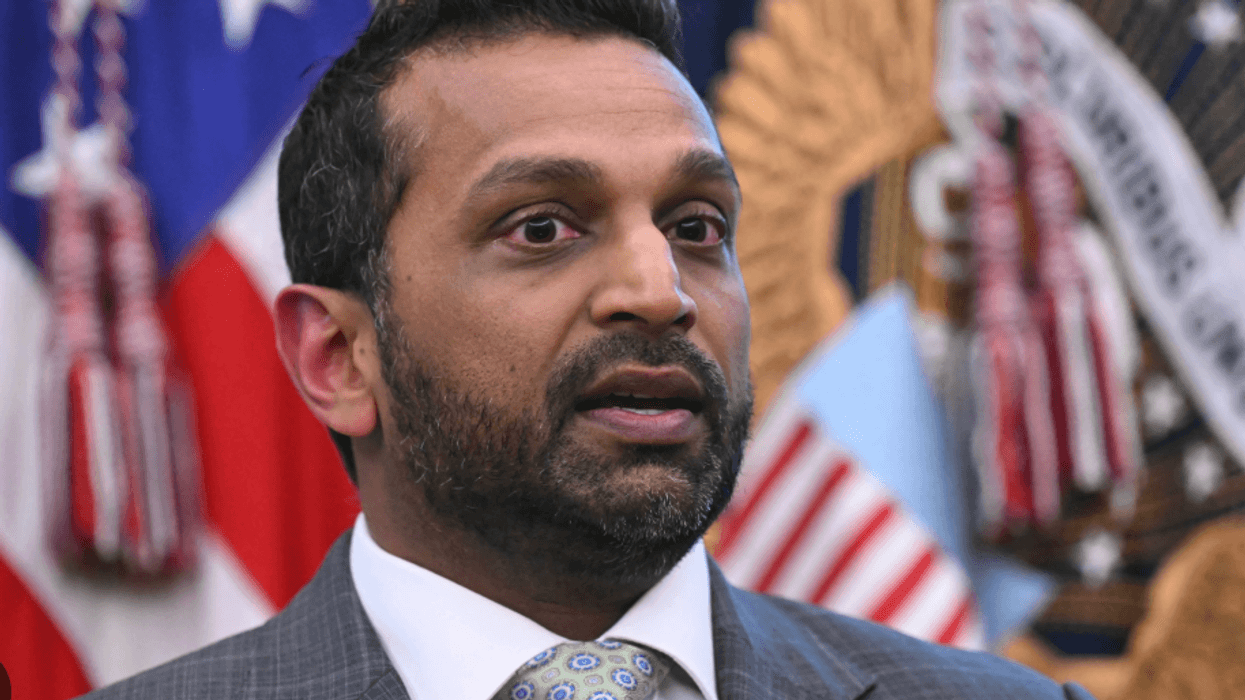
President Donald Trump’s FBI director, Kash Patel, is reportedly in “panic mode” as he scrambles to save his job amidst reports of excessive drinking.

“FBI Director Kash Patel ordered the polygraphing of more than two dozen former and current members of his security detail, as well as other staff, and has been described as being in panic mode to save his job and find leakers among his team, according to two people briefed on the development,” MS NOW’s Carol Leonnig and Ken Dilanian reported on Thursday. They added that Patel reportedly “walled himself off” from senior leaders at the FBI because of the multiple media reports about his drinking impairing his leadership.

“The director has also avoided meeting this week with some key operational leaders of the bureau, the people said, raising concerns inside the FBI about Patel’s ability to stay abreast of pressing threats and investigations in order to make the best decisions,” Leonnig and Dilanian addeIn addition to being angered at reports of him drinking (which prompted Patel to sue The Atlantic for covering them), Patel is also upset for reportedly ordering SWAT agents to protect his girlfriend, country music performer Alexis Wilkins, in Nashville, as well as for using a government jet to travel for a so-called “date night.”

“MS NOW reported in February that Patel decided to fly to Milan, Italy, on the government jet to watch the U.S. men’s ice hockey team in the final games of the Olympics,” Leonnig and Dilanian wrote. “At the time, a spokesperson for Patel said in an on-the-record statement that the Italy trip was for business, and Patel was attending several security and partner meetings. Videos emerged shortly after Team USA won the gold medal of Patel in the men’s ice hockey team’s locker room, joining a victory celebration by chugging beer, spraying alcohol in the air and jumping up and down and cheering.”

They added, “The images infuriated the president, according to sources who spoke to MS NOW at the time, and he told Patel he didn’t like the optics of a director drinking while claiming to be on a government business trip.”

Speaking to MS NOW on Thursday, former FBI Assistant Special Agent Michael Feinberg told anchor Katy Tur that Patel’s alleged poor behavior has demoralized the bureau he was appointed to lead.

"Most FBI agents feel — I do not know a single agent who, like me, left, nor do I have any friends whatsoever still in the Bureau, who have a single positive thing to say about his stewardship," Feinberg told Tur on Thursday. "Nobody agrees with every director's every decision. I was there for [Robert] Mueller, for [James] Comey, for [Christopher] Wray, and for a brief time for Patel. And the difference is, with the first three, you might have disagreed with their decision or their policies, but you had respect for their intellectual credentials. You had respect for their professional achievements. You had respect for their temperament and their character, their integrity. Patel brings no intellectual credentials to the job. He has no relevant experience whatsoever that would have enabled him to do this well. And as near as we can tell, he has no integrity. So it's unclear what anybody would look up to."

Feinberg continued that "I have never seen morale in any organization as low as it is in the FBI right now," from Patel characterizing the FBI as a "diseased temple" to dismissing criticism of him as being motivated by the agency supposedly having a liberal bias.

"I'd humbly suggest that allegation alone has no basis whatsoever," Feinberg explained to Tur. "In reality, people who work in law enforcement and national security are not exactly known for being leftists. These aren't people singing the Internationale and celebrating May Day. I think it's pretty fair to call most of them, at least on the law-and-order side, right-leaning."

Despite these reports, FBI spokesman Ben Williamson argued that the reports about Patel’s performance are political. “The only people in panic are the ‘panicans’ in the media pushing out false stories because they spend zero time covering the record-breaking success in reduction in crime at this FBI," Williamson told MS NOW.

Reprinted with permission from Alternet

Shop our Store

Headlines

Editor's Blog

Trending

World