Tag: medicare-for-all
Why Democrats Must Bring A Fresh Vision To Our Debate Over Health Care

Why Democrats Must Bring A Fresh Vision To Our Debate Over Health Care

As we head toward the mid-term elections, affordability has seized center stage in the health care debate, and for good reason. Americans of every class and health status are upset about the amount of money they must shell out to buy insurance and pay the extra bills that arrive after they get sick.

The ruling Republican regime is making things worse. Not only has it launched a full-scale attack on Medicaid, which covers nearly a third of all Americans, the latest White House initiative allows the insurance industry to sell low-cost plans on the Affordable Care Act exchanges that will pay only a fraction of the bills people receive after being hospitalized. If the regime gets its way, comprehensive insurance — the previous requirement for all Obamacare plans — will become unaffordable for almost everyone but the well-to-do.

Democratic Party-oriented think tanks and commentators continue to crank out proposals for making insurance more affordable. A new report from the Searchlight Institute, first reported by Jon Cohn of The Bulwark, calls for limiting private equity’s role in health care; limiting insurers’ ability to abuse prior authorization or hide profits at their wholly-owned physician practices; and wielding antitrust law to bust up hospital and pharmacy benefit manager monopolies.

Last week, Nobel laureate and substacker Paul Krugman laid out his path forward for dealing with the affordability crisis. His three-part explainer started by laying out “why universal healthcare is a desirable objective, and why some type of government intervention is essential to achieve it.”

His second installment described the ongoing Republican assault on Obamacare and its successes. But his final piece, rather than offering a bold or unique plan, or even something like the European countries to which he unfavorably compared the U.S., repeats most Democrats’ long-standing plea for including a public option on the exchanges.

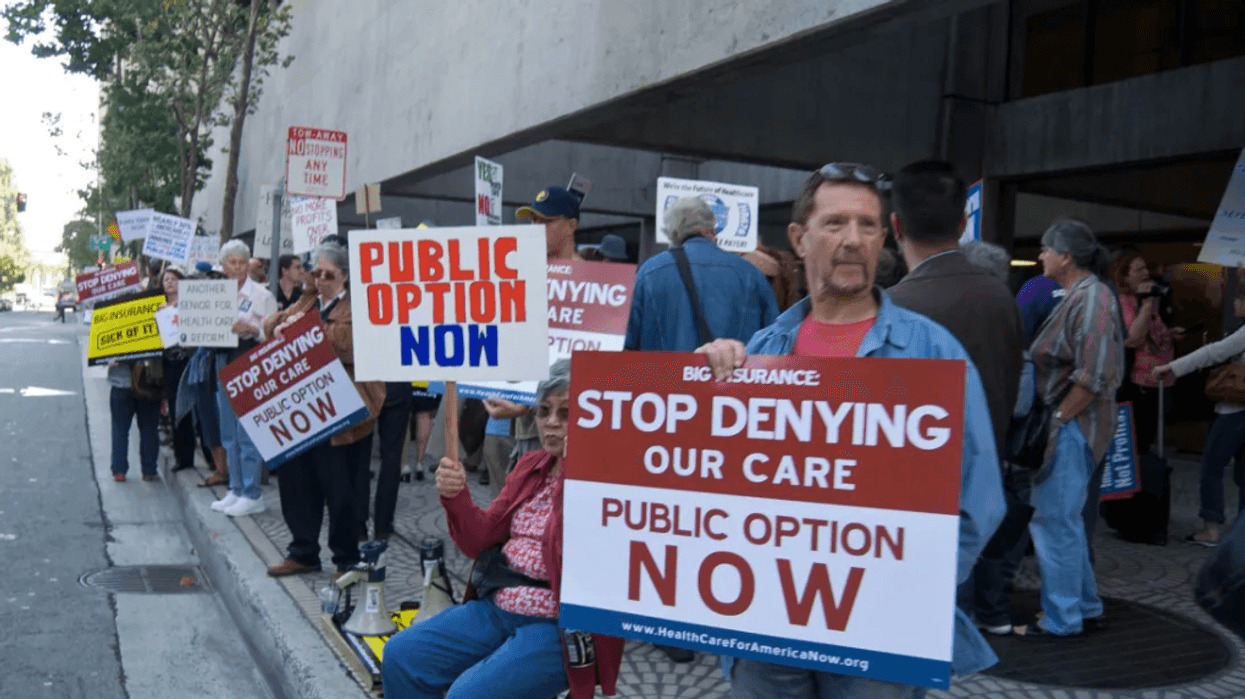
A public option would allow people to buy into Medicare. Progressive groups have been advocating this for decades. The House-backed version of the Affordable Care Act in 2009 included a public option. He imagines many employers would encourage their employees to avail themselves of this new option (presumably providing them with some or most of the cost of the buy-in). “If they like what they get, which they probably would, we could transition over time to a single-payer system without forcing Americans into it,” he wrote.

Shortcomings

Krugman fails to address the virulent opposition that would be mounted against the public option by the hospital, insurance, drug and medical device industries, and the many other types of providers (nursing homes, hospice, ambulatory surgical centers, etc.) that make up the medical industrial complex. Nor does he take into account the main reason employers resist jettisoning their role: It keeps many employees from job-hopping.

Krugman assumes public anger over rising costs will overwhelm their opposition, a dubious proposition in my view even if the Democratic Party wins control over both houses of Congress and the White House. Why do I say dubious?

It is well known that health care accounts for 18 percent of gross domestic product, far more than other industrialized countries. What is less well known is the fact that direct health care provision accounts for 12 percent of all employment in the U.S. It is the largest or second largest employer in almost every city and town. In at least one recent month, the nation would have shed jobs had it not been for growth in the health care sector.

If you throw in employment in the health insurance industry, manufacturers of drugs, medical devices and durable medical equipment, and the small army of consultants, medical educators, think tankers and other health care hangers-on, about one in six American jobs flows from our bloated health care sector. Moreover, they are evenly distributed throughout the country, constituting a powerful voice in every Congressional district.

Reformers need a way to win providers — not the hospital system administrators, not the insurance company executives, not the nursing home operators; but the physicians, nurses and nurse aides, support staff, and more — to their side.

That’s why I am committed to a strategy that provides the health care sector with an off-ramp from its unproductive and wasteful ways. The system is tremendously successful at generating new technologies and treating highly complex cases. But it stinks at almost everything else that the general population needs.

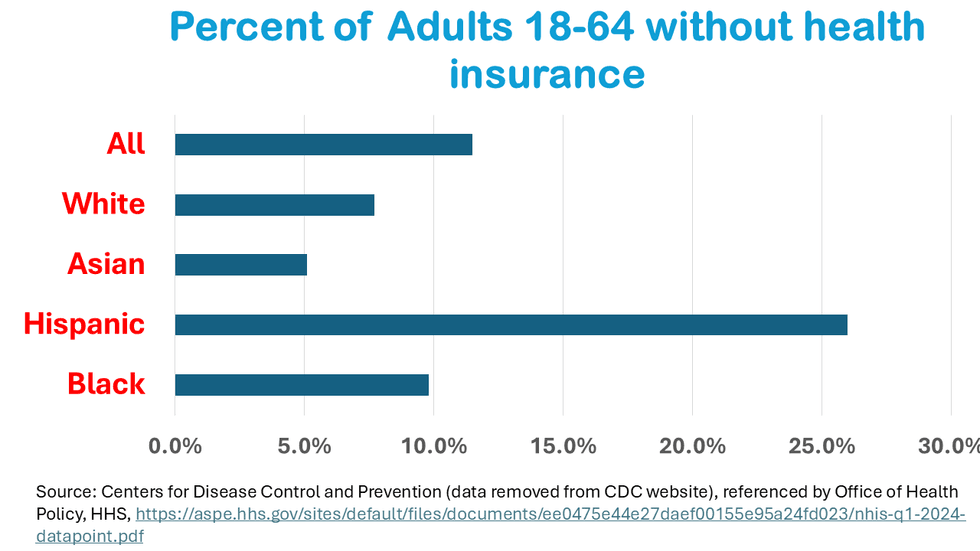
It consumes more societal resources than any country on earth. It doesn’t cover everyone. Its multi-payer complexity requires enormous administrative overhead. Its specialty-driven, fee-for-service payment system delivers more pricey tests and operations than people need. It shortchanges primary care and prevention. It generates worse outcomes than other countries whether measured by longevity, infant and maternal mortality or chronic disease levels. And those lousy outcomes are extremely unfair, with minority populations suffering far worse outcomes than their white fellow Americans. (I will address this issue in my next article.)
I agree with Krugman that the Obamacare exchanges need a public option for the uninsured and for any employer that wants to join. But the details, which he doesn’t address in his article, matter. Its pricing will have to be set at a percentage somewhat larger than what Medicare pays, which is what Washington state did when it became the first state to roll out a public option in 2021 (at 160 percent of Medicare prices). Colorado and Nevada have followed suit with their own higher-than-Medicare priced public options.

Providers need a guaranteed off-ramp. They and their millions of employees can’t absorb the sudden shock to the system required by the mass migration to the public option at Medicare rates, which, according to the Medicare Payment Advisory Commission, are somewhat below breakeven rates. Therefore, in addition to creating the public option, providers need to be regulated through government-set budgets that are set at current levels and guaranteed to grow, but only at a slower rate than the rest of the economy.

Over the past several decades, health care spending has risen faster than the rate of economic growth, ballooning from 13 percent of GDP at the start of this century to 18 percent of GDP today. If budgets are allowed to grow at one to one-and-a-half percentage points above inflation (that’s about half the economic growth rate), U.S. health care spending will gradually decline to international norms.

Invest in health

What else would guaranteed budgets accomplish? It would free hospitals, physician practices, clinics and other provider organizations from the treadmill of fee-for-service medicine, where the more you do the more you make. It would free up resources to invest in the nation’s woefully underfunded primary care and behavioral health providers.

It would encourage provider organizations to invest in community outreach to underserved populations suffering from undiagnosed and untreated diseases (think hypertension, pre-diabetes, obesity, and drug, alcohol and tobacco addiction). If we treat disease before its complications set in, people will spend less time in the emergency room, where care is costliest, and often comes too late to affect the trajectory of their chronic condition.

In short, the nation’s health care system needs to transform itself into one that promotes health, not one that profits when more people get sick. The Make American Healthy Again movement has that part right. Reformers on the left should grab that page from their playbook by providing a positive vision for how to produce healthier individuals as well as a plan to reduce how much the public has to spend.
Trump Van Winkle, Obamacare And The 'Money-Sucking' Health Insurance Industry

Trump Van Winkle, Obamacare And The 'Money-Sucking' Health Insurance Industry

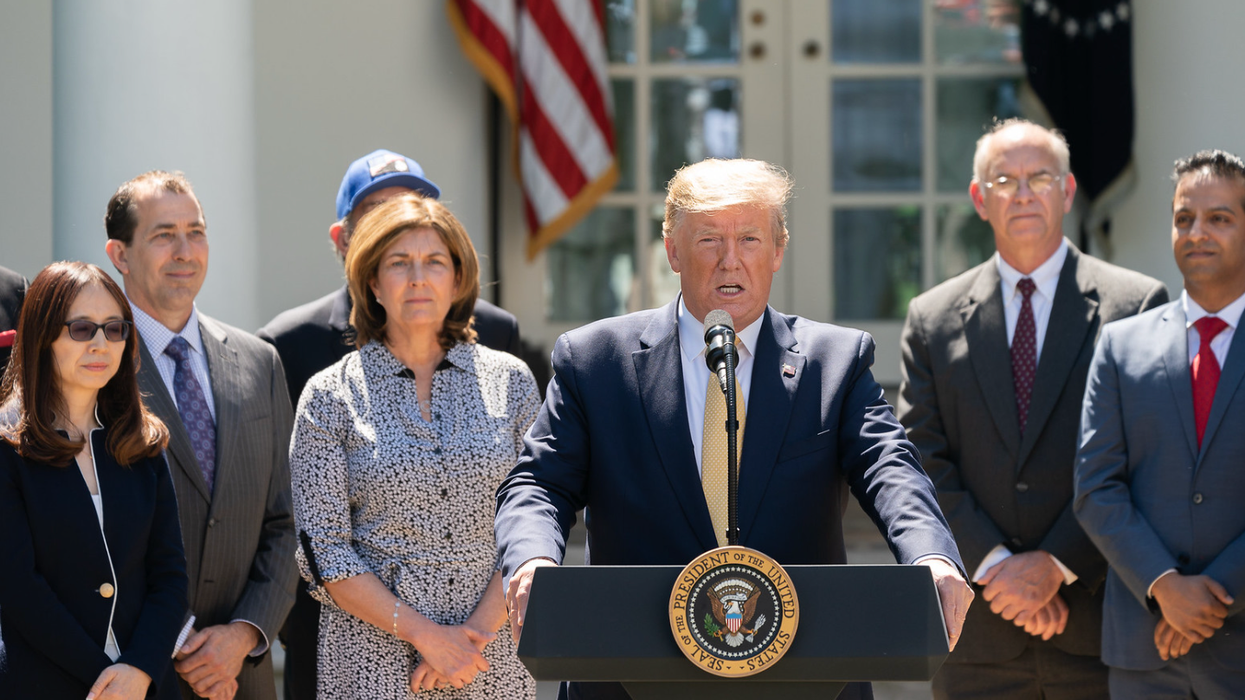
There is an old child’s tale about Rip Van Winkle. He fell asleep for 20 years and wakes up after the American Revolution and finds the world has changed in big ways. Donald Trump seems to be doing his own Rip Van Winkle routine. Yesterday, Trump suggested as an alternative to Obamacare, which he said feeds the “money sucking” insurance industry, that we just give money directly to people and let them buy their own healthcare.

This is a Rip Van Winkle story because Trump seems to think he has come up with a new idea. He apparently has missed the debate around healthcare reform that led up to Obamacare. He also apparently missed the debate on developing an alternative during his first term.While we don’t know exactly what Trump has in mind -- the plan will be ready in two weeks :), I hear -- there are fundamental problems with this sort of "just give people cash" idea. These problems push serious people, who have been awake, towards something like Obamacare or universal Medicare.

The basic problem of providing healthcare coverage is that some people have health conditions that are very expensive to treat, but most people are relatively healthy. If we just left things to the market, insurers will only cover healthy people. These people are very profitable for the industry, since they are basically just sending their insurer a check every month.

The problem is with the tens of millions of people who have health issues like diabetes, heart disease, cancer, or other conditions. These people are big money losers for the industry. They will avoid insuring them if they can or alternatively charge them tens of thousands a year for coverage. They may also contest making payments by claiming people had failed to disclose their health condition when they applied for insurance. I briefly went through the problems of the pre-ACA insurance market a few weeks back.

If Trump just gives people cash, it will do nothing to get around these problems. First, it is not clear which people he wants to give cash, and which cash. If he just means the enhanced subsides, he has around $35 billion a year to play with. Currently, around 22 million people get the enhanced subsidies, so that would imply checks of around $1.600 a year.

But there are another 28 million people currently without insurance, and another 2 million getting insurance in the exchanges without subsidies. Surely these people should be eligible for the Trump checks also. That would come to 52 million people sharing $35 billion, giving them each a check of less than $700.

Making the story even more complicated, people gain and lose coverage all the time, as they or a family member gets hired or leave a job with insurance. They may also gain or lose coverage for a government program like Medicaid. This means Trump has to figure out whether he will be sending out his checks once a year, giving many people a huge bonus and screwing those who lose their job after the cutoff date. Alternatively, this would have to be some sort of recurring payment, monthly or quarterly.

Perhaps Trump intends to take all the money going to Obamacare, not just the enhanced subsidies, which the Center on Policy Priorities puts at $125 billion, and roll it into his Trump checks. That would make them around $1,900 a year.

The next question is what Trump expects people to do with their money. A young healthy person may be able to cover their healthcare costs with $1,900 a year, but even these people would likely want insurance against the risk they may incur a serious illness or be in some sort of accident. Good luck finding insurance for $170 a month.

And the problem is far worse for older people and people with major health issues. In an unregulated insurance market, these people would be paying thousands of dollars a month for their insurance. Their Trump check will not go very far towards covering a premium of several thousand dollars a month.

Perhaps Trump plans to keep the Obamacare restrictions that require insurers to cover everyone, regardless of health condition, and prohibits discriminating based on health condition. That would limit the payments for people with health problems but still mean premiums that dwarf the size of the Trump checks, especially for those in the oldest pre-Medicare age bracket 55-64.

That would also put us basically where we are now except the checks would be smaller and untargeted, since all people without insurance, not just those enrolling in the exchanges, would be getting checks. Also, the current payments are adjusted by income. We don’t know whether Trump plans his checks to be income-based.

And in this story, the money would still be going to money sucking insurance companies, except presumably with less regulation so that the money sucking insurance companies could suck up more money. Under Obamacare, insurers have to pay out at least 80 percent of what they collect in premiums to providers, otherwise their customers get a rebate. Since Trump wants to get the government out of the picture, the insurers could presumably pocket even more money.

If Trump really wants to go after the money sucking insurance companies, getting them out of Medicare would be a great start. They mostly add cost to the program. He can improve the traditional program, adding dental, eyecare, and hearing coverage, and also imposing an out-of-pocket cap, and stop paying money sucking insurers in the Medicare Advantage program. Due to their higher administrative costs and profits, Medicare Advantage costs the government at least $100 billion a year compared to the traditional Medicare program.

If we’re really serious about cracking down on the money sucking insurance companies, why not go all the way and just provide universal Medicare. This would not only save the money directly paid to insurers, it would also eliminate much of the cost that hospitals, doctors’ offices and other providers have to incur dealing with complex forms from multiple insurers. This could save as much as $1 trillion a year ($8,000 per household) compared to what we pay now for administrative costs and insurance industry profits.

A universal Medicare system would also mean that everyone has access to healthcare regardless of where they work, what government program they qualify for, or if they remembered to pay their insurance premium last month. Not many would have expected Donald Trump to be the person to get us to Medicare for All, but if he really wants to crack down on money sucking insurance companies, that would be the way to go. Welcome aboard, comrade!


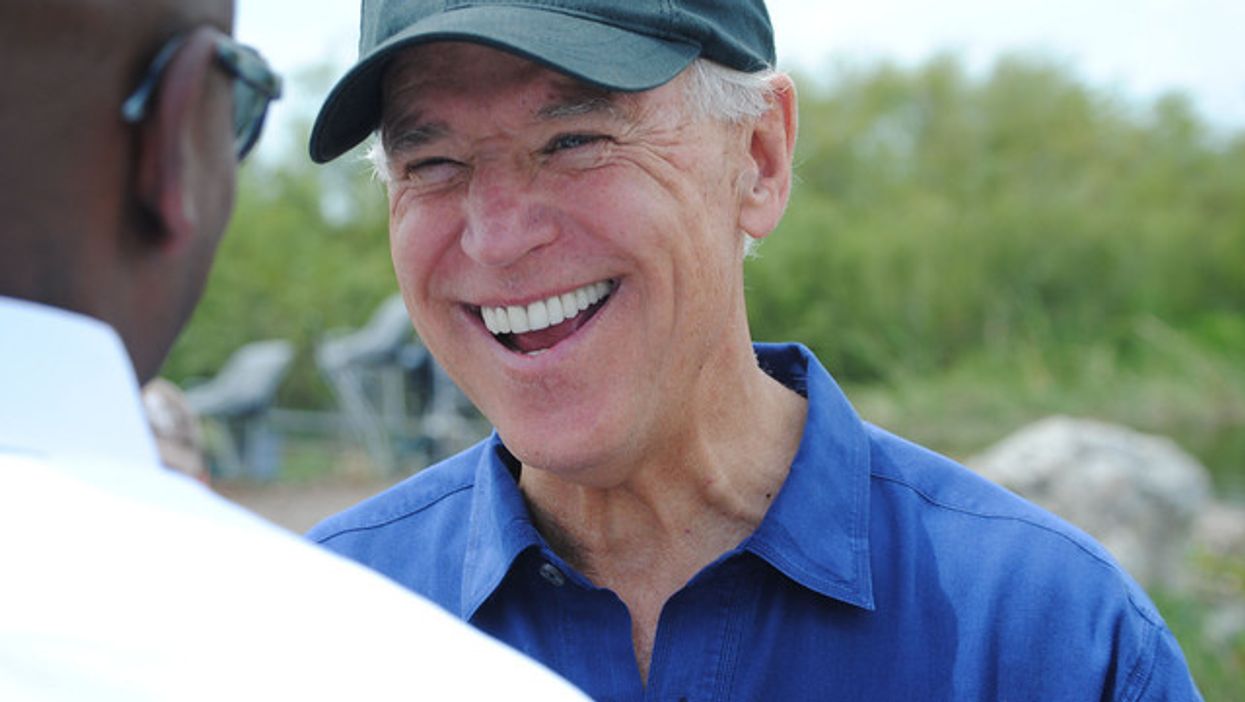
Joe Biden

Biden’s Real Health Care Reform Is Far Better Than Trump’s Imaginary Plan

Health care policy has been a major issue for a long time. It played a big role in Barack Obama's 2008 election victory, his entire presidency and the 2010 GOP takeover of the House of Representatives. Repealing Obamacare was a Republican priority before and after Donald Trump became president. The debate on "Medicare for All" dominated the 2020 Democratic primaries.

Now, in the middle of the nation's worst pandemic in 100 years, you would think health care policy would be the object of obsession among politicians and voters. Instead, the issue has gone missing.

Read NowShow less
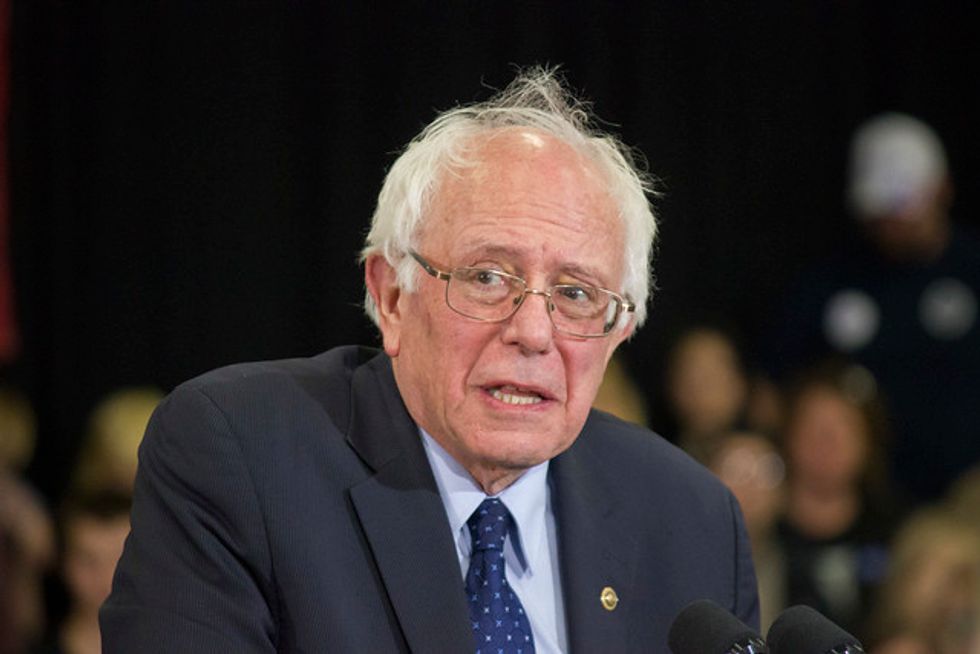
Votes Do Matter, Bernie

Votes Do Matter, Bernie

If Bernie Sanders were amassing a nearly insurmountable lead in the delegate counts, I have little doubt that he would be saying to Joe Biden: “Democrats have spoken. Time to drop out and help the team.”

But doing what he expects of others is not Bernie’s way. As in the past, he can stay in, waving the implied threat that not adopting his program might cause his base to stay home in November. The impolite word is “extortion,” which Sanders launders with baloney claims that he is, somehow, actually winning.

My favorite is “We are winning the generational debate.” Sanders said this right after Joe Biden crushed him in Super Tuesday II. Sanders had just lost his working-class firewall of Michigan, plus Missouri, Mississippi, Idaho and even Sanders-friendly Washington. (He won only North Dakota.)

By “generational debate,” Sanders meant he was prevailing among younger voters, which is true. But he is apparently not doing well among young nonvoters, who, contrary to the campaign’s claims, are not showing up in vast numbers to support him.

Camp Bernie fantasizes that young people’s votes count more than old people’s votes. For demographic reasons, Sanders was expected to lose Florida and Arizona. But Biden bested him by nearly 40(!) percentage points in Florida — and at a time when the coronavirus is scaring a lot of elderly voters away from the polls.

The Sanders campaign continually boasts that it is winning the small-donations race. “We’re especially proud that of the more than 2 million donations we received this month, over 1.4 million were from voters in states that vote on Super Tuesday,” Faiz Shakir, Sanders’ campaign manager, said at the start of March.

Sanders’ ability to raise large sums in small quantities is genuinely impressive. And it follows that the Vermonter would not be beholden to big-money interests. But dollars are not votes. Votes are something Americans cast free of charge — and not by writing checks, whatever the size. Votes determine the winner.

Two days later, Super Tuesday happened. After greatly outspending Biden, Sanders lost 10 of the 14 states including Texas and Virginia. He did grab the biggest prize, California, though by fewer than 7 percentage points. Vermont’s neighbors, Massachusetts and Maine, went for Biden.

After losing badly on Super Tuesday II, Sanders vowed not to end his campaign. He explained, “Poll after poll, including exit polls, show that a strong majority of the American people support our progressive agenda.”

It’s a cliche but true that the only poll that matters is the one on Election Day. But it’s not hard to “win” a poll if you word it in your favor. Sanders often cites the polls finding that most Americans like the idea of his “Medicare for All.” Other polls, however, show that even more Americans object to losing their private coverage, which his proposal would ban. How do you explain that discrepancy? Marketing.

What Sanders calls Medicare for All is not Medicare. It’s a Canadian-style single-payer system. However one feels about the Canadian system, the fact remains that Canada forbids people from buying private coverage for services included in the government plan. Medicare is a mixed-payer program combining government insurance with a good deal of regulated private coverage.

To we who have followed the health care battles over the years, Biden’s proposals to expand government’s role is plenty progressive. But if you buy into Sanders’ contention that the coronavirus pandemic will drive people toward his more radical ideas, you have to ask yourself: Why does Sanders lose by progressively bigger margins as this virus rampages?

It’s those darn voters. They get in the way every time.

Follow Froma Harrop on Twitter @FromaHarrop. She can be reached at fharrop@gmail.com. To find out more about Froma Harrop and read features by other Creators writers and cartoonists, visit the Creators webpage at www.creators.com.

Shop our Store

Headlines

Editor's Blog

Corona Virus

Trending

World