Tag: politico
Trump Judge Orders White House To Reinstate CNN, MSNOW And Politico

Trump Judge Orders White House To Reinstate CNN, MSNOW And Politico

After an early morning fire drill—when the administration, incredibly, failed to comply with Judge Timothy J. Kelly’s order to immediately restore the White House hard passes of reporters for CNN, MS NOW, and Politico—the reporters that Trump had ousted have now had their access restored.

The final back-and-forth may recede from prominence, but it was breathtakingly unprofessional, if not contemptuous, that after Kelly’s order, the reporters showed up at the White House only to again be turned away.

The Department explained its failure to follow the order with a bland statement to the court, giving a chronology that included restored access as of eight minutes after the media’s emergency motion. The belated and shoddy compliance means that Kelly needn’t consider, at least for now, a civil contempt finding against the administration. In light of the Department’s representations, the judge issued a brief order denying the request for an emergency hearing but inviting the plaintiffs to brief him about any further instances of noncompliance.

That returns the focus to the opinion itself and what it augurs in the event that the administration chooses unwisely to violate the rule of holes and keep trying to selectively bar members of the media, while digging itself ever deeper.

It was no surprise that Judge Kelly on Thursday ordered the Trump administration to immediately restore the journalists’ White House hard passes. Kelly, who reinstated Jim Acosta’s pass in 2018, rested his restraining order on due process grounds. It was the path of least resistance, because binding D.C. Circuit precedent requires the White House to give reporters notice and a chance to be heard before it pulls a hard pass. Trump gave them neither—“not a semblance of due process,” as the outlets’ lawyer, Ted Boutrous, put it.

The administration had essentially no answer to the precedent point. It could only argue that the cases were wrongly decided. Kelly, a Trump appointee, served up a door-slamming reply: “Maybe—but this Court is bound by D.C. Circuit precedent, full stop”

Putting the ruling on due process grounds meant that Kelly didn’t need to address the outlets’ First Amendment claims, at least for now. But his ruling was assured and emphatic. Kelly also refused the government’s request to stay his order, which runs 14 days while the parties brief a preliminary injunction.

The government didn’t dispute that the reporters got no notice beforehand. Instead, it played a familiar but, in this case, very weak hand, waving the mantra of national security. The Justice Department argued that the outlets’ reporting created an “extraordinary” circumstance that excused the White House from giving any process up front.

To make the case, it produced letters, sent four days after the ban, accusing the outlets of reporting that “threatened national security and/or spread falsehoods,” along with declarations from two Pentagon officials.

The letters were beside the point on both the due process claim and the retaliation and viewpoint discrimination claims. That’s because it was Trump’s decision under review—not the after-the-fact musings of officials who had nothing to do with it about how it might have implicated national security. As I wrote yesterday, Trump made it very easy for CNN, MS NOW and Politico by leaving no doubt that he acted because he didn’t like what they wrote.

In fact, a particularly foreboding part of the opinion for the administration was Kelly’s finding that “nothing in the record that predates this suit suggests that the revocation of Plaintiffs’ hard passes was motivated by national security concerns.” That’s a polite way of saying the administration was feeding him a load of hooey. Boutrous put it more plainly still, telling Kelly the letters “completely do not reflect what the president himself has said.”

Kelly went on to find no factual support for the claim that pulling the passes would protect national security. The government offered “no declarations or other support—classified or unclassified—explaining how any of the reporting they identified in their letters to Plaintiffs damaged the national security.”

As it has done in the past, the Department trotted out two declarants to try to make a case for national security. Kelly shot it down, noting that the declarants “have no direct knowledge of how reporters operate in the White House, or about any of the facts at issue here.” In most cases, he wrote, the reporters who wrote the stories cited in the White House letters “did not even hold hard passes,” And the White House had renewed CNN reporter Betsy Klein’s pass months after she published some of the very reporting it now cites.

Significantly, Kelly reached this bottom line while reciting the administration’s beloved principle that courts owe the executive’s national security judgments “highly deferential” review. The problem is that the administration supplied nothing to defer to. Deference attaches to a national security judgment the executive actually made, and by Trump’s own account, he made none.

The same goes for the outlets’ First Amendment claim of viewpoint discrimination, which is the more serious charge and the one that best captures the perniciousness of Trump’s conduct. Kelly didn’t have to reach it, because the due process violation was so straightforward. But the claim will be waiting in the preliminary injunction round, and it is every bit as strong.

Continuing his series of superlatives—but absolutely justified ones—Boutrous called the suit “probably the clearest case in history” of viewpoint discrimination. And it’s hard to imagine a cleaner one. Trump himself made the decision and broadcast his reasoning for it. No amount of government obfuscation can get around those conclusive points.

“He keeps proving our point,” Boutrous told Kelly. “He’s really our lead witness here.

Indeed.

Trump vowed Monday to appeal any ruling against him, in the process signaling that he knew he was going to lose. Temporary restraining orders generally aren’t appealable, as Kelly noted, though the administration can try to argue that the order already functions as a preliminary injunction—which is why it asked Kelly to convert it into one in the first place. However that plays out, if the case advances, the viewpoint discrimination claim and Trump’s own words will be waiting.

He’d be wise to fold (and if he does, expect him to somehow spin it as a win). The television networks suspended pool coverage in solidarity, and for the first time in more than a decade, Trump found himself without the cameras that have recorded nearly his every move. On Monday, he cut the ribbon on his new helipad before a lone second-tier camera that couldn’t pick up his voice over the roar of Marine One. In fact, an important collateral benefit of the whole episode is that the members of the press pool have banded together, having absorbed the lesson that collective resistance is the best way to beat a tyrant.

For Trump, there’s an equally clear lesson: Even a president may not punish a news outlet because he doesn’t like what it writes. Especially a president. As Justice Robert Jackson famously wrote more than 80 years ago, “no official, high or petty, can prescribe what shall be orthodox in politics, nationalism, religion, or other matters of opinion.”

Trump being Trump, the lesson will go unlearned. And we always have to anticipate the prospect that a feckless and reflexively defiant White House will inject heart attacks into the legal system as it did this morning. But if the media hangs tough and the courts stay faithful to the law, we can continue to ride out the storm.

Harry Litman is a former United States Attorney and the executive producer and host of the Talking Feds podcast. He has taught law at UCLA, Berkeley, and Georgetown and served as a deputy assistant attorney general in the Clinton Administration. Please consider subscribing to Talking Feds on Substack.
Donald and Melania at UN

Trump's Assaults On The First Amendment Won't Stand But Still Damage Democracy

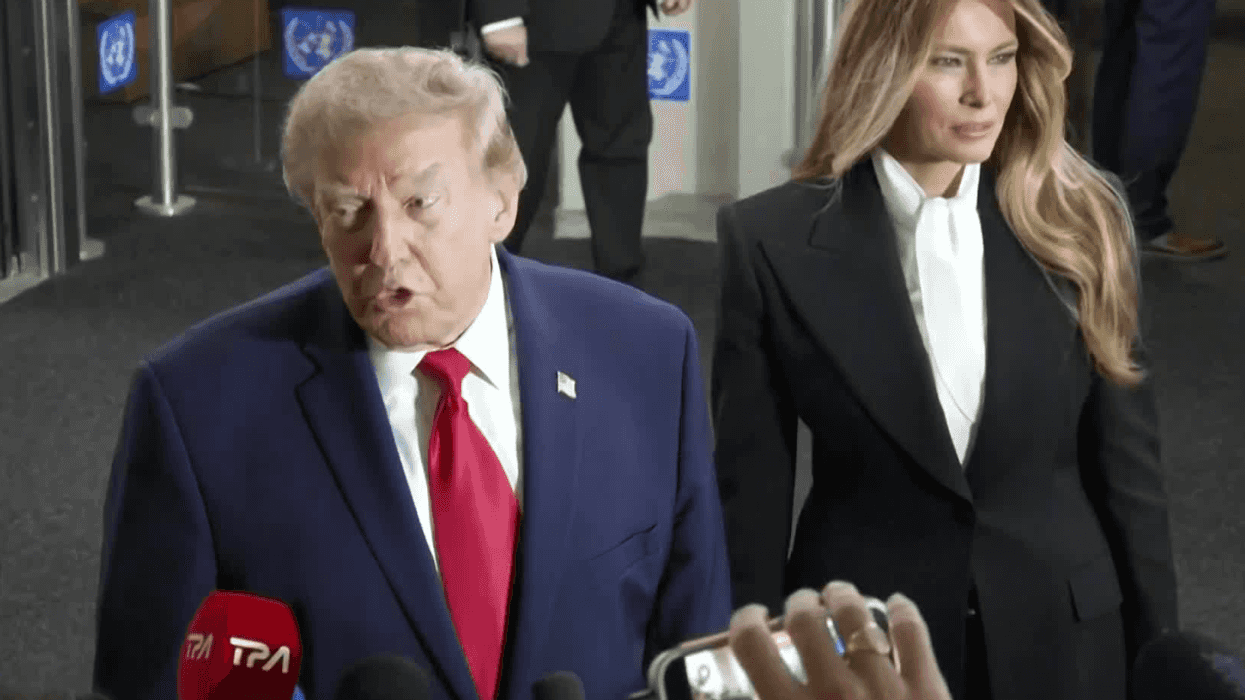
Good for CNN, MS NOW, and Politico for filing an immediate lawsuit Monday against Donald Trump’s order barring them from the White House grounds. Better still, the rest of the press pool refused to fill their slots, suspending a shared arrangement that has put an independent camera on every president since Eisenhower. Trump traveled to the United Nations on Monday with no network crew recording his official movements, the first such blackout in modern memory.

It was a collective flexing of muscle, and twenty months of Trump 2.0 have taught us that this—institutions acting together, refusing to be picked off one at a time—is exactly the right way to push back against a tyrant. And of course it hit Trump where it hurts him most, cutting off the oxygen of the public’s attention to his every move.

There will be a hearing before Judge Timothy Kelly tomorrow afternoon, Wednesday, September 23, on the networks’ motion for a temporary restraining order.

The networks’ solidarity was historic, if not quite unprecedented. A far smaller version happened in 2009, when the Obama White House tried to exclude Fox News from a round of pool interviews with pay czar Kenneth Feinberg. The other networks refused to take part unless Fox was included, and the administration backed down within days. Something similar will happen here.

And as the Fox News precedent demonstrates, the perniciousness of Trump’s move has nothing to do with politics, i.e., with the particular viewpoint that the government is trying to ostracize. The principle is about the structure of a free press, not the politics of any one network.

The collective action figures to hasten the collapse of Trump’s order even faster than the lawsuit will. And if the courts do not quickly reverse him, he will likely find a way to declare victory and undo it himself. We can take heart in that, and in the show of vigor by the press and the courts, which have been among the more stalwart institutions resisting Trump’s authoritarian moves throughout this presidency.

But before popping the champagne, we should take stock of the gravity of this latest move—one of three in the last couple of weeks—to transgress what is arguably, along with invidious racial discrimination, the most categorical constraint on government action in the Constitution.

Of course, all the constraints the Constitution places on government are important, and constitutional lawyers are not in the habit of ranking the charter’s commands, but the Constitution is an instrumental document, designed to promote, in five words or fewer, life, liberty, and the pursuit of happiness. Considered from that vantage point, few if any of its commands rank higher than the proscription against government discrimination on the basis of viewpoint, the very epicenter of the First Amendment. Given the coercive power of the state, it presents special harms to a self-governing society.

And the last two weeks alone have supplied three direct attacks on that principle. Each was executed not by a rogue actor but as the settled policy of the United States government.

Besides the latest outrage, Kash Patel cut off cooperation with Canada’s national police force to punish an editorially independent broadcaster over how it chose to describe the 9/11 attacks; and the FCC leaned on ABC hard enough that Jimmy Kimmel pulled a Senate candidate’s interview off the air rather than expose his local stations to the agency’s wrath. We took note of each as it occurred, then largely moved on. Such is the degraded state of government and daily life under Trump that these episodes just get filed away in the overflowing, ever-growing drawer of constitutional abuses.

The prohibition on viewpoint discrimination by government is as central to the American experiment as any provision of the Bill of Rights: the government may not punish or reward speech because of the speaker’s viewpoint. Eighty years ago, Justice Robert Jackson put it in words no one has improved on, warning in West Virginia Board of Education v. Barnette that “no official, high or petty,” may prescribe what shall be orthodox in politics or opinion. Among the justices, Jackson had a gift for the ringing phrase that has rarely been equalled. “High or petty” turns out to be the phrase for the moment.

It’s familiar ground in our constitutional tradition to justify freedom of speech according to the hoary principle of the open competition of ideas. Justice Oliver Wendell Holmes gave it its enduring image in Abrams v. United States—“the best test of truth is the power of the thought to get itself accepted in the competition of the market.” But the marketplace is only the start of the answer, because its signature remedy—that the cure for bad speech is more speech—has nothing to say when the government itself is the censor. The wrong is not that a bad idea is circulating but that the state has put its thumb on the scale.

There are several influential accounts of the particular evil of viewpoint discrimination by the government, and why it is nearly always unconstitutional.

When she was a law professor, Elena Kagan traced the danger to the government’s motive. She argued that free-speech law is best understood not as a device for maximizing the sheer quantity of speech, but as a tool for flushing out the government’s illegitimate reasons for acting: of which viewpoint discrimination is the surest sign. When officials burden speech because they dislike the idea behind it, they are almost always acting for a reason the Constitution forbids: hostility to a message, or the wish to shield themselves from criticism and tilt the debate in their own favor. That is an abuse of power whatever its practical effect. This is why the rule applies even when a particular restriction barely dents public debate; the wrong lies not in the damage done to the conversation but in the corruption of the government’s reason for acting.

A second fairly canonical understanding is the “checking value” of the First Amendment. As the scholar Vincent Blasi explained, free expression matters above all because it is how a free people exposes and restrains the abuse of official power. On this view, the special danger of viewpoint discrimination is that the speech a government most wants to punish is precisely the speech that holds it to account, so a state that can silence its critics has disabled the very instrument built to keep it honest.

Justice Hugo Black encapsulated that idea in the Pentagon Papers case: the press “was to serve the governed, not the governors,” protected so “that it could bare the secrets of government and inform the people.” The worry again is more fundamental than a distortion in the marketplace of ideas. When an administration punishes the outlets that scrutinize it, it is dismantling a safeguard.

The state is perfectly free to express its own preferences (though limits come in—as we’ve found honored in the breach—with false speech by government). But it can’t use the machinery of the state to punish the people who hold the view it dislikes. It’s the difference between persuasion, which is fine, and coercion, which is a fundamental abuse of government power, the classic tactic of authoritarian government.

In sum, viewpoint discrimination is forbidden because it betrays an illegitimate government motive and because it uses the coercive power of the state to suppress speech that a free society depends on to keep government honest.

Each of the three recent episodes is a signal lesson in the social harm and deep constitutional betrayal that viewpoint discrimination occasions. None offends only one of the rationales above, but each throws one of the harms into especially sharp relief.

Trump’s barring of CNN, MS NOW, and Politico is as pristine an instance of viewpoint discrimination as we have seen in Trump 2.0. Usually the administration has scrambled to manufacture a pretextual rationale—as when it dressed the Associated Press ban as a quarrel over the AP’s refusal to say “Gulf of America” rather than the plain retaliation it was. But here Trump brandished the smoking gun.

As I wrote on Bluesky, “Trump does CNN & MS big favor by putting it so bluntly. Government discrimination on the basis of viewpoint is virtually always unconstitutional.” With unintended irony, given his grotesque transformation of the White House into a monument to his own presidency, Trump complained that there is “something wrong with a country” that lets people “write purposely negative stories,” and so “I don’t have to let them into…the people’s house”.

The offense is best seen through Kagan’s lens: the illegitimate motive hangs over the whole episode like a pall. The wrong is complete on that motive alone; it does not turn on any measurable effect on coverage. Its gravamen is that Trump wielded public power to reward flattery and punish scrutiny—precisely the malign purpose the rule exists to prevent.

But the core offense is to the First Amendment’s checking value. Trump has launched a frontal attack on the outlets whose job in a democracy is to hold him to account. As of today, he is vowing to fight and, ironically, branding the coverage he dislikes “a threat to democracy.” That will be short-lived: unless Trump takes action to reverse his own edict, the suit filed Monday will succeed.

But the important lesson from the explanations of the special dangers of viewpoint discrimination is that a reversal weeks from now may arrest the constitutional evil. It will not undo the serious injury the press and society already have sustained.

The Kimmel episode illustrates why a winning legal case is not the same as a constitutional safeguard, not in an authoritarian society anyway. Brendan Carr, Trump’s ideological warrior atop the FCC, adopted a viewpoint preference and dressed it as a neutral scheduling rule. His “equal time” rationale was transparently meritless in light of the long-settled exemption for bona fide news interviews. Carr didn’t care. He used his mangled account to pressure ABC, its affiliates, and its local stations over the show’s booking of James Talarico, the Democratic candidate for Senate in Texas.

Kimmel named the wrong exactly—the FCC wanted “to make our editorial decisions for us, which of course we cannot accept”.

And yet they did accept it in a fashion. ABC concluded, rationally, that the fight would be too expensive and time-consuming, and the show pulled the interview from the air and posted it to YouTube.

The aftermath was fairly delightful. The banished interview drew more than twelve million views on YouTube, a far larger audience than the timeslot would ever have delivered. Kimmel and Talarico got the last laugh.

But that viewpoint overlooks the serious constitutional injury that Carr and the administration imposed and got away with. It’s precisely the kind of coercion that the government may never practice against disfavored viewpoints (much less to promote its own party’s candidates). The pressure was flatly unconstitutional, and a lawsuit would almost certainly have won. But vindication would have taken months and cost a fortune, and the blast radius reached past ABC to the affiliates and local stations caught in the crossfire. Weigh the near-certain victory against the fatigue, expense, and exposure of getting there, and the rational calculation becomes: let this one go.

That calculation is itself the authoritarian’s victory. He does not need to win in court; he needs only to make the defense of one’s rights so costly and so exhausting that a rights-holder with a sure case decides it isn’t worth the fight. And of course there is the collateral prospect of an overall chilling effect, so that the next time a network will make a similar calculation to avoid the time and expense—not to mention the many creative ways that this administration finds to make all aspects of life harder for its ideological opponents.

Patel’s browbeating of Canada over the words it used to describe 9/11 belongs on this list. As FBI director, he cut off a portion of the bureau’s law-enforcement cooperation with Canada’s national police—canceling meetings, telling his counterparts they would be out of touch—to punish the CBC, Canada’s public broadcaster, over an internal guidance memo on how to describe the September 11 attacks. The news organization’s long-standing policy was to describe the attacks as terrorism but only with accompanying expert attribution.

And he did it where argument was not only available but obvious. Patel was free to say, loudly, that the CBC’s policy requiring some expert attribution in order to use the word “terrorism” was ridiculous; Canada’s own culture minister called it “pedantic and foolish,” and that kind of government counter-speech is entirely legitimate. What he could not legitimately do was warn that any Canadian agency failing to “publicly reject this bastardization of history” would “no longer have a friend in this FBI.” The CBC folded within days. Patel still halted some cooperation between the two nations’ law enforcement agencies anyway.

This may not be a First Amendment violation, strictly speaking. The broadcaster is foreign; the squeeze ran through the Mounties. But it is of a piece with the administration’s petty, bullyboy instinct: when it encounters views it doesn’t like, it screams and threatens. And the harm here fell on Americans: live counterterrorism and cybersecurity work with a close ally, suspended to punish an editorial judgment that had already been surrendered.

In the daily functioning of a democracy, ideas fight for space in the hurly-burly, with the winner being the most worthwhile—or so is the large bet we placed as a country on the Constitution. Government suppression of ideas it disfavors, or that cut against its political interests, is a more pernicious matter altogether.

Barring reporters for unfavorable coverage, threatening a network’s licenses over a comedian’s monologue, punishing an ally over a style guide are the reflexes of an autocracy. The state insists on a single approved version of events and treats the truth as a loyalty test.

Hannah Arendt, who along with George Orwell is the prescient prophet of our current dark times, put the stakes plainly in a 1974 interview: “The moment we no longer have a free press, anything can happen. What makes it possible for a totalitarian or any other dictatorship to rule is that people are not informed.”

Thanks largely to the courts and the collective action of the media, we are not yet at the point where everything comes apart; and I believe we will not get there. That is a buoying headline of a sort. But a democracy can be eroded and pushed toward authoritarianism, with current and lasting consequences. The administration’s violations of the viewpoint discrimination principle harm us as a free society, even if they are forced to walk back every one. We are, here and now, poorer and less free, for having authoritarians in charge.

Harry Litman is a former United States Attorney and the executive producer and host of the Talking Feds podcast. He has taught law at UCLA, Berkeley, and Georgetown and served as a deputy assistant attorney general in the Clinton Administration. Please consider subscribing to Talking Feds on Substack.


Betsy Klein

The Press Finally Stands Up To Trump! Courage Is Contagious

It’s good to see that all the major news outlets are standing together behind the three outlets that lost their White House press credentials because Donald Trump didn’t like their reporting. The three, CNN, MS NOW, and Politico, had apparently written something that hurt Trump’s feelings, so he decided to take revenge by banishing them from the White House grounds.

In a great display of solidarity, all the networks, including Fox News, abandoned their live feeds from the White House. This deprives Trump of what he values most: an audience.

Many of us were disappointed, if not altogether surprised, by the rapidity with which major institutions and prominent individuals abandoned principles and bent the knee for Trump at the start of his second term. The major universities stand out in this respect, as several, notably Columbia University, quickly abandoned principles of academic freedom to accommodate Trump in terms of what could be said or taught on campus.

It was especially disgusting to see that much of the assault on universities was ostensibly about protecting Jews from antisemitism. This came from an administration that has an ongoing problem with the neo-Nazi ties of various staffers rising to the surface. Elon Musk, its major campaign funder, and briefly co-president, is an open supporter of neo-Nazi political parties around the world.

Similarly, a number of law firms with long-established reputations for promoting civil rights and other liberal causes quickly entered into deals with the administration. To repent for the sin of trying to hire and promote people from disadvantaged groups, they signed an agreement to stop the practice and do free legal work for Trump’s chosen causes. (See Michelle Goldberg’s excellent New York Times column on this capitulation, which is based on a new book by Jacob Weisberg: Profiles in Cowardice: A Study of Collaboration in the Trump Era.)

Many members of the super-rich, with at least some credentials as committed small “d” democrats, quickly donned their MAGA hats and joined the inaugural celebrations. Centibillionaires Jeff Bezos and Mark Zuckerberg stand out in this respect. Bezos had bought and revitalized the Washington Post in 2013. When Trump won the first time, he changed the newspaper’s masthead to “democracy dies in darkness.”

Zuckerberg and his wife, Chan Zuckerberg, had donated hundreds of millions of dollars to support the electoral infrastructure. This was especially important in 2020, when the Covid pandemic created an unprecedented situation for carrying through a national election.

Rather than risk any of their hundreds of billions, both billionaires quickly embraced Trump. Bezos turned the Post into a right-wing megaphone. Zuckerberg canned anything remotely progressive from his philanthropic activities and Meta.

It should have been possible for a more unified response to Trump’s authoritarian threat. There were more than two months between the election and when Trump took office, but it seems the only thing this crew was interested in planning was its outfits for the inauguration.

The media did not react any better. When Trump decided to change the name of the “Gulf of Mexico” to the “Gulf of America,” it suspended AP from the White House press briefings because it did not go along with this absurdity in its reporting. (We can now wear Gulf of Mexico and Lake Ontario tee-shirts as political statements.) Rather than standing in solidarity with AP and walking out, the rest of the media collectively looked the other way.

But now they have recovered their integrity. They all know that the only sin the three banished outlets have committed is reporting. Trump is upset because reality contradicts his dementia dreams, and he doesn’t like that pointed out. But that is what real news outlets are supposed to do.

It has become increasingly evident that Trump fears reality like a vampire fears light. He has staffed his entire administration with sycophants. Even in the rare case they have some level of competency, they will gladly put it aside to do Trump’s bidding. The result is rising inflation and interest rates, a pointless and tremendously destructive war, an abandonment of any pretense to care about human rights or national sovereignty, and the return of measles.

That’s a real disaster, and it’s good that much of the media is prepared to tell the true story. Their act of solidarity should make it easier for more to regain their courage and join the throng of the formerly MAGA.

Dean Baker is a senior economist at the Center for Economic and Policy Research and the author of the 2016 book Rigged: How Globalization and the Rules of the Modern Economy Were Structured to Make the Rich Richer. Please consider subscribing to his Substack, from which this is reprinted with permission.

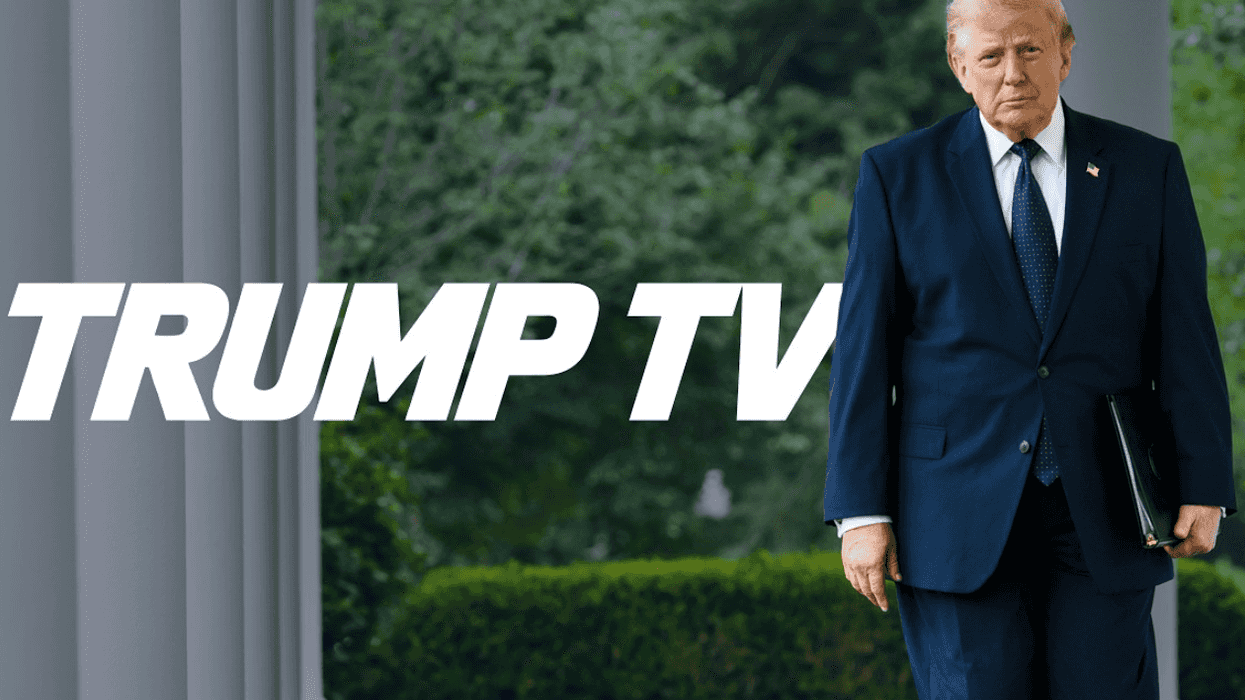
Trump TV

Who's A 'Communist'? President Announces Trump TV State News Channel

Reactions lit up President Donald Trump on Monday to the White House's newly announced "Trump TV" initiative, as his ban on several news networks exploded into a major scandal, with one observer accusing the administration of "literally shredding the Constitution."

Trump last week announced on Truth Social that he was banning MS NOW, CNN and Politico from the White House, dubiously claiming that they were intentionally spreading lies about him and his presidency. In response, the entire White House pool launched a boycott of presidential coverage, while the targeted networks filed a lawsuit accusing the administration of blatant First Amendment violations.

Amid all of that chaos on Monday, the White House announced the launch of "Trump TV," described as a "24/7" livestreaming YouTube channel broadcasting "the Trump Administration's biggest moments all in one place." While not a traditional news outlet by any stretch, the timing of the announcement alongside Trump's assault on TV news outlets sparked numerous withering reactions across social media, accusing him of "communist" style state-run programming and "literally shredding the Constitution."

Aquilino Gonell, a former staff sergeant for the U.S. Capitol Police during the January 6 attacks, tore into Trump over the announcement, implying he was a hypocrite for doing so while also attacking Democrats as "communist."

"It will be official state-run media. But look over there…the communist," Gonell posted to X. "Literally shredding the Constitution.""So, state-run media," the official Lincoln Project account posted. "Donald Trump is the communist."

"Otherwise known as state-run media," Stephanie Grisham, a former White House press secretary during Trump's first term, posted. "You know who else does this? Russia, China, and Iran to name a few..."

Various reactions also took aim at the official White House app that launched at the same time, through which the Trump TV stream can be viewed, in addition to other offerings. Daniel Dale, a leading columnist and fact-checker for CNN, took particular aim at several of the "accomplishments" touted in the app.

"Just checked out this White House app," Dale wrote. "Under 'accomplishments,' it lists… 1) Gas prices from seven months ago, before the Iran war (they’re now more than $1.50 per gallon higher — $4.48, per AAA). 2) The inflation rate from seven months ago, before the Iran war (the most recent rate, for August, was a full percentage point higher, 3.4 percent). 3) GDP growth from three quarters ago (the most recent available quarter, Q2 2026, was nearly three points lower, 1.5 percent). In summary, it may possibly be helpful to consume news from news outlets."

Reprinted with permission from AlterNet

Shop our Store

Headlines

Editor's Blog

Trending

World