Tag: trump pardons
Pardons, Sopranos Style: Indictment Of MAGA Lobbyist Exposes Systemic Rot

Pardons, Sopranos Style: Indictment Of MAGA Lobbyist Exposes Systemic Rot

A fixer is owed money. The client won’t pay. So the fixer turns to an enforcer: How far should I go? Do you want him hurt? A broken jaw? A missing finger?

The fixer’s answer: do “anything and everything” to collect.

It has the makings of a mob drama. Except it’s all true. And this isn’t North Jersey. It’s Washington, D.C. And the product isn’t illicit goods—at least not in the traditional sense.

It’s presidential pardons.

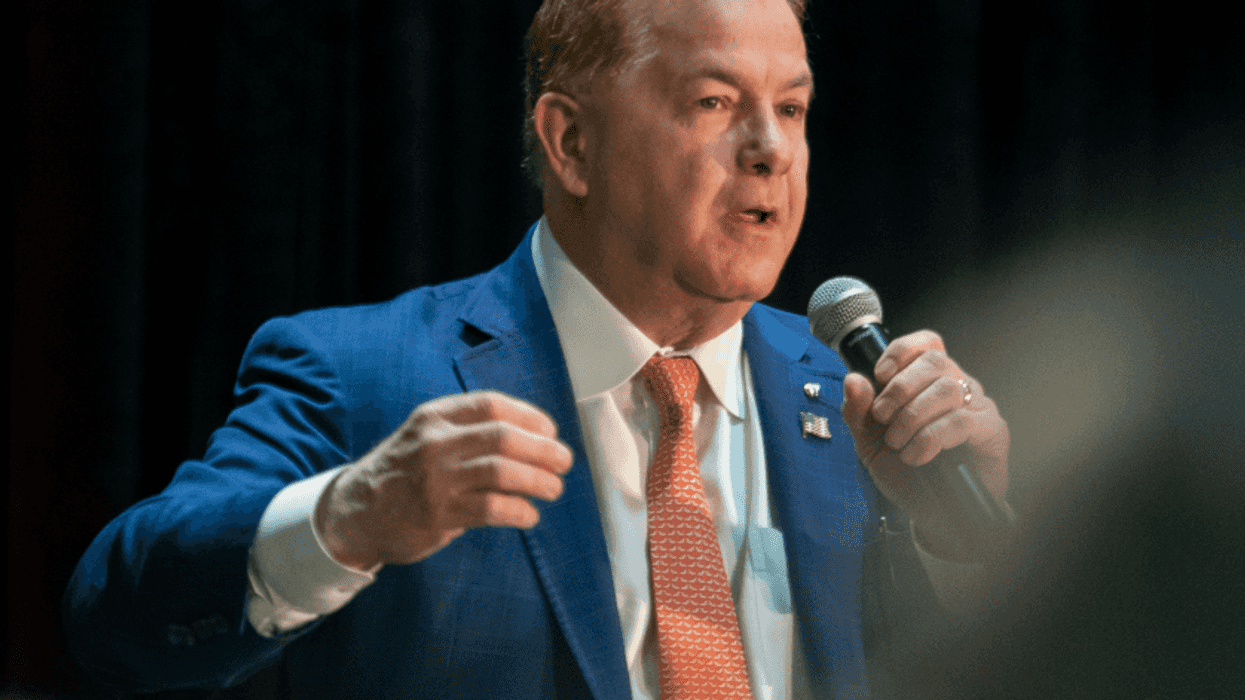
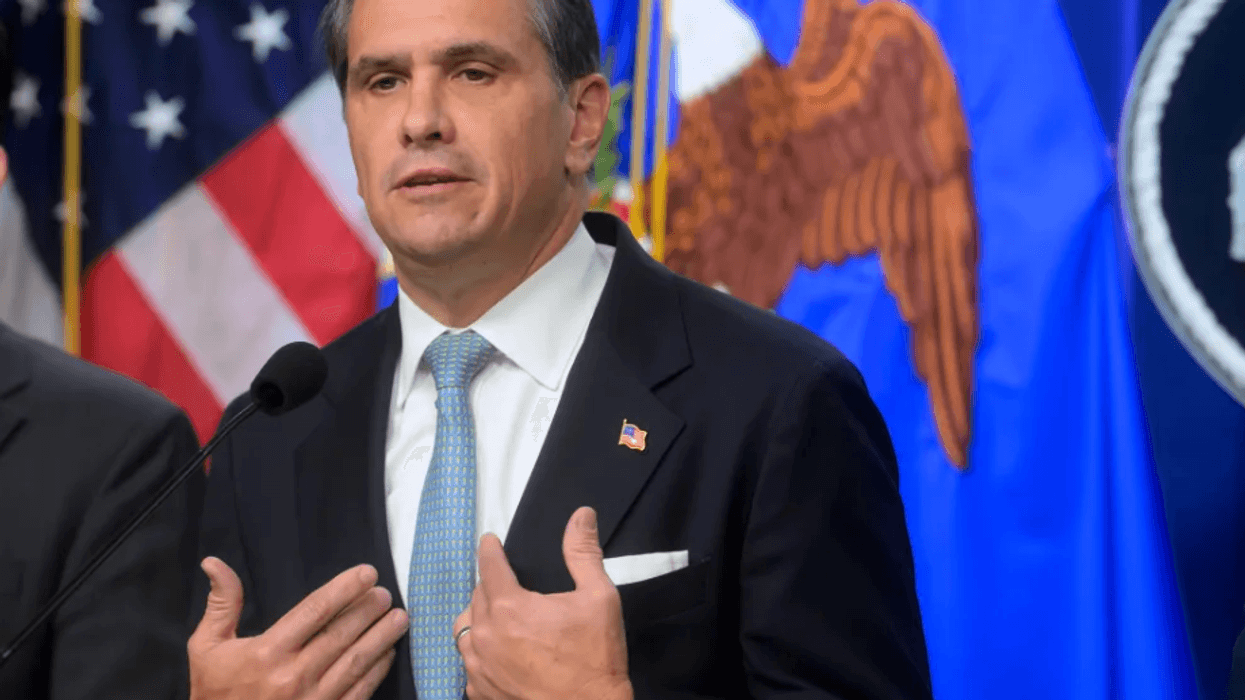
Josh Nass is a Washington lawyer who recently helped secure a presidential pardon. He now faces criminal charges for extortion.

Nass’s story illustrates a larger point. When a president turns the pardon power into a favor-trading racket, the corruption radiates outward—into the lawyers, fixers, and enforcers who operate in its shadow.

Nass is a conservative lawyer and lobbyist who circulates in MAGA circles and reportedly purchased property in Trump Tower, an immediate credential for proximity to the boss. He is one of a growing number of figures operating in the shadows of Trump’s pardon bazaar, advertising access and charging would-be recipients six- and seven-figure fees.

Figures from Rudy Giuliani to Corey Lewandowski have been drawn into this orbit. Giuliani reportedly sought as much as $2 million from a client for a potential pardon in 2020.

Nass worked the system successfully. That almost certainly means he traded not in the traditional currency of clemency—rehabilitation, remorse, equity—but in something else: proximity, flattery, politics.

But the client couldn’t pay the $500,000 contingency fee.

That happens to lawyers. When it does, they turn to the legal system—negotiate, restructure the debt, write it off, or, if all else fails, file suit.

But Nass had no interest in operating within the legal system. Instead, according to prosecutors in the Eastern District of New York, in filings seeking his pretrial detention, he hired someone he believed to be a thug enforcer to “persuade” the client to pay up, using the traditional tools of the trade: terror and violence.

That person turned out to be a confidential informant. The result was a series of recorded conversations and, now, an extortion charge. In the taped conversations, Nass and the informant discuss how far to take the intimidation.

Cut off a finger? Put a gun to his head?

Nass’s answer: do “anything and everything.”

And then, according to prosecutors, Nass offers a justification:

“You came to him as a human being… and he told you to go f*** yourself. So you can’t be a human being with him.”

It’s not hard to hear Paulie making the same argument to Tony.

The point is not simply that Nass allegedly crossed a criminal line.

It’s that someone like Nass exists at all, part of an ecosystem that has grown up around Trump’s transformation of the pardon power.

I’ve argued before that Trump’s use of clemency is among the most corrupt features of his presidency, not because of any single decision, but because the entire process has been reoriented away from law and toward personal and political advantage.

Nothing surpasses the pardons he issued on his first day in office to the January 6 marauders; they are a lasting stain on our history. But that was only the most visible example. He has since doled out a long string of pardons to flagrantly undeserving individuals for illegitimate reasons.

In some cases, the surrounding circumstances—for example, clemency for relatives of major political donors—have such a stench that they ordinarily would trigger oversight in Congress or criminal investigation. In Trump 2.0, fuggedaboutit.

The institutions that would ordinarily check the outrages have stepped back, stood down, or been sidelined. The Department of Justice sees no difference between Trump’s political maneuvers, however unsavory, and the letter of the law. Congress’s oversight is toothless. And the Supreme Court’s infamous immunity decision has removed criminal accountability from the field.

When pardons become a political commodity, a market grows around them. A December Wall Street Journal report suggests that the going rate for a Trump pardon clocks in at around $1 million.

Nass is illustrative of the seamy courtiers that pop up wherever influence is currency: lawyers and lobbyists charging enormous fees to people who would have no plausible chance at clemency in a system governed by principle.

They are not selling legal analysis or advocacy in any meaningful sense. They are selling access. And in the pardon racket Trump presides over, access is everything.

Deals like that don’t stay clean.

It’s not just that the pardon system has become transactional and unmoored from any legitimate consideration. It’s that everyone operating within it understands that, at the top, the usual legal constraints no longer apply.

If a president were trading pardons for money in an ordinary administration, that would trigger a criminal investigation. It would dominate the Justice Department. It would end presidencies.

Here, it barely registers. The reaction is muted, episodic, quickly overtaken by the next outrage. What would once have been disqualifying has become background noise under a president who makes corruption a feature rather than a bug of his administration.

And the signal from the top is unmistakable. The Supreme Court’s immunity decision does more than shield past conduct. It communicates that certain exercises of presidential power operate beyond the reach of ordinary law.

The actors in the president’s orbit respond accordingly. The boss makes the big money, and the capos exploit the system for a cut of the illicit proceeds.

Nass’s conduct isn’t an aberration. It’s the logic of the market.

When the product is illicit—whether drugs, stolen goods, or pardons—transactions don’t end in courtrooms. They end in leverage, and sometimes in violence.

The system has adapted to the premise that the president can do no wrong. Everything else follows.

The scandal is not the extortion charge.

The scandal is the system that made it entirely predictable.

Beyond Trump's Latest Crazy Pardon, Glimpses Of A Post-Trump America

Beyond Trump's Latest Crazy Pardon, Glimpses Of A Post-Trump America

Trump 2.0 continually impresses everyone for its craziness. The latest venture into the absurd was Trump’s preemptive pardon of Democratic Rep. Henry Cuellar (D-TX), who had been indicted on charges for accepting bribes from foreign actors.

The pardon is not especially surprising, since Donald Trump finds a corrupt politician as irresistible as he might have found an attractive woman in his younger days. The Trumpian absurdity part of the story is that Cuellar immediately turned around and said that he wants the prosecutors investigated. In Donald Trump’s America the greatest crime is enforcing the law against a Donald Trump ally.

Who knows where Cuellar’s request will end up? Most immediately, he apparently went to Jim Jordan, the head of the House Judiciary Committee with his case. This likely means some serious hyperventilation and screaming, but not much else.

It’s not clear that anyone in the Justice Department will pick up on Cuellar’s insistence that prosecuting him should be a crime and start investigating their colleagues. The refusal of Justice Department lawyers to carry through blatantly political prosecutions has been a source of encouragement. This shows both that they have a bit of a moral compass, and also that they are thinking of a post-Trump world, where a clown show prosecution of a Trump enemy is not something good to have on your resume.

The refusal to prosecute was very public when Trump’s pick for acting United States attorney for the Eastern District of Virginia, Lindsey Halligan, could not get any of the career lawyers in the Justice Department to sign off on the prosecutions of former FBI director Jame Comey and New York Attorney General Letitia James. She had to take up the task herself even though she had never prosecuted a case before. Such refusals are likely playing a role in the Justice Department’s refusal to date to press an antisemitic prosecution of liberal billionaire George Soros or whack job conspiracy indictments of Barack Obama and Hillary Clinton.

Rats Leaving the Ship

It’s not just Justice Department lawyers who can give us some hope of a post-Trump world where democracy survives. Jamie Dimon, the CEO of JP Morgan, recently said that he was refusing to make a contribution to Trump’s ballroom monstrosity because he was concerned how a post-Trump Justice Department might view it.

This comment should be taken very seriously. JP Morgan is by far the largest bank in the country, which Dimon has run for two decades. Also, Mr. Dimon is an astute businessman who clearly puts business above politics. Early in 2024 he gave Trump a pseudo-endorsement when he famously said that he thought the economy would do fine regardless of whether Trump or Biden won. That he is now thinking of a world with a normal Justice Department is huge.

It’s not just Dimon who is thinking about a world beyond Trump. A near record number of Republican members of Congress have announced their retirement. Some, most notably Marjorie Taylor Greene, are not even finishing out their terms.

It’s understandable that many would be unhappy with their jobs. Most of them are not morons. They know they are being asked to repeat inane lies in support of Donald Trump and whatever whack job thing he says or does. That can’t be lots of fun.

On top of this, politicians do understand election results. They see a shift of double-digits away from Republicans in elections across the country. They also see the polls showing Trump’s popularity going through the floor. That does not sound like a good environment to seek re-election even when Trump has gerrymandered districts to favor Republicans.

Collapsing Conspiracy Theories

Trump also has the problem that many of the MAGA team’s guiding lies are coming undone. The most notable one is the Jeffrey Epstein scandal. Many Trump backers really believed that Donald Trump was the white knight who was going to smash the child trafficking pedophile ring being run by Hillary Clinton and other evil Democrats.

Now that he is sitting in the White House, he is doing everything possible to keep secret the files related to the country’s most notorious child sex trafficker. Trump’s denials of his ties to Epstein are becoming ever more absurd. Only the most extreme cult members can find them credible at this point. Trump was clearly a close friend of Epstein’s and likely partner in at least some of his activities.

And it’s not just the child sex trafficking conspiracy that’s sinking under the weight of reality. Trump’s FBI team managed to finally nail down a suspect in the January 6th Capitol pipe bomb case. (Congrats to them, seriously.)

The top levels of the MAGA cult, including current deputy FBI director Dan Bongino, had been pushing whack job conspiracies about how the pipe bombs were part of an FBI inside job. Now it seems that the suspect was just another January 6th insurrectionist supporting the stolen election story. The big question now is whether he qualifies for Donald Trump’s blanket pardon of his mob.

The other Trump conspiracy at risk is the story of Jack Smith’s weaponization of the Justice Department. The Republicans are boasting about how they have subpoenaed Smith to testify in secret hearings where they can then publish selected excerpts from his testimony.

Smith has volunteered to testify in public. Republicans are scared to death to let Smith speak in public and let everyone hear about his by the book investigation of Donald Trump’s effort to overthrow the government. For the moment, Smith’s public testimony has not been a major demand from Democrats, but there is always the possibility some members of the party could wake up.

Healthcare and Affordability: Reality Still Matters

Finally, the Trump gang does have to deal with some real-world problems that are not going away. Health insurance premiums are about to rise a lot for tens of millions of people, unless Trump and the Republicans in Congress do a 180 and agree to extend the subsidies for the exchanges under Obamacare.

Wages for millions of workers, especially low-paid ones, are also not keeping pace with inflation. Trump might insist that tariffs don’t affect prices, but they do. We just got new data on import prices for September, showing again that exporters are not eating the tariffs. The labor market has also weakened substantially, with the unemployment rate for disadvantaged groups like Black workers and young people rising sharply.

And even Trump’s big issue, immigration, is not going well for him these days. While most Americans might have been happy to see the pet-eating rapists and murderers sent back to where they came from, it’s clear that violent criminals are a tiny fraction of the people being nabbed by ICE. The overwhelming majority are people who have committed no criminal offense whatsoever or a minor offense like shoplifting.

No one thinks we are safer as a country when they see ununiformed masked men grabbing gardeners and food truck operators off the streets. The hardcore racists might applaud this sort of crackdown on people guilty of not being white, but thankfully, even a majority of Trump voters don’t fall into this category.

Trump’s Caribbean war crimes are also not playing well. Using advanced weaponry to blow up small boats that are thousands of miles from the U.S. does not make sense as a drug interdiction strategy. Killing survivors from the initial strikes makes even less sense. The whole thing becomes even more absurd when Trump issues a pardon to a notorious drug trafficker who the Justice Department spent years investigating and convicting.

MAGA Is Melting Down

It’s too early for big celebrations, but it does look like the wheels are coming off the Trump juggernaut. When the AI bubble bursts, likely taking crypto with it, and Trump’s rich buddies become considerably less rich, the rats will all start fleeing.

But we can’t sit around and wait for the big crash, which could still be some time in coming and likely won’t be all at once. We need to bolster the forces of democracy every way we can. That means supporting defectors, even if they might be awful people, and doing whatever we can to resist. Look forward to seeing everyone at No Kings III.

Dean Baker is a senior economist at the Center for Economic and Policy Research and the author of the 2016 book Rigged: How Globalization and the Rules of the Modern Economy Were Structured to Make the Rich Richer. Please consider subscribing to his Substack.

Reprinted with permission from Dean Baker.

Trump's 'War On Drugs' Is Either Personal Lunacy -- Or Political Distraction

Trump's 'War On Drugs' Is Either Personal Lunacy -- Or Political Distraction

Since President Richard Nixon declared a "War on Drugs" in 1971, federal, state and local governments have spent an estimated $1 trillion fighting it — and losing. Donald Trump now seems fully engaged in that futile conflict, adding his own twisted brand of violence.

It's not enough to bomb boats "suspected" of ferrying drugs to the United States. Defense Secretary Pete Hegseth has ordered the military, after the initial strike, to "kill" survivors clinging to life rafts on the waters below.

Shocked lawmakers, both Republican and Democratic, are calling such actions "war crimes." The law of war authorizes the use of deadly force against enemy combatants. But once they're no longer a threat, the obligation is to care for the wounded.

That's beside the matter of whether the targets were, in fact, drug boats. Some may be, but the U.S. military is fully capable of stopping, boarding and interviewing the crew of a little vessel sailing through the Caribbean or Pacific.

And even if the boats are carrying drugs, there's no easy way of knowing how many of their passengers were traffickers and how many were the traffickers' hostages. Drug gangs are known to threaten innocents and their children to force participation in the ferrying business.

How well has this "war" been working out? Not well.

Fentanyl, a synthetic opioid, has killed more Americans than the wars in Vietnam, Iraq and Afghanistan combined. And lined up behind it are still more vicious street drugs.

In 2023, about 110,000 Americans died from drug overdoses, nearly 10 times the number in 1999. The death toll fell in 2024, due mostly to the availability of naloxone, which can reverse overdoses. But it was still seven times the drug-related fatalities of a quarter century prior.

This is counting deaths from both opioids and stimulants, the category for cocaine. Deadly synthetic opioids such as fentanyl are now often added to the cocaine. A recent CDC report found that nearly 80% of cocaine-related deaths involved drugs with opioids mixed in, especially fentanyl.

You can't stop fentanyl from entering this or any other country. Fentanyl the size of a pencil eraser can kill dozens of people. How hard is it to hide that tiny amount sewn in a teddy bear's nose? Not hard at all.

A kilogram of fentanyl contains up to half a million potentially lethal doses. A kilogram is only 2.2 pounds. A quart of milk weighs about that.

In fiscal 2025, the Coast Guard seized almost 510,000 pounds of cocaine. That was the most in its history but a fraction of the cocaine that got past our borders — drugs arriving by land, sea and air.

Go ahead and keep trying to prevent these drugs from coming in, but let's not pretend that this bombing of unidentified boats is anything more than another Trump performance. Perhaps it's another way to divert attention from the Epstein files.

If this were really about punishing drug lords, Trump wouldn't have just issued a full pardon to Honduran ex-President Juan Orlando Hernandez. Convicted last year of partnering with traffickers, Hernandez is credited with helping flood the U.S. with hundreds of thousands of kilograms of cocaine.

A Drug Enforcement Administration agent, who worked on the Hernandez case but was not allowed to comment publicly, called the pardon "lunacy."

That show of inconsistency was so crashing, you can't help but suspect Trump's motive was to even further distract the public from the investigation into the sex trafficking of underaged girls. It was piled right onto the macabre videos of the U.S. military dropping bombs on small boats.

That would seem the best explanation for these bizarre Trump orders — short of lunacy, that is.

Shop our Store

Headlines

Editor's Blog

Corona Virus

Trending

World