Tag: white house ballroom
Trump Lawyer: We Can Bulldoze The Statue Of Liberty Without Any Public Recourse

Trump Lawyer: We Can Bulldoze The Statue Of Liberty Without Any Public Recourse

A single exchange in last Friday’s District of Columbia Circuit argument laid bare the Trump administration’s strategy in a series of recent cases: push through deeply unpopular and frequently illegal measures, disable Congress, and freeze out the public from being able to do anything about it.

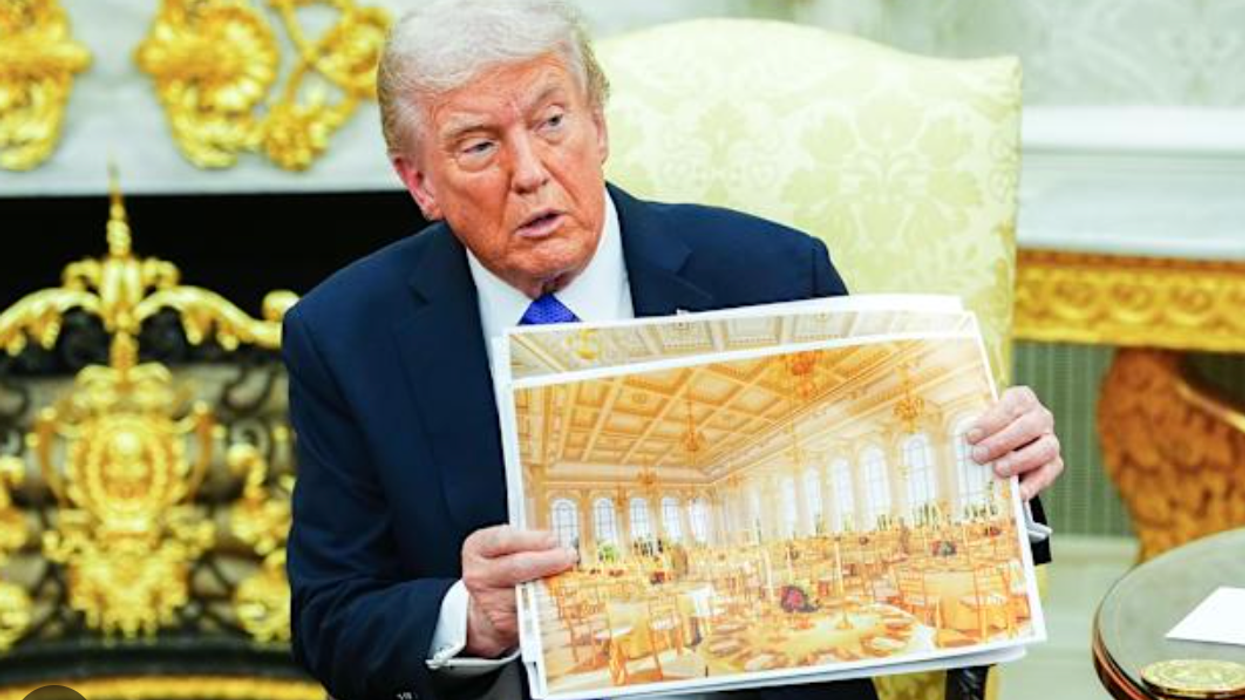
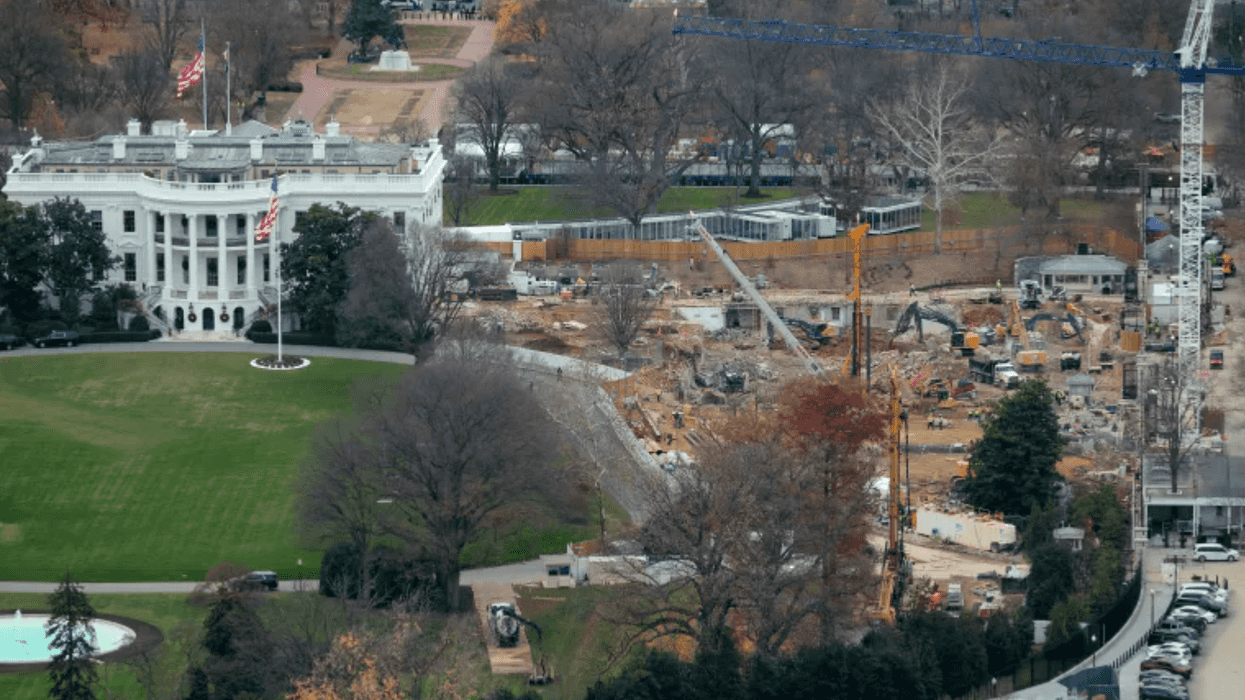
The exchange concerned Trump’s most cherished goal of remaking the White House—the people’s house—in his imperial and garish image.Recall how we got here. Last fall, with no congressional authorization and no completed legal process, the administration simply got up one day and started digging a huge hole where the East Wing had been. By the time the National Trust for Historic Preservation sued in December, the East Wing was gone, and large-scale excavation was well underway.

Judge Richard Leon initially rejected the Trust’s first two injunction requests because they rested on flawed legal theories. Then, in March, he granted a preliminary injunction on the Trust’s amended complaint, halting above-ground construction. The administration took an emergency appeal, and the DC Circuit administratively stayed the injunction the very next day, permitting construction to proceed while the appeal was expedited.

By the time of Friday’s argument, three million pounds of steel rebar were in the ground, and the structure was beginning to rise above it.That brings us to last Friday’s argument. The DC Circuit is commonly considered the second most powerful federal court in the nation. Given the court’s sophistication and the personal importance to Trump of the project, the administration sent its version of the A-Team. Yaakov Roth is a senior official in the DOJ’s Civil Division, as well as a lawyer with a gold-plated résumé that includes a clerkship for Justice Antonin Scalia and extensive appellate experience.

The most active questioner on the panel was Obama appointee Judge Patricia Millett. In the course of pressing Roth on the administration’s standing argument, Millett dropped the hypothetical that crystallized the Department’s position.

“If this were the Statue of Liberty,” Millett asked, “the people whose ancestors—that was the first thing they saw coming to this country, but the government moved too fast—nothing can be done by them to challenge it?”

Roth’s answer: “I think that’s right, yes.”Roth’s answer was not a mistake under pressure. He had thought through the implications of the administration’s position and understood that Millett would be quick to exploit any inconsistency and use it to unravel the administration’s case.

Millett simply followed the logic to its destination and asked him to confirm it. He did, as he had to. The only check, he allowed, would be Congress—which would have to pass a law that Trump could veto, requiring two-thirds to override.

Millett then named what she had gotten Roth to concede: “Move fast and break things and then nobody has standing.” Roth conceded that was essentially correct.

That is the administration’s playbook for a series of recent high-handed moves: the $1.8 billion slush fund for January 6 defendants; the systematic destruction of presidential records; the collusive settlements with Flynn and Bannon; and now the ballroom rising on the demolished White House East Wing.

In each of these examples, the administration follows the same two-step plan.

First, neuter Congress: anything requiring legislation to stop faces a certain presidential veto, and the two-thirds override is a mathematical fantasy as long as enough Republican members remain terrified of Trump’s one remaining real weapon, the threat to come after them.

Second, neuter the courts: argue that no one has legal standing to challenge what is being done, that the injury is too generalized, too abstract, too aesthetic to cross the Article III threshold.

The argument is not that they’re acting in the interests of the American people; it’s rather that the American people can’t do anything about it.

Congress can’t act. Courts can’t hear it. The bulldozer rolls with no brakes.

There is nothing inherently improper about an administration’s invocation of standing doctrine. The requirement that plaintiffs show a concrete, particularized injury before federal courts will take up their claim is a valid constraint, rooted in Article III, and courts across the ideological spectrum have enforced it against litigants of every stripe. The constitutional design is that federal courts are not a substitute for legislative action.

But the administration has taken its reliance on standing to a new low, and used it to bypass legal accountability for a series of issues of intense popular concern. It has combined aggressive standing arguments with bare-knuckle intimidation of Republicans in Congress. The result is a pincer movement that leaves the public—the people who overwhelmingly object to a $1.8 billion giveaway to January 6 defendants, who feel in their bones that the White House belongs to all of them, who do not want their government shredding documents that belong to the people–with no branch to turn to and no courthouse door that will open.

The power of the Millett hypothetical is that it smokes out where the administration’s argument leads. Can the executive lay waste to the Statue of Liberty? Damn right, says Roth—and even if it’s a rank violation of the executive duty to take care, nobody can stop it because nobody has standing.

It’s their game plan, anyway. But the administration’s retreat last week on the slush fund shows what can crack it: a combination of legal exposure and political pressure. The payout to January 6 insurrectionists was odious as well as unconstitutional, and the legal attacks and political pushback reinforced each other. That process is ongoing: Judges Williams, Brinkema, and Leon can still bring the legal hammer down, making it that much harder for the administration to work its will, and for Republicans in Congress to just acquiesce to Trump’s lawless action.

That is the 1-2 punch the moment calls for, and it is available for the ballroom as well. Roth told the court that the public has no voice in the Mar-a-Lago-ization of the people’s house. We can prove him wrong. The task is to raise the political stakes so that every Republican representative feels the heat for going along with Trump’s massively unpopular project.

The White House is the most universally recognized symbol of the national government. Its relatively modest, neoclassical structure stands in harmony with the Capitol and the Supreme Court up the hill. It is the building that millions of schoolchildren visit, that Americans call “the people’s house.” It’s the antithesis of the gaudy ornateness of Trump’s gold-plated imperial design.

There is a profound un-American quality to Trump’s ballroom makeover. He is, in effect, trying to crown himself Emperor—cowing Congress and parrying court action with aggressive standing arguments pressed all the way to the Supreme Court. It is a gesture of deep contempt for the country whose most beloved building he is trying to remake in his own image.

Many of my colleagues believe that he can’t be stopped. I see the force of their positions, but I don’t share them. My best guess is that Trump’s Xanadu monstrosity does not get completed, even though it has been engineered to parry every legal and political challenge the system can throw at it. Some combination of legal and political resolve will hold the line.

An administration lawyer told the judges in the second most powerful court in the country that no court can stop a president who moves fast enough from destroying the White House or the Statue of Liberty. The administration is counting on paralyzing the courts and the Congress, and ultimately on the public’s apathy. The slush fund showed that’s a losable bet. The formula is public pressure, judicial accountability, and Republicans made to own it at the polls. The first part is up to us.

Harry Litman is a former United States Attorney and the executive producer and host of the Talking Feds podcast. He has taught law at UCLA, Berkeley, and Georgetown and served as a deputy assistant attorney general in the Clinton Administration. Please consider subscribing to Talking Feds on Substack.

Reprinted with permission from Talking Feds.
With White House East Wing Ruined, Trump Now Plans To Wreck West Wing

With White House East Wing Ruined, Trump Now Plans To Wreck West Wing

Fresh off of demolishing the East Wing of the White House, President Donald Trump is now considering tampering with the West Wing and building a one-story addition, reports The Daily Beast,

“Despite previously declaring that the project would ‘not interfere’ with the existing White House building, the president’s lead architect revealed on Thursday that another level could soon be built above the West Wing Colonnade — the iconic columned walkway connecting the Oval Office to the Executive Residence at the White House,” the Beast reports.

Trump’s chief architect Shalom Baranes announced the plans while presenting updates to the National Capital Planning Commission on Thursday, arguing that adding another story to the West Wing would “reinstate the symmetry around the central pavilion of the White House,” and balance out new renovations to the now-destroyed East Wing.

Baranes added that Trump also plans to make his $400 million ballroom as tall as the White House’s main mansion itself, shattering long-standing tradition that additions not dwarf the main building serving as a seat of the executive branch.

The Daily Beast reports the White House is making its case to the planning body reviewing the proposed ballroom, which Trump has “stacked with the president’s aides and allies.”The National Trust Preservation Committee, meanwhile, is seeking to halt further construction until a “legally mandated review process” could take place, while the Asbestos Disease Awareness Organization has filed a lawsuit, accusing the administration of refusing to release information on whether it removed or released asbestos when it demolished the East Wing.

Despite public outcry, the Trump insists he has the authority to duck decades of procedure and carry out his destruction and renovations, which he claims will be funded by U.S. billionaires, many of them seeking presidential favors.

Reprinted with permission from Alternet

Trump Ensures That His Tacky Taste Will Pervade The Nation's Capital

Trump Ensures That His Tacky Taste Will Pervade The Nation's Capital

The White House has fired all six members of the U.S. Commission of Fine Arts, an independent federal agency that helps shape the look of Washington’s monuments and federal buildings.

“On behalf of President Donald J. Trump, I am writing to inform you that your position as a member of the Commission of Fine Arts is terminated, effective immediately,” read an email reviewed by The Washington Post and sent late Tuesday by a staffer in the White House personnel office.

The move—first reported by the Post—came as Trump accelerates plans for several flashy construction projects, including a $300 million White House ballroom and a triumphal arch near the Lincoln Memorial. Both would require review by at least one federal design board, and Trump has been cleaning house to make sure those boards are stocked with loyalists.

The Commission of Fine Arts, created by Congress in 1910, traditionally includes a mix of architects, designers, and urban planners who advise the federal government on the capital’s architectural development.

President Joe Biden appointed the now-dismissed group, several of whom were expected to serve through 2028.

Trump’s purge is part of a broader effort to consolidate control over Washington’s two main federal design panels: the U.S. Commission of Fine Arts and the National Capital Planning Commission. The White House already ousted Biden-era members of the latter in July, replacing them with Trump allies, including his staff secretary—and now NCPC chair—Will Scharf. Together, the two panels typically review everything from memorial designs to major changes at the White House itself.

The firings come as Trump moves ahead with his ambitious East Wing overhaul, which includes a proposed 90,000-square-foot ballroom and necessitated destroying the entire existing wing. The president has said the project will be funded by himself and donors, including tech bro allies.

It’s not clear whether the Commission of Fine Arts would have any real say over Trump’s ballroom. The White House has argued that only the National Capital Planning Commission—the other federal design board overseeing major construction across D.C., Virginia, and Maryland—has jurisdiction. Officials say that body steps in only once “vertical” construction begins, not during demolition, meaning the administration can proceed with tearing down the East Wing without either commission’s approval.

Speaking to the Post, a White House official confirmed the Fine Arts commissioners had been terminated.

“We are preparing to appoint a new slate of members to the commission that are more aligned with President Trump’s ‘America First’ policies,” the official said, requesting anonymity to discuss personnel matters.

Trump has also taken a personal interest in reshaping the city’s skyline. Earlier this month, he floated plans for a massive arch near the Lincoln Memorial, though he’s provided no cost estimate, timeline for approval, or design details.

This week’s purge mirrors earlier shake-ups at other cultural and planning institutions, including the Kennedy Center board and the U.S. Holocaust Memorial Council—both of which saw Biden appointees pushed out to make room for Trump loyalists.

The Commission of Fine Arts has long reviewed high-profile White House projects, including the 2019 tennis pavilion overseen by former First Lady Melania Trump. But with Trump eager to fast-track construction, he may try to bypass such reviews entirely.The timing of these firings is hard to ignore. Trump’s push to remake Washington in his own image—starting with his gaudy, oversized ballroom—has come with a quiet purge of the very institutions meant to keep federal design in check.

Reprinted with permission from Daily Kos

What Are The Actual Plans For Trump's Ballroom? Nobody Knows, Including Him

What Are The Actual Plans For Trump's Ballroom? Nobody Knows, Including Him

The East Wing of the White House was reduced to a pile of rubble last week in a hasty, brutal demolition that shocked the country. Now, it’s time to build President Donald Trump’s big, dumb, gilded bribe palace—but no one knows exactly what that entails.

The New York Times tried to figure this out, looking at the plans—which Trump waved around in the Oval Office—posted on the White House website and a physical model of the ballroom.

And guess what? None of them are the same.

Honestly, of course they aren’t. This is all being done on the fly, subject to Trump’s daily whims. The ballroom could hold 650 people, or maybe 1,350—it’s a mystery! Maybe it will cost $200 million, maybe $300 million. Wait, scratch that—it’s $350 million. Definitely $350 million.

You might find it odd that construction is already starting on a building that has multiple building plans—where one version of the ballroom holds nearly twice the other, with a price tag that increases by about $50 million every time you turn around.

You fool! You rube! You just don’t understand how construction works! Let White House press secretary Karoline Leavitt school you.

“With any construction project, changes come. And we have informed all of you, we've been keeping you apprised of this project. We've shown you the renderings,” she said.Well, yes. It’s the fact that there are renderings plural that is the problem here. All we really know for sure is that it will be 90,000 square feet, or nearly double the size of the White House, which stands at 55,000 square feet—at least until Trump destroyed the East Wing.

Former First Lady Jackie Kennedy’s garden is also gone, as are two magnolia trees that were planted in the 1940s to honor former Presidents Warren G. Harding and Franklin D. Roosevelt. And why not? Trump doesn’t want to honor any past presidents. He only wants to honor himself.

Even the small details are inconsistent in Trump’s plans for the ballroom, including the number of decorative columns and staircases. There’s also the small problem of the renderings having physically impossible features, like a stairway to nowhere and overlapping windows.

To be frank, it looks a lot like someone just used AI to render a crappy facsimile of Mar-a-Lago.

Maybe these plans all look like haphazard, slightly different versions of golden crap because McCrery Architects, which is designing the ballroom, mostly builds churches—not ballrooms. However, James McCrery, the firm’s owner, is a hard-right religious zealot and has also designed buildings for Hillsdale College, the right’s beloved ultraconservative school.

But Trump knows that the companies showering him with money for this project don’t actually care about the ballroom's aesthetics or who builds it; it’s just another opportunity to curry favor with the president.

And Trump certainly doesn’t care about quality. He revels in gilded everything, a king in the world’s tackiest castle. He’s created a perfect ecosystem of grift without oversight or public input.

And what do we get? A comically ill-designed piece of garbage where the People’s House used to be.

Reprinted with permission from Daily Kos

Shop our Store

Headlines

Editor's Blog

Corona Virus

Trending

World