Tag: anna wintour
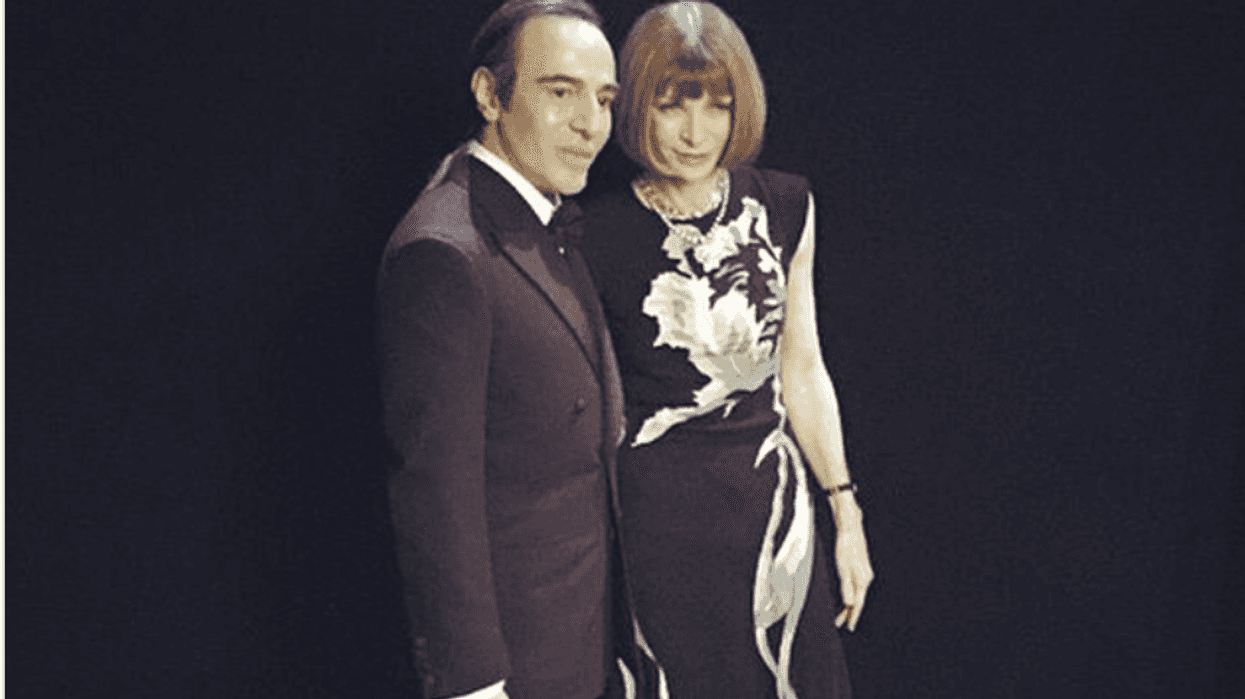
John Galliano and Anna Wintour

A Fashion Queen's Luxury Splendor Can't Quite Conceal Her Moral Squalor

Anna Wintour spent nearly four decades reigning over Vogue magazine. She was chair of the Metropolitan Museum of Art's Costume Institute and its glitzy gala. Wintour is an inspiration for the imperious fashion editor in The Devil Wears Prada. With her trademark bob hairdo, sunglasses, and snotty English accent, Wintour has been the style influence who crowns the influencers.

But her honking blunder in choosing designer John Galliano for a solo show has sullied her legacy. Even worse, it is set to open alongside the institute's fundraising red-carpet blowout. Galliano is known for his antisemitic and anti-Asian tirades. France convicted him of a hate-speech crime, and several luxury brands summarily dropped him.

Some Vogue insiders explain that the 76-year-old Wintour suffers from being out of step with the next generation, that she's not current on social media. Others, myself included, believe she is out of step with decency and judgment.

Granted, the fashion business obsesses on outward appearances. That's its business. But balance sheets for companies making chemicals and ball bearings include a line called "goodwill." It's for intangible assets that make people feel good about the brand.

One must suffer a moral deficiency to celebrate a guy who shouts, "I love Hitler" in public places. Those words are vulgar and offensive everywhere, but especially so at institutions with many Jewish patrons and in an industry with a large Jewish presence.

It makes no difference that Galliano is considered one of the designer greats. Or that he often comes off as just a weirdo with his pirate mustache and frozen grimace. Or that he claims to have been under the influence of some inebriant during his outbursts. Or that he issued an apology for "the hurt I caused to the Jewish and Asian communities."

That level of sympathy was lacking in Wintour. After Galliano pulled out from the Met show, she issued a statement that "John's decision that the exhibition devoted to his work should not take place at this time is very courageous and a measure of the man he is."

Wintour's touting of bigots because they're clever with clothes is not limited to this individual. It was found that Rama Duwaji, the fashion-forward wife of Mayor Zohran Mamdani, had provided crude antisemitic illustrations for a book. Her earlier social media posts also trafficked in the N-word and made anti-gay slurs.

But Wintour gushed over the girl's style in the May issue of Vogue: "I'm full of admiration for New York City's new first lady because she looks so cool and wears a lot of vintage" and so forth.

We understand that the rag trade is not overly invested in its players' moral fiber. And there are artists whose views are repugnant, but if they're especially good at the craft, their reputation can be largely restored with the passage of a few decades.

During World War II, Coco Chanel had ties to Nazi officials for whom she did spying. She tried to use the Nazi anti-Jewish property laws to seize control of the perfume business from her Jewish partners. We're talking about Chanel No. 5.

In 1954, at age 70, Chanel regrouped with a successful comeback fashion collection. American women responded eagerly to Coco's new collection. The French were less enthusiastic.

Ask us again about Galliano in 2035.

Wintour offers a reminder that an arbiter of fashion taste and style can harbor the conscience of a slob. Criticize the response to Galliano as shaming, if you must. But some things are shameful.

The Met Gala, long an Olympics of vulgar exhibitionism, does raise money for a good cause. The Galliano affair was bad for the museum and bad for fashion as a culture.

Meanwhile, goodbye Anna Wintour.

Froma Harrop is an award winning journalist who covers politics, economics and culture. She has worked on the Reuters business desk, edited economics reports for The New York Times News Service and served on the Providence Journal editorial board.
Vogue Doesn’t Have To Put Melania On Its Cover

Vogue Doesn’t Have To Put Melania On Its Cover

Michelle Obama made the cover of Vogue magazine three times. Hillary Clinton not only graced the cover in her first lady days but also, as the candidate running against Donald Trump in 2016, received the magazine’s first and (so far) only political endorsement.
Conspicuously missing is the current first lady, Melania Trump. She would seem a natural in that she’s a former model and a beauty. Her magnificent posture is an inspiration to us all.

CNN’s Christiane Amanpour recently confronted Vogue editor-in-chief Anna Wintour with the indisputable fact that far more Democratic women appear on her prized cover than their Republican sisters. Wintour neither denied nor apologized for that imbalance or the omission of Trump.

Wintour said choices for the cover tend to be women who are “icons and inspiring to women from a global perspective.” Like most of the fashion business, she regards Trump world with disgust, adding, “I don’t think it’s a moment not to take a stand.”

Is Vogue magazine being unfair in keeping Trump’s third bride off its cover? “Is it fair?” is not the right question. Vogue is a privately owned publication and can include or exclude anyone it chooses from its cover or inside pages.

(For the record, Barbara and Laura Bush both had profiles inside. I happen to think that Barbara Bush would have made for a glorious cover.)

There is also the business calculation. Knowing Vogue‘s readership, one doesn’t imagine that an issue honoring someone so closely associated with Donald Trump on the cover would fly off the shelves. It would probably set off a blizzard of subscription cancellations.

I generally don’t have strong feelings for or against first ladies, but a magazine with a Trump on the cover for any reason other than affairs of state would be avoided. Lifestyle magazines, such as Vogue, are for relaxation and escape. Reminders that Trump is president are jarring, even after two years of him.

In olden days, Vogue’s cover was graced by a diverse group of northern Europeans — beauties with roots in countries ranging from England to Norway. Guess who had the most covers: Lauren Hutton with 26.

The magazine has moved in recent years to feature a more ethnically and racially diverse cover. That is a good thing. Another positive move was joining the healthy body initiative, which meant moving away from very young, horribly thin models.

But in its efforts to retain younger readers straying to Elle magazine, Vogue devalued its brand by putting the likes of Kim Kardashian, a professional vulgarian, on the cover. (I wouldn’t touch that issue, either.) Wintour’s stand that those chosen are “inspiring to women” sort of falls flat in the case of Kardashian, with her sexual exhibitionism, video tape included.

Melania Trump’s representative told Fox News that the first lady has “more important” things to do than fret about her absence from Vogue covers. Stephanie Grisham, recently chosen to replace Sarah Sanders as White House spokeswoman, went on to say, “This just further demonstrates how biased the fashion magazine industry is, and shows how insecure and small-minded Anna Wintour is.”

Of course, fashion publishing has the right to be as biased as it wants to be. And so does every other private-sector industry. Whether being so is bad for business is for the owners to decide.

Meanwhile, this blip of “bad” publicity from the White House is undeniably good publicity for Vogue.

So Wintour owes no one an explanation for keeping Trump off its covers. And if she wants to say she felt “honored” by Obama’s repeat presence or subtitle Clinton’s cover shot “The Extraordinary Hillary Clinton,” she can.

Follow Froma Harrop on Twitter @FromaHarrop. She can be reached at fharrop@gmail.com.To find out more about Froma Harrop and read features by other Creators writers and cartoonists, visit the Creators webpage at www.creators.com.

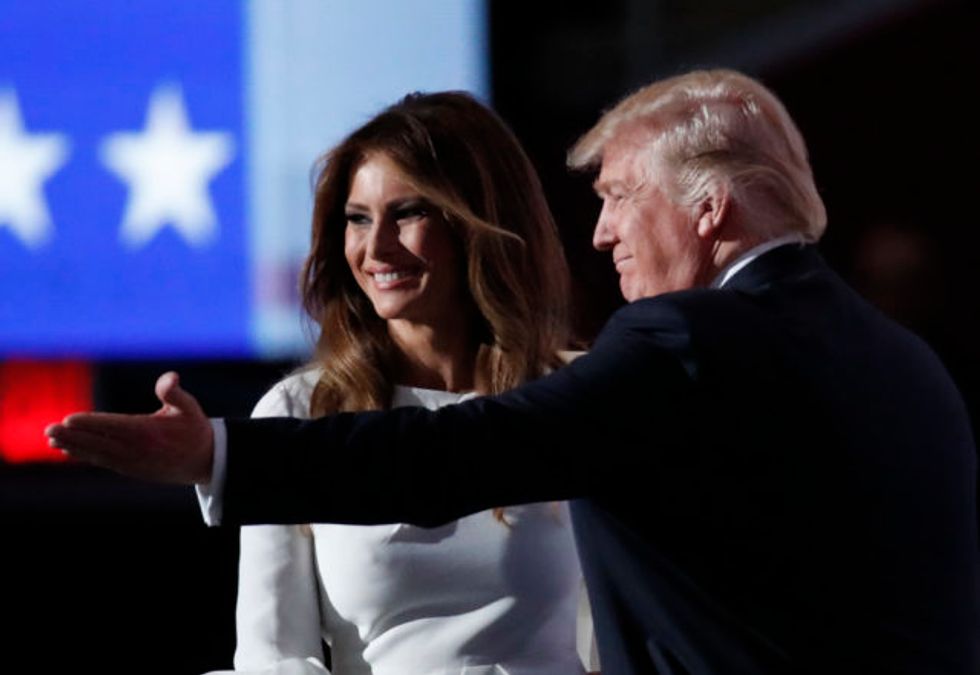
IMAGE: Melania Trump takes the stage after her introduction by her husband, Republican presidential candidate Donald Trump, at the Republican National Convention, July 18, 2016. REUTERS/Jim Young

Met Ball Raises Profile Of Arts Benefits — At What Cost?

Met Ball Raises Profile Of Arts Benefits — At What Cost?

By Chris Jones, Chicago Tribune (TNS)

Along with an increased pollen count, May is high season for the spring ritual known as annual benefits. For those rare creatures who relish plated chicken breast and bottomless decaf, these are the halcyon days, with many events shoehorned into the prime real estate between the beginning of May and Memorial Day weekend, after which any self-respecting benefit needs to welcome swimsuits and be held beside a lake or a pool.

With some worthy exceptions, benefits are not wildly popular events. Those who go to them well know they’ll be expected to open their wallets to bid on a wealthier, tax-savvier someone’s gorgeous condo in Aspen or Captiva Island (nonpeak weeks only, please) and, unless the bartender proves corrupt, further know that organizations have figured out that to get people to sit at their tables and listen to the pitches, they have to close the cocktail hour hard and fast, offering no exceptions.

Along with the provision of the most eloquent, often fictional, notes of regret, the art of the discreet early exit is practiced at a high level at these events; sometimes tablemates just disappear, not even leaving a puff of smoke, cheesecakes wilting at their plates.

Mayors, politicians, and other professionals work at an even higher level of subterfuge, carefully leaving the sense that they are present all night long — just at a different table or shaking a different set of hands — when, in fact, they ducked out right after their welcome. Meanwhile, anyone hosting a table for their favorite arts organization has the pressure of filling their seats, lest they look like they have no friends. Last-minute cancels are hellish.

Meanwhile, the harried nonprofit staffers who work on these ravenous events invariably find that they are hard work, indeed, replete with myriad little traps, details, and last-minute changes of plan, not to mention an entitled, hierarchy-conscious customer base that is dropping a great deal of money and expects to be treated accordingly. Rare is the development office that does not find the events exhausting. Frequent are the postmortems wondering whether they are worth the bother.

Yet all sides likely are stuck with these spring fundraising rituals. For some organizations, they pull in a hefty portion of the annual budget. In an era of state budget cuts, individual philanthropy is increasing in importance. Benefits offer an organization their attendees’ full and relaxed focus for a night, and that is hard to grab any other way. Without the lubrication of a glass of wine or two, and the opportunity to raise a paddle and make a very visible, public gift, many arts organizations would have big holes in their finances.

But this spring, the classic May benefit has enjoyed a serious rise in profile. It’s not just about the amount of money raised — some eye-popping takes notwithstanding — but the actual cultural profile of the event itself. In some cases, the benefit for the arts institution now threatens to eclipse the quotidian profile of the year-round offerings at the institution itself.

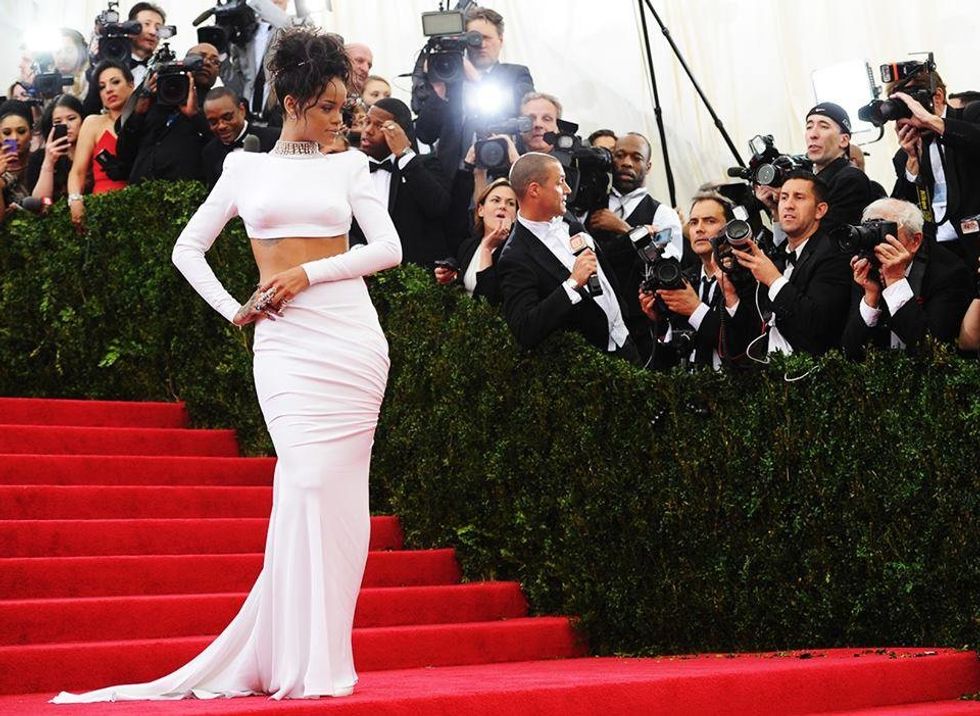
Take, for example, all of the breathless coverage of the Metropolitan Museum of Art’s Costume Institute Benefit Gala, aka the Met Ball, held May fifth. Hosted by Anna Wintour, the famously terrifying editor of Vogue and no slouch at publicity, this event reportedly featured a guest list of hundreds of A-list Hollywood figures, media moguls, and other one-percenters with current cultural currency but, in most cases, not a record of frequent visits to the Met. The level of wealth at the event was just as well, perhaps, for the Costume Institute relies on the benefit for almost all of its annual funding.

But you have to hand it to Wintour. Most attendees at most benefits have been strong-armed by someone to show up. This one was a genuine hot ticket.

The Met had certain advantages, even aside from its long association with, and proximity to, great wealth and prestige. When your business is fashion, a cultural field within which it is easy, if you have plenty of money, to participate or at least to think you participate, it’s easier to meld a red-carpet celebration at a benefit event to the core creative act of the institution. Those fashionable attendees could acquire some of the Met’s gravitas just by being photographed. That’s harder to do when the benefit is for a different kind of cause; theaters often offer the lure of performance to their supporters, but it’s hard for artistic professionals to fully hide their contempt for the work of amateurs. Moreover, fashion is a business that generates a see-and-be-seen factor not afforded to, say, your average inner-city arts institution.

Still, you can’t be a hot ticket unless you limit the availability of tickets. Period. Incredibly, Wintour managed to do precisely that at the Met Ball, turning away some names never seen in bold and eschewing the monikers of the crass, even those who could afford the tickets. That’s a rare feat at a benefit, because these events typically don’t turn anyone wealthy away, lest a chance missed. Perhaps the lesson here is that they should.

Wintour also has mastered the art of affording, and carefully curating, formidable networking opportunities, which is a prime reason people attend benefits in the first place. In other words, she long ago figured out that the way to raise the most money is not by appealing to the attendee’s generosity but to their self-interest, which includes the attendant interest in publicity, the blood supply of the fashionable.

As other arts groups watched as the Met Ball sucked up oxygen, you could imagine the envy. Especially as the take for the night hit a reported $12 million, with the hits on social media amounting to yet more millions. That brought a priceless amount of publicity to the Costume Institute itself, which has 12 million good reasons to feel grateful to Wintour.

But some savvier folks no doubt also saw some of the perils.

There is the danger of a high-profile fundraiser, and the professional interests thereof, eclipsing the institution itself. Benefits are, after all, part of the culture of an institution, and to external constituencies they are seen as reflective of its internal values, even if the institution often sees them as deviations from its norms. If the benefit is not open to all, it can make subsequent appeals to the less affluent appear hollow, even though most arts nonprofits rely greatly on the generosity of a multitude of small donors, giving at the level they can manage.

So there is a case for that chicken, the modest glass of wine, the video of the year’s great achievements, the silent auction of homemade items, the early exit. As hard as it can be in the real world, it’s always best when an organization plays itself.

Photo: Met Gala via Facebook

Shop our Store

Headlines

Editor's Blog

Trending

World