Tag: lisa cook
In The Fed Case, Justices Confront The Problem Of The Lying President

In The Fed Case, Justices Confront The Problem Of The Lying President

The consensus after Wednesday’s much-anticipated argument in Trump v. Cook was that the Supreme Court of the United States was likely to rebuff the president’s attempt to fire Federal Reserve governor Lisa Cook.

But while the bottom line was relatively clear, the rest of the story was murkier. The justices expressed frustration with the underdeveloped record in the case and with their obligation to figure out how to proceed on a record that was, in many ways, preliminary.

Thus, Justice Samuel Alito asked why the Court was being asked to proceed in such a hurry, noting concerns that key parts of the factual record were not clearly before the justices.

Of course, “hurried” here is five months since the attempted discharge, but that’s lickety-split in the world of appellate litigation. More to the point, the preliminary nature of the case and the record are completely a function of the Court’s own decision, as it has done so frequently in Trump’s first year, to grant review of the case in the early stages on an emergency-posture basis.

That posture virtually guaranteed an underdeveloped record. For example, the justices had no pre-termination hearing to assess, and the actual “notice” of her firing was a Truth Social post by Trump announcing her discharge, before any formal process had run its course.

The justices were left to wrestle with two broad approaches. The first would be to send the case back to the lower court for factual development. That would get the case out of the Court’s hair, but it would leave the underlying substantive issue unresolved and might require further Court consideration down the line. The second would be to bite the bullet and offer some minimal definition of “cause,” and then determine that Trump’s proffered reasons for firing Cook did not meet that standard.

For example, the Court could conclude that cause under the statute cannot rest on alleged gross negligence alone. Or that it cannot be based on pre-appointment conduct, as it was here. Or that it cannot be grounded in conduct unrelated to the officer’s professional duties.

But there was an additional, largely unspoken problem hovering over the entire oral argument.

That problem is that the president is a lying liar who wakes up lying and lies all day (LLWWULALAD).

The solicitor general was forced to play along with the fiction. His chief argument was a vigorous defense of the idea that Cook should be discharged because of her supposed gross sin: an inaccurate statement on mortgage paperwork.

Cook’s lawyer, the masterful Paul Clement, argued that the administration’s proposed definition of cause amounted to an at-will standard in disguise, green-lighting any reason the president chose to fasten onto.

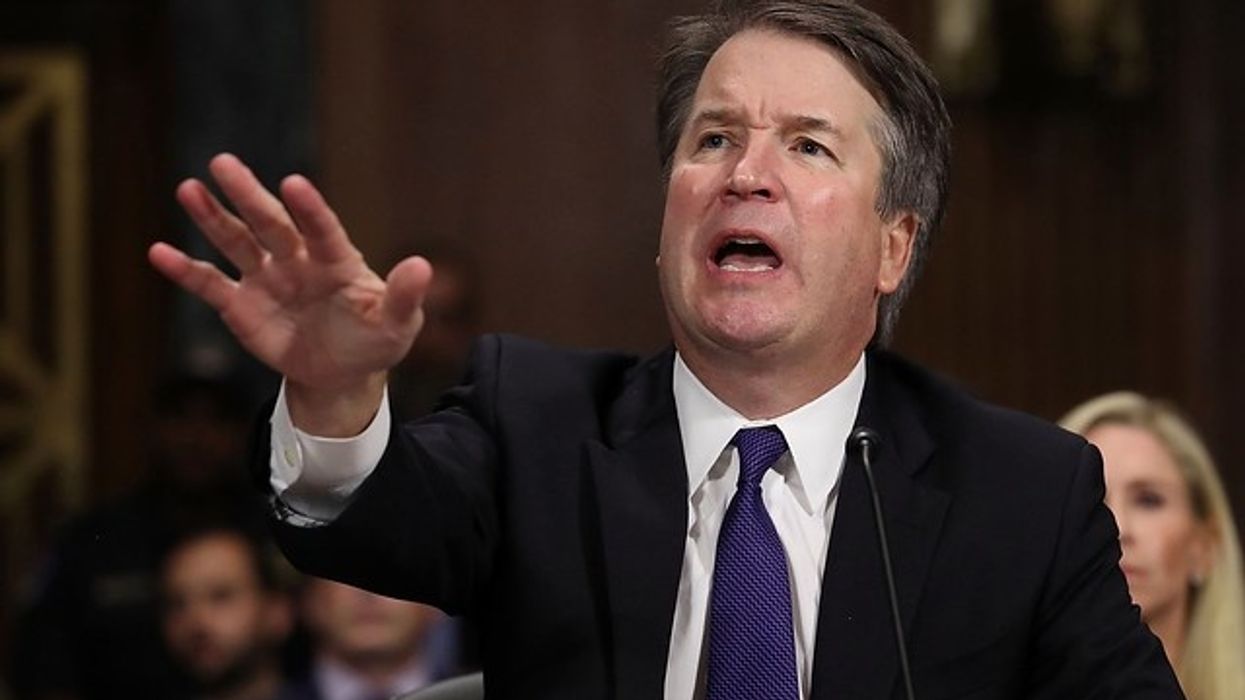
And more to the point, Justice Brett Kavanaugh, the functional center of the Court and its most frequent member of the majority last term, pushed the parties to docs on “real-world, downstream effects.” Kavanaugh posed the spectre of “what goes around, comes around,” meaning that a future Democratic administration could discharge Trump appointees en masse under the expansive cause standard the administration was championing.

That hypothetical rests on an important assumption: presidential good faith. If that assumption holds, the danger Kavanaugh described largely evaporates. A truthful president would not invoke threadbare allegations of minor or remote misconduct—such as a disputed entry on a mortgage application predating a governor’s tenure—to justify removal.

The concern animating Kavanaugh’s questions, however, is that a president might use a nominal “cause” as a make-weight excuse for what everyone agrees would be improper: the dismissal of a Federal Reserve governor for policy disagreements.

But for that concern, a weak but bona fide discharge for cause wouldn’t be a big problem. Kavanaugh, a veteran of Washington’s embroiled political battles (recall his service for Ken Starr in the Clinton investigation, which he cited in his pugnacious confirmation testimony) understands that the actual risk is a weak cause standard could easily be met and serve as a pretext for policy differences.

And of course, that is precisely what happened here. Nobody in Washington believes that Trump actually cares about Cook’s long-ago mortgage paperwork. The problem is not merely that the cause is weak; it is that the asserted cause is an obvious pretext.

And this is one of only dozens of instances in which Trump is doing a similar move of citing some sonorous concern—mortgage fraud, or academic integrity, or false statements to Congress—that is really a shield for raw political will.

And that’s because Trump is a LLWWULALAD.

So whatever rope the justices give him—even to fire someone for weak cause—would in practice amount to letting him bully the Fed to do his bidding, including on the setting of interest rates, in other words, doing exactly what his lawyer agrees would be unlawful but getting away with it by lying about the true case.

The markets would clearly understand that. The result would be a collapse of confidence long anchored in the Fed’s professionalism.

But only where the president is a LLWWULALAD.

At one point, Kavanaugh asked Sauer directly whether the Court was supposed to second-guess the President’s stated reason or whether, instead, it should “defer and assume the stated cause was valid.” Sauer responded by invoking the Court’s longstanding tradition of not questioning the good faith of the executive.

And you can be fairly well assured that the justices will not retreat from that doctrine, which will be at issue in future cases involving Trump, in particular, given that he is a LLWWULALAD. If the Court applies an irrebuttable presumption of good faith to Trump’s determinations—about, for example, the existence of an insurrection, a rebellion, or other emergency conditions—it risks green-lighting extraordinary powers that could be used in many ways, including to try to reverse an election.

Here, however, the justices have already carved out the Federal Reserve from the administration’s broader wrecking-ball effort to eliminate for-cause protections across independent agencies. So it was common ground in the argument that the Fed’s for-cause protection is constitutional and governs Cook’s case.

That should take us a long way toward Cook’s reinstatement. Ordinarily, it would be enough. But the Court must still confront the problem that the president is a LLWWULALAD.

The Court knows the score, as did everyone in the courtroom. Expect the justices to find a way to rebuff Trump without saying out loud what they all know to be true.

They will not say it, but they understand that allowing Trump to prevail on an obvious pretext—a lie—would mean that, in Dickens’s words, the law is an ass.

When the opinion issues, it should not take much deciphering of the Court’s decorous prose to understand that there is an ass in this case—but it is not the law.

Harry Litman is a former United States Attorney and the executive producer and host of the Talking Feds podcast. He has taught law at UCLA, Berkeley, and Georgetown and served as a deputy assistant attorney general in the Clinton Administration. Please consider subscribing to Talking Feds on Substack.

Reprinted with permission from Talking Feds.
Scott Bessent

Did Treasury Secretary Commit Same 'Fraud' Alleged Against Fed Governor?

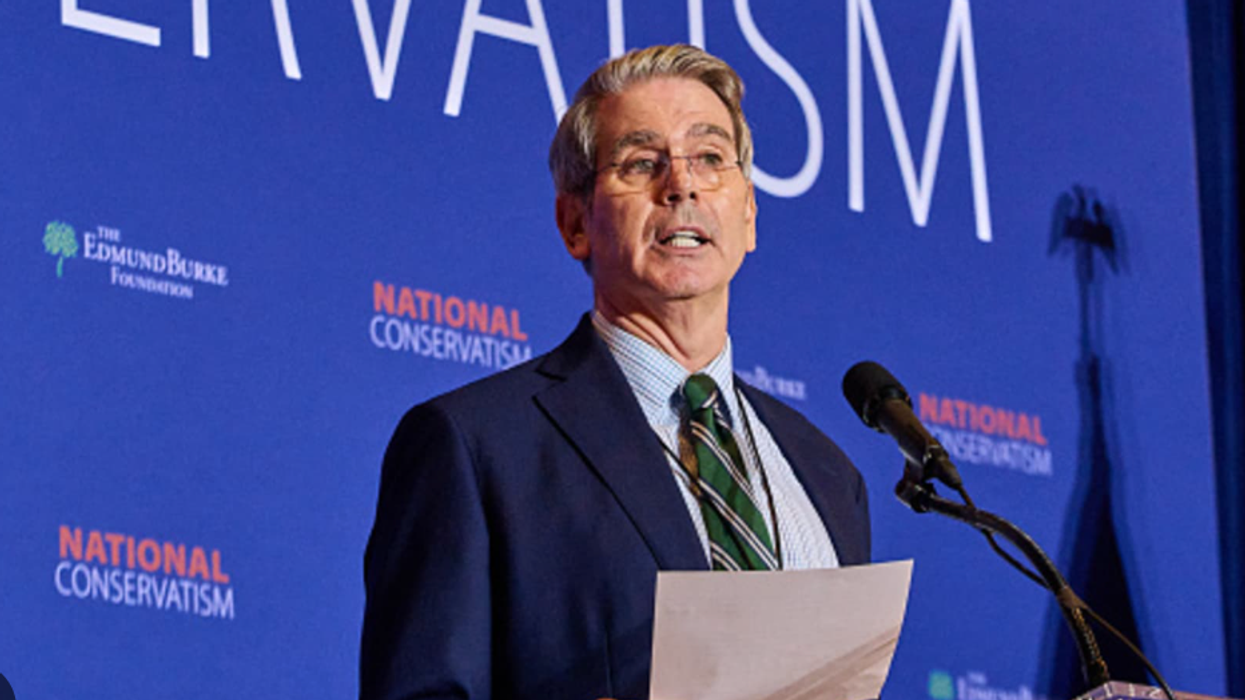
Treasury Secretary Scott Bessent is under fire over home-loan filings that look strikingly similar to the discrepancies that President Donald Trump’s administration has been using to try to oust Federal Reserve Governor Lisa Cook.

Bloomberg reported that Bessent signed agreements designating two homes—one in Bedford Hills, New York, and another in Provincetown, Massachusetts—as his “principal residence” on the same day in 2007. Mortgage experts told the outlet that conflicts like these are pretty standard and don’t necessarily amount to fraud.

That’s almost identical to Cook’s case. In 2021, she signed mortgage agreements for a house in Ann Arbor, Michigan, and a condo in Atlanta, Georgia, claiming both as her main residence.

But unlike Bessent, Cook was immediately vilified. Federal Housing Finance Agency Director Bill Pulte has repeatedly accused her of mortgage fraud and posted her documents online, triggering Trump’s push to remove her. Both a federal judge and an appeals court blocked the effort, forcing the administration to plead its case to the Supreme Court before a key interest-rate meeting this week.

There’s no evidence Bessent did anything wrong—and that’s precisely the point. His case highlights what critics have been saying for months: Trump’s campaign against Cook isn’t about enforcing mortgage rules, it’s about punishing a Biden administration appointee.

Allegations of mortgage fraud have become a favorite weapon for the Trump administration. Beyond Cook, Trump has publicly called out California Sen. Adam Schiff and New York Attorney General Letitia James to be prosecuted for similar allegations, even pressuring federal prosecutors to bring charges against James. But there’s an unmistakable hypocrisy here. As Trump targets his political opponents, ProPublica reports that at least three of his Cabinet members—excluding Bessent—also have multiple primary-residence mortgages, with seemingly zero consequences.

Cook has made clear she has no plans to step aside. In August, she said Trump “purported to fire me ‘for cause’ when no cause exists under the law.” (A federal judge ruled in her favor, arguing that “for cause” applies only to misconduct carried out while in office. The mortgage agreements at the heart of Trump’s case were signed in 2021—before she joined the Fed in 2022.)

“I will not resign,” Cook said.

Her continued presence on the Federal Reserve Board of Governors comes as the central bank approved a modest 0.25-percentage-point cut to interest rates during its meeting this week.

Bessent’s own situation is also drawing attention because of his public feud with Pulte. At a private dinner earlier this month at the conservative Executive Branch club in Washington, the two reportedly clashed over remarks the housing finance director made to the president.

“Why the fuck are you talking to the president about me? Fuck you,” Bessent said, according to Politico. “I’m gonna punch you in your fucking face.”

Pressed about the confrontation this week, though, Bessent brushed it off.

“Treasury secretaries dating back to Alexander Hamilton have a history of dueling,” he said on CNBC’s Squawk Box.

The White House and Pulte’s office have declined to comment on Bessent’s mortgage filings. An attorney for Bessent told Bloomberg he couldn’t compare Bessent’s case with Cook’s because he hadn’t reviewed her file. Bessent himself has been less diplomatic, saying Cook “hasn’t said she didn’t do it” and is “just saying the president can’t fire her.”

That line may come back to haunt him. The revelation that Bessent made similar filings undercuts Trump’s narrative and makes the administration’s pursuit of Cook look nakedly political.

For now, Cook is still on the job, while Bessent is under the microscope. And Trump, once again, is trying to turn a paperwork technicality into a loyalty test. After all, in his Washington, it’s not the law that matters—it’s whose side you’re on.

Reprinted with permission from Daily Kos.

Lisa Cook

Lying With Impunity: Nepo Billionaire Pulte Framed Lisa Cook

A few weeks back, Bill Pulte, the Federal Housing Finance Agency Director (FHFA) and the billionaire heir to a housing construction firm, claimed to have found evidence that Federal Reserve Board Governor Lisa Cook had committed mortgage fraud. Donald Trump immediately tried to fire Cook from her position at the Fed, with the intention of getting another seat on the Fed’s seven-person board.

This attempted firing raised several serious questions. Most immediately, whether the FHFA Director is supposed to be rifling through the mortgage documents of Trump’s political opponents.

Previously, Pulte had claimed to have found evidence that California Senator Adam Schiff had committed mortgage fraud. Schiff had led the first impeachment case against Trump in 2019, as a member of the House. Pulte also claimed to have found evidence of mortgage fraud by Letitia James, the Attorney General of New York, who had gotten a civil conviction against Trump for, among other things, lying on loan forms.

But it also raised questions about Trump’s power as president. While the Republican Supreme Court claimed to find wording in the Constitution that allowed the president to freely fire members of ostensibly independent agencies like the Federal Trade Commission, which overseas antitrust law, and the National Labor Relations Board, which monitors labor law violations, it also apparently found wording that prevented the president from behaving similarly towards the Fed.

The Republican Supreme Court’s argument for the Fed’s special treatment was a bit more complicated, but it would only be a slight simplification to say that it was because the Fed is important. The Court apparently accepted the argument of the vast majority of economists that it would be bad news to have a Fed under the complete control of the president. For this reason, they appeared to leave in place the pre-existing standard for appointees of independent agencies, that they could only be removed for cause.

This is where Pulte’s accusation appeared useful. Trump could now pronounce Cook, a Black woman (like Letitia James), guilty of mortgage fraud, and therefore someone who could be fired for cause. This was never the open and shut case that Trump and his sycophants claimed.

First, it was not clear that what Cook had allegedly done amounted to fraud. According to Pulte, she had listed two different homes as primary residences on mortgage applications. If true, this might violate the law, but it is a common breach that is rarely prosecuted. It turns out three Trump cabinet members, as well as Mr. Pulte’s parents, seem to have done the same thing. If Cook’s actions had violated the law, it probably ranks as something somewhat more serious than a traffic ticket, but considerably less serious than the spousal abuse that Trump laughed off as a real crime earlier this week.

There was also the second point, that the alleged offense had occurred prior to Cook’s appointment to the Fed. Can “cause” refer to an action someone had done before being appointed to office?

There were allegations of sexual assault against Trump Defense Secretary Pete Hegseth before his appointment. RFK Jr. was an admitted heroin addict in his youth. While both cabinet members are political appointees, who clearly hold their positions at the president’s discretion, would these past offenses in principle be grounds for removal for cause?

And then there is the final point. Cook was never proven to have done anything wrong. All Trump had was Pulte’s accusation of wrongdoing.

It turns out Pulte’s accusation is not worth very much. NBC News, among other news outlets, obtained loan documents showing that Cook had identified her Atlanta house as a “vacation home,” which would seem to be in full compliance with the law. The question is now whether Trump can fire a Fed governor over a seemingly false allegation from one of his political appointees. That seems to be a pretty clear-cut loss for Team Trump, but I can’t speak for the Republican Supreme Court.

Since we’re on the topic of Trump lies, let me digress for a moment to the assassination of Charlie Kirk. First, no one should in any way applaud this act. As my eighth-grade teacher told the 13-year-old idiots celebrating the shooting of George Wallace in 1972, you kill the movement, not the man. Like Wallace, Kirk was a real human being, with friends and family. His death is a tragedy.

But moving to the broader political context, Team Trump moved to weaponize the shooting before the body was even cold, blaming the left for the killing at a point where they knew nothing about the shooter. They looked to purges of the media, schools and universities, and all other institutions.

Now that the suspect, Tyler Robinson, is in custody, it appears that the motivation for the killing was more likely to have come from the right than from the left. It’s still early, and more information will surely come out, but one thing that seems clear from this shooting is that it was done by a troubled young man who had too easy access to guns. The same is true of Thomas Cook, the 20-year-old man who shot Donald Trump in Butler Pennsylvania last summer.

Trump and his supporters are quick to blame these shootings on a mysterious “they,” implying that it is somehow part of a grand plot by the left. But like the charges against Cook, the story of the plot is a lie, invented entirely by Team Trump. Lying is apparently a way of life for those born into families with billions, but the rest of the country should not have to suffer the consequences of the lies from the rich and very rich.

Dean Baker is a senior economist at the Center for Economic and Policy Research and the author of the 2016 book Rigged: How Globalization and the Rules of the Modern Economy Were Structured to Make the Rich Richer. Please consider subscribing to his Substack site.

Reprinted with permission from Dean Baker

Bill Pulte

The Real Scandal? Bill Pulte's Unethical 'Investigations' Of Trump Opponents

Bill Pulte, the head of Federal Housing Financial Authority, the agency that oversees Fannie Mae and Freddie Mac, has been in the news recently over his allegations that prominent opponents of President Trump had committed mortgage fraud. Most recently Pulte has put Federal Reserve Board Governor Lisa Cook in his crosshairs, claiming that she listed two homes as principal residences on mortgage applications.

Trump immediately used this allegation as a basis for trying to fire Cook, even though the Fed is supposed to be an independent agency, outside of the president’s control. Governor Cook sued Trump over his firing effort and the courts will ultimately decide whether this is within his power.

At this point, it is important to remember that Cook has not even been indicted for anything, much less convicted. We only have an allegation from Mr. Pulte.

It is also worth noting the irony of Trump, who was convicted in a civil trial for putting false information on loan forms, trying to fire someone for listing two homes as principal residences. Among the items that Trump put on his loan form was the claim that his 10,000 square foot condo was actually 32,000 square feet. Perhaps President Trump is offended by the pettiness of Cook’s alleged crime.

While the validity of Pulte’s allegations will have to be determined by the courts, the real scandal is Pulte himself. He is supposed to be running the agency that oversees the processing of tens of millions of mortgages by two huge quasi-public agencies. We are not supposed to be paying him to rifle through mortgage documents to find and disclose dirt that Trump can use against his political opponents.

The media really need to be directing some serious questions in Pulte’s direction. First and foremost, how did he happen to discover the mortgage abuses that he alleges were committed by New York Attorney General Letitia James, Senator Adam Schiff, and now Governor Lisa Cook. Were these “discoveries” the result of random inspections done by agency staff?

Furthermore, was he looking through non-public mortgage files to gather this information? Also, why did he make this information public when he uncovered it, instead of going through normal channels? If he had followed established procedures, he would have turned over the information to the agency’s inspector general, who would then turn if over to the Justice Department, if they determined it was appropriate. The first time the public would hear about it was when an indictment was issued.

What reason does Pulte have for not following normal procedures? He really needs to come clean on this.

He should also come clean on his holdings of Pulte Group stock, the huge housing construction company started by his grandfather. It may be the case that conflicts of interest are almost a job requirement in the Trump administration, but many of us still think that government officials should be working for the public, not trying to fatten their pocketbook.

If Pulte helps Trump get his wish and a Trump-controlled Fed lowers interest rates, it would provide a big boost to the Pulte Group’s profits. That hope would give Pulte a strong motivation to try to hasten the day when Trump appointees dominate the Fed’s Open Market Committee that sets interest rates.

Anyhow, there is definitely a big scandal here, but it involves Bill Pulte, not Lisa Cook. The media really need to take notice.

Dean Baker is a senior economist at the Center for Economic and Policy Research and the author of the 2016 book Rigged: How Globalization and the Rules of the Modern Economy Were Structured to Make the Rich Richer. Please consider subscribing to his Substack site.

Reprinted with permission from Substack.

Shop our Store

Headlines

Editor's Blog

Corona Virus

Trending

World