Will Measles Surge And Ethical Conflicts Stop This Anti-Vaxxer Becoming Surgeon General?
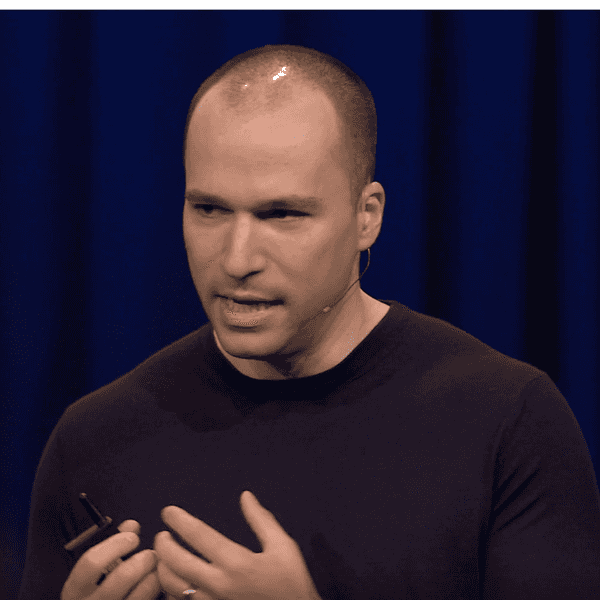
Dr. Casey Means
President Donald Trump — his eye on crumbling approval ratings and the growing likelihood that he’ll face a Democratic House after the mid-term elections — is reportedly souring on the Make America Healthy Again show.
He has postponed appointing someone to run the flailing Centers for Disease Control and Prevention, where the sands seem to be shifting. Its interim director Jay Bhattacharya, who also oversees the shrinking National Institutes of Health, on Wednesday morning told what’s left of the CDC staff, “I think it is vital that every kid in this country get the measles vaccine. Absolutely vital.”
In the wake of her confirmation hearing last month, various media reports claimed Casey Means’ nomination to become the nation’s next Surgeon General is in trouble. Sen. Bill Cassidy (R-LA), a pediatrician, backs vaccines and she didn’t. Sens. Susan Collins (R-ME) and Lisa Murkowski (R-AL), the GOP’s designated fence sitters, said they still have questions. Sen. Thom Tillis (R-NC), who is retiring, told the Associated Press he’s leaning against voting for Means should her nomination reach the full Senate.
Yet, given anti-vax sentiment within MAHA and the group’s role in grass roots GOP politics, it’s way too soon to count Means out.
Who is Casey Means? She made her fortune as co-owner of Levels, which sells an app for continuous glucose and blood monitoring. The firm’s subscription plans (costs range from $288 to $1,999 annually) are marketed primarily to the worried well to “help you fuel better and feel more balanced.” (That cheeky description comes directly from the company website.)
Two years ago, the FDA approved the over-the-counter sale of a glucose monitor that Levels promotes for its corporate partner, Dexcom. That company used a regulatory process for approving medical devices that doesn’t require submission of clinical trial data proving that it leads to better outcomes.
Dexcom also does business with Means’ brother Calley, a top health care adviser to the Trump administration. He is co-owner of Truemed, which encourages consumers to use health savings accounts to buy supplements, fitness equipment, red light therapy and saunas from its manufacturing partners.
A year ago, just two months before Casey Means was nominated for surgeon general, the Means siblings appeared at a supplements industry trade show. Their message, according to an Associated Press account of the Natural Products Expo: The goals of the Make America Healthy Again movement will help your bottom lines.
The head of MAHA’s political action committee, which pushes for anti-science policies in state legislatures and nationally, told the same conference: “It blows my mind that I'm going to watch the Republicans carry the supplement industry and the holistic health industry and chiropractors and the acupuncturists into the promised land.”
The supplements and wellness industries do not need another Moses, although they could get one in Means. Those fast-growing, largely unregulated businesses took up residence in the land of milk and honey when the late Sen. Orrin Hatch, a Republican from Utah, shepherded the 1994 Dietary Supplement and Health Education Act through Congress. That law officially exempted supplements from meeting FDA efficacy requirements, and limited safety oversight to manufacturing purity, not prevention of physical harm. Even the good manufacturing practices guidelines allowed under the bill are non-binding.
No wonder the supplements industry grew from 4,000 products when the DSHEA passed to about 90,000 today. It has become a $70 billion-a-year industry in the U.S. — twice the size of the European Union, which has about the same number of people.
Today, grocery stores dedicate entire aisles to supplement sales, as do a few large retail chains like GNC (General Nutrition Corp., now owned by the Harbin Pharmaceutical Group of China). Analysts estimate the industry will grow by 50% over the next five years.
Conflicts-of-interest disqualify thee, but not me
In most accounts of her career, Means lambasts the medical profession for being in bed with the pharmaceutical industry. She dropped out of her medical residency in otolaryngology (ear, nose and throat doctors), claiming the field was rife with conflicts of interest.
She says (with some justification) that many of its practitioners prefer seeing more patients needing their skills than focusing on prevention. Like Kennedy, her champion, she repeatedly attacks the drug industry, vaccine makers and mainstream medicine for their conflicts of interest.
Yet the MAHA movement and the Trump regime ignored her conflicts of interest (and her brother’s) before appointing them to high government positions. Casey Means’ financial disclosure, released last September, showed that over the past five years she received “newsletter sponsorship and partnership fees (of) $12,000 from herbal remedies firm Apothekary; $27,431 from algae supplements company ENERGYbits; $16,461 from fiber supplements company Florasophy; $27,000 from probiotics company Pendulum Therapeutics; $46,000 from supplements company Pique; $536 from prenatal vitamin company WeNatal; and $16,104 from basil seed supplements company Basil Seed Works. Means received a total of more than $130,000 in sponsorship fees from supplement company Amazentis, including a $55,000 book tour sponsorship.”
Mehmet Oz, who runs CMS for the Trump regime, and top adviser Calley Means have also profited from their ties to the supplements industry.
The false promises of most supplements
The supplements industry is a case study in how to use marginal, company-sponsored science, heavy advertising and political muscle to peddle useless products to the American people. As more than one industry critic has pointed out, the industry is responsible for Americans having the most expensive urine in the world.
Their lobbyists have successfully fought every legislative attempt to impose either efficacy or safety requirements on supplements — the standard applied to drugs. Supplement makers are not required to submit placebo-controlled clinical trials to the government. Yet many in their advertising make carefully worded statements about health benefits that to the average consumer sound like it has been scientifically proven, something that the FDA is supposed to prevent.
Prevagen — widely advertised as improving “brain health” — is the poster child for this improper marketing and failed regulatory oversight. The FDA began raising safety concerns as early as 2007 and sent its first warning letters to Quincy Bioscience, its maker, in 2012. The Federal Trade Commission and New York State filed suit in 2017 to stop Prevagen’s alleged illegal marketing. It took seven years of litigation before a federal court finally issued an injunction against the company to stop making the claim that Prevagen improved brain function.
Despite that 2024 ruling, late night television is still filled with Prevagen ads aimed at seniors and the worried well wanting to stave off dementia. Today, instead of the company making the claim, they use older adults testifying that the product helped them.
In defending her nomination, administration spokespersons have touted Means’ stellar academic credentials. Means is a 2014 graduate of Stanford Medical School. She received advanced training in otolaryngology, her specialty, at Oregon Health & Science University.
But she dropped out in 2018 to launch her wellness career after seeing how little organized medicine did to prevent the need for surgery. She launched Levels a year later with $12 million in venture capital funding. By 2024, she was deeply involved with Kennedy’s presidential campaign and co-wrote with her brother a New York Times 2024 best-selling book called Good Energy: The Surprising Connection Between Metabolism and Limitless Health.
Jumping in front of the MAHA parade
As the New Yorker reported in its book review, the publicity blitz for the book included appearances on the Joe Rogan podcast and Tucker Carlson show on Fox. She told Carlson her sacred texts included the Bible and Ayn Rand, clearly an attempt to endear herself to the Christian Nationalist and Libertarian wings of the 2024 Trump coalition.
She allied herself with Kennedy, too, although many in the MAHA movement remained skeptical of her blind ambition. “Nicole Shanahan, who was Kennedy’s running mate during his 2024 Presidential bid, posted on X that ‘there is something very artificial and aggressive about them (referring to both Casey and Calley Means), almost like they were bred and raised Manchurian assets’,” the review noted.
Her ties to Kennedy, himself a late convert to Trumpism, led to her nomination to become the nation’s 22nd Surgeon General. At 38, she would be the second youngest person to hold that post after Dr. Vivek Murthy during President Obama’s first term.
Like some previous Surgeons General, she would come to the office without the government or professional experience that would qualify her to supervise the 6,000-plus uniformed physicians and other public health professionals who serve in government agencies. But unlike most previous Surgeons General, she has eschewed becoming a practicing physician, choosing instead to engage in entrepreneurship, part-time teaching, political advocacy and politics.
Often called the nation’s doctor, Surgeons General usually make their mark by focusing on a single public health problem. Many have been steeped in controversy.
In 1964, Luther Terry ignored tobacco industry opposition to issue the first official warning that cigarette smoking causes cancer. During the Reagan presidency’s AIDS crisis, which the White House ignored for nearly his entire two terms in office, C. Everett Koop mailed a brochure to every American household explaining the viral (not moral) causes of the disease and how to prevent it. In the 1990s, Joycelyn Elders focused on sex education and adolescent sexual health, making her a target for conservative culture warriors.
Means, during her prolonged nomination process (it was put on hiatus last year during her pregnancy), has sought to make the fight against chronic illness the centerpiece of her tenure — a worthy endeavor that would require taking on (at the least) the processed food, chemical, and agriculture industries. During her opening testimony at her confirmation hearing last month, she blamed Americans’ “ultra-processed diet, industrial chemical exposure, lack of physical activity, chronic stress and loneliness, and overmedicalization” for making the U.S. “the most chronically ill high-income nation in the world.”
She wouldn’t be the first to express those concerns. Richard Carmona under George W. Bush and Regina Benjamin under Barack Obama also targeted chronic disease, which they blamed on rising obesity, unhealthy diets and a lack of exercise. Nor is there much controversy in that stance. Sen. Bernie Sanders, the Vermont independent socialist who caucuses with Democrats, praised that aspect of her presentation during the hearing.
A vaccine two-step in the offing?
But her nomination is in trouble for one reason and one reason only: Casey Means refuses to separate herself from the Robert F. Kennedy Jr.-led war on vaccines.
At last month’s hearing, she refused to directly endorse the childhood MMR vaccine (measles, mumps, rubella) despite a multi-state measles outbreak, triggered by the declining vaccination rate, that has sickened thousands and taken at least two children’s lives. Instead, she called for parents to discuss the issue with their doctors.
“You’re the nation’s doctor,” Sen. Cassidy, chairman of the Senate committee, said. “Would you encourage her to have her child vaccinated?”
“I’m not an individual’s doctor,” she replied. “Every individual needs to talk to their doctor before putting a medication in their body.”
When Sen. Tim Kaine (D-VA) pressed her to confirm that the flu vaccine saved lives, she demurred.
“This is an easy one, doctor, this is an easy one,” Kaine said.
“I support the CDC guidance on the flu vaccine, and I will always be working with the CDC and ACIP,” she replied.
That would be the same ACIP that was hand-picked by Kennedy; that has scaled back its childhood vaccination recommendations without offering scientific justification; and which a New York federal court last week ruled was illegally appointed.
Means also refused to rule out vaccines as a cause of autism, instead calling for more research because science is never settled. But at the present moment, the scientific literature not only overwhelmingly rejects that thesis, but the first major study suggesting there was such a link, which was published in the prestigious Lancet, has been retracted for data fraud with its primary author banished from the practice of medicine in Great Britain, his home country.
Is Dr. Means unqualified to become the next Surgeon General? You betcha. Will she? Betting markets reportedly put her chances at less than 50 percent, with a sharp drop after last month’s hearing. Given the GOP’s latest election losses, including in Trump’s hometown of Palm Beach, they’re probably even lower today.
I’m usually in the Yogi Berra camp when it comes to predictions, but I’ll go out on a limb here. I predict Means will make private assurances to the reluctant four-some in the GOP-controlled Senate and win confirmation to become the least qualified Surgeon General since the post was established in 1871.
The 38-year-old wellness influencer and entrepreneur, who doesn’t practice medicine, even in her spare time, is nothing if not ambitious. All she has to do is follow Bhattacharya’s lead and do an about face on some aspect of vaccine policy. The big guy and the GOP-controlled Senate — desperate for some good news on the electoral front — will notice.
Merrill Goozner, the former editor of Modern Healthcare, writes about health care and politics at GoozNews.substack.com, where this column first appeared. Please consider subscribing to support his work.
Reprinted with permission from Gooz News
- Trump's Kooky Surgeon General Nominee Withers Under Senate Scrutiny ›
- True American Greatness Will Recover From The Disease Of Trumpism ›
- Means' surgeon general nomination is stalled as senators question her experience and vaccine stance | National | newsitem.com ›
- Dr. Casey Means’ surgeon general nomination stalled as GOP senators cast doubt | The Independent ›
- Why Casey Means’ surgeon general nomination is in limbo ›
- Casey Means’s surgeon general bid stalls with key GOP votes uncertain - The Washington Post ›
- Casey Means' surgeon general nomination is stalled | AP News ›
Start your day with National Memo Newsletter
Know first.
The opinions that matter. Delivered to your inbox every morning