Tag: kennedy center
Brendan Carr

FCC Officials Took Paramount's Pricey Gifts While Company Sought Deal Approval

Reprinted with permission from ProPublica

The rich and famous who filed into the Kennedy Center’s opera house in December were there to enjoy one of the nation’s most exclusive celebrations of the performing arts: the center’s annual honors gala.

The black-tie event, hosted by President Donald Trump, prioritized tickets to people who donated more than $75,000 to the center. This year, it feted Hollywood icon Sylvester Stallone, the legendary glam rock band Kiss and the Grammy Award-winning disco pioneer Gloria Gaynor.

Among the attendees that evening were two lower-profile government officials whose regulatory decisions had been crucial to the future of the gala’s broadcast sponsor, CBS, and its parent company, Paramount.

Five months earlier, Federal Communications Commissioner Olivia Trusty cast a decisive vote approving Paramount’s historic $8 billion merger with Skydance Media. Now, the commissioner and a guest enjoyed the star-studded celebration thanks to tickets gifted to her by Paramount worth more than $12,000, according to ethics disclosure records obtained by ProPublica.

The other commissioner who approved the merger watched from a prized perch. FCC Chair Brendan Carr and his wife sat in a private skybox with Paramount CEO David Ellison and other executives from Paramount and CBS. Such seats sold for $125,000 a ticket, according to Kennedy Center guidelines.

It’s unclear if Paramount gifted Carr the premium seats because the FCC has yet to make public his financial disclosure for last year.

However, past disclosures show Carr and Trusty are among seven FCC commissioners who have accepted Kennedy gala tickets from CBS or its parent company over the last decade. Ethics experts told ProPublica this poses a blatant conflict of interest since the commission regulates the network. Carr’s previous financial statements show he has accepted tickets at least seven times since his 2017 appointment, totaling over $63,000 in gifts.

Last December’s ceremony attended by Trusty and Carr took place as Paramount was launching a hostile takeover bid for Warner Bros. Discovery, a move that would later result in a merger agreement that requires FCC approval.

Federal ethics rules ban employees from taking gifts from any entity that does business with, is regulated by or seeks official action from their agency.

Four ethics experts told ProPublica that by accepting the premium tickets Trusty and Carr compromised the FCC’s impartiality and should not take part in any upcoming decision on the merger.

“There’s no way that any top federal regulator should ever, ever accept a gift from a regulated company with interests their work will foreseeably affect,” said Walter Shaub, who led the federal Office of Government Ethics from 2013 to 2017. “The appearance of taking gifts like that is terrible. What’s at stake is nothing less than the public’s trust in government.”

Virginia Canter, who served as an ethics lawyer at the White House, Treasury Department, and Securities and Exchange Commission during the presidencies of George H.W. Bush, Bill Clinton, George W. Bush and Barack Obama, said the commissioners who accepted tickets cannot participate in this matter without damaging the integrity of the government’s decision-making process.

“This is shocking. Pretty disturbing, that’s what I would say. I just don’t understand what they were thinking,” said Canter, who now works as chief counsel for ethics and corruption at the nonpartisan government watchdog group Democracy Defenders Fund.

The FCC’s review of the merger is one of the final hurdles facing a historic $110 billion consolidation of two of the five largest film studios in Hollywood. The deal would unite Paramount Skydance with Warner Bros., bringing under the control of one company Paramount+ and HBO Max streaming services; CBS and CNN; and scores of other major broadcast channels, cable networks, and digital platforms.

The new megacorporation, which could reshape how millions will access news, movies, sports and video games, faces fierce opposition from inside and outside Hollywood. More than 5,000 actors, producers and entertainment workers — including stars such as Robert De Niro, Javier Bardem, Joaquin Phoenix and Glenn Close — signed an open letter decrying how the consolidation would eliminate jobs and compromise “the integrity, independence, and diversity of our industry.”

On Monday, California, New York and 10 other Democratic states filed a lawsuit seeking to block the merger under federal and state anti-monopoly laws.

American and international regulators are evaluating the deal for its potential national security implications and impacts to consumers worldwide. Last week, the British government signaled it planned to investigate whether the new entertainment titan that would emerge from the union would unfairly stifle competition. The FCC’s ongoing review includes examining the Middle Eastern sovereign wealth funds backing the deal, including from Saudi Arabia, Qatar and Abu Dhabi.

The FCC usually has five commissioners — all appointed by the president and confirmed by the Senate to serve five-year terms — but the agency currently has only three. Any vote by the full commission would likely be decided by Republicans Carr and Trusty over Democrat Anna Gomez. Gomez was not at the December 2025 show but has accepted tickets from Paramount in the past. Because the FCC requires a three-commissioner quorum for a vote, any recusal could leave the panel unable to decide on the merger. Carr could decide to ask staff to approve the deal rather than bring it to a commission vote, but the ethics experts said he should recuse himself from any decisions affecting the Paramount merger.

The experts warned the commissioners’ gifts might become central in legal challenges and said the Justice Department should investigate potential violations of federal rules or laws.

Neither Carr nor Trusty responded to ProPublica’s requests for comment. Gomez said in a statement that she followed agency advice when she attended the event in 2023 and 2024. Her statement did not elaborate or otherwise address why taking gifts from Paramount did not pose a conflict of interest.

An FCC spokesperson said agency ethics officers have for years cleared commissioner appearances, finding it consistent with ethics law.

“FCC Chairs and officials have attended the same event, in the same ways, consistently from the Trump Administration to the Biden Administration to the Obama Administration,” the FCC said in a statement. “There has been no change in recent years.”

Shaub called the justification outrageous.

“It’s no excuse to say that you took the gift because everyone else was doing it or that your agency has had a bad habit of indulging in gift taking for a long time,” Shaub said. “That kind of explanation doesn’t work for school children, and it sure as hell doesn’t work for government officials who are supposed to have better judgment than a fifth grader.”

Read NowShow less
Take The Kennedy Center Win -- And Then Get Up For The Next Battle

Take The Kennedy Center Win -- And Then Get Up For The Next Battle

Well, that was pretty fun.

There was an almost physical satisfaction seeing the letters “Donald J. Trump” removed from the facade of the John F. Kennedy Center for the Performing Arts. We saw the tangible payoff of the triumph of the law over Trump’s raw vanity, like the expulsion of a usurper to the throne. It was reminiscent of the post-Communist toppling of the giant statues of Stalin that Russian people had had to endure for decades.

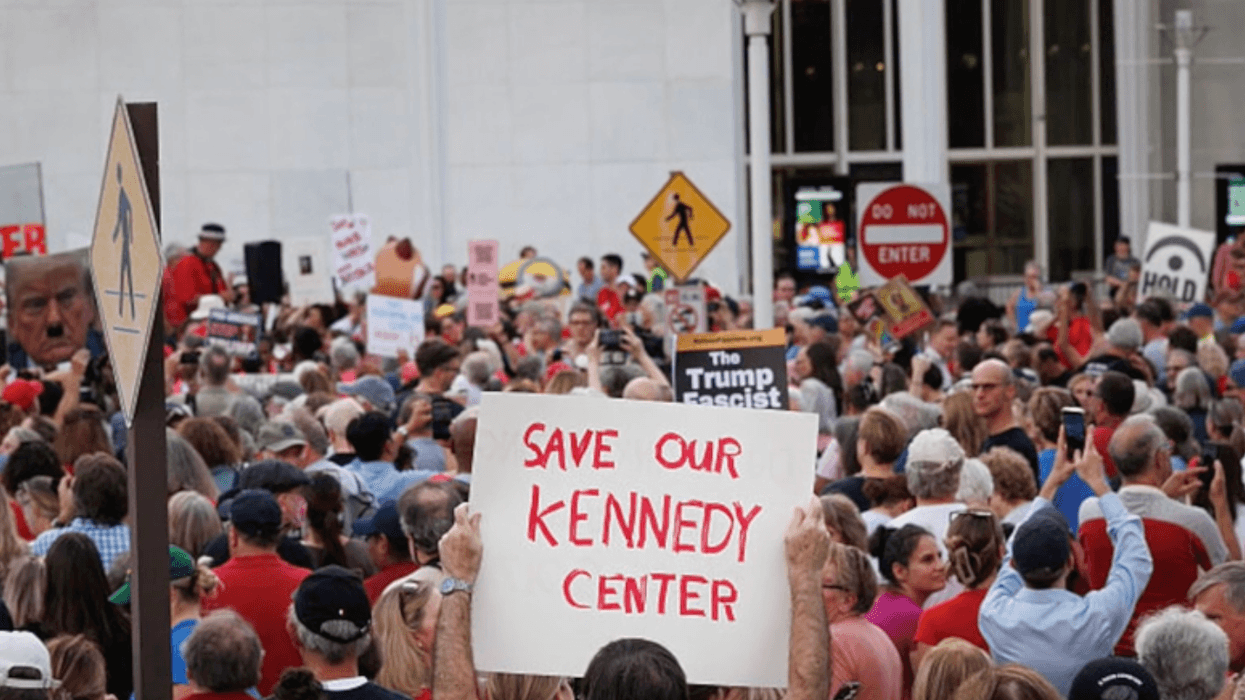
In its ultimate pettiness, the Trump administration launched a 12th-hour appeal for a short delay in complying with the order to take down the Trump name that had sullied the John F. Kennedy Center for the last six months. The apparent goal was to deny the gathering crowd the satisfaction of seeing the tyrant’s name physically removed. They got a 12-hour extension and then waited until the wee hours to comply, in a process that took less than an hour.

Besides the satisfaction of a modest but tangible victory, the case provides a workable template for many of Trump’s lawless power grabs.

A significant percentage of the outrages of Trump’s second term reduce to some version of the same move as with the Kennedy Center. Congress long ago made a decision and put it into law, and the Trump administration acted as if it could just ignore it.

The administration has refused to spend appropriated funds, asserted the power to fire officials Congress insulated by law, rewritten election procedures Congress had already legislated, and stood up a $1.776 billion “compensation fund” with no clear appropriations basis at all. Each of these fights involves its own tangle of doctrine and politics, but the general principle of steamrolling congressional decisions is the unifying factor.

In the case of the Kennedy Center, Congress passed a statute in 1964 designating the National Cultural Center as “the John F. Kennedy Center for the Performing Arts” and providing that it would serve as the nation’s “sole national memorial” to the slain president. Nothing in that statute gives a board of presidentially appointed trustees the authority to rename the institution. Full stop.

U.S. District Judge Christopher Cooper’s meticulous May 29 opinion runs 94 pages, but its holding fits in two sentences anyone can understand:

“The Kennedy Center’s organic statute makes crystal clear that the Center is to be named for President Kennedy, and it cannot bear any other formal name or public memorial based on the Board’s unilateral say-so. Congress gave the Kennedy Center its name, and only Congress can change it.”

That’s the whole separation-of-powers argument, stated with simple elegance.

The Trump takeover of the Kennedy Center was of a piece with his takeover of the government. The whole operation rededicated the Kennedy Center to the interest of the new Trump namesake, abandoning the broader cultural mission and service to the people that was its animating purpose.

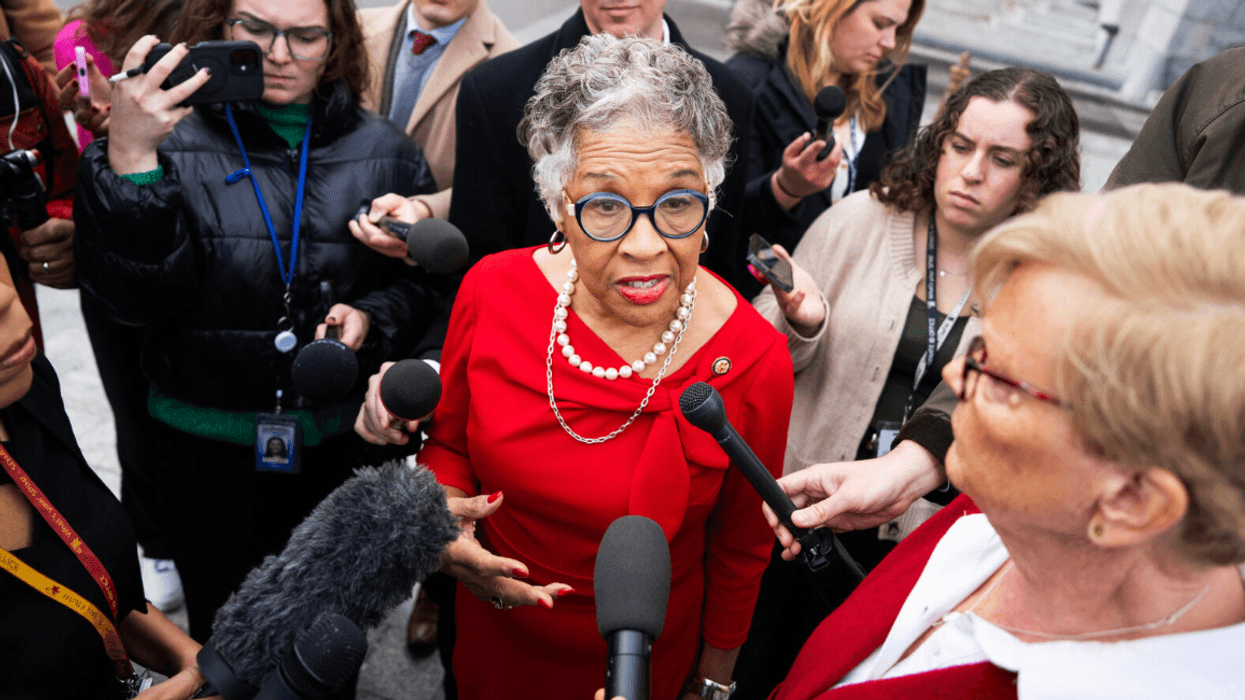
The letters “THE DONALD J. TRUMP AND” had been installed last December, less than 24 hours after a hastily called, off-agenda board vote. When Rep. Joyce Beatty (D-OH), the board’s ex officio member and the only trustee not chosen for loyalty, tried to object, her microphone was cut; and the vote was gaveled through as “unanimous.” The new letters went up on the building’s portico the very next day. The fix was in.

The Center’s foundation, the entity raising private money for the renovation, adopted bylaws conditioning every donation on the name staying exactly as Trump wanted it: “Donald J. Trump and John F. Kennedy Memorial Center for the Performing Arts.” If the Center ever removed Trump’s name from “its filings, marketing, branding, façade, or any other affiliated location,” the Foundation would claw back every dollar it had given.

Anyone who has served on a nonprofit board knows what the job entails: looking out for the health, finances, and reputation of the institution. It was a straightforward breach of fiduciary duty for the board to insert a provision saying that if the Center ever complied with the law and dropped Trump’s name, every dollar raised under the Trump brand would be clawed back. Plainly, the only person this policy served was Trump.

The same instinct drove the emergency stay motion DOJ filed once the litigation went south. As with the wacky legal submissions in the ballroom case, the brief here seemed to bear Trump’s personal imprint: its first paragraph runs three solid pages, larded with overheated rhetoric to the effect that only Trump could fix the Center.

It didn’t matter legally, but in fact, that submission was dead wrong. Judge Cooper’s opinion, along with a stream of accounts from people who worked at the Kennedy Center before Trump’s team purged them, makes clear that the takeover, far from being the salvation Trump claimed, gutted a storied institution.

Under Trump’s nominal leadership, the institution was quickly driven into freefall. A discharged curator, Josef Palermo, described leadership with no arts management experience whose apparent goal was to “show up on a red carpet and take pictures,” and a fundraising operation that sold proximity to Trump as the product. His overall word for the takeover: desecration.

That same pettiness ran through the broader record of how this institution treated the artists it depended on. A series of performers canceled their bookings, unwilling to lend their names to the Trump brand.

In January, the great American composer Philip Glass withdrew the premiere of his Symphony No. 15, “Lincoln,” from the Center, explaining that “the values of the Kennedy Center today are in direct conflict with the message of the symphony.” Trump’s response was a sneering dismissal.

The institutional toll was equally stark. The Washington National Opera, the Center’s resident company since 1971, announced it would leave, while ticket sales across the Center’s programming plunged 70 percent after the renaming. It was the same flim-flam Trump perfected decades ago in Atlantic City and New York, bankrupting one venture after another while insisting each was the greatest of its kind, selling brass and calling it gold.

As it does in every dispute, the administration led with a standing argument—not that it had the legal right to rename the Center, but that nobody had the right to bring a court challenge in the first place. The emergency stay motion repeated the claim that Rep. Joyce Beatty, the board’s ex officio member who brought the suit, lacked standing to challenge any of this in the first place.

Cooper didn’t buy it. Beatty, as a trustee with fiduciary obligations under the statute, had standing to challenge the full board. And at that point, the path was clear to restore what Congress had written into law. Congress gave the Kennedy Center its name, and only Congress can change it. Q.E.D.

Cooper’s order didn’t specify that the restored name had to remain visible, and that apparently gave someone in the White House the idea of covering it with a tarp—to spare Trump’s bruised feelings and deny the public the satisfaction of watching his name come down.

It’s as if the federal government were saying that if Donald Trump’s name couldn’t appear on the building, nobody’s could. Had the protagonist been anyone else, the spectacle might have seemed pitiable. Because it was Trump—the third-grade spoiled child incarnation—it registered instead as ridiculous.

That fairly absurd coda aside, it’s evident that while legal doctrine fueled the opinion, public outrage at Trump’s vainglory supplied the kindling. It’s one of several recent episodes in which the public, and as a result at least some Republicans in Congress, stood against the Trump tide. Democracy-loving Americans should take the win, and then get up tomorrow and fight the next fight.

Harry Litman is a former United States Attorney and the executive producer and host of the Talking Feds podcast. He has taught law at UCLA, Berkeley, and Georgetown and served as a deputy assistant attorney general in the Clinton Administration. Please consider subscribing to Talking Feds on Substack.

Reprinted with permission from Talking Feds.

Covering Up Kennedy Center Facade, Trump Makes Desperate Claim

Covering Up Kennedy Center Facade, Trump Makes Desperate Claim

Continuing to debase itself, the Department of Justice filed an emergency appeal Friday in the Kennedy Center case, demanding that the D.C. Circuit Court of Appeals stay the lower court’s order to remove President Donald Trump’s name from everything he illegally slapped it on.

Debasing itself even further, the “appeal” is based on something that somehow the DOJ never got around to telling the lower court.

And debasing itself into the subbasement, it’s pretty clear that one Donald J. Trump authored substantial portions of this mess.

Or, as the plaintiffs in the case put it in their response: This is “a transparent effort to jam the Court and game the judicial system.”

Yes, if you, like so many others, spent your Friday with your eyes glued to a livestream, waiting for Trump’s name to come off the Kennedy Center after the court denied the administration’s whiny request for a stay, the president’s minions did everything they could to deny you the satisfaction—including hanging giant tarps to conceal his defeat.

You see, the administration has a new new theory on why Trump’s name has to stay on the building, one that was, apparently, not revealed to the lower court, but popped up in the DOJ’s last-minute filing.

Sorry—did we say DOJ? We meant Trump’s last-minute filing because it’s painfully clear they’re letting him write shouty briefs again, just as in the White House ballroom case.

Here’s a little taste: “The District Court is not allowing us to close in order to properly fix up and repair the Building, including potentially life threatening structural damage like beams and parking garage ceilings that are rusted, and in serious danger of falling onto people below — Indeed, total collapse!”

That is, you will likely note, not actually a legal argument in favor of keeping Trump’s name on a building whose name can only be changed by an act of Congress. The legal argument, such as it is, is the reveal that they secretly changed the Center’s bylaws to now read:

The Corporation may make donations to the Center in support of its educational, artistic, cultural, and performing arts functions; provided, however, that in so doing, the Board of Directors shall condition such donations to the Center upon the name of the Center remaining unchanged as the ‘Donald J. Trump and John F. Kennedy Memorial Center for the Performing Arts.’ In the event the Center should at any time remove the name of President Donald J. Trump from its filings, marketing, branding, façade, or any other affiliated location, the Corporation shall recover from the Center the total of all gifts, donations, and contributions made to the Center by or on behalf of the Corporation.

In case you’re not following that little bylaw switcheroo, the Trump-ghostwritten brief is happy to spell it out for you:

People and companies, who have given, or will be giving, millions of dollars to the Center were only willing to do so with the name ‘Trump’ on the Building. Many did it because they loved the concept of two Great Presidents, one Republican, one Democrat, working together as one — In many ways, a bipartisan relationship! All of this money, hundreds of millions of dollars, will have to be immediately returned, or not received by the Center.

Is it normal in litigation to just hide something and spring it on appeal after you lose below? NOPE! Indeed, it’s actually the exact opposite of how things work. As the plaintiffs pointed out in their emergency response to this non-emergency nonsense, arguments not raised at the district court level are forfeited.

Okay, well the DOJ has another one for you. It’s this hilarious bit chiding the court about how they shouldn’t require big alterations to the building until the case has been fully litigated:

Major physical changes to the Center should await this Court’s resolution of those issues; as an equitable matter, it does not make sense to alter the Center’s name and signage now, only to potentially revert the name again after what should be a successful appeal.

You’re reading that right. The administration that tore down the White House’s East Wing without permission, the administration that insists it gets to build a giant arch and it has to start ASAP and nosiree, no approval from Congress needed, is now saying that the extremely minor act of taking Trump’s name off the building he illegally slapped it on is a “major physical change” that shouldn’t happen until the court fully resolves the issue.

This is grasping at straws, but it’s not all slender reeds. The appeal goes to the D.C. Circuit Court of Appeals, where Trump has had enormous success thanks to emergency panels stacked with his appointees, so there’s a real chance that they might find some newly discovered constitutional principle that nothing can stop Trump from doing this.

Now, we all just get to wait and see when crews will finally get around to removing the tarps obstructing the portion of the building that’s now free of the president’s name—or if it will remain stubbornly covered until Trump can figure out a way to mark it as his territory again.


Kennedy Center Counsel Orders Removal Of Trump's Name From Iconic Building

Kennedy Center Counsel Orders Removal Of Trump's Name From Iconic Building

President Donald Trump’s name is set to be removed from the facade of the iconic Kennedy Center for the Performing Arts, restoring an American treasure to its rightful condition. The office for the center’s general counsel circulated a memo to staffers on Thursday, ordering them to remove Trump’s name after a judge ruled against the administration late last week.

The Kennedy Center was named to honor former President John F. Kennedy after his assassination in 1963. The center was meant to be a living memorial to one of the most fondly remembered American leaders, and was defaced by Trump this past December.

The counsel’s memo explained: “To comply with this order, you must immediately change email signatures, letterhead, and other documents to reflect the name as ‘The John F. Kennedy Center for the Performing Arts,’ or ‘Kennedy Center.’ Other changes, such as to templates and forms, signage, brochures, and website pages, must be completed no later than Friday, June 12, 2026.”

Last Friday, the removal of Trump’s name was ordered after a federal judge determined that the decision to add his name was in violation of law. U.S. District Judge Christopher Cooper said in his ruling that the center was named as an act of Congress, and that only Congress—not Trump and a board of trustees packed by his cronies—can change the name.

Trump responded with a whining social media post on Friday, stating that his administration would “make all necessary arrangements with Congress to allow a full and complete transfer of this Institution, giving them the responsibility for its Operation, Maintenance, and Management.”

Trump’s attempted takeover of the center was unpopular with the public. In a February YouGov poll, 64 percent of Americans opposed his renaming of the center. Only 16 percent supported it.

Reprinted with permission from Daily Kos

Shop our Store

Headlines

Editor's Blog

Trending

World