MAHA Coup: With Activists (And Women) Pushed Aside, Corporate Shills Took Over
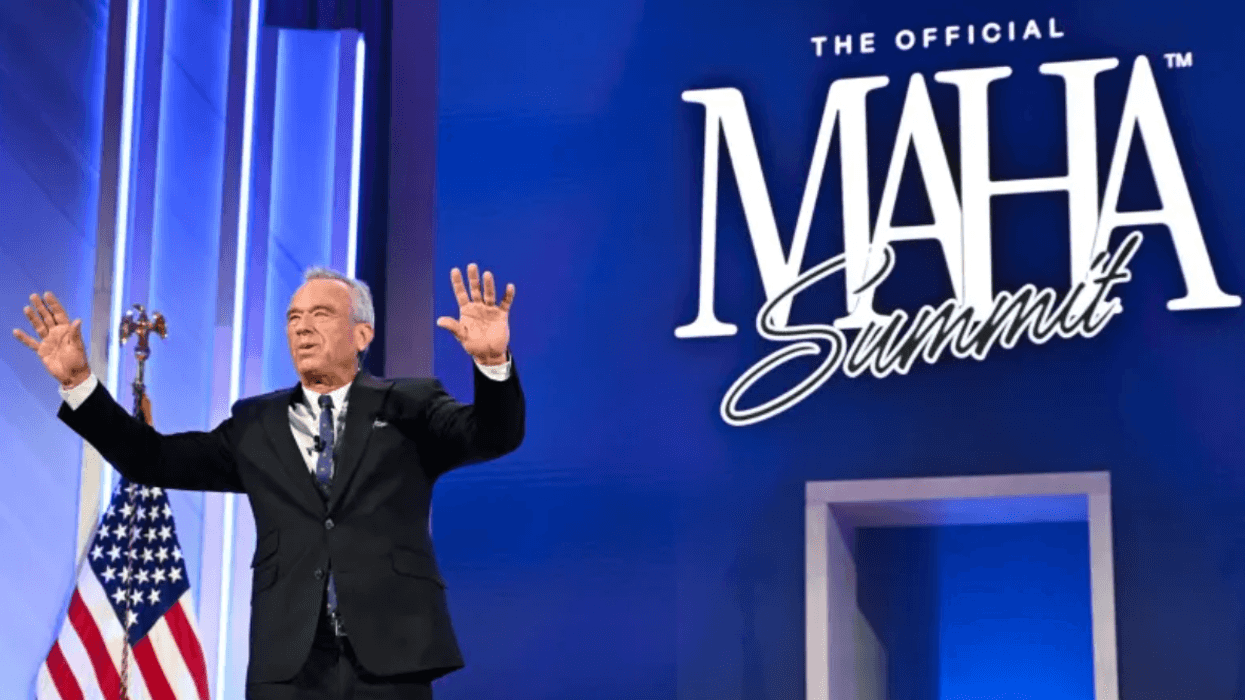
Last week, the MAHA Center hosted the second annual MAHA Summit, described by the organizers as a convention of “senior health leaders across technology, business, and government working to make Americans healthier.” The summit's apparent cooperation with industry figures and the Trump administration seemed to drive further an existing wedge within the MAHA coalition, putting administration-aligned advocates at odds with some grassroots activists and popular influencers.
As one activist put it, “I don’t recognize this version of MAHA.”
The MAHA Center — the nonprofit arm of a triad of organizations, including MAHA Action and the MAHA PAC, all tied to Health and Human Services Secretary Robert F. Kennedy Jr. — describes MAHA as “a nationwide movement focused on reversing the chronic disease epidemic in America through advocacy, grassroots activism, and policy reform.”
Nonetheless, several prominent grassroots advocates and MAHA influencers were absent from the lineup — including Turning Point USA’s Alex Clark, Moms Across America’s Zen Honeycutt, and Kelly Ryerson, known online as Glyphosate Girl. Instead, the panels primarily featured Trump administration officials and industry representatives — from health tech, insurance, and agriculture — many of whom delivered sales or policy pitches.
In recent months, elected Republicans have faced backlash from MAHA advocates for apparently siding with industry interests on priorities like glyphosate and agricultural legislation. An invitation to participate in the summit could have been an olive branch to MAHA influencers — but if they received invites, it appears those influencers declined.
A panel on reform at the Centers for Medicare & Medicaid Services did feature podcaster Russell Brand as a moderator — a bizarre choice, not least because Brand is facing charges for numerous counts of rape and sexual assault. In his introductory remarks, Chief Executive Officer of MAHA Holdings Alex Hardy told the audience, “You'll hear from Russell Brand and Dr. [Mehmet] Oz. One's a heart surgeon, and one's a heart throb. We'll let you decide which is which.”
Some issues of recent MAHA activism featured lightly if at all during the panels. There were no dedicated panels for vaccine reform, glyphosate, and data centers — all of which have propelled MAHA advocacy in recent months and some of which would require a brush with industries that were represented among the summit’s speakers.
AI innovation was particularly emphasized throughout the summit, but the MAHA backlash against data centers was only mentioned in passing, when CMS Deputy Administrator Dan Brillman said, “The 58 percent that don’t use it, hate it. They hate data centers. We need more people using AI to better their health.” At the end of the event, RFK Jr. further promoted AI, telling the audience that it could “free us from medical tyranny” of experts.
Kelly Ryerson and Alex Clark also suggested that the MAHA Summit was not geared toward the women who made the movement a major political force. Ahead of the event, Ryerson told the Washington Examiner, “The MAHA Summit lineup does not reflect the issues that birthed the original MAHA movement and drove voters, especially women, to show up and vote for this coalition,” adding, “I don’t recognize this version of MAHA.” Similarly, NBC reported that Clark did not attend the summit. “Where are the original women who started the movement?” Clark asked.
Of the nearly 60 speakers who featured on the agenda, only seven were women — one of whom was RFK Jr.’s wife Cheryl Hines, who appeared for just five minutes to announce future MAHA events.
Women have played a critical role in the movement — the introductory remarks of the event even paid lip service to “MAHA moms.” So it’s notable that the women of MAHA were largely excluded or chose not to participate in the summit. Their absence suggests that the MAHA coalition is now facing a familiar political question: Is compromise with prevailing power players a sign that the movement is succeeding or failing?
Is the summit just the tip of the iceberg?
The MAHA Summit highlighted an existing fracture in the foundation of the MAHA coalition. In recent months, MAHA Action and popular influencers have taken opposing lines on at least two issues related to the Trump administration.
One such example followed from the EPA announcement this past May that it would drop limits on some PFAS in drinking water. Ryerson, Clark, and MAHA activist Alexandra Muñoz expressed frustration with the move, while MAHA Action praised EPA efforts.
Before the rule was announced, Clark and Muñoz urged the EPA to change course. Clark wrote, “Don't weaken PFAS regulation!!!” and Muñoz posted, “Don't allow more PFAS in our drinking water!!!!”
In response to the change, Clark again expressed her frustration with the move, writing, “We are running one of the largest uncontrolled chemical experiments in human history from an alleged ‘MAHA EPA.’”
Ryerson seemed to agree with Clark and Muñoz, writing, “Yesterday, as predicted, the EPA announced they will be removing limits on certain PFAS in tap water.” Her post also included a quote she had given to The New York Times, strongly advising the EPA “not to move forward on deregulating PFAS if they want to win the November midterms.”
According to the New York Times, EPA Administrator Lee Zeldin “sought to counter that anger by appearing Monday with Robert F. Kennedy Jr., the health and human services secretary who spearheaded the MAHA movement, and announcing nearly $1 billion to help states address the contaminants in drinking water.”
MAHA Action backed Zeldin's spin, praising the administration's move. The account wrote, “The EPA is putting $1 billion toward cleaning PFAS from America’s drinking water. After decades of contamination, communities are finally getting help to confront the ‘forever chemicals’ poisoning their water.”
In a separate joint post with MAHA Action President Tony Lyons, MAHA Action wrote that Zeldin and the EPA were “declaring war on forever chemicals.”
A similar dynamic ensued following the announcement of Heidi Overton's nomination for FDA commissioner late last month. Again MAHA Action fell in line with the administration, while Clark, Ryerson, and Muñoz criticized the move.
MAHA Action and Lyons, along with the account MAHA Mommas, praised Overton's nomination, writing, “Secretary Kennedy has given his full endorsement of President Trump’s pick for the next FDA Commissioner, Dr. Heidi Overton.” The post added, “Kennedy is making clear that under Overton, the FDA will answer to science and the American people, not the status quo.”
Clark pushed back, writing, “This is who wrote the glyphosate executive order by the way,” seemingly referring to a February executive order aimed at boosting glyphosate production. Clark’s post was shared by Muñoz. (White House officials disputed the claim that Overton wrote the order, saying it was authored by Trump’s national security advisory team.)
Ryerson again seemed to agree with Clark and Muñoz, writing of the nomination, “Very sad day for MAHA."
The divide hasn’t escaped Lyons, it seems. Earlier this fall, he discussed the MAHA coalition’s role in driving GOP midterm results with Rumble’s Flyover Conservative, saying, “I think the strategy has to be to look at the coalition that worked in the fall of 2024, where we got a few million people to switch parties and to recognize that, like I said before, the party that they thought represented them really didn't.”
Lyons added, “On the more activist side of the MAHA movement — activists are never happy, they're not meant to be happy, the idea for activism is that you can always do better.”
Reprinted with permission from Media Matters