Tag: withdrawal
Hey Suckers! Stop Taking Trump's Boob Bait On Greenland And Panama

Hey Suckers! Stop Taking Trump's Boob Bait On Greenland And Panama

Donald Trump had a rough couple of weeks. Members of his own party sunk his attempt to escape a vote on the debt limit for two years. Some of Trump's picks for top jobs weren't received with universal applause. A revolt by Republican senators against his choice of Matt Gaetz as attorney general forced the Florida Republican to withdraw from consideration. Then there was, yuck, the Gaetz report.

If you were Trump confronted with this unwanted evidence of limited political potency, what would you do? You would throw out some dazzling nonsense to distract the public's attention from your difficulties. You would make outlandish comments on such matters as buying Greenland and taking back the Panama Canal. You'd suggest that Canada become the 51st state.

And what has much of respectable media done with this fusillade of goofy chatter? Unfortunately, they jumped at the bait with unseemly speed and moved their focus to Trump's muttering about plans to stomp on the sovereignty of friendly countries. They led news reports with serious discussions of the international ramifications.

"The US is unlikely to take control of any of these regions," the BBC wrote with a straight face, "but these statements could indicate that Trump's 'America First' vision includes flexing the superpower's muscle beyond its borders for US trade and national security interests."

We've been here before.

In August 2019, then-President Trump told reporters of the "strategically interesting" idea of buying Greenland, which is a territory of Denmark. The Danish prime minister called the proposal "absurd." Trump then canceled a planned state visit to Denmark, citing such remarks as the reason.

But to show what a ha-ha headbang that attention-grabbing stunt really was, Trump tweeted a photograph of a skyscraper in the middle of an Arctic setting with the Trump logo at the top.

He wrote: "I promise not to do this to Greenland!"

He just dusted off the ridiculous idea again, writing on a social media post that the U.S. "feels that the ownership and control of Greenland is an absolute necessity" for reasons of national security and global freedom.

Media again snapped at the floating lures.

The Wall Street Journal offered the headline, "Trump Threatens to Take Control of Panama Canal, Greenland." The New York Times headline was "Trump's Wish to Control Greenland and Panama Canal: Not a Joke This Time." The article asserted: "Over the past two days, President-elect Donald J. Trump has made clear that he has designs for American territorial expansion."

Not a joke? Trump's son Eric posted an image on X showing Greenland, the Panama Canal, and Canada in an Amazon online shopping cart.

The Danish prime minister's office simply brushed off the latest provocation. It blandly remarked that the government was "looking forward to working with the new administration" and left it at that.

As for the Panama Canal, one serious news source noted that Trump would be able to use "the world's largest military" to back up his demands. The irony of discussing such rash international adventures without noting that Trump routinely accused his political opponents of being war-mongers was lost.

Greenland is still not for sale, but if it were on the market, it would be a big-ticket item, to say the least. Some analysts put the value of its natural resources alone in the hundreds of billions of dollars. Taking it by force would be a costly military operation.

How would starting the United States on a round of territorial expansion fit in with vows to chop $2 trillion out of the budget? Not well and another reason to dismiss the clown show.

At the very least, Trump should have to come up with new material.

Reprinted with permission from Creators.
Mike Johnson

The Republican Response To Biden's Withdrawal Is Blithering Incoherence

The right’s response to President Joe Biden’s announcement that he will not seek reelection is absurd, cynical, and self-discrediting. Reporters should not treat the resulting opportunistic hodgepodge as if it were credible.

Following weeks of Democratic Party angst after Biden’s June 27 debate performance triggered widespread concern about his ability to win reelection, the president said on Sunday afternoon that he would drop out.

“While it has been my intention to seek reelection, I believe it is in the best interest of my party and the country for me to stand down and to focus solely on fulfilling my duties as President for the remainder of my term,” Biden wrote in a statement.

Biden’s decision was a blow to President Donald Trump, whose campaign was built around a run against the president and reportedly believed Biden’s nomination gave Trump the best chance of winning in November. Republicans are flailing as they grapple with the prospect of a different opponent for their historically unpopular nominee.

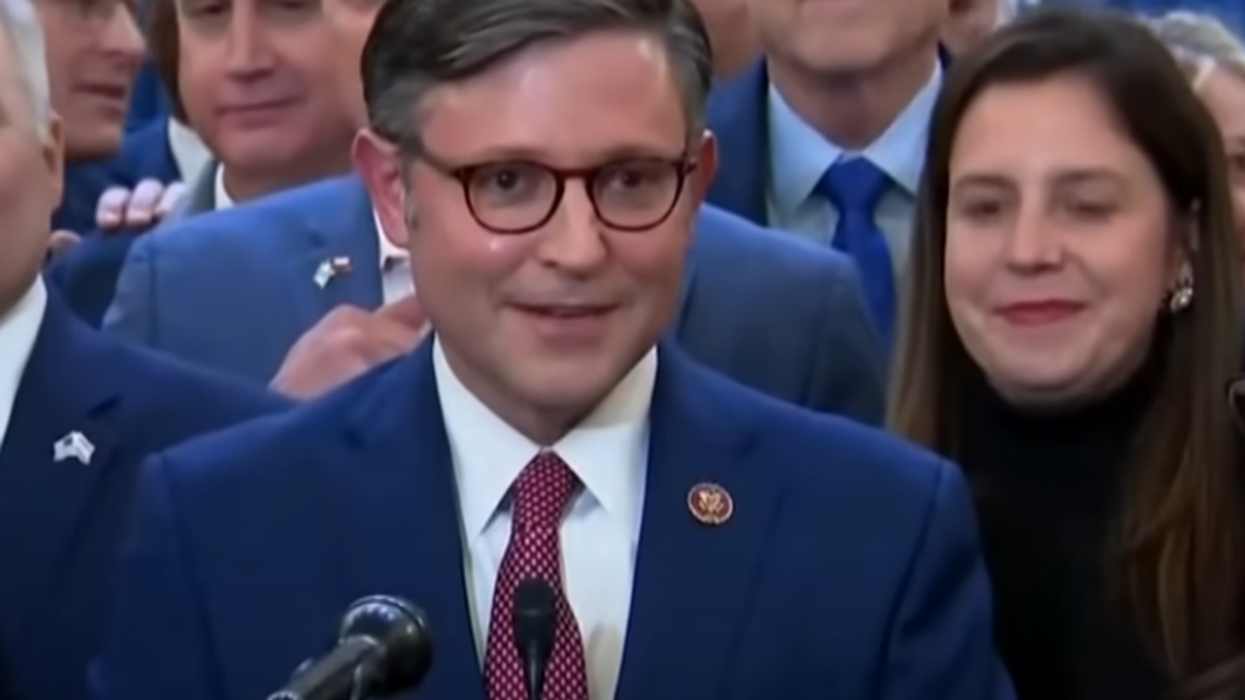
House Speaker Mike Johnson’s comments before and after Biden’s announcement are instructive.

Johnson claimed on Sunday morning that replacing Biden as the Democratic nominee would be “unlawful” and suggested Republicans would litigate to keep him on the ballot if the party tried to replace him.

“I think they would run into some legal impediments in at least a few of these jurisdictions," he said on ABC’s This Week. "I think there'll be a compelling case to be made that that shouldn't happen, and so I think they've got legal trouble. If that's their intention, and that's their plan. So we'll see how it plays out.”

The argument that Democrats can’t legally choose their own nominee at the party’s convention next month don’t deserve “any credence,” according to election expert Rick Hansen: “Joe Biden is not the party’s nominee now, and states generally point to the major party’s nominee as the one whose name is on the ballot.”

But in any case, Johnson’s argument that Republicans will sue to keep Biden on the ballot logically conflicts with his argument after Biden said he was dropping out.

On Sunday afternoon, Johnson said: “If Joe Biden is not fit to run for President, he is not fit to serve as President. He must resign the office immediately.”

(Johnson, a key figure in Trump’s plot to overturn the 2020 election on January 6, 2021, also now claims the Democrats “invalidated” Biden’s primary voters in an affront to the democratic process.)

So Republicans are going to sue to keep Biden on the ballot to serve as president for four more years while simultaneously claiming that he should resign his office? That’s totally incoherent, a signal of obvious political desperation.

The right’s leaders have benefited at times from the low standards the news media sets for them. But Republicans are telegraphing that the coming days will feature an avalanche of bad faith nonsense — and that’s how reporters should treat their arguments.

Reprinted with permission from Media Matters.

Afghan Realities Prompt Obama To Slow Plans For U.S. Withdrawal

Afghan Realities Prompt Obama To Slow Plans For U.S. Withdrawal

By David J. Lynch, Bloomberg News (TNS)

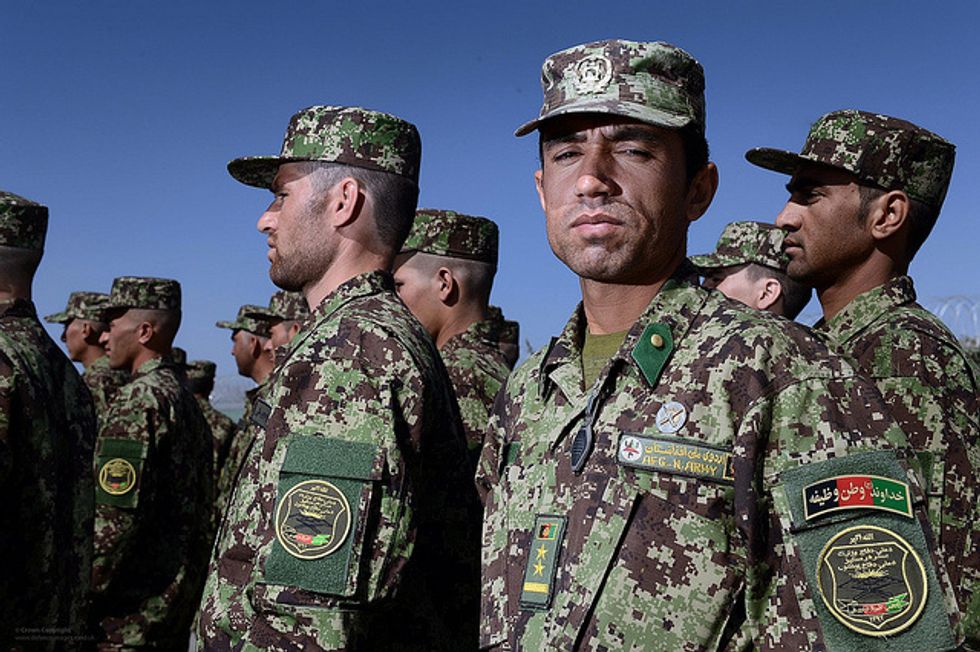
WASHINGTON — President Barack Obama is expected as soon as Tuesday to slow the withdrawal of U.S. troops from Afghanistan, raising new doubts that he will complete a promised drawdown before leaving office.

That decision has forced the president to confront the conflict between his vow to end America’s wars and the political and military realities in Afghanistan, Iraq, and Syria as well as the escalating violence in Yemen and Libya.

“The region writ large is in a descending spiral of chaos,” said David Barno, a retired three-star Army general who commanded U.S. and allied troops in Afghanistan from 2003 to 2005, adding “there’ve been some lessons drawn” from the security vacuum that arose in Iraq after the departure of the last U.S. forces there at the end of 2011.

The tension between Obama’s strategy and the situation in the region is clear ahead of the president’s meeting at the White House Tuesday with Afghan President Ashraf Ghani. Since May 2014, when Obama announced plans to remove almost all American forces before he leaves office, Afghan security forces have struggled to cope with increasing Taliban attacks.

The U.S. proclaimed its combat role in Afghanistan ended on December 31. U.S. and NATO troops are now training Afghan security forces and conducting counter-terrorist missions against the Taliban and groups such as al-Qaida and the Haqqani Network, both based in neighboring Pakistan.

Under a plan the president announced last year, the 9,800-strong force of U.S. troops in Afghanistan was to be cut to about 5,500 by the end of this year. By the end of 2016, as Obama prepares to turn over the White House to his successor, the U.S. presence would drop to an embassy protection force of about 1,000.

Now, with Afghan forces still hobbled by shortcomings and regional terrorist groups proliferating, the planned U.S. drawdown could be risky, many experts say.

Seth Jones, an analyst for the Santa Monica, California-based Rand Corp. who served as an adviser to the commander of U.S. special operations forces in Afghanistan, said the situation late next year could include the danger of “external plots arising from Afghanistan and Pakistan that would make it very unwise for the U.S. to leave.”

“The success or failure of the U.S. mission in Afghanistan has reached a critical juncture,” says a March 20 report from the nonpartisan Institute for the Study of War in Washington. The planned U.S. drawdown by the end of next year would permit “the Taliban to expand in ways that undermine core U.S. interests, such as seeing to it that Afghanistan has the ability to defend its borders,” the report concludes.

The Taliban has pointed to the end of the U.S. combat role and the continuing drawdown “as a sign of its inevitable victory” and return to power, James Clapper, the director of national intelligence, told Congress last month.

The Afghan National Security Forces last year prevented the Taliban from seizing any major cities, and the country’s security forces “will probably maintain control of most major population centers” this year, Clapper testified. But “without international funding, the ANSF will probably not remain a cohesive or viable force.”

Anthony Cordesman, a military analyst with the Center for Strategic and International Studies in Washington, said that while the end of the U.S. combat role was always expected to involve some deterioration in security, “I think it is worse than expected.”

Administration officials announced their plan for the drawdown of American forces in Afghanistan “without issuing any meaningful assessment of what some 13 years of war had accomplished,” Cordesman and Aaron Lin wrote in a March 19 assessment. “They did so without any public attempt to provide a meaningful strategic assessment of the future U.S. role and commitments to Afghanistan or the region, and without providing any meaningful public analysis or metrics of the combat situation.”

While Cordesman said a reduction in unclassified data released by the U.S. military over the past year makes it difficult to make a detailed assessment, his report warns that “the current U.S. transformation effort may well repeat key previous U.S. failures in Vietnam and Iraq.”

U.S. military and intelligence officials, speaking on the condition of anonymity to discuss intelligence assessments, said that if Afghanistan is to avoid Iraq’s fate in the wake of a U.S. withdrawal, Afghan soldiers and police must improve their ability to operate without U.S. air, logistics, and intelligence support.

“ANSF still need a great deal of help in developing the systems and processes necessary to run a modern, professional army and police force,” General John Campbell, the commander of U.S. forces in Afghanistan, told the House Armed Services Committee this month.

The lack of U.S. combat air support during the most recent fighting season allowed Taliban fighters to mass in greater numbers without fear of being attacked from the air, according to the March report from the Institute for the Study of War.

Afghan units last year were unable to expel the Taliban from areas it controlled, according to David Kilcullen, a counterinsurgency adviser to General David Petraeus when he commanded the international forces in Iraq and Afghanistan.

“There are real questions as to whether ANSF can sustain the current high casualty and desertion rates or succeed in containing the insurgency without external air support,” wrote Kilcullen in a November article in “Stability: The International Journal of Security & Development.”

As the Afghan forces have assumed responsibility for the war, combat losses, and desertions have taken their toll. There were 325,642 Afghan army and police at the end of last year, down by more than 12,000 fewer from the beginning of 2014, according to the U.S. Special Inspector General for Afghan Reconstruction.

The U.S. already has spent $65 billion to train and equip the Afghan security forces, with billions in additional spending required in coming years.

In light of the situation, administration officials have said publicly that Obama is likely to retain a higher force level over the next two years to allow more time for the government of Ghani and Chief Executive Abdullah Abdullah to demonstrate progress.

Obama met with his national security team last week to discuss recommendations for adjusted force levels prepared by Campbell, and officials have suggested that a revised timetable could be announced as early as a Tuesday press conference with Obama and Ghani.

U.S. officials have praised Ghani as a more reliable partner than his predecessor, Hamid Karzai, who threatened in 2010 to join the Taliban if U.S. criticism didn’t cease.

Ghani, a former World Bank official who taught at two American universities, has been more cooperative, U.S. officials say. In September, one day after being sworn into office, he signed a new security accord with the U.S. that allowed a residual force of U.S. and NATO troops to operate.

Obama could meet his goal of withdrawing all but roughly 1,000 U.S. soldiers by January 2017 even if higher troop levels are maintained for the next two years, Barno said. Until about 60 days before the 2011 U.S. exit from Iraq, the U.S. maintained a force that was roughly that size, he said.

Photo: UK Ministry of Defence via Flickr

Norway And The Fear Of Al Qaeda

It seemed obvious: An attack on a Western target in the wake of the constant pressure that the US and NATO forces have been applying to Al Qaeda. The group and its various offshoots have had a rough couple of months. They suffered the killing of bin Laden; the killing of Ilyas Kashmiri, Al Qaeda’s military boss in Central Asia; the attempts on the life of the leader of the Afghan Taliban, Mullah Omar; and the constant use of predator drones for targeted attacks on leaders wherever Al Qaeda is training and recruiting, notably Afghanistan, Somalia, and Yemen. Then today, as if in response, there were two consecutive attacks in Norway, an explosion that caused major damage to government buildings and shootings at a youth camp run by the Labor Party where top government officials were apparently scheduled to speak.

Al Qaeda did not claim credit for the chaos — as of late Friday afternoon, a group calling itself “Helpers of the Global Jihad” had made, then revoked, a statement claiming responsibility — but the twin attacks seemed to bear the group’s signature. The bombing of public buildings resembles similar assaults of embassies and hotels around the world, while the shooting rampage looked like it was straight out of the playbook of Anwar al Awlaki, an American-born cleric who has become the new face of Al Qaeda in Yemen, and has urged his followers to use guns against Western targets.

Given all the evidence — and the chatter on Islamist message boards — one would expect that the source of today’s attacks were clear. But as of 5:30 Friday evening, the only suspect arrested was a Norwegian citizen, and his ties with Islamist militants, if they existed at all, were unclear. More than one western expert had warned that it was a message from Ayman Al-Zawahiri, bin Laden’s longtime number two and the new head of Al Qaeda.

And it wasn’t just Westerners who blamed the most available bogeyman.

Ayman Zawahiri, Osama bin Laden’s longtime lieutenant and now the titular head of al Qaeda, has been calling for an attack against Norwegians since 2003. The Norwegian army reportedly continues to provide special forces in and around Kabul and in 2006 the Norwegian press published Danish cartoons that ridiculed Islam and the prophet Mohammed, eliciting angry protests from Muslims around the globe. (Unlike the Danish government, however, the Norwegian government issued an apology.) And last week, Mullah Krekar, an Iraqi refugee in Norway who founded the Islamist group Ansar al Islam (predecessor of Al Qaeda in Iraq), was indicted in Oslo for making threats against Norwegian politicians.

As Abu Suleiman al-Nasser, a military leader of Al Qaeda in Iraq who has repeatedly threatened attacks against Scandinavian countries, bluntly explained on a jihadist message board earlier today: “Norway was targeted in order to become a lesson and example for the rest of the countries of Europe.” Al-Nasser demanded that European countries withdraw from Afghanistan. “Answer the demands of the Mujahideen,” he said, “as what you see is only the beginning and what’s coming is more.’”

Karen Greenberg is the director of NYU’s Center on Law and Security

Shop our Store

Headlines

Editor's Blog

Corona Virus

Trending

World