Tag: jp morgan
Joe Biden

Biden's America Is Doing Fabulously Well, In Fact

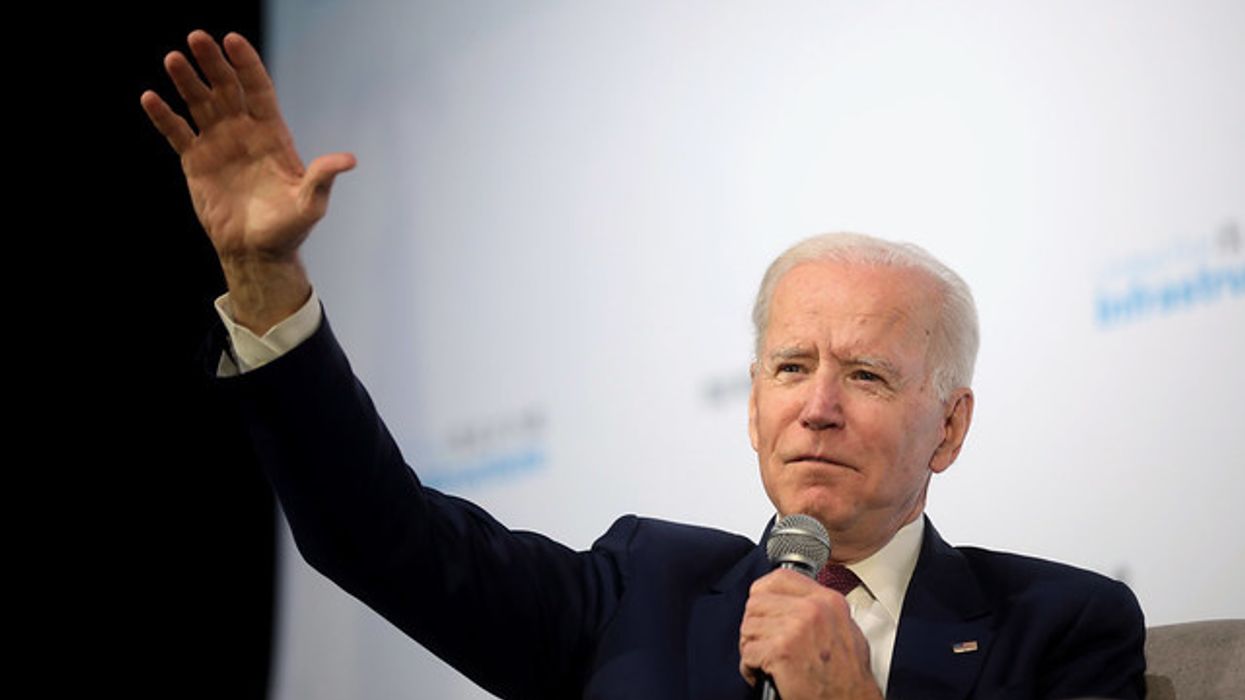
Life is not perfect in Joe Biden's America, but when was it ever perfect? Just looking at the numbers, though, things are pretty great.

Stock prices are hitting record highs. Unemployment is at its lowest level in 50 years. Violent crime — murder, rape, aggravated assault and robbery — has dropped to a near 50-year low. The net worth of American households stands at record levels.

Higher prices remain a concern for many, but inflation has much moderated. Inflation last month was zero, and some prices are coming down. For example, the average price of gasoline, which hit $5.816 a gallon two years ago, is now down to $3.452.

The U.S. economy is, in The Wall Street Journal's words, "the envy of the world." Since shortly before the pandemic, the real GDP has grown 9.4 percent. By contrast, Britain's has risen just one percent, and in Germany and Japan, it's up less than one percent.

Jamie Dimon, the boss at JP Morgan, has called the booming American economy "unbelievable" with the average consumer "much wealthier than before."

And that's why the world's investors are flooding into American markets.

"The US has the biggest and most innovative companies with strong earnings growth but profit also from its safe haven status," explained Ulrich Urbahn, an analyst at Hamburg-based Berenberg Bank.

Meanwhile, the U.S. is taking on China as the world's producer of green energy and microchips. This didn't just happen. America is charging ahead in this competitive race because of Biden's three big invest-in-America bills.

After recently observing the massive factory construction in Georgia, BBC economics editor Faisal Islam wrote, "In 20 years of reporting around the world, what I have seen in the US over the past year can only compare to what I saw in China in the mid-2000s."

Granted, many Americans feel pressed by prices at the supermarket or McDonald's. In reality, inflation had been a worldwide phenomenon.

That may account for consumer sentiment numbers that reflect unwarranted pessimism (though there's been some improvement). Consumer behavior in the real world suggests otherwise. Americans are continuing to spend at levels that baffle economists.

No one who follows news delivered straight can believe that the economy was better under Donald Trump. There's hardly a number to support that claim. It's a tribute to the ex-president's powers to con that much of the public thinks the four-time bankrupt is an economic wizard.

We know that Trump can put on a show. But the show of late has turned more bizarre than entertaining — witness his crazy verbal meanderings about electric boats and sharks, one of which bit off a "young lady's leg."

Trump recently spoke to corporate bigwigs at a Business Roundtable meeting in New York. Some in attendance had been predisposed to Trump based on his talk of tax cuts and looser regulations.

But they were shocked by his mental confusion. "Trump doesn't know what he's talking about," one CEO told Andrew Sorkin, host of CNBC's Squawk Box.

Several of them, Sorkin reported, "said that [Trump] was remarkably meandering, could not keep a straight thought [and] was all over the map." He offered few details on how he would reduce taxes and cut back on business regulations.

Trump recently quoted his doctor who years ago said he was mentally competent, but he mangled the doctor's name. And no, Donald, World War II is in the past, not the future.

The numbers say the U.S. economy is amazingly strong under Biden. And the non-economic numbers are not too shabby either. The murder rate, for one, is well below pre-pandemic levels -- that is, when Donald Trump was president.

Face it, Biden's America is doing fabulously well.

Reprinted with permission from Creators.
JPMorgan Earnings Fall 19 Percent On Lower Mortgage Income

JPMorgan Earnings Fall 19 Percent On Lower Mortgage Income

New York (AFP) – JPMorgan Chase Friday reported lower earnings due to a drop in its mortgage business as the U.S. banking giant seeks to turn the corner after costly legal settlements.

JPMorgan, one of the first major companies to release first-quarter results, said net income was $5.3 billion, down 19 percent from a year ago.

Key factors behind the decline included a big drop in mortgage banking income, lower earnings from corporate and investment banking and a rise in provisions in case of credit losses.

JPMorgan chief executive Jamie Dimon said the results were “good” given the industry-wide headwinds in trading and mortgages.

“We have growing confidence in the economy — consumers, corporations and middle market companies are in increasingly good financial shape and housing has turned the corner in most markets — and we are doing our part to support the recovery,” Dimon said.

The results follow a 2013 marred by huge legal settlements over JPMorgan’s mortgage practices prior to the 2008 crisis, a major trading scandal in the bank’s London office and other controversies.

Dimon called the conditions of 2013 “painful and nerve-wracking” in a letter to shareholders this week. However, bank officials are hopeful 2014 will see fewer large legal settlements with regulators and private parties.

Net income in mortgage banking was $114 million, down $559 million from last year. Profits in corporate and investment banking were $2.0 billion, down from $2.6 billion in the 2013 quarter.

The company’s provision for credit losses was $850 million, up $233 million from last year.

The earnings translated into $1.28 per share, below the $1.40 expected by Wall Street. Revenues came in at $23.86 billion, below the $24.53 billion projected by analysts.

Shares of JPMorgan fell 2.7 percent to $55.87 in pre-market trading.

AFP Photo/Robyn Beck

WATCH: Elizabeth Warren Introduces Bill To Expose ‘Sweetheart Deals’ For Corporations

WATCH: Elizabeth Warren Introduces Bill To Expose ‘Sweetheart Deals’ For Corporations

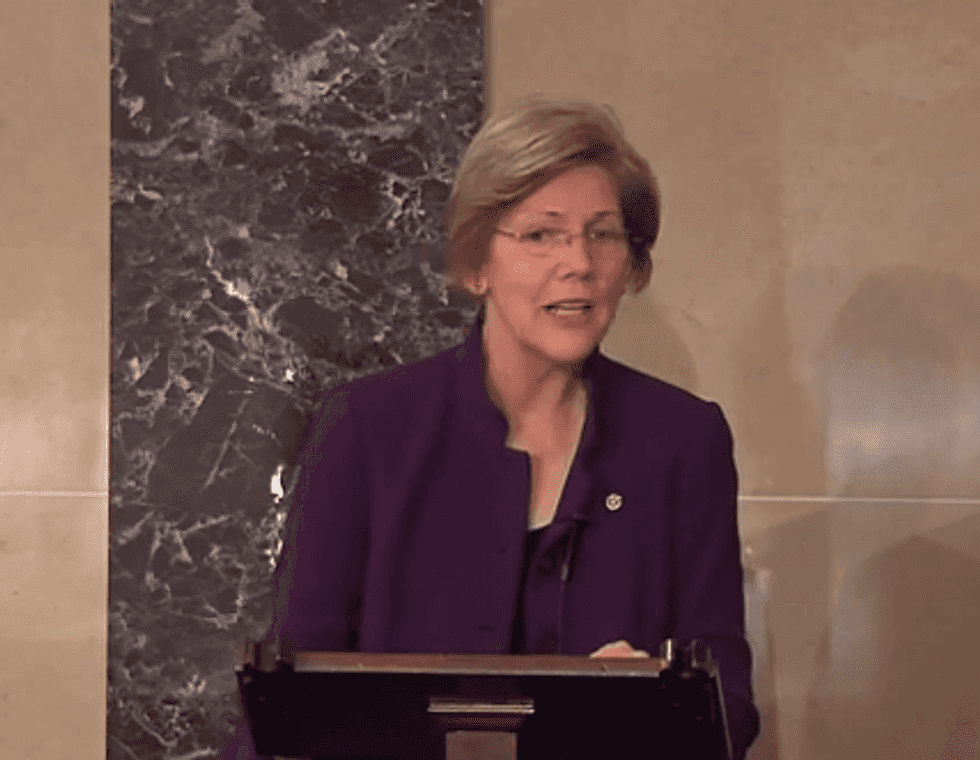
Senator Elizabeth Warren (D-MA) rose to the floor of the Senate on Thursday morning to introduce the Truth in Settlements Act, which is co-sponsored by Senator Tom Coburn (R-OK).

“Several years ago the government announced a $385 million settlement with Fresenius Medical Care for allegedly defrauding Medicare and other health programs for years,” Warren said. “When the agreement was originally announced, the Justice Department touted the sticker price as the agency’s largest civil recovery to date in a health care fraud case. But the DOJ didn’t say a word about the tax treatment. The agency’s failure to even consider that issue was a very costly mistake. By the time the company finished claiming all its tax deductions from the settlement, it ended up paying $100 million less than originally advertised. In other words, the taxpayers picked up more than a quarter of the tab.”

The senator also compared a settlement last year between Wells Fargo and the Federal Housing Finance agency for $335 million in fraudulent sales to Fannie Mae and Freddie Mac, which was about 6 percent of what JPMorgan paid to the same agency for a similar claim.

What was the difference in the two settlements?

“Well, we’ll never know because the JPMorgan settlement is public. But the much smaller Wells Fargo settlement is confidential.”

The bill implements several requirements on settlements made in disputes that are not being litigated, including a requirement that the government offer a rationale whenever an agreement is kept confidential.

JP Morgan To Pay $153 Million For Screwing Investors

As goes Goldman, goes the nation:

JP Morgan Chase has agreed to pay $153 million to settle allegations that it misled investors when it created and marketed a risky mortgage investment shortly before the housing market collapsed. The Securities and Exchange Commission accused JP Morgan of securities fraud, saying the bank failed to tell investors that a hedge fund helped create the investment while betting that it would fail. Investors who lost more than $100 million on the deal included a religious non-profit group in Minneapolis, several Asian financial institutions and General Motors Asset Management, which manages the General Motors pension plans. The accusations closely mirror the S.E.C.’s 2010 case against Goldman Sachs, which was accused of selling a mortgage investment that was intended to collapse. In that case, Hedge fund giant John Paulson had helped create — and bet against — the Abacus mortgage investment sold by Goldman.

The SEC seems to be picking the low-hanging fruit, so to speak, going after instances during the lead-up to the financial crisis where big banks and financial institutions left clear traces of malice with respect to their investors. As is typical in these cases, the firm “neither admitted nor denied wrongdoing in the settlement.” [The New York Times]


Shop our Store

Headlines

Editor's Blog

Corona Virus

Trending

World