Tag: justice
How Disastrous Is The Supreme Court's Nationwide Injunctions Decision?

How Disastrous Is The Supreme Court's Nationwide Injunctions Decision?

The Supreme Court’s decision last Friday on nationwide injunctions has generated an unusually intense reaction. Commentators are sharply divided on just how damaging it is. Two friends of mine—both excellent, sophisticated, and reasonable lawyers—got into the equivalent of a shouting match on MSNBC over whether the ruling was “no big deal” or “a disaster.” That split extended to newspaper coverage, with more than one national paper running opposing op-eds.

In the case itself, Justice Jackson, in dissent, called the Court’s opinion “an existential threat to the rule of law.” Justice Barrett, writing for the six-justice majority, responded in strikingly dismissive terms:

“We will not dwell on Justice Jackson’s argument, which is at odds with more than two centuries’ worth of precedent, not to mention the Constitution itself. We observe only this: Justice Jackson decries an imperial Executive while embracing an imperial Judiciary.”

How to explain such diametrically opposed views of the decision? And how bad is the decision, anyway?

Commentators Are Analyzing Different Aspects of the Case at Different Levels

I think that the sharp divergence among commentators stems from the different levels on which the opinion can be assessed.

At the level of legal doctrine, the Court addressed a real problem—but did so in a way that is both inefficient and under-enforcing of constitutional rights.

At the level of abstract practical impact, the new rule clearly disadvantages some litigants. But there are a couple of potential workarounds, the shape and effectiveness of which remain to be seen.

Where the decision is most troubling is in its immediate, practical impact—here and now, in July 2025—given this president, this Congress, this Supreme Court, and the lower courts that have been by far the most effective institutional brake on Trump’s authoritarian ambitions. On that front, the ruling is a train wreck.

Legal Doctrine and the “Kacsmaryk Problem”

Under the status quo, district court judges could impose nationwide injunctions at their discretion. That gave rise to what we might call the “Kacsmaryk problem.” In April 2023, Judge Matthew Kacsmaryk issued a preliminary injunction that purported to suspend FDA approval of mifepristone nationwide.

A sweeping injunction on such shaky legal ground can tie the Justice Department in knots, forcing it to apply a contested ruling across the country. These rulings create serious headaches for DOJ—conflicting obligations, legal uncertainty, and disrupted national policy. That’s why the Biden Justice Department twice asked the Supreme Court to weigh in on the issue. The Court declined both times.

Barrett’s opinion does take up an issue crying out for judicial supervision. The problem is that her solution is inefficient and under-protective of constitutional rights.

The ruling effectively bars nationwide injunctions by district courts, with a few narrow exceptions.

It’s inefficient because prohibiting such injunctions will lead to duplicative litigation in dozens of judicial districts. Instead of resolving a question once, it must now be relitigated repeatedly.

It’s also under-protective. Even when a district court identifies a likely constitutional violation, its ruling won’t apply beyond the named plaintiffs. It could take months—or years—before others benefit from the same legal protection.

There are, however, a few potential avenues for tempering the damage.

First, the opinion allows district courts to issue broader relief when necessary to provide “complete relief” to the plaintiffs before them. That will be a major battleground. In cases like birthright citizenship, it may be impossible to provide complete relief without halting the broader policy at issue.

Second, litigants can attempt to bring nationwide class actions. A ruling for the class would bind the government nationwide, since class members reside in every district.

But that’s easier said than done. Class certification is complex and costly. The rules require legal and factual commonality among class members, and the Supreme Court has grown increasingly skeptical of such actions. If lower courts prove permissive in granting class status, the damage from this decision could be modest. That’s the view of those who say the opinion isn’t a disaster.

Still, the Court could have adopted a more nuanced solution. It could have allowed nationwide injunctions in cases involving constitutional rights, or required expedited review of broad orders. Congress, too, could have acted—by limiting forum-shopping or authorizing broader injunctions only in exceptional circumstances.

Instead, the Court has imposed a near-total ban, with only “complete relief” and class actions as narrow escape valves.

General Impact of the Ruling for the Separation of Powers

The practical upshot of the Court’s decision is that district courts can now only protect the plaintiffs before them. An administration unhappy with a ruling can simply ignore it and try again in a more favorable district. There’s no incentive to appeal; forum-shopping becomes standard operating procedure.

The decision enables not just forum-shopping but strategic exploitation of the judiciary. It fragments legal authority, weakens individual rulings, and invites conflicting injunctions—fueling chaos in the legal system and uncertainty for the public.

Perhaps the most significant effect is the shift in power to the Supreme Court—especially via its shadow docket. Readers of this Substack know how problematic that is. The Court has used its emergency docket to issue major, often opaque rulings, with limited explanation and no public deliberation.

Justice Kavanaugh, in his concurrence, embraced this shift. He emphasized that the Court is open “24/7/365” and has tools to make fast decisions. But that’s cold comfort for those who oppose Trump’s steady assault on constitutional norms. The emergency docket has become a venue for sweeping, unexplained rulings—almost always to the executive’s benefit.

Practical Impact Today for the Trump Authoritarian Campaign

That brings us to the heart of the matter. The alarm isn’t over legal theory—it’s about what this decision enables, right now.

Over the past several months, Trump has issued a blizzard of executive orders, most of them brazen violations of constitutional limits. He’s tried to usurp Congress’s role, gut the federal bureaucracy, intimidate private institutions, trample civil rights, target opponents, and impose far-right policies by decree.

If even half of those orders had taken effect, the country would already look unrecognizable as a constitutional democracy.

Time and again, it’s been the lower federal courts who’ve stopped him.

They’ve had to. Congress, narrowly controlled by Republicans, has refused to act. Civic institutions have been cowed. And the Supreme Court has shown far more deference to Trump than the lower courts have.

Now, the Supreme Court is cutting those courts off at the knees.

There’s a palpable possessiveness—if not jealousy—on the part of the justices, as they assert their exclusive role in setting national legal policy. The danger is that they are increasingly siding with Trump, even when doing so empowers unreviewable executive authority.

Take birthright citizenship. What’s to stop the administration from shopping its legally baseless theory from district to district until it finds a sympathetic judge? It could quietly enforce that ruling, avoid appealing it, and never give the Supreme Court a chance to reject it.

At oral argument, the Solicitor General said they would seek certiorari. But given this administration’s routine dishonesty in court, taking that promise at face value is almost laughably naïve.

Which brings us to the uniquely Trumpian risk: a president who lies constantly, demands unreviewable authority, and now has a Supreme Court inclined to let him have it.

In a recent Ninth Circuit argument over Trump’s federalization of California’s National Guard, his lawyer argued that the president could invoke emergency powers for any or no reason—and that courts should not be allowed to question his good faith. The Supreme Court has not yet embraced that position, but Friday’s ruling makes clear that this battle is still very much alive.

The Supreme Court Remains a Clear and Present Danger

The conservative supermajority’s background matters. Five of the six justices came from Republican executive branch roles. All have expressed strong sympathies for executive power. Many believe Watergate gave Congress too much authority—and that it’s time to “rebalance.”

That might be a valid stance in a government of coequal branches. But we don’t have that. What we have is Trump, a Congress in retreat, and now a Supreme Court opinion that threatens to silence the only courtrooms where the rule of law was still holding the line.

Whether the workarounds—like class actions—can offer a meaningful check remains to be seen. Justice Alito, joined by Justice Thomas, warned lower courts not to let class certification become a backdoor to broad relief. Other justices may join that chorus. And once again, many of these battles will be fought through the shadow docket—where the Court has repeatedly sided with Trump and undermined the lower courts.

And most scandalously, we cannot count on Congress to act. The Framers assumed it would step in to check runaway executive power. But not this Congress.

With this opinion, the Supreme Court has just stripped the legal system—and the American people—of one of its most important tools for resisting lawless authoritarianism. It has handed Trump a vastly more powerful weapon for imposing unconstitutional policies, especially with a complacent Congress at his back.

There are strategies for fighting back. Lawyers across the country are already deploying them, and their work deserves support at every turn. We cannot afford despair—or distraction. The lies must be called out. The vision Trump seeks to impose must be resisted no less vigorously.

However, if Trump succeeds in suffocating democracy, Friday’s decision will be remembered as a turning point—the day the Supreme Court crippled the only branch still willing to say “no.”

We deserve better from the Highest Court in the land. But the only question that matters now is: can we still get just enough to keep democracy intact?

Harry Litman is a former United States Attorney and the executive producer and host of the Talking Feds podcast. He has taught law at UCLA, Berkeley, and Georgetown and served as a deputy assistant attorney general in the Clinton Administration. Please consider subscribing to Talking Feds on Substack.

Reprinted with permission from Substack.
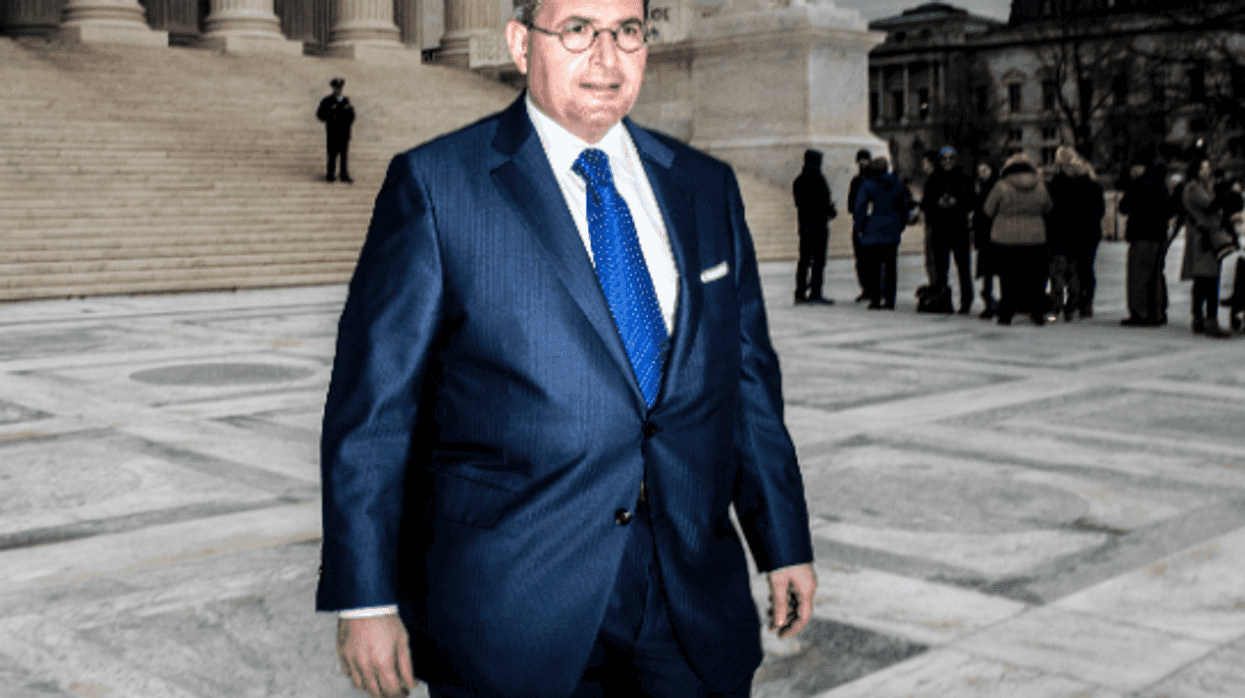
Leonard Leo

It's Just His Nature: Scorpion Trump Stings Frog Leo In Lawless Rage

Leonard Leo, the bête noire of liberals who curated Trump’s first-term judicial appointments, including his three Supreme Court justices, has gone from Trump's shortlist to his shit list. As is his wont, Trump turned on his loyal servant with particular savagery, calling him a “sleazebag” who had rendered bad advice on a series of judicial nominations.

Leo responded with comparative good grace, along with a pointed, if diplomatic, defense of his influential work: "I'm very grateful for President Trump transforming the Federal Courts…[T]he Federal Judiciary is better than it's ever been in modern history, and that will be President Trump's most important legacy."

The genesis of the fallout speaks volumes about Trump's view of the role of the federal judiciary, and of his own inner circle.

Trump's ire was sparked by the Court of International Trade’s recent opinion striking down his broad tariffs because they unlawfully usurped Congress’s powers and relied on supposed “emergency” powers under the International Emergency Economic Powers Act (IEEPA) that the Act does not provide.

This legal failing is a cross-cutting theme of Trump's indiscriminate power grabs. Similar to a number of modern would-be authoritarians, Trump has repeatedly tried to steamroll basic legislative authority by characterizing everyday political issues as emergencies requiring a strongman’s intervention.

The opinion was a unanimous per curiam (i.e., no single author was identified) by three members of the Court of International Trade: a Reagan appointee, an Obama appointee, and a first-term Trump appointee. Moreover, the Trump appointee, Timothy Reif, is—as Trump appointees go—unusually well qualified, having previously served as general counsel in the Office of the U.S. Trade Representative (USTR) in the Executive Office of the President and then senior counsellor to the U.S. Trade Representative.

The panel, including Reif, held that the IEEPA—the text of which doesn't even contain the word emergency—could not support Trump’s outlandish and all-too-familiar claims that the sky is falling. At the same time, the court noted the possibility of statutory sources of authority other than the one Trump invoked.

In response to the administration’s predictable motion for emergency relief, the Federal Circuit—the Court of Appeals for the specialized Court of International Trade—has imposed an administrative stay that tells us nothing about whether it will affirm the lower court on the merits.

Trump's temper tantrum is ironic, if not absurd, given Leonard Leo’s record as the administration’s judicial nominee whisperer. By any measure—on the left or the right, and whether provoking aversion or elation—Leo has compiled a phenomenally successful record in the service of Trump and the conservative judicial movement in general.

He follows in the footsteps of advisors to other Republican administrations since Reagan, who have adopted a single-minded focus on judicial appointees and have dramatically transformed the makeup of the federal judiciary. In Leo’s case, that includes Trump's three Supreme Court nominees: Neil Gorsuch, Brett Kavanaugh, and Amy Coney Barrett.

Conservative Trump supporters have generally taken those appointees—which have established an über-majority conservative Court likely to last for a generation or more—as back-to-back-to-back home runs.

Just for starters, all three of them voted to overrule Roe v. Wade, probably the number one goal of judicial conservatives for a generation, and a (dubious) achievement that for many years looked impossible. In terms of the personal bounty for Trump, all joined the outlandish 2024 immunity opinion that continues to provide him comfort on a regular basis—for example, just last week, with the pardon for Paul Walczak in the wake of a $1 million solicited donation by Walczak’s mother that fits the criminal elements of bribery to a T.

The larger lesson in Trump's excoriation of Leo is what it shows about Trump’s expectations of the purpose of screening his nominees.

Leo has served up a long series of candidates who talk the talk about conservative jurisprudence, including the newfangled articles of faith like robust Second Amendment interpretation, solicitude for religious-based intolerance, and the Supreme Court’s less-than-fully-coherent history-and-tradition test.

That doesn't cut it for Trump. One important opinion against him—plainly on the basis of well-established legal principles that any judicial conservative should embrace—and Leo gets moved to the other list, with a heavy dose of Trump’s obloquy for good measure. For Trump, there's only one test of judicial qualifications: ruling for Trump, whatever the law provides. Leo failed in his presumed duty to find absolute Trump toadies, or to quietly inculcate the potential toadies he did find.

Leo joins a very long list of former insiders whom Trump has abruptly cast out and vilified. Central advisers such as Mike Pence, Chris Christie, Anthony Scaramucci, Kayleigh McEnany, Mick Mulvaney, John Bolton, and many others have all tasted Trump’s poison, some for reasons that are minor or even mysterious. The fact is, there's no rhyme or reason to Trump's spurning of former close associates. It rather just seems to be a way of demonstrating domination and superiority to any advisor, however valuable.

Trump is like the scorpion in the fable of the scorpion and the frog. Not able to swim to cross the river, the scorpion asks a frog for a ride on his back. Knowing the scorpion’s dangerous sting, the frog hesitates: “How do I know you won’t sting me?” The scorpion replies, “Because if I sting you, we’ll both drown.” So, the frog agrees to ferry the scorpion across the river. Halfway there, the scorpion stings the frog, who with his dying words asks, “Why did you do that? Now we’re both going to die.”

“I couldn’t help it,” the scorpion replies. “It’s in my nature.”

Trump is a legal ignoramus indifferent to the Constitution and the role of law. His only interest is domination. He turns on those who served him faithfully because it’s in his nature.

The general agenda of Trump 2.0—outlined by the long blueprint of Project 2025—is to put in place a series of measures that grossly, and unconstitutionally, aggrandize Trump's personal power, rejecting any vestiges of restraint and lawfulness that stymied him the first time around.

Transposed to the federal judiciary, that means a careful search for judges like Aileen Cannon or Matt Kacsmaryk who—not to put too fine a point on it—are utterly in the tank for the president who appointed them and who could yet elevate them to higher judicial service.

So far, the Trump 2.0 judicial nomination process has little to show for itself; the Senate has confirmed none of his 11 federal court nominees this year.

Leo’s casting out thus portends a series of nominees carefully chosen to cross fingers behind their backs when they swear, as the law requires, to “administer justice without respect to persons.” Call it the attempted Cannonization of the federal judiciary—and, to the extent Trump can secure Senate confirmations, one more sharp departure from the rule of law.

Harry Litman is a former United States Attorney and the executive producer and host of the Talking Feds podcast. He has taught law at UCLA, Berkeley, and Georgetown and served as a deputy assistant attorney general in the Clinton Administration. Please consider subscribing to Talking Feds on Substack.

Reprinted with permission from Substack.
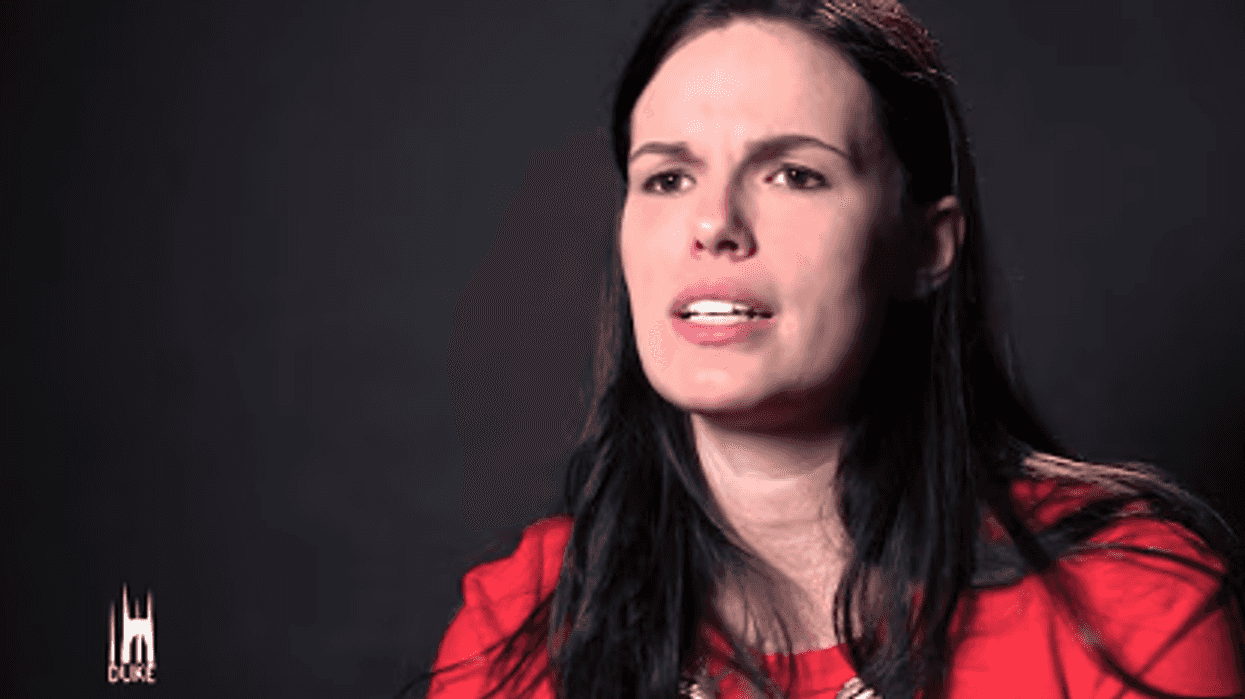
Allison Riggs

In North Carolina, Political Power Grab Thwarts Voters

Some people just won’t take no for an answer.

Put in that category the Republican candidate for a seat on the North Carolina Supreme Court. Jefferson Griffin lost that race to incumbent Democratic Justice Allison Riggs by just 734 votes out of more than 5.5 million cast, which has to hurt. Ask Democrat Cheri Beasley, who in 2020 lost her North Carolina chief justice race to Republican Paul Newby by about 400 votes from almost 5.4 million ballots cast.

Since two recounts have confirmed the Riggs win, you might think Griffin would have conceded by now, as Beasley did after two recounts.

You would be wrong.

Without pointing to one illegal or fraudulent vote, Griffin is trying to have 60,000 votes thrown out — including the votes of Riggs’ parents — mostly because either a driver’s license number or the last four digits of a Social Security number were not attached to those voters’ registrations.

There may be good reasons for that, as many registered before those items were required, or the “missing” information was not attached because of bureaucratic error. Last year, a federal judge, a Trump appointee, dismissed part of a suit brought by the Republican Party that sought to purge 225,000 voters from the rolls.

Because of North Carolina law, everyone who voted in November had to show an accepted form of ID — for many, a driver’s license. They walked out of their polling places satisfied they had performed their civic duty.

If Griffin and state Republicans have their way, many of their votes may not count.

It’s no coincidence that analysis has shown that voters the GOP point to as suspect are disproportionately young, non-white or less likely to vote for Republicans.

Griffin, who hasn’t tried to defend his reasoning out loud, is only questioning results in his race, knowing the doubt and confusion it would cause in other, already certified state races. State and federal courts, and even some right-wing, so-called voter integrity groups have in the past rejected the arguments Griffin makes.

It’s easy yet dangerous to dismiss it as the usual GOP tactic of sowing doubt about any election a Republican loses, crying “wolf” or “rigged,” while declaring an election free and fair if it goes the other way; it gradually causes Americans to reject the integrity of any election.

And it is a tactic overwhelmingly used by one party.

The difference between the two major parties on how they handle wins and losses is why the transfer of power in January 2025 — with Vice President Kamala Harris honorably certifying an electoral count she lost — looked nothing like the violent insurrection of Jan. 6, 2021, when losing candidate Donald Trump incited followers to resist instead of choosing democracy.

Now, Griffin’s case is getting national attention because the GOP-dominated, seven-member North Carolina Supreme Court is giving it oxygen, offering national Republicans a blueprint. Four of the five GOP justices voted to temporarily put the brakes on the certification. Riggs understandably recused herself, and Justice Anita Earls, the only other Democrat on the court, voted to let the state Board of Elections decision, and the Riggs win, stand.

Showing some independence as well as common sense, Republican Justice Richard Dietz joined Earls in rejecting the post-election maneuvering, and wrote in dissent: “Permitting post-election litigation that seeks to rewrite our state’s election rules — and, as a result, remove the right to vote in an election from people who already lawfully voted under the existing rules — invites incredible mischief.”

A challenge to the state Supreme Court action has already come in the form of a recent filing from the Democratic National Committee. On a press call earlier this week, former North Carolina Gov. Roy Cooper, outgoing DNC Chair Jaime Harrison and state party chair Anderson Clayton talked about what the case means beyond North Carolina.

“The eyes of the entire country are on this race because the implications of having free and fair elections that are being questioned and potentially overturned are devastating,” said Cooper. “If they are successful in this scheme,” he said, “there will be copycat lawsuits across this country for races where they don’t like the result.”

“This time it’s 60,000 ballots, next time it’s 100,000 ballots, and then it’s 250,000 ballots until no ballots get counted,” said Clayton, whose national profile rose during the swing state attention North Carolina received in the last election cycle. “This playbook is not new to our state, but it is one that Republicans will take and make a national playbook if they’re able to succeed here.”

“As a party, our responsibility is to the voters — not a politician,” said Harrison. He admitted the result at the top of the ticket was not what Democrats worked for or wanted, but noted how well his party did downballot in North Carolina, including capturing the offices of governor, lieutenant governor and attorney general, and breaking, by one seat, the GOP supermajority in the state legislature.

The move to reject ballots to put Griffin on the court is a Republican reaction to those wins, Harrison said, a “temper tantrum” to try to change the rules, something GOP state legislators already did when they passed, while they still held that supermajority, last-minute laws to diminish incoming Gov. Josh Stein’s already limited powers.

Harrison, a South Carolinian, recalled a time in the South when not all Americans, including his own grandparents, had the right to vote.

Maybe Griffin and his enablers have forgotten that all-too-recent history, when brave patriots fought and died expanding that precious franchise so all Americans’ voices could be heard and respected.

Or maybe a seat on the North Carolina Supreme Court is more important.

Reprinted with permission from Roll Call.

Alexandria Ocasio-Cortez

AOC Says She Will Seek To Impeach Supreme Court Justices

Rep. Alexandria Ocasio-Cortez (D-NY) responded to Monday’s Supreme Court decision finding presidents have far greater immunity against criminal prosecution than even the Founders appear to have wanted, announced she will file articles of impeachment against the justices, although she did not name which ones.

In their 6-3 ruling along partisan lines, the justices claimed presidents cannot be criminally charged for “official” acts, but are not immune from charges for private ones. Legal scholars declared the six right-wing justices had effectively just made Donald Trump a “king.”

“The Supreme Court has become consumed by a corruption crisis beyond its control,” Rep. Ocasio-Cortez, known as “AOC,” wrote on Monday.

“Today’s ruling represents an assault on American democracy. It is up to Congress to defend our nation from this authoritarian capture,” she added. “I intend on filing articles of impeachment upon our return.”

Congress is in recess this week ahead of the Fourth of July holiday.

Rep. Maxwell Alejandro Frost (D-FL) responded, “I fully support this.”

NBC News’ senior national political reporter Sahil Kapur noted impeachment would “require a majority of the House to impeach plus two-thirds of the Senate to remove a member of SCOTUS.”

But former Obama administration official Brandon Friedman remarked, “Before everyone starts whining about how an impeachment of Supreme Court justices won’t pass a Republican-controlled House, that isn’t what this is about. It’s about the spectacle. It’s about the headlines. It’s about communicating to voters a grave threat to the Republic.”

Earlier on Monday Georgetown Law professor Josh Chafetz had said, “Democrats should go to war with the Court. The public is on their side on the issues—including abortion, immunity, environmental regulations, etc. They should make opposition to the Republican Court the organizing theme of the November election.”

Reprinted with permission from Alternet.

Shop our Store

Headlines

Editor's Blog

Corona Virus

Trending

World