Tag: voter turnout
Pollster: Young Voters' Fury Over Economy (And Trump) Boosting Democrats In Midterm

Pollster: Young Voters' Fury Over Economy (And Trump) Boosting Democrats In Midterm

According to a new Harvard Youth poll, faith in the American government has sunk to a new low of just 15 percent among young Americans aged 18-29. A slim 13 percent think the country is on the right track, however only 33 percent say they trust the upcoming midterm elections will be fair.

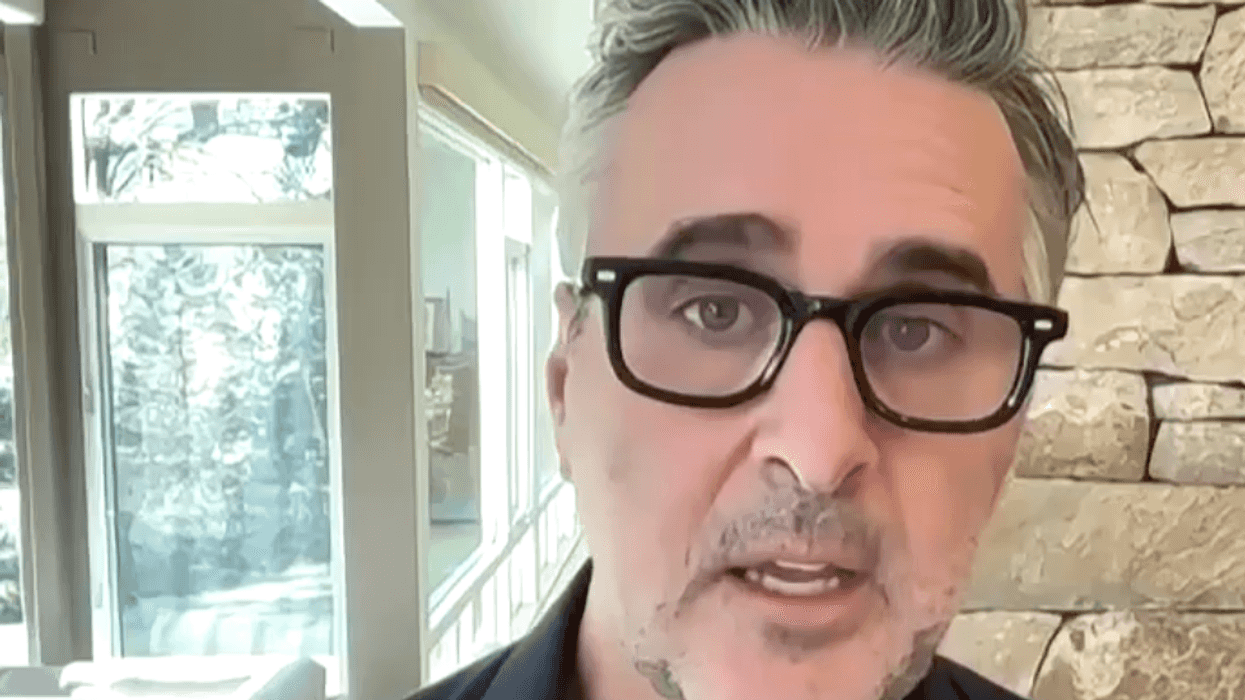
The director of polling at the Harvard Kennedy School's Institute of Politics, John Della Volpe, joined MSNOW on Friday to discuss the survey’s findings, saying he hasn’t seen anything like it in America over his 25 years as a pollster.

According to Della Volpe, young voters are concerned about “a stack of issues.”

“It's inflation, cost of living, housing, health care, paying more, getting less,” he explained. “The day-to-day concerns financially and otherwise related to the war. These are all adding up to a generation that is highly anxious, incredibly stressed out by this, and talk about not even living day-to-day, but surviving day-to-day.”

And, says Della Volpe, young Americans have heard a lot of talk from President Donald Trump, but the “rhetoric” doesn’t align with what they’re experiencing.

Instead of addressing voter concerns, agreed host Alex Wagner, the administration is “doing nothing about the rising cost of health care, literally letting Obamacare subsidies expire and raising the cost of health care on 23 million Americans, many of whom are young.”

Trump is also “not addressing the future of joblessness, which is artificial intelligence taking over many of these jobs that these young people would have once had… This president has not shown that to be a priority.” Then there is the environment: “Who's going to inherit a heated-up, broken earth but young people? They have every reason to feel incredibly bummed out about the direction.”

As Wagner notes, many of these young voters have now spent a decade having Trump tell them they can’t trust elections.

“This administration has done more to erode confidence in the levers of our democracy than any other presidency,” she asserted. “Telling them that their votes don't count, telling them the elections are fraudulent, telling them that there's an unseen enemy pouring across the border to change the fabric of this country.”

Della Volpe points out that much of the electoral disillusionment is among Republican and independent voters, explaining, “Younger folks who identify as Democrats…are significantly more likely to say they will vote in November than young Republicans and independent or indifferent voters…So still you see that advantage for Democrats.”


latinas to the polls

In Georgia Runoff It's Loud, Visible Democrats Versus Quiet, Covert Republicans

The margins are razor-thin in Georgia’s Senate runoff that ends on December 7, according to interviews with dozens of party insiders, grassroot organizers, and voters at polls and rallies across the state during the past week.

Sen. Raphael Warnock, the Democratic incumbent, appeared to lead as early voting concluded on Friday – a sentiment affirmed by CNN’s latest poll, which reached voters from Thanksgiving weekend through last Tuesday. But Republicans say that their base prefers voting in person at local precincts on Election Day, fueling their hope hat a surge will elect Herschel Walker, the Georgia football star whose Republican candidacy was propelled by Donald Trump.

As early voting closed, 1.83 million Georgians had voted in person or returned mailed-out ballots, according to the secretary of state’s office. While daily turnout broke records, including 350,000 votes cast on Friday, only 26 percent of Georgians with active voter registrations have voted so far. In contrast, during 2020’s runoffs when control of the Senate was at stake, about 4.5 million votes were cast.

In many respects, both parties are reverting to core values and loyalties to bring out voters. At Walker’s rallies this week, he presented himself as a man who has been redeemed by Christianity and, if elected, would oppose the "evil" policies put forth by Democrats and the Biden administration.

Such religious and party orthodoxies were well-received by his supporters, who, in interviews after a Walker rally, mentioned that Trump’s offensive behavior did not stop the former president from enacting policies they approved. And, of course, Walker’s status as a football legend and “good old boy” was appealing.

“Everybody in Georgia loves Herschel. You should have seen that boy run,” said Fran, a retired furniture store owner, who declined to give her last name while attending a Walker rally on Monday in Toccoa, in the state’s northeast corner.

Interviews with voters in Republican strongholds, such as Hall County north of Atlanta, suggested that party loyalty – including the last-minute endorsement of Walker by Gov. Brian Kemp, the state’s top-ranking Republican, who did not back Walker in the primary election, will push party faithful to vote on Tuesday.

“I do think it will have some influence on people,” Sloane Mattadeen, who serves in the U.S. Navy, said after voting. “I think there is some authority there.”

On the other hand, Walker has an uphill climb. He received 200,000 votes less than Kemp in the general election and was 38,000 votes behind Warnock out of nearly 4 million votes cast statewide. What makes Democrats nervous is that Walker’s campaign has been eerily quiet in all but the state’s remote regions.

“They ran a quiet, very covert campaign this entire midterm,” said a Democratic congressional staffer who asked not to be named. “You didn’t see Kemp. If it was not for Donald Trump and his big mouth, you may not even know what was going on with Herschel Walker. You don’t see them when they come for fundraisers… The Republicans are making phone calls, but it is not overt at all.”

The GOP’s latest lawn signs do not mention Walker’s name; they just urge people to vote Republican. Typically, one usually sees one or two lawn signs for Walker, which contrasts with a half-dozen or more signs for Warnock on busy streets.

A former state government press aide who recently took a private sector job said that many of Georgia’s Republican leaders are tired of all things Trump, including his hand-picked candidates like Walker. That partly accounts for the lower-profile messaging, he said, adding that the GOP base understands Kemp’s signals.

Whether that comment applies equally to men and women is another variable. As of Friday morning, about 10 percent more women had voted compared to men, the secretary of state's office reported. (Academic experts said that split was normal in Georgia elections.)

Walker’s anti-abortion stance, despite his history of previously paying for abortions and of domestic abuse, both of which Democrats have publicized, was downplayed by several women who said they had just voted for Walker. Other voters, women and men who said they were voting for Warnock, said that Walker’s character was deeply flawed. Black voters went further and said that his candidacy was perpetuating ugly stereotypes about Black men that they have worked for years to overcome.

More Visible Democrats

In contrast, the Warnock campaign and many get-out-the-vote efforts addressing constituencies likely to support him have been highly visible and vocal. Groups that barely existed a few years ago have been conducting voter drives as part of longer-term efforts to empower their communities.

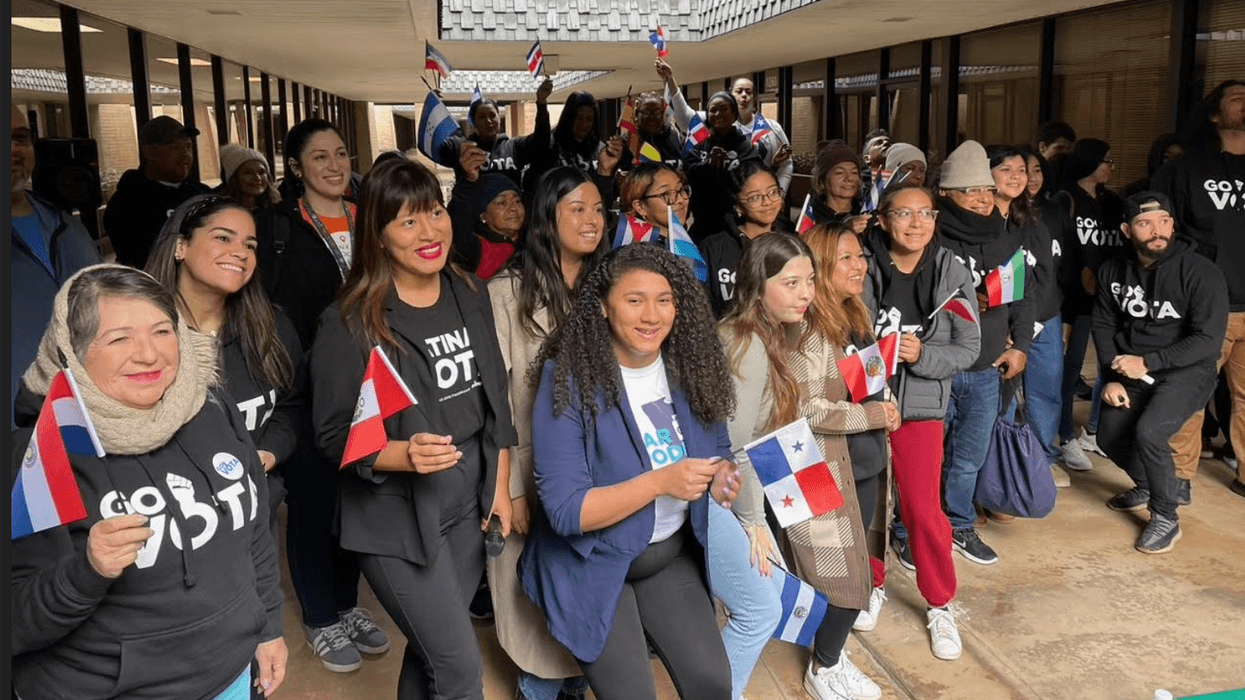
In a warehouse district north of Atlanta on Friday, three dozen volunteers – mostly young women wearing black sweatshirts saying “Go VOTA” – assembled for a car caravan through nearby neighborhoods to urge Latina women to vote. They also planned to knock on 1,000 doors. Organizers from seven groups behind this effort said they already had made more than 90,000 phone calls to voters.

There are grassroot efforts like this across the state. By Friday morning, more than 800,000 white voters had cast ballots, 477,000 Black voters had cast ballots and 24,000 Hispanic voters had cast ballots, the state data hub reported. While the Hispanic numbers were low compared to other groups, this voter drive’s organizers said their voters could make a difference if margins are close.

“I was born in Georgia and raised in Gwinnett County, a lovely multicultural, multi-lingual community,” said Leslie Palomino, senior canvass lead for Georgia at PoderLatinx. “Growing up in a mixed-status family led me, the middle child in a household of five, to become the first eligible voter. Today, I’ll be casting my vote alongside my sister, Kimberly Palomino. Latinas are a powerful force and today we make our voice heard.”

A few minutes later, Palomino and a caravan of flag-waving, horn-honking volunteers left to visit one early voting site and then rouse voters. There was no comparable effort from Republicans anywhere in sight.

Steven Rosenfeld is the editor and chief correspondent of Voting Booth, a project of the Independent Media Institute. He has reported for National Public Radio, Marketplace, and Christian Science Monitor Radio, as well as a wide range of progressive publications including Salon, AlterNet, The American Prospect, and many others.

This article was produced by Voting Booth, a project of the Independent Media Institute.

You Have The Right To Vote -- Maybe Even If You're In Jail

You Have The Right To Vote -- Maybe Even If You're In Jail

They’ve been eligible to vote since 1974. That year, in the case of O’Brien v. Skinner, the Supreme Court of the United States held that “misdemeanants” or accused people who haven’t been convicted of felonies are eligible to vote just as they would be were they not in custody.

Casting a ballot from jail is nice work if you can get it. The ballot that is.

In theory, about 547,000 incarcerated people should be voting on November 8. Most have to vote through an absentee ballot just like they would if they were out of town on Election Day.

But ballots are hard to come by, and usually for specious reasons. A witness at the October 10, 2019 hearing on Washington DC’s Restore the Vote Amendment Act — the first law in the country to actually re-enfranchise incarcerated people since the two states that allow prisoners to vote never took away their rights in the first place — described situations where prison mailrooms failed to deliver the absentee ballots to the inmates. Even if they get the ballot in their hands, inmates have to pay for the postage to return it. Commissary purchases can take as long as two weeks in some places; stamped envelopes aren’t guaranteed.

Of course, barriers start well before the distribution of ballots. In Houston, Texas, Harris County Sheriff Eddie Gonzalez recognized that his jail confiscates the photo ID needed to register and vote.

The same was true in the city and county of Denver, Colorado. It frustrated the voting of the detainees so broadly that the county changed its voter registration rules to allow photocopies of licenses and photo ID’s rather than requiring detainees to have them in hand, as they’re technically contraband.

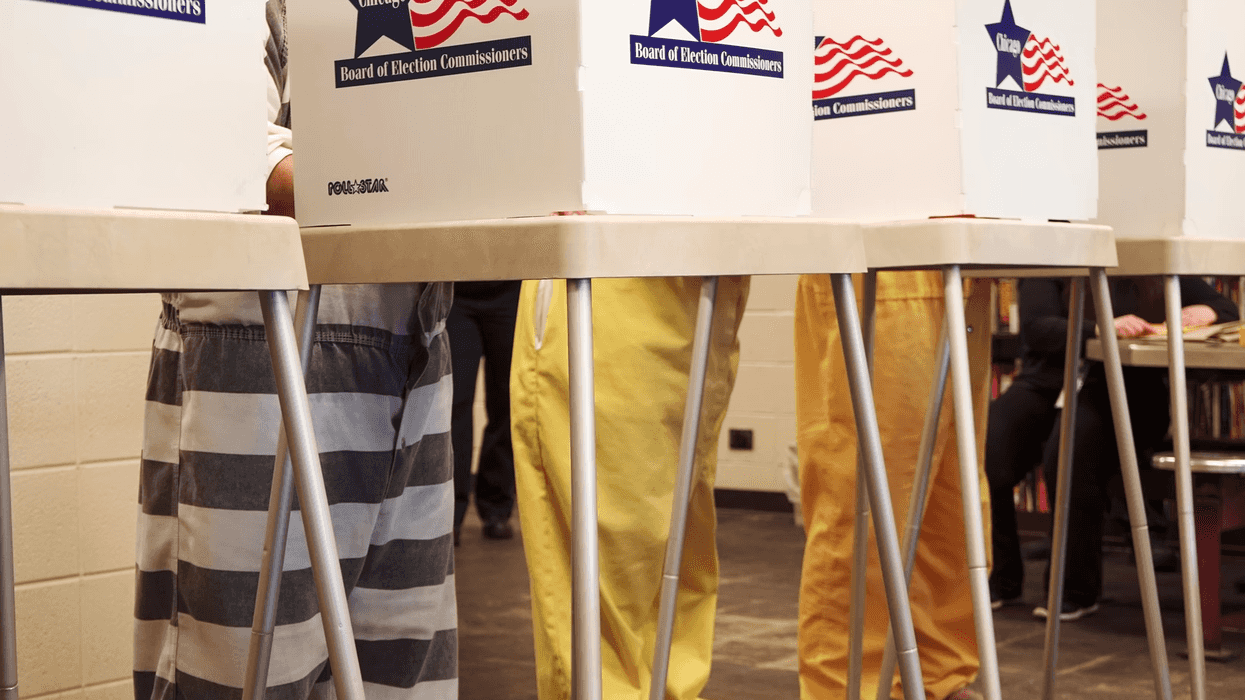
The solution to these problems was to turn jails into actual polling stations — and that’s exactly what seven jails have done, according to the advocacy and research nonprofit Prison Policy Initiative. Now those seven facilities — the jail in Washington D.C., two in Illinois, including Cook County Jail, one in Los Angeles, two in Colorado, and Harris County Jail in Houston, Texas — will act as polling places on Election Day. That basic right to vote and the logistics to implement it are coming together

But the challenge of getting pretrial detainees to vote goes beyond coordinating how it's done. Ward Six Councilman Charles Allen of the District of Columbia City Council, who chairs its committee on the judiciary and public safety, wondered whether formal civics education was necessary to get detainees to vote; he even speculated whether that would include having a dedicated member of the city's board of elections stationed at the jail.

According to Allen, 73 unsentenced people voted in the primary at the D.C. jail and 127 in the general election in 2018. Those numbers amount to about one percent of the average daily population when it was at its lowest.

To be fair to Washington, the District may be the hardest place in the country to implement detainee voting. Inmates in the city may not be in the facility long enough to vote; the average length of stay for men is 136 days and 70 days for women.

After that, if a sentence is imposed, the federal government ships them out of the city to federal prisons across the country, in states with different laws. About 3700 people — two thirds of incarcerated D.C. residents — vote from somewhere else. That distance requires that they receive a traditional absentee ballot to mail in.

But the results aren’t that great in other jurisdictions. While about 40 percent of Cook County Jail detainees voted in the 2020 presidential election, the exceptional circumstances of that year — reduced inmate populations because of the pandemic and four separate days of early voting over two weekends — enhanced participation.

During the June 2022 primary, only 25 percent of detainees voted, even though same day registration should have made it easier for many more to participate in the democratic process. It was still a higher turnout rate than for citizens at large — and it’s up from seven percent in 2018 — but jail voting participation rates should top 85 percent when the facility becomes a polling place with on-site registration.There’s no concern about transportation, not making it in time, or even competing obligations. Turnout is solely the responsibility of the constituents.

And that’s what proves that it’s not convenience of voting that brings about participation; it’s knowledge of the right. And most incarcerated people don’t know about their rights, even when the voting booth gets installed in the lobby of their building.

An advocate with Speak Up and Vote in Illinois said those detained in jail frequently “didn’t realize they’re eligible to vote, so they didn’t try”-- as did someone working with the Denver Sheriff’s Department, who said that detainees “told us this was their first time voting and they had no idea they had the right the vote.” Harris County Sheriff Gonzalez essentially conceded the “majority of people involved in the justice system don’t vote due to a lack of information on voting.”

The task of turnout is educating people on rights they’ve always had but either didn’t know or didn’t care about.

No matter what the participation level is, putting voting booths inside jails is a bold move. We think of the laboratories of democracy as sterile places, crucibles that cook up only the purest policies. To let detainees and their voluntary behavior — ballot casting isn’t required — teach corrections administrators how to implement these rights takes a lot of trust.

It’s especially brave since granting voting rights for prisoners isn’t a favored political move. James Carville, political consultant and former lead strategist for the Clinton campaign in 1992, complains about it a lot, but his essentially bigoted stance isn’t totally out of touch. A HuffPost//YouGov poll surveyed a group of 1000 US citizens and found that 63 percent favored voting rights for people when they complete their sentences. That support then plummets by more than half, to 24 percent, when the topic of re-enfranchising prisoners comes up.

The opposition to voting rights for incarcerated people is outdated, for sure; our nation’s highest court has allowed unconvicted detainees to vote for almost 50 years. That we’re just figuring out how to let them do that in 2022 is both heartwarming and disheartening at the same time.

Chandra Bozelko did time in a maximum-security facility in Connecticut. While inside she became the first incarcerated person with a regular byline in a publication outside of the facility. Her “Prison Diaries" column ran in The New Haven Independent, and she later established a blog under the same name that earned several professional awards. Her columns now appear regularly in The National Memo.

Terry McAuliffe

Massive Democratic Turnout In Virginia Primary Bodes Ill For GOP

Reprinted with permission from American Independent

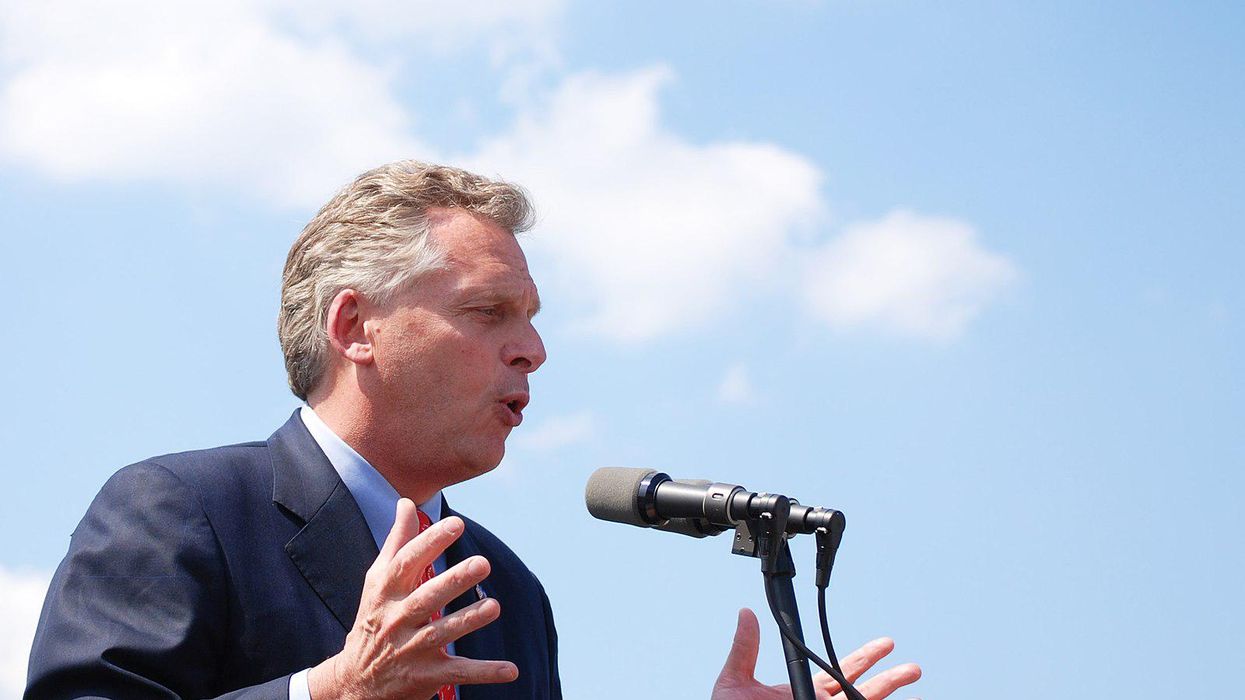
In Tuesday's Democratic gubernatorial primary in Virginia, former Gov. Terry McAuliffe won the nomination for his old job with at least 301,811 votes. A month ago, Republican Glenn Youngkin won his party's nomination with just 10,318.

McAuliffe got about 62 percent of the more than 485,000 votes cast in the primary. The turnout was not far below the record 2017 Democratic total of 542,858 votes fueled by an anti-Donald Trump wave in the state.

"With some more votes to count, VA Dem turnout last night is edging closer to 500k, which would only be down about 10 percent from the extraordinary turnout we saw in 2017 (and way up from 2005, 2009, 2013, etc.)," observed Lowell Feld, a Democratic strategist and founder of the Blue Virginia blog, on the blog's Twitter account. "That bodes VERY well for Dems this November!"

"You can put those 'questions about Dem enthusiasm' takes to bed," agreedAaron Fritschner, communications director for Rep. Don Beyer (D-VA).

The high Democratic turnout for McAuliffe and the Democrats is a stark contrast to last month's Republican nomination process. Rather than hold a primary, the state GOP opted to hold 40 unassembled caucuses across the state on May 8. Though more than 50,000 self-identified GOP voters registered to participate in that process, just 30,524 actually bothered to show up.

"The Republicans used a closed process relying on party insiders to choose their nominee at an in-person convention rather than having voting in a primary, and almost half of the people who registered as delegates for the convention didn't, uh, go," said Fritschner.

Youngkin, a wealthy businessman, was nominated with just 10,318 first-choice votes in the complicated voting process.

Larry Sabato, director of the Center for Politics at the University of Virginia, tweeted Tuesday night that Democratic results were not what the Republicans had hoped for.

"GOP wanted (1) @TerryMcAuliffe embarrassed with under 50%. In fact he's topping 60%. (2) A low-turnout primary. No exact % yet but turnout is clearly NOT low," he observed.

Youngkin will face an uphill battle against McAuliffe in the Democratic-trending state. Donald Trump lost Virginia to Joe Biden by more than 10 points last November.

After Trump endorsed him last month, Youngkin said he was "honored" to have his backing.

Sabato has predicted that Trump's endorsement will be the kiss of death in the November general election.

Published with permission of The American Independent Foundation.

Shop our Store

Headlines

Editor's Blog

Trending

World